





14 min read
The Butterfly of Psyche
author: High Priest Zevios Metathronos
ψυχή (psychḗ)
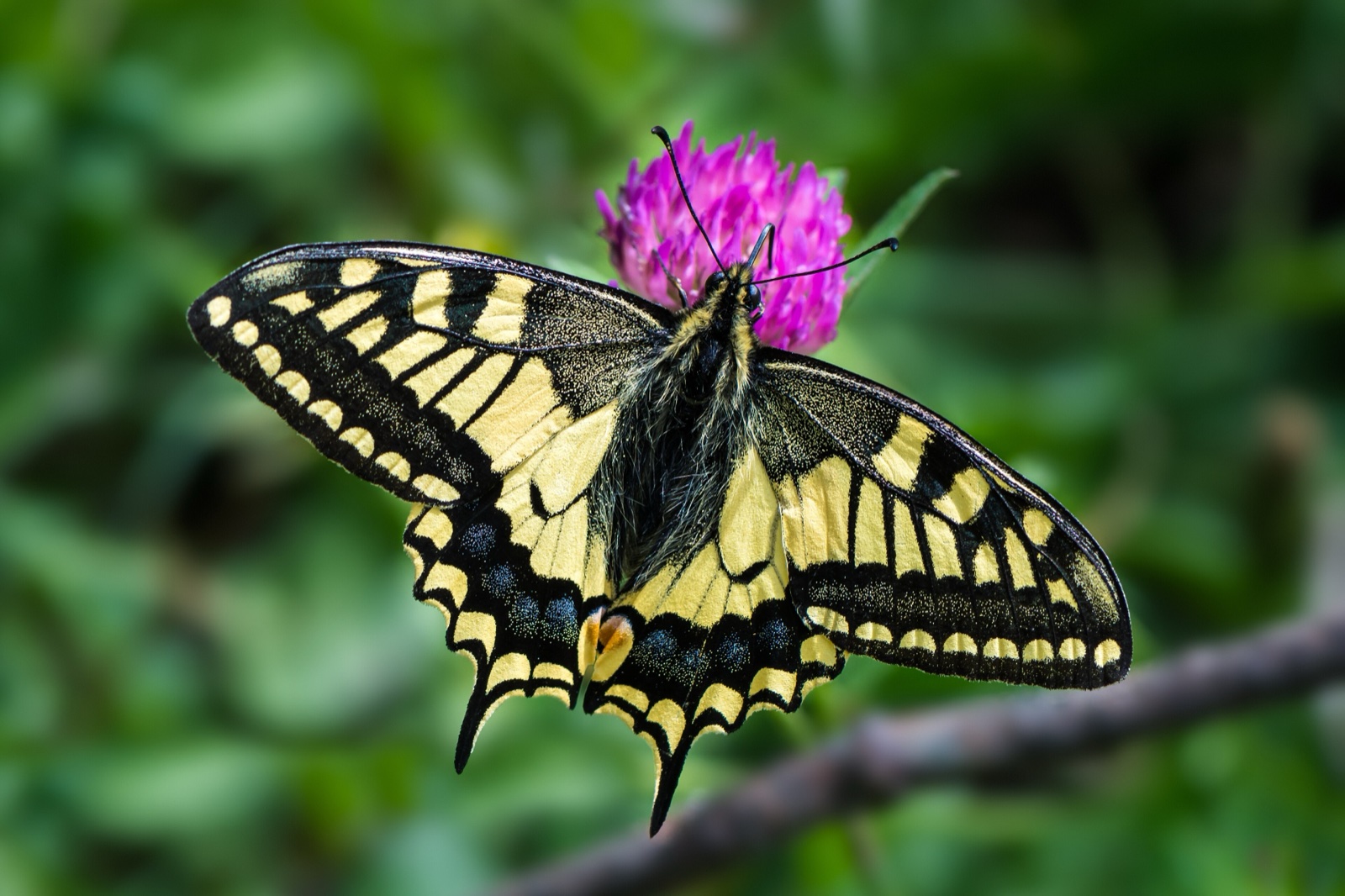
Psyche, beloved of Eros and made immortal by Zeus: the butterfly as the soul in metamorphosis.
Uoaei1 · CC BY-SA 4.0 · Wikimedia Commons

In Greek one word, ψυχή, names both the soul and the butterfly. Aristotle gave it to the winged insect that bursts from the chrysalis, and Apuleius told how Psyche was carried to heaven and made immortal at the command of Jupiter. In Zevism the butterfly is the visible form of Theosis: the soul that dissolves, is rebuilt and rises on wings.
| Realm | The Small Sacred Creatures |
|---|---|
| Greek | ψυχή (psychḗ), soul and butterfly |
| Latin | papilio; Psyche in Apuleius |
| Other Names | Greek χρυσαλλίς (chrysallís), the chrysalis; κάμπη (kámpē), the caterpillar |
| Species | Papilio machaon (Old World swallowtail) and kin |
| Gods | Psyche, Eros (Cupid), Zeus (Jupiter), Hermes (Mercury), Persephone |
| Material Capacity | Complete metamorphosis through the dissolution of the larval body; long migration |
| Spiritual Capacity | Theosis: the soul dissolved, rebuilt and raised on wings |
| Element and Sphere | Air; the heart and the shoulder wings; the threshold of death and rebirth |
The Living Animal
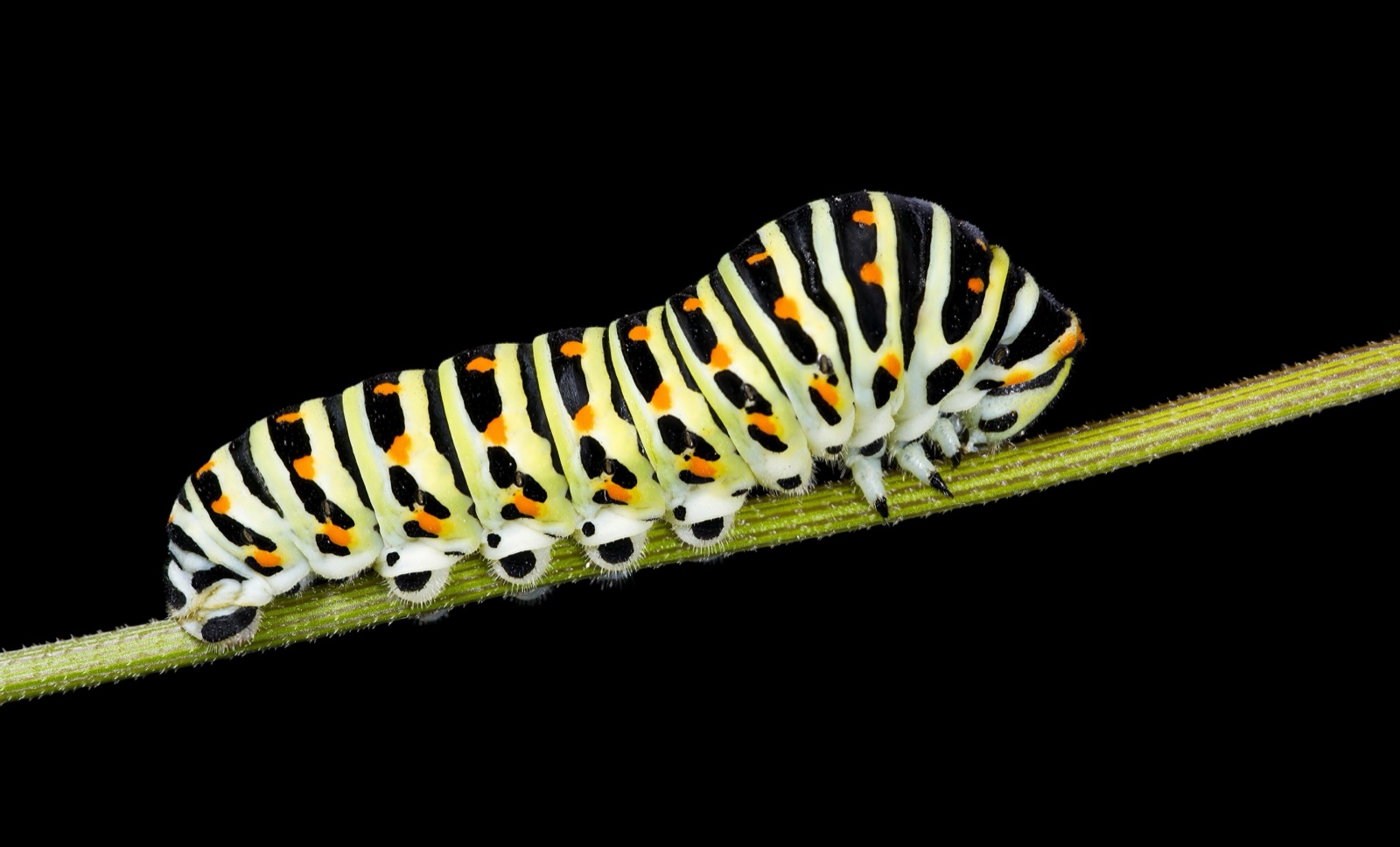
Butterflies and moths pass through complete metamorphosis: from the egg comes the caterpillar, the caterpillar becomes the chrysalis, and from the chrysalis emerges the winged adult[1]. The swallowtail of the opening image, Papilio machaon, lives these 2 lives in 2 bodies: the caterpillar shown below, 42 mm long, crawls and eats, and the adult flies and seeks a mate.
Aristotle described the cycle. The so-called psychai, he writes, come from caterpillars that appear on green leaves, above all on the rhaphanos, which some call krambē; the caterpillars grow, fall still, change their form and are called chrysalides; they have a hard shell, cling by threads like a spider's web, and show neither mouth nor any other distinct part; and after a short time the shell bursts and winged creatures fly out of them, and these too are named psychai[2]. The Greek lexicon of Liddell, Scott and Jones records "butterfly or moth" as a sense of ψυχή and gives this passage as its witness[3].
Inside the chrysalis the caterpillar digests itself. It releases enzymes that dissolve its tissues, so that a pupa cut open at the right moment would let "caterpillar soup" ooze out[1]. Certain highly organized groups of cells, the imaginal discs, survive this dissolution. They formed before the caterpillar hatched, one for each adult part it will need, such as eyes, wings and legs, and they draw on the protein-rich soup around them to divide rapidly; in the fruit fly a wing disc may begin with about 50 cells and end metamorphosis with more than 50,000[1].
Something of the larva passes through the dissolution intact. In 2008 Douglas Blackiston, Elena Silva Casey and Martha Weiss trained fifth-instar caterpillars of the tobacco hornworm, Manduca sexta, to avoid the odour of ethyl acetate by pairing it with a mild shock; about 77% of the adult moths still avoided the odour, close to the 78% of trained larvae[4]. Caterpillars trained earlier, at the third instar, kept the aversion as larvae but lost it as adults, which the authors connect with brain regions that develop later in larval life[4].
The winged adult can cross continents. Monarchs of eastern North America, Danaus plexippus, fly as far as 3,000 miles (about 4,800 km) to winter in the oyamel fir forests of the mountains of Mexico, and 3 to 4 generations are needed to carry the species back to the northern United States and Canada[5]. The painted lady, Vanessa cardui, spreads north every year from the desert fringes of North Africa, the Middle East and central Asia, recolonizing mainland Europe and reaching the British Isles[6].
Didier Descouens · CC BY-SA 4.0 · Wikimedia Commons
.jpg)
The Spiritual Capacity
In Zevism the butterfly is the soul shown in its 3 states. The caterpillar is the soul bound to appetite, feeding without pause and crawling on a single plane. The chrysalis is the soul withdrawn into stillness, sealed in its shell, without mouth and without visible organs, as Aristotle saw it[2]. The imago is the soul that has passed through dissolution and rises on wings toward the light.
This is the image of Theosis, ὁμοίωσις θεῷ κατὰ τὸ δυνατόν. Plato teaches that the soul must try to flee from here to there as swiftly as possible, that this flight is becoming like God as far as possible, and that becoming like God is becoming just and holy with wisdom[7]. The butterfly's flight from the leaf to the open air is this ascent made visible; see Becoming as the Gods.
The chrysalis teaches that ascent demands dissolution. The larval body is broken down, and the new organs rise from discs that were prepared before the caterpillar ever hatched[1]. In the Temple's teaching the imaginal discs are the seeds of the divine form placed in the soul from the beginning: they wait in every person, and they grow by feeding on what the old self gives up. The same work of transformation is taught in The Skull and the Work of Transformation.
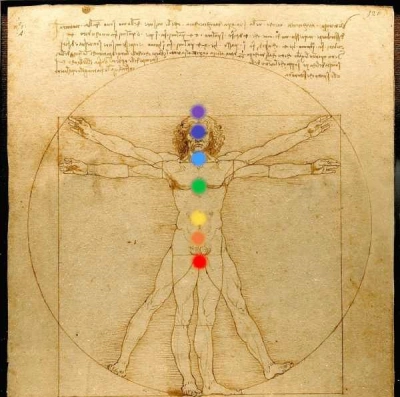
The wings themselves belong to the soul's anatomy. The Temple teaches that the shoulder chakras bolt wings, which give more power to the soul and symbolize spiritual freedom; the butterfly's 2 pairs of wings are their outward sign. Psyche's union with Eros places the butterfly at the heart chakra, where desire for the divine becomes the force that lifts the soul. See The Chakras and Eros.
Where Matter and Spirit Meet
The butterfly's spiritual capacities are written in its body. 5 of its material capacities show the bond one by one.
- Complete metamorphosis and the stages of Theosis. Egg, caterpillar, chrysalis and winged adult follow in fixed order[1]. The Zevist path has the same order: the soul first feeds and grows, then withdraws into discipline, and only then rises; no stage can be skipped.
- Self-digestion and the death of the lower self. The caterpillar dissolves its own tissues with its own enzymes[1]. Transformation in Zevism is work done by the soul upon itself: no outside power dissolves the lower nature for it, and the dissolution is the price of the wings.
- The imaginal discs and the seed of the divine form. The adult's eyes, wings and legs grow from groups of cells laid down before hatching, which survive the breakdown and feed on it[1]. So the divine form waits within the soul from the beginning, and the energy released by the dissolution of old habits becomes its food.
- Memory through metamorphosis and the continuity of Arete. Moths kept what they had learned as caterpillars when the training came late in larval life[4]. What the soul has learned deeply passes through every change of form; virtue gained is kept, and what was learned shallowly is lost.
- Migration across generations and the chain of the tradition. The monarch's return north is completed by 3 to 4 generations, none of which flies the whole route[5]. Zevism is the chain of all spirituality from its inception: each generation carries the flight a stage further, and the path is completed by the chain, never by one link.
The Gods and Their Many Names
The butterfly belongs to the soul itself, and so to the Gods who govern the soul's love, trial and ascent. Greek joined the 2 in one word, ψυχή, and the myth of Psyche gave that word a body and a story. In the Temple's teaching the names change with the land while the powers remain: Eros is Cupid, Aphrodite is Venus, Hermes is Mercury and also Thoth and Anubis, the guides of souls, Persephone is Ereshkigal, and the Zeus who makes Psyche immortal is Jupiter, the Head God.
| Civilization | God | The Bond with the Animal | Witness |
|---|---|---|---|
| Hellas | Psyche, the soul personified | The winged insect born from the chrysalis bears the soul's own name, ψυχή | Aristotle, History of Animals 551a[2]; LSJ s.v. ψυχή[3] |
| Rome | Cupid (Eros) and Venus (Aphrodite) | Psyche is loved by Cupid and tested by Venus in the tale of Apuleius, Metamorphoses 4.28-6.24 | Apuleius[8] |
| Rome | Proserpina (Persephone, Ereshkigal) | Psyche descends to fetch the box of Proserpina's beauty, opens it, falls into a deathlike sleep and is woken by Cupid (6.16-6.21) | Apuleius[8] |
| Rome | Mercury (Hermes, Thoth, Anubis) | Carries Psyche up into heaven at Jupiter's command | Apuleius, Metamorphoses 6.23[8] |
| Rome | Jupiter (Zeus, the Head God) | Gives Psyche the cup of ambrosia: "Take it, Psyche, and be immortal" | Apuleius, Metamorphoses 6.23[8] |
| Roman East (Antioch, Zeugma) | Psyche beside Eros | Ancient mosaics show her as a butterfly-winged woman with Eros; Theoi illustrates the type with mosaics from Samandağı (3rd century AD, Hatay Archaeology Museum) and Zeugma (Gaziantep Museum) | Theoi Project[9] |
| Imperial Rome | Psyche and Eros at the tomb | Embrace at either end of a sarcophagus of about 190 to 200 AD, Psyche as the personification of the human soul | Metropolitan Museum of Art 56.145[10] |
The thread runs from the insect to the throne of Zeus. Aristotle names the winged creature that bursts from the chrysalis psychē; Apuleius sends Psyche through trials that end in a descent to the house of Proserpina and a sleep like death; and Jupiter, the Head God, raises her and grants her immortality[8]. The butterfly and the myth tell one truth twice: the soul rises through a death it undergoes, and its final rank is given by Zeus.
The Gods who surround Psyche are the Gods of the soul's whole course. Eros draws her, Aphrodite tests her, Persephone holds the threshold of death, Hermes guides her upward, and Zeus crowns the ascent. Wherever the soul is pictured with butterfly wings, whether on a mosaic floor in Syria or on a Roman tomb, the same order of powers stands behind the image.
François Gérard · Public domain · Wikimedia Commons

Ancient Witnesses
3 witnesses: the naturalist who gave the insect its name, the philosopher who named the soul's flight, and the novelist who told how Psyche was made immortal.
Aristotle, History of Animals 5.19, 551a [2]
Γίνονται δ’ αἱ μὲν καλούμεναι ψυχαὶ ἐκ τῶν καμπῶν, αἳ γίνονται ἐπὶ τῶν φύλλων τῶν χλωρῶν,
μετὰ δὲ ταῦτα αὐξηθεῖσαι ἀκινητίζουσι, καὶ μεταβάλλουσι τὴν μορφήν, καὶ καλοῦνται χρυσαλλίδες,
περιρρήγνυται τὸ κέλυφος, καὶ ἐκπέτεται ἐξ αὐτῶν πτερωτὰ ζῷα, ἃς καλοῦμεν ψυχάς.The so-called psychai come from caterpillars, which arise on green leaves. After this, once grown, they become motionless, change their form and are called chrysalides. The shell bursts open, and out of them fly winged creatures, the ones named psychai.
Aristotelis Opera, ed. Immanuel Bekker (Oxford, 1837); First Thousand Years of Greek (Leipzig, 2016) · 3 extracts from one continuous passage, given in order. Translation: Temple of Zeus.
διὸ καὶ πειρᾶσθαι χρὴ ἐνθένδε ἐκεῖσε φεύγειν ὅτι τάχιστα.
φυγὴ δὲ ὁμοίωσις θεῷ κατὰ τὸ δυνατόν· ὁμοίωσις δὲ δίκαιον καὶ ὅσιον μετὰ φρονήσεως γενέσθαι.Therefore one must try to flee from here to there as swiftly as possible. And the flight is becoming like God as far as possible; and becoming like God is becoming just and holy with wisdom.
Platonis Opera, ed. John Burnet (Oxford, 1905) · Translation: Temple of Zeus.
Apuleius, Metamorphoses 6.23 [8]
en illico per Mercurium arripi Psychen et in caelum perduci iubet.
Porrecto ambrosiae poculo, Sume, inquit Psyche, et immortalis esto; nec unquam digredietur a tuo nexu Cupido sed istae vobis erunt perpetuae nuptiae.And at once Jupiter orders Psyche to be seized by Mercury and brought up into heaven. Holding out a cup of ambrosia, He says: “Take it, Psyche, and be immortal; Cupid shall never depart from your embrace, and this marriage of yours shall last for ever.”
The Golden Ass, being the Metamorphoses of Lucius Apuleius, ed. Stephen Gaselee (London and New York, 1915) · Translation: Temple of Zeus. The edition prints no quotation marks around the speech.
Universal Significance
The word outlived the cult. Greek ψυχή meant "the soul, mind, spirit; life", and the departed soul was often represented as a butterfly or moth[11]. The term psychology, built from ψυχή and logia, was probably coined in Germany by Melanchthon in the mid-16th century; it appears in English in the 1650s with the sense "the study of the soul", and its modern sense as a behavioural science dates from the early 1890s[12]. The science of the mind still carries the name of the butterfly.
Roman art fixed the image of the winged soul. Greco-Roman mosaics show Psyche as a woman with butterfly wings in the company of Eros[9], and a Roman glass cameo in the Metropolitan Museum, dated between the 1st century BC and the 3rd century AD, presents Eros and Psyche together[13]. On a Roman sarcophagus of about 190 to 200 AD, Eros and Psyche embrace at either end of the main scene, Psyche there being the "personification of the human soul"[10].
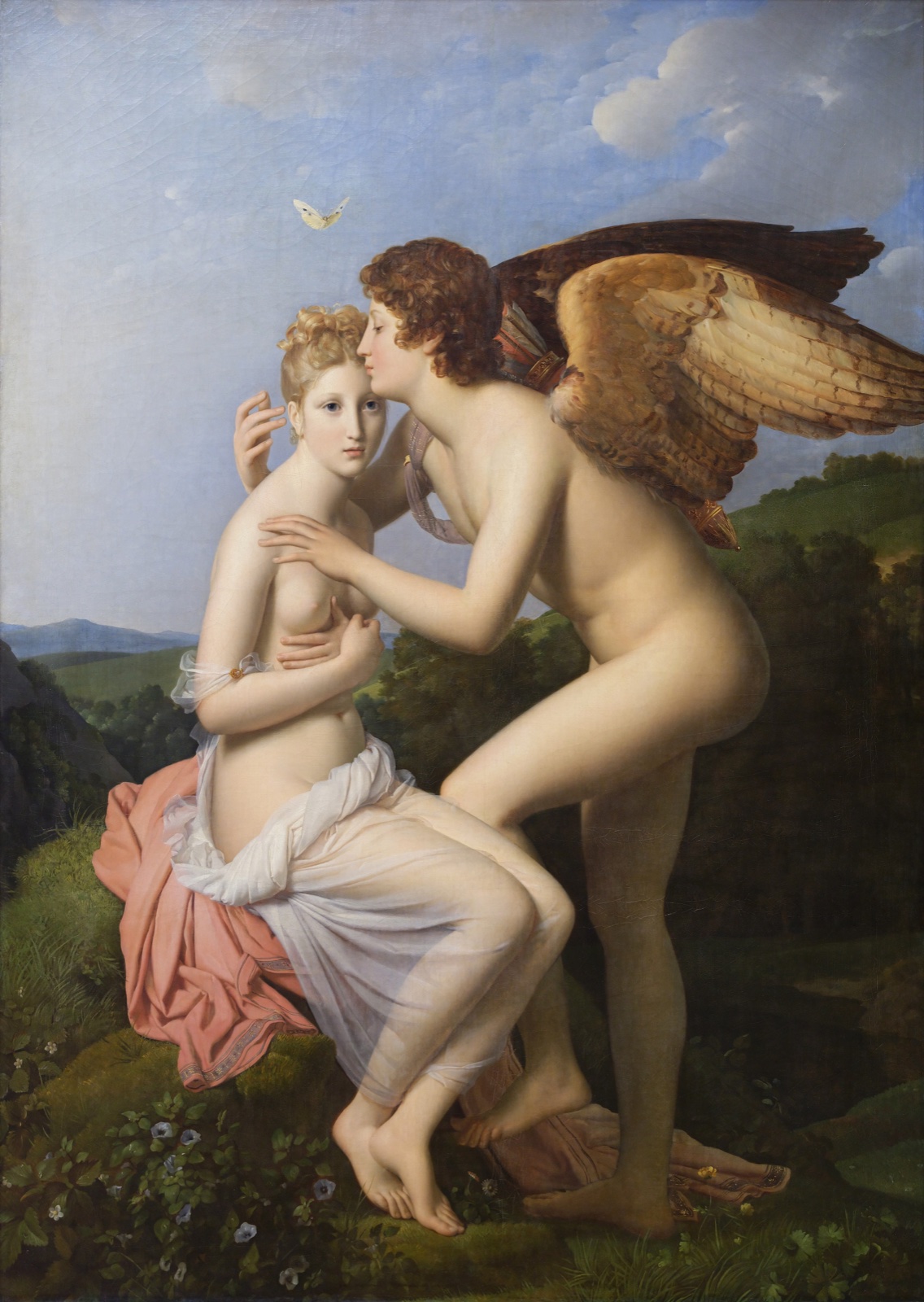
The image returned in Neoclassical Paris. François Gérard showed Psyché et l'Amour, also called Psyche Receiving the First Kiss of Love, at the Salon of 1798; the Louvre acquired it at public auction in 1822, and it is held in the Department of Paintings as INV 4739[14]. Above Psyche's head a butterfly hovers as the sign of her soul[15], foreshadowing the soul she will embody as a Goddess[16].
Modern biology has returned to the oldest question the butterfly poses, whether anything survives the dissolution of the body. The memory experiment of 2008 showed that a learned aversion can cross metamorphosis[4]. The same insects are now in danger: the FAO warns that 40 percent of invertebrate pollinator species, particularly bees and butterflies, face extinction[17].
In Zevist Contemplation
The Zevist takes the butterfly as the discipline of transformation: patient feeding, sealed withdrawal and the rise of the winged soul. These practices belong to daily life and need no priest.
- The 3 states. At the start of meditation, name honestly where the soul stands: feeding as the caterpillar, sealed as the chrysalis, or rising as the winged imago. Each state has its right work, and the Zevist does that work without forcing the next.
- The sealed chrysalis. Sit in stillness with the senses drawn inward, as the chrysalis has no mouth and takes no food. Let the breath slow and let old forms of thought dissolve without holding on to them, trusting the discs of the divine form within.
- The wings at the shoulders. Bring the attention to the shoulder chakras and visualize 2 pairs of luminous wings unfolding from them as the chest opens with each inhalation. This is the image of spiritual freedom, power given to the soul by the work already done.
- The heart of Psyche. Hold the image of Psyche and Eros at the heart chakra, and let desire turn toward the divine. Conduct follows: what the soul loves, it becomes, and Arete is love of the highest made into habit.
The myth of Psyche is told in full on the page of Eros; the ascent it pictures is taught in Becoming as the Gods, and the bee, the soul at ordered work, is its partner among the small sacred creatures.
Continue exploring
Related Pages
- The Gods: Eros
- The Gods: Zeus
- The Gods: Hermes
- Teaching: Becoming as the Gods
- Sacred Animal: The Bee of Zeus
- Sacred Animal: The Scarab of Khepri
- Previous: The Bee of Zeus
- Next: The Scarab of Khepri
- All 32 Sacred Animals
- All symbols