





14 min read
The Bee of Zeus
author: High Priest Zevios Metathronos
μέλισσα (mélissa)
Nurse of Zeus, voice of Delphi, born of the tears of Ra: the bee as the soul at ordered work.
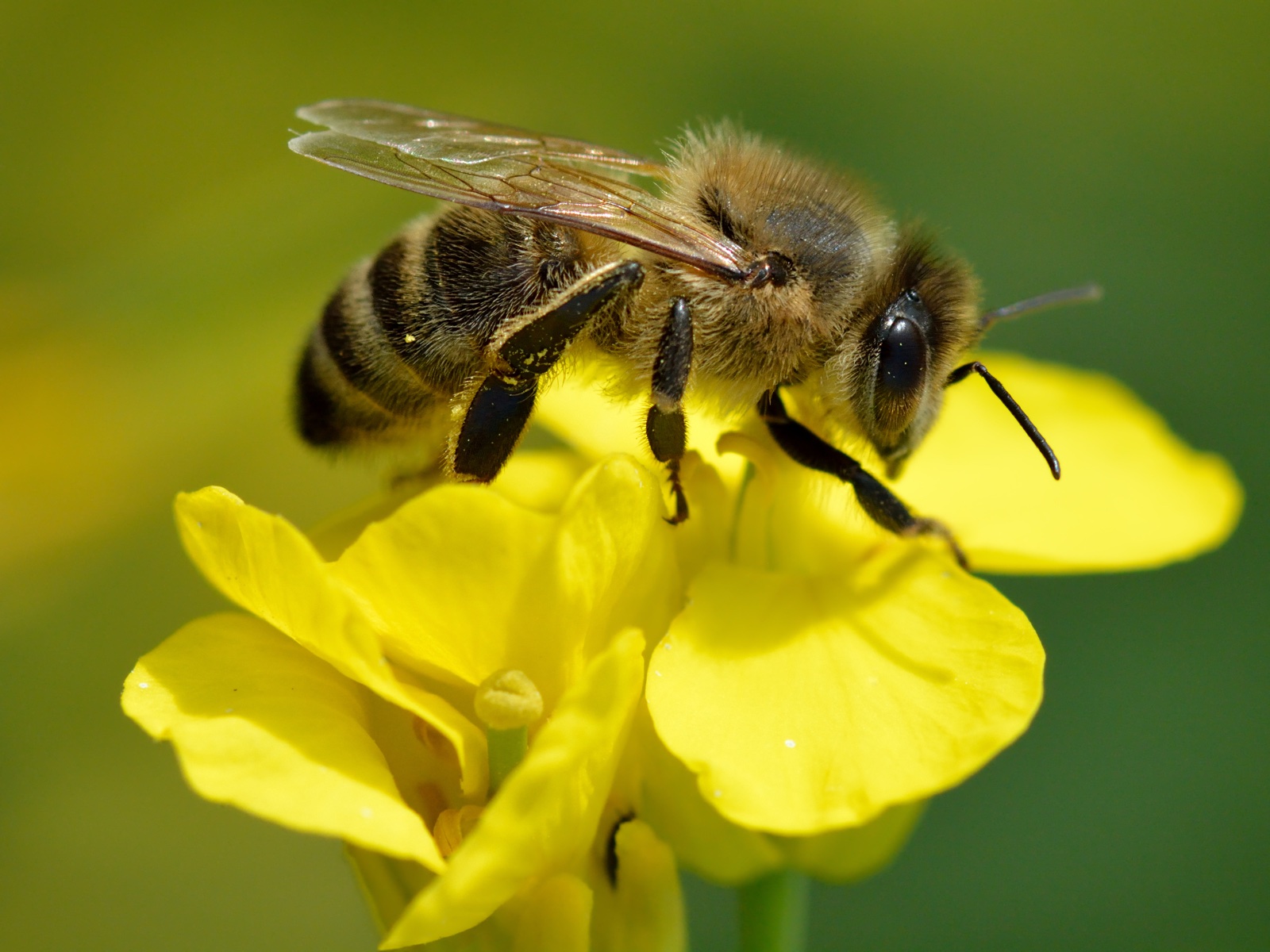
Ivar Leidus · CC BY-SA 4.0 · Wikimedia Commons

The bee fed the infant Zeus in a Cretan cave, gave its name to the priestesses of Demeter and Artemis, and was born, the Egyptians wrote, from the tears of Ra. In Zevism it is the image of the soul that works in order, gathers sweetness from the world and builds by geometry.
| Realm | The Small Sacred Creatures |
|---|---|
| Greek | μέλισσα (mélissa) |
| Latin | apis |
| Other Names | Greek melissai (priestesses), essēnes ("king bees", priests of Artemis at Ephesus) |
| Species | Apis mellifera (western honey bee) |
| Gods | Zeus, Demeter, Artemis of Ephesus, Apollo, Ra (Amun-Ra), Kama |
| Material Capacity | Hexagonal comb of least wax, the waggle dance that maps the sun, pollination of crops |
| Spiritual Capacity | Ordered work of the soul; nourishment of the hidden divine spark; sacred speech |
| Element and Sphere | Air and Sun; the cave, the flower and the hive |
The Living Animal
The bee of the tradition is the western honey bee, Apis mellifera, an insect that lives only in a colony. In late spring and summer a colony holds 1 queen, several thousand workers and several hundred drones, and its efficiency rises with its numbers up to roughly 60,000 workers[1]. At her peak the queen may lay up to 1,500 eggs a day and 250,000 in a year, and she can live up to 5 years[1].
The workers carry the life of the hive. They live about 6 weeks in summer, while workers reared in autumn can live up to 6 months[1]. Their duties follow their age: in the first weeks they clean cells, feed the brood, tend the queen, build comb, guard the entrance and fan the air; only then do they fly out as foragers for nectar, pollen, water and propolis[1]. Only workers have working wax glands; queens and drones lack them. The egg hatches on day 3, and a worker emerges about 12 days after her cell is capped[1].
The comb is built of hexagons. Pappus of Alexandria saw in the bees "a certain geometrical forethought": cells must touch so that no foreign matter can enter between them, only 3 regular figures close the plane, and of these the hexagon "will hold more honey for the same expenditure of material" than the square or the triangle[2]. In 1999 Thomas Hales published the first general proof of the honeycomb conjecture, that the regular hexagonal grid divides the plane into equal areas with the least total perimeter, and he names Pappus's preface to Book 5 as the ancient statement of the problem[3]. The sacred geometry of the hive is thus a proven optimum.
The forager speaks with her body. Karl von Frisch showed that a bee returning from near food runs in close circles, the round dance, while a bee returning from distant food makes a straight run marked by tail-wagging movements[4]. On the vertical comb the angle of that run from the vertical gives the angle of the food from the sun: if the goal lies 40 degrees left of the sun, the dancer turns her straight run 40 degrees left of the vertical[4]. Distance is told by duration; for goals from 200 to 4,500 m the waggle run lengthens from about 0.5 second to about 4 seconds[4].
Bees also read the polarization of the sky, which to human eyes is a uniform blue but to them is "distinctly patterned", and from it they find the sun when it is hidden[4]. For these discoveries von Frisch received one third of the Nobel Prize in Physiology or Medicine of 1973[5]. The FAO states that 3 out of 4 crops across the globe depend at least in part on bees and other pollinators[6].
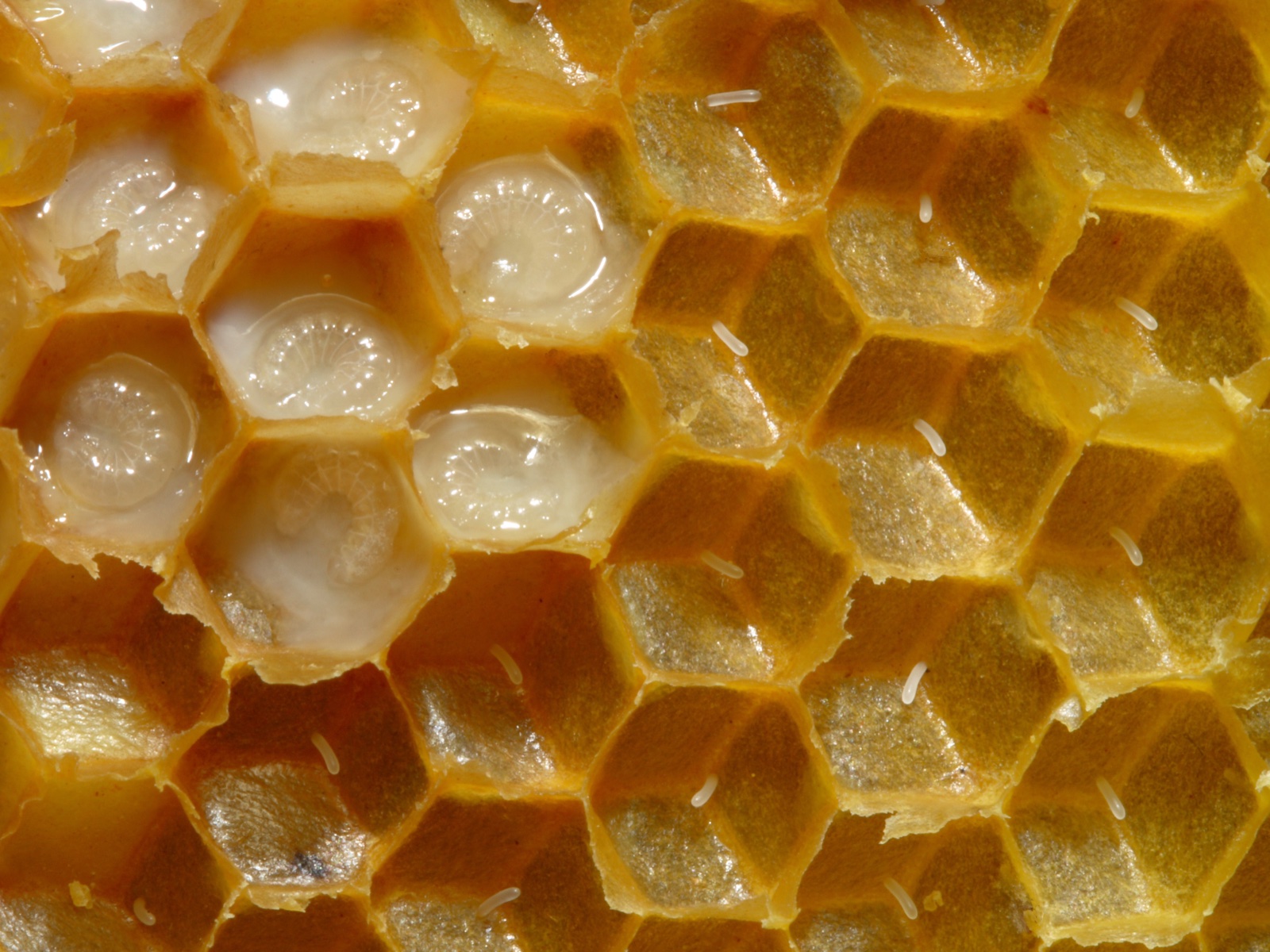
Waugsberg (talk · contribs) · CC BY-SA 3.0 · Wikimedia Commons

The Spiritual Capacity
In Zevism the bee is the soul at ordered work. It takes from the flowers of the world only what it can turn into sweetness and into the substance of light, and it carries what it gathers home to a common store. The hive lives by Ma'at: each member has its task by age and season, and thousands of bodies keep one heat and one purpose. A colony that loses its order dissolves, and in that collapse the Zevist sees Izfet at the scale of a single hive.
The bee is first the nurse of Zeus. Antoninus Liberalis records a sacred cave of bees in Crete where Rhea bore Zeus, a place no God or mortal might approach, guarded by "the sacred bees that were the nurses of Zeus"[7]. Virgil adds that Jupiter gave the bees their natures as the reward for feeding the king of heaven in the Dictaean cave[8]. In the Temple's teaching the bee therefore belongs to the hour when the sovereign power is still hidden and growing: it feeds the divine spark in the cave of the heart before that spark rules.
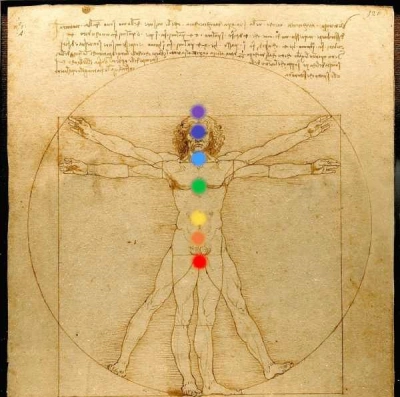
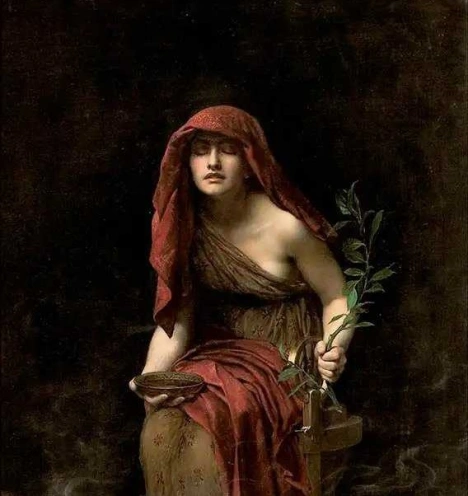
The bee is also the bearer of sacred speech. Pindar calls the oracle of Delphi the voice of "the Delphic bee"[9]. Porphyry writes that the ancients called the priestesses of Demeter bees, called Persephone "honied", called the Moon a bee, and gave the name of bees to souls coming into generation who live justly[10]. The Zevist reads here the throat chakra joined to the Third Eye: the hum of the hive is breath shaped into ordered sound, and the oracle is knowledge from above carried into words. See The Chakras.
Honey and wax are the 2 fruits of this work. Honey is sweetness concentrated from countless flights, and wax is the body of the hive and the fuel of the lamp; Egypt said both came "out of the tears of the god Re"[11]. In the Temple's teaching the solar chakra, the Grail, is the hive of the soul: what the senses gather by day is carried inward, refined and stored as power.
Where Matter and Spirit Meet
Each spiritual capacity of the bee has a visible form in the living insect. 5 of them show the bond most clearly.
- The hexagon and the economy of virtue. The hexagonal cell holds the most honey for the least wax[2], an optimum proved for the plane only in 1999[3]. The Zevist sees in it the form of Arete: the greatest inner store built with the least waste of force, by right proportion and never by excess.
- The dance and the solar bearing. In the dark hive the forager turns the angle of the Sun outside into an angle on the vertical comb[4]. This is the work of the Third Eye: the soul, enclosed in the darkness of the body, keeps its bearing on a Sun it cannot see and leads others to the source.
- The polarized sky and inner sight. Bees find the sun behind cloud by a pattern in the blue that human eyes cannot see[4]. The awakened soul does the same with the order of the Gods, perceiving a structure where ordinary sight finds only an even surface.
- Duties by age and the order of the path. A worker cleans, nurses, builds and guards before she flies to the fields[1]. The Zevist path keeps the same order: purification and care of the inner life come first, and the outward flight of power follows.
- Pollination and the gift returned. 3 out of 4 crops depend in part on pollinators[6]. The bee takes nectar and gives back fruit; in Zevism this is the law of the worship of the Gods, in which what is received is returned with increase and the world flowers from the exchange.
The Gods and Their Many Names
The bee stands beside the Gods at 3 points: where divine life is nourished, where truth is spoken, and where light is born. In the Temple's teaching these are one sovereign order seen in many lands. Zeus nursed by bees in Crete is the Head God whom Egypt worshipped as Amun, Zeus Ammon; the bee of Egypt was born from the tears of Ra, the sun God with whom Amun was joined as Amun-Ra. Demeter of the bee-priestesses is the Ceres of Rome and the Isis of Egypt; Artemis of Ephesus is Diana; Apollo of the Delphic bee is Helios.
| Civilization | God | The Bond with the Animal | Witness |
|---|---|---|---|
| Crete | Zeus, the Head God (Jupiter) | The sacred bees nursed the infant in the cave where Rhea bore Him; thieves who came for the honey were turned into birds | Antoninus Liberalis 19[7]; Virgil, Georgics 4.149-152[8] |
| Hellas | Demeter (Ceres, Isis) and Persephone | Demeter's priestesses were called bees; Persephone was called "honied" | Porphyry, On the Cave of the Nymphs 18[10] |
| Ionia (Ephesus) | Artemis Ephesia (Diana) | The bee alone on the city's silver; Her priestesses called bees, Her priests the Essenes, "king bees" | Pausanias 8.13.1[12]; ACANS, Macquarie[13] |
| Delphi | Apollo (Helios) | The oracle speaks as "the Delphic bee" | Pindar, Pythian 4.60[9] |
| Egypt | Ra (joined with Amun, Zeus Ammon, as Amun-Ra) | His tears fell to earth and became the bee; from them came wax and honey | Papyrus Salt 825, British Museum EA10051,4[14] |
| India | Kama, God of love (the Indian counterpart of Eros) | His bow is of sugarcane and His bowstring a row of bees | Encyclopaedia Britannica, "Kama"[15] |
The 2 shores of the eastern Mediterranean tell one teaching. In Crete the bee feeds the sovereign God; in Egypt the bee is born from the sovereign God's tears. Life passes from the God to the bee and from the bee to the God, and honey is the token of that exchange. On Crete itself the gold pendant from the Chrysolakkos cemetery at Malia, made between 1800 and 1700 BC with filigree and granulation, shows 2 insects that Arthur Evans identified as bees[16].
The priesthoods carry the same bond into human service. At Ephesus the priests of Artemis were called Essenes, "king bees", and served a year-long term under strict rules of purity, and Her priestesses were called melissai, bees[13]. The gloss "king bee" for essēn goes back to the Byzantine lexica[17]. Those who served the Gods in purity were named after the insect that lives wholly by order.
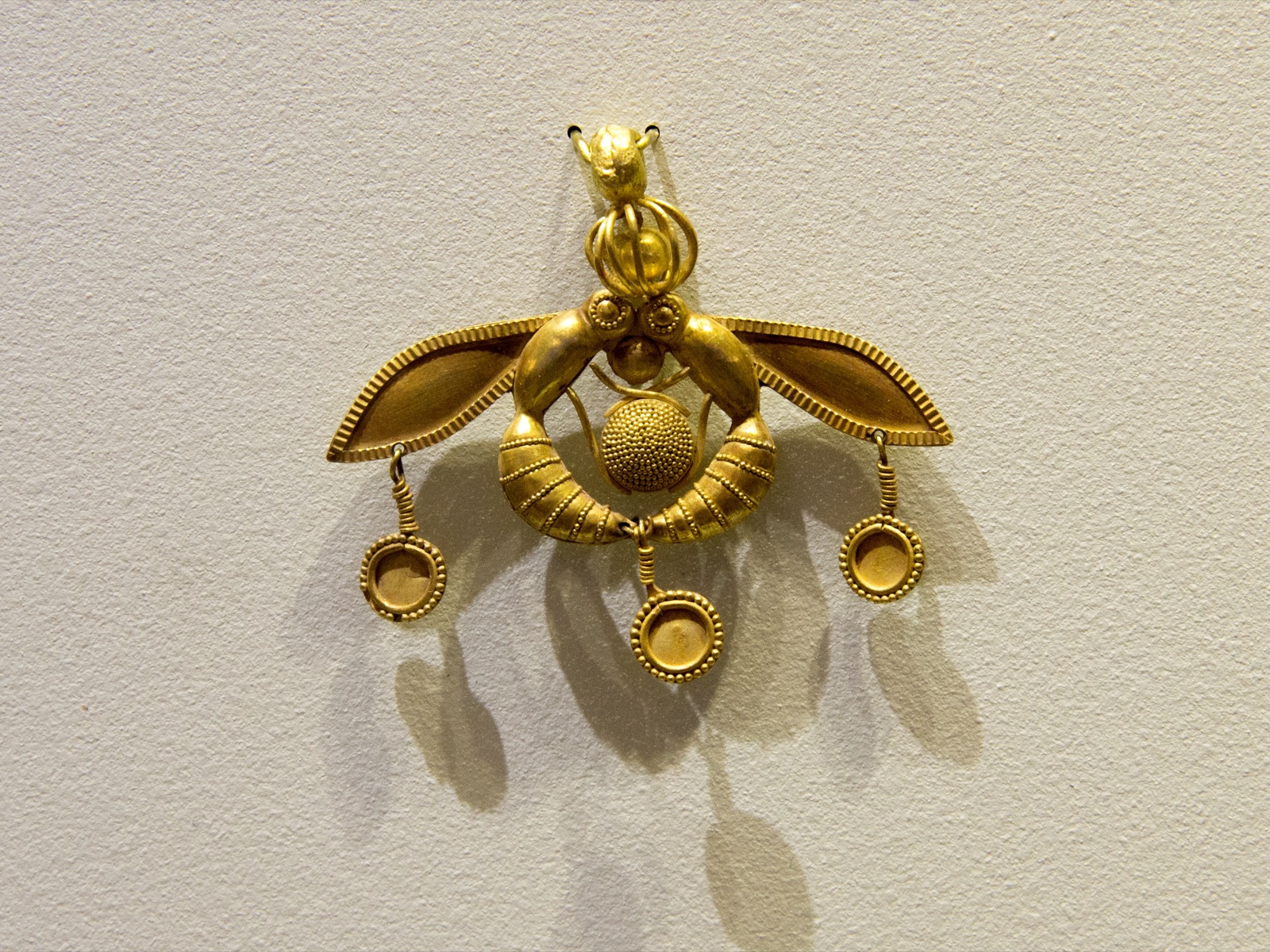
Zde · CC BY-SA 4.0 · Wikimedia Commons

Ancient Witnesses
3 witnesses from 3 civilizations: Pindar at the sanctuary of Delphi, Virgil at Rome, and a ritual papyrus of Ptolemaic Egypt.
ὦ μάκαρ υἱὲ Πολυμνάστου, σὲ δʼ ἐν τούτῳ λόγῳ
χρησμὸς ὤρθωσεν μελίσσας Δελφίδος αὐτομάτῳ κελάδῳ·
ἅ σε χαίρειν ἐς τρὶς αὐδάσαισα πεπρωμένον
βασιλέʼ ἄμφανεν Κυράνᾳ,Blessed son of Polymnestus, in this telling the oracle of the Delphic bee raised you up with its unbidden cry: she hailed you thrice and showed you as the king destined for Cyrene.
The Odes of Pindar, ed. Sir John Sandys (Cambridge, MA and London, 1937) · Translation: Temple of Zeus. Text: Perseus Digital Library edition.
Virgil, Georgics 4.149-152 [8]
Nunc age, naturas apibus quas Iuppiter ipse
addidit, expediam, pro qua mercede canoros
Curetum sonitus crepitantiaque aera secutae
Dictaeo caeli regem pavere sub antro.Come now, I shall unfold the natures that Jupiter Himself gave to the bees, the reward for which, following the ringing sounds and the clashing bronze of the Curetes, they fed the king of heaven beneath the Dictaean cave.
The Bucolics, Aeneid, and Georgics of Virgil, ed. J. B. Greenough (Boston, 1881) · Translation: Temple of Zeus.
Papyrus Salt 825 (British Museum EA10051,4), Ptolemaic Period [11]
The god Re wept and the tears from his eyes fell on the ground and turned into a bee.
The bee made [his honeycomb] and busied himself with the flowers of every plant;
And so wax was made and also honey
Out of the tears of the god ReEnglish translation by Leek (1975), p. 148, as quoted by Z. Shoosmith, Birmingham Egyptology · The original line is the published English translation (Leek 1975); the second rendering is the Temple of Zeus paraphrase. No transliteration given.
Universal Significance
The bee entered coinage early. Ephesus placed the bee alone on the obverse of its early silver[13], and a silver drachma of about 202 to 170 BC in the Australian National University's Classics Museum still shows the bee between the letters Ε and Φ, with a stag before a palm tree on the reverse[18].
Modern heraldry took the bee from a royal grave. In 1653 golden ornaments were found at Tournai in the tomb of the Frankish king Childeric I; they were taken for bees, though they were in fact cicadas[19]. The physician Jean-Jacques Chifflet argued that they were bees and the ancestors of the fleur-de-lys, a theory disputed at the time[20]. When Napoleon founded his Empire, Cambacérès proposed bees, calling France "a republic with a head, like a hive"; the bee was chosen as a symbol of immortality and resurrection, to link the new dynasty to the origins of France, and the imperial mantle was scarlet velvet spread with bees[19].
Rome carries 3 bees on the arms of the Barberini. Maffeo Barberini became Pope Urban VIII in 1623, and Bernini's bronze baldacchino over the high altar of St Peter's bears Barberini bees and laurel on its columns and 8 Barberini shields with 3 bees on its plinths[21].
The beehive became the emblem of industry. Utah made the beehive its official state emblem on 4 March 1959 as "a symbol of hard work and industry", and its state motto is the single word "Industry"[22]. The FAO marks World Bee Day each year on 20 May[23].
Modern science has twice crowned the bee. Von Frisch's decoding of the dance won a share of the Nobel Prize of 1973[5], and Hales's proof of 1999 confirmed with full rigour the geometry Pappus had praised[3]. The same FAO statement that sets the value of pollinators warns that 40 percent of invertebrate pollinator species, bees and butterflies above all, face extinction[6].
In Zevist Contemplation
The Zevist takes the bee as a discipline of order, of breath and of sweetness gathered from experience. The following practices belong to daily life and need no priest.
- The hum in the breath. Sit upright, inhale slowly, and exhale with a low hum through closed lips, feeling the vibration rise from the throat into the head. Hold the attention between the brows: the throat chakra gives the sound and the Third Eye receives it, as the oracle's voice joined speech to sight.
- The golden cell. Visualize a hexagonal cell of golden light at the solar chakra and see it fill, breath by breath, with light like honey. Each of the 6 walls is a virtue kept in daily conduct; the cell holds only as long as all 6 stand.
- The cave of Dikte. Picture the heart as the Cretan cave where the infant God is nursed by bees. Each act of study, worship and right conduct is a drop of honey brought to the divine spark within, which grows in hiding before it rules.
- The conduct of the forager. Take from the world without harming its flowers, return what is received with increase, and keep the order of the work: first the inner tasks of purification, then the outward flight. This is the bee's Ma'at made into a rule of life.
The bee's partner in the small sacred creatures is the butterfly, the soul in its metamorphosis; its geometry continues in Sacred Geometry.
Continue exploring
Related Pages
- The Gods: Zeus
- The Gods: Artemis
- The Gods: Apollo
- The Gods: Amon Ra
- Sacred Animal: The Butterfly of Psyche
- Sacred Animal: The Scarab of Khepri
- Previous: The Tortoise of Hermes
- Next: The Butterfly of Psyche
- All 32 Sacred Animals
- All symbols