




13 min read
The Crocodile of Sobek
author: High Priest Zevios Metathronos
κροκόδειλος (krokódeilos)
Sobek of the Nile, the Makara of Varuna and Ganga, and the power of the deep that Horus stands upon.
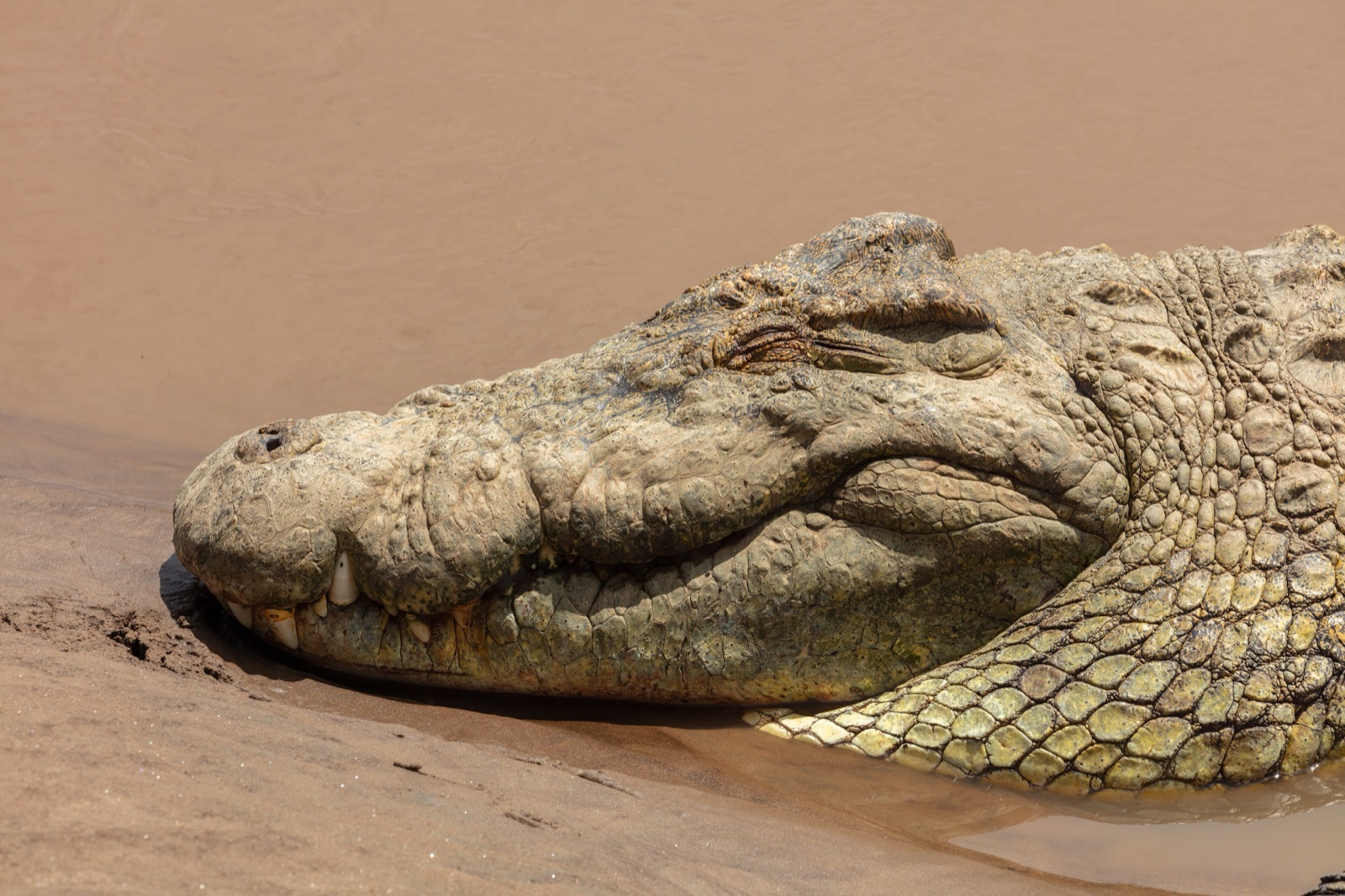
Diego Delso · CC BY-SA 4.0 · Wikimedia Commons
,_reserva_natural_Mas%C3%A1i_Mara,_Kenia,_2024-05-20,_DD_70.jpg)
The crocodile has held the edge between land and water for over 85 million years[1], and Egypt saw in it the power of the Nile itself. In Zevism the crocodile is the force of the deep waters: devouring when it is loose, sovereign when it is bound by Ma'at and joined to the Sun, as Sobek became Sobek-Ra and as Horus stands upon the crocodiles.
| Realm | Creatures of the Waters and the Depths |
|---|---|
| Greek | κροκόδειλος (krokódeilos); Egyptian χάμψαι (chámpsai) in Herodotus |
| Latin | crocodilus |
| Other Names | Egyptian Sobek (Greek Souchos); Sanskrit makara |
| Species | Crocodylus niloticus (Nile crocodile) and the other crocodilians |
| Gods | Sobek, Sobek-Ra, Haroeris, Horus the Child, Varuna, Ganga |
| Material Capacity | The strongest bite measured in any animal; a 4-chambered heart; jaws that carry the young |
| Spiritual Capacity | The power of the deep waters, bound by Ma'at and raised to the Sun |
| Element and Sphere | Water and earth; the river and its bank; the threshold of the temple |
The Living Animal
The sacred crocodile of Egypt is the Nile crocodile, Crocodylus niloticus. Adult males usually measure between 3.5 and 5 m[2], and the largest reach about 20 feet and weigh up to 1,650 pounds[3]. The species lives throughout sub-Saharan Africa, the Nile Basin and Madagascar, in rivers, freshwater marshes and mangrove swamps; it eats mainly fish but also takes large prey, and a single meal can equal half its own weight[3].
Its jaws are the strongest measured in the animal world. In 2012 Gregory Erickson and his colleagues measured bite forces across all 23 living crocodilian species, using 83 adult animals, and recorded 16,414 newtons in a saltwater crocodile, the highest bite force measured in any animal[1]. The authors judged this bite architecture critical to the long success of a lineage that has dominated the predatory niches at the water-land interface for over 85 million years[1], since the Cretaceous, the last period of the Mesozoic.
Within the armoured body lies a refined physiology. The Nile crocodile has a 4-chambered heart, modified for its cold-blooded life by an elongated cardiac septum[2]. The sex of each hatchling is fixed by the temperature at which the egg incubates[2].
The jaws that kill are also the gentlest in the river. Both parents guard the nest until the eggs hatch, and they often roll the eggs gently in their mouths to help the young break free[3]. After an incubation of about 90 days, the female may lead the hatchlings to the water or carry them there in her mouth[2]. Hunting nearly wiped the species out in the mid-20th century; protection has since restored it in most areas, and the IUCN Red List now ranks it as Least Concern[3].
The Spiritual Capacity
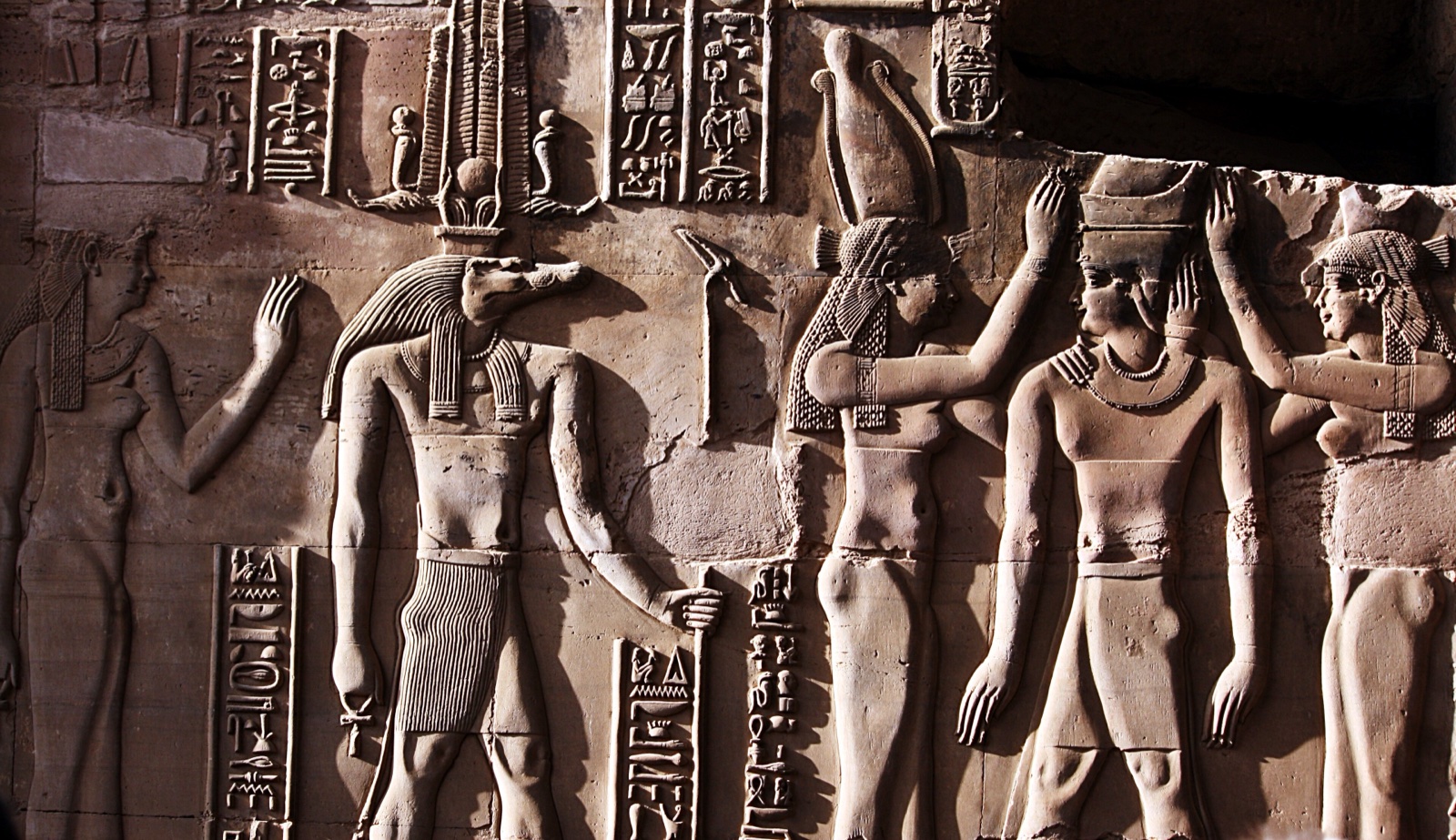
Egypt gave the crocodile to Sobek. The God is first known from Pyramid Texts of the Old Kingdom; He was invoked to protect people from the dangers of the Nile and was bound to pharaonic power, fertility and military prowess[4]. In later ages He was joined to the Sun as Sobek-Ra, a fusion of Sobek with Ra[4].
In the Temple's teaching the crocodile is the force of the deep waters of the soul: the instinctive power that lies below the surface of consciousness, at the base chakra, vast and patient. Left to itself this force devours, and Herodotus records that some Egyptians held crocodiles sacred while others treated them as enemies[5]. Bound by Ma'at, it becomes the strength of the ruler and the fertility of the river, and Sobek-Ra shows the end of the work: the power of the depths raised to the Sun, the soul's own solar chakra.
Horus completes the teaching. On healing stelae of the Late Period such as the Metternich Stela, Horus the Child stands with His feet on 2 crocodiles and holds snakes and scorpions in His fists[6]. The awakened soul stands upon the forces of the deep and rules them, and from that standing flows the power to heal.
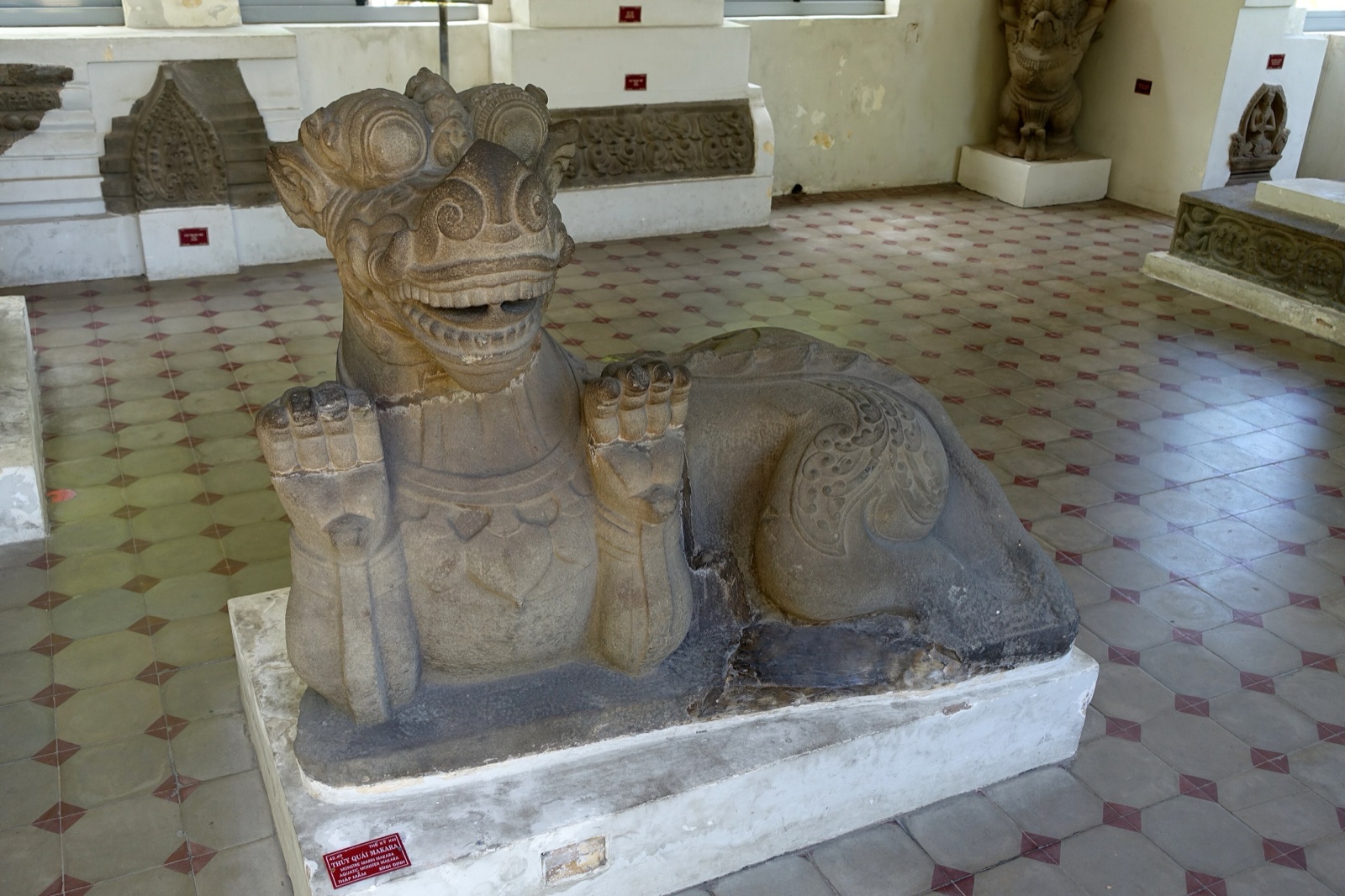
The Makara of India carries the same power to the thresholds. It is the mount of Varuna, God of the ocean, and of Ganga, the river Goddess[7], and it guards the gateways of temples[7]. The Zevist reads it as the guardian of passage between the outer world and the sanctuary, the point where the waters of the soul are crossed.
Egypt also gave the crocodile to the dead. In chapter 88 of the Book of the Dead the justified soul, named as Osiris, takes the form of the sacred crocodile and is honoured as a lord in Sekhem[8]. The power that the living fear becomes, in the afterlife, a form the purified soul can wear; the Temple's teaching on that passage is set out in The Afterlife and Death.
Hedwig Storch · CC BY-SA 3.0 · Wikimedia Commons

Where Matter and Spirit Meet
The crocodile's body shows, capacity by capacity, the spiritual power it carries. 5 of its living traits speak most plainly.
- The strongest bite and the gentlest carrying. The same family of jaws that exerts 16,414 newtons[1] lifts the eggs and carries the hatchlings to the water[3][2]. This is Arete in its purest image: the greatest power held under the greatest control, so that strength becomes protection.
- The water-land interface and the threshold of the soul. For 85 million years the crocodilians have ruled the edge where land meets water[1]. The soul has its own such edge, between the conscious mind and the depths below it, and the crocodile is its guardian; the Makara at the temple gate keeps the same post.
- The 4-chambered heart and the ordered centre. Beneath the scales of a cold-blooded reptile beats a heart of 4 chambers[2]. The heart chakra is the place where the raw force of the base is ordered before it rises, and Ma'at rules the soul from the centre outward.
- The guarded nest and the virtues being born. Both parents keep watch over the nest until the eggs hatch[3]. What is newly forming in the soul, a virtue not yet firm or a practice not yet rooted, needs the same unbroken guard until it can live in the open water.
- The endurance of the lineage and the unbroken chain. The crocodilian line has held its place at the water's edge for over 85 million years[1]. Zevism holds itself the chain of all spirituality from its inception, and the crocodile is the living image of a power that endures through every age because it is founded in the oldest order.
The Gods and Their Many Names
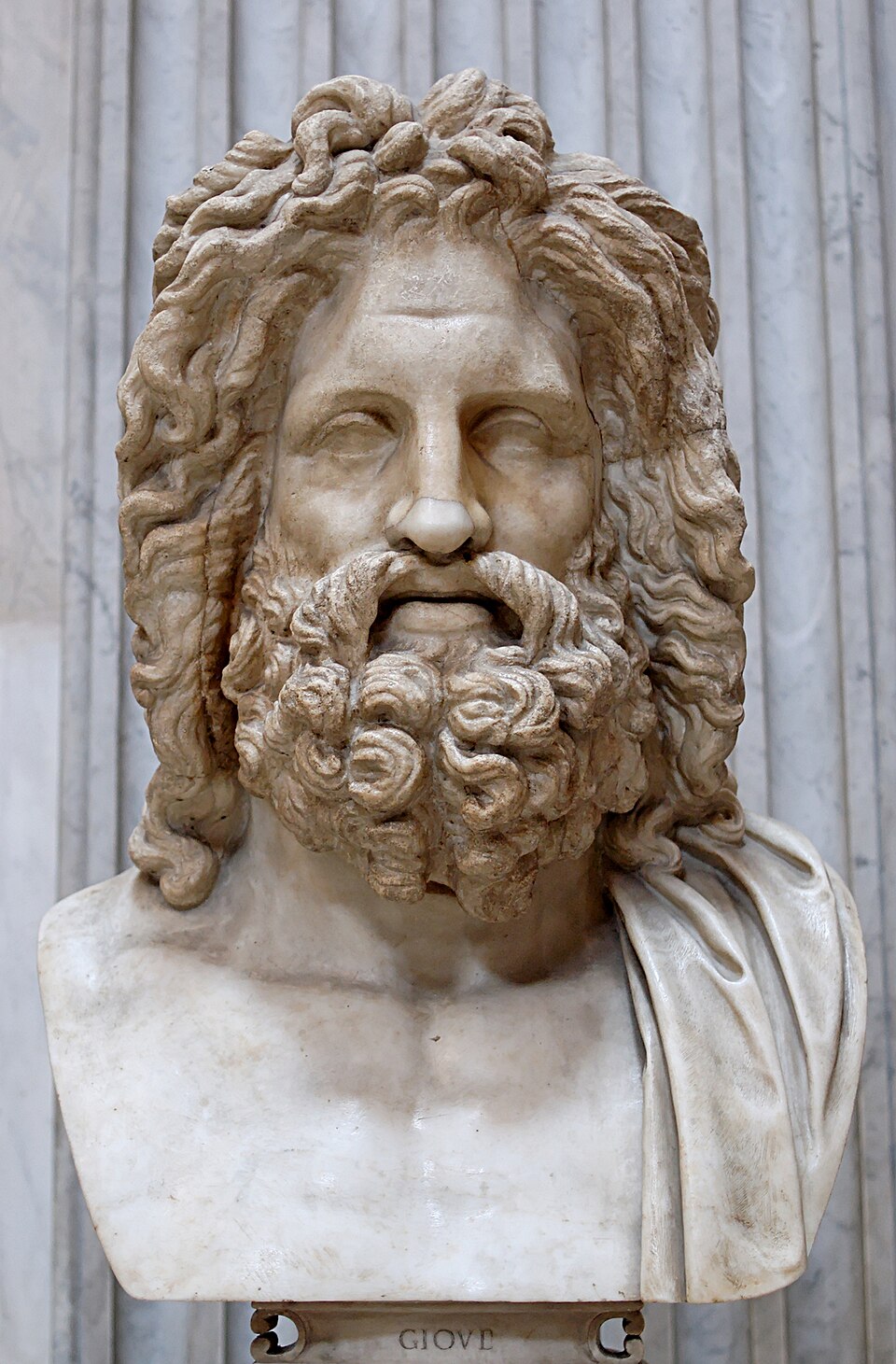
The crocodile belongs to the powers of the waters and to the Sun that masters them. In the Temple's teaching Varuna, whose mount is the Makara, is Poseidon, Neptune and Enki, and Sobek joined to Ra brings the crocodile under the solar sovereignty of Amun-Ra, whom the Temple knows as Zeus. Horus the Child, who stands on the crocodiles, answers to the God whom the Greeks called Apollo, as Herodotus already wrote[5].
| Civilization | God (and the Temple's identity) | The Bond with the Animal | Witness |
|---|---|---|---|
| Egypt, the Faiyum | Sobek of Shedet (Crocodilopolis, later Arsinoe) | A sacred crocodile named Souchos lives in a lake, tame to the priests, fed with grain, meat and wine | Strabo 17.1.38[9]; Sobek[4] |
| Egypt, Thebes and Lake Moeris | Sobek | 1 crocodile is trained to be tame, adorned with earrings and bracelets, and embalmed in sacred tombs at death | Herodotus 2.69.1-2[5] |
| Egypt, Kom Ombo | Sobek and Haroeris (Horus the Elder) | A double temple: the southern half for the crocodile God, the northern for the falcon God, begun by Ptolemy VI | Temple of Kom Ombo[10] |
| Egypt, Late Period | Horus the Child (Apollo to the Greeks) | Stands on 2 crocodiles on the magical stelae, holding snakes and scorpions; 13 spells against bites | Metternich Stela, Met 50.85[6] |
| Egypt, Book of the Dead | Osiris (Dionysus), as the justified dead | The dead, named Osiris Ani, takes the form of the sacred crocodile, lord of homage in Sekhem | Chapter 88, Papyrus of Ani[8] |
| India | Varuna (Poseidon, Neptune, Enki) | The Makara is the mount of the God of the ocean | Makara[7] |
| India | Ganga | The river Goddess rides the Makara | Makara[7] |
The thread is the same from the Faiyum to the Ganges. The crocodile is the creature of the water that gives life and takes it, and so it belongs to the Gods who rule the waters: Sobek of the Nile, Varuna of the ocean, Ganga of the sacred river. In each land a higher power stands over it, Ra joined to Sobek, Horus upon the crocodiles, the deity enthroned upon the Makara, and that order is the condition of its holiness.
Herodotus shows the other side. Around Elephantine, he writes, men ate crocodiles and did not hold them sacred[5]. The same animal was a God in one nome and prey in another: power honoured where it was bound to the temple, power fought where it was not.
Daderot · CC0 · Wikimedia Commons

Ancient Witnesses
3 witnesses follow: Herodotus on the tame crocodiles of Thebes and Lake Moeris, Strabo on the sacred crocodile of Arsinoe, which he saw fed by its priests, and the Egyptian Book of the Dead on the transformation of the dead into the sacred crocodile. The Egyptian witness is given in the public-domain English of E. A. Wallis Budge.
Herodotus, Histories 2.69.2 [5]
ἐκ πάντων δὲ ἕνα ἑκάτεροι τρέφουσι κροκόδειλον δεδιδαγμένον εἶναι χειροήθεα, ἀρτήματά τε λίθινα χυτὰ καὶ χρύσεα ἐς τὰ ὦτα ἐνθέντες καὶ ἀμφιδέας περὶ τοὺς ἐμπροσθίους πόδας, καὶ σιτία ἀποτακτὰ διδόντες καὶ ἱρήια, καὶ περιέποντες ὡς κάλλιστα ζῶντας· ἀποθανόντας δὲ θάπτουσι ταριχεύσαντες ἐν ἱρῇσι θήκῃσι.
Out of all of them, each of these peoples keeps one crocodile, trained to be tame. They put earrings of molten stone and gold in its ears and bracelets on its forefeet, give it appointed food and offerings, and tend the animals as finely as possible while they live; when they die, they embalm them and bury them in sacred tombs.
Herodotus, ed. A. D. Godley (Loeb, 1920) · The peoples around Thebes and Lake Moeris (2.69.1). Translation: Temple of Zeus.
σφόδρα γὰρ ἐν τῷ νομῷ τούτῳ τιμῶσι τὸν κροκόδειλον, καὶ ἔστιν ἱερὸς παρʼ αὐτοῖς ἐν λίμνῃ καθʼ αὑτὸν τρεφόμενος, χειροήθης τοῖς ἱερεῦσι· καλεῖται δὲ Σοῦχος· τρέφεται δὲ σιτίοις καὶ κρέασι καὶ οἴνῳ, προσφερόντων ἀεὶ τῶν ξένων τῶν ἐπὶ τὴν θέαν ἀφικνουμένων.
For in this nome they greatly honour the crocodile, and there is a sacred one among them, kept by itself in a lake and tame to the priests. It is called Souchos, and it is fed on grain, meat and wine, which the visitors who come to see it always bring.
Strabonis Geographica, ed. A. Meineke (Leipzig: Teubner, 1877) · Arsinoe in the Faiyum, formerly called the City of the Crocodiles. Translation: Temple of Zeus.
Book of the Dead, chapter 88 (Papyrus of Ani) [8]
I am the crocodile which dwelleth in terror, I am the sacred crocodile and I cause destruction. I am the great fish in Kamui. I am the lord to whom homage is paid in Sekhem.
E. A. Wallis Budge, The Book of the Dead: The Papyrus of Ani (London, 1895) · The Chapter of Changing into a Crocodile, spoken by Osiris Ani. Original: the English translation of E. A. Wallis Budge (1895), public domain; the translation sets his clauses in inverted order.
Universal Significance
The animal's name is Greek. Herodotus reports that the Egyptians called the creatures champsai, and that the Ionians named them krokodeiloi because they looked like the lizards in the stone walls of Ionia[5]. The same chapters give the first Greek natural history of the crocodile: it eats nothing for the 4 coldest months, lays its eggs on land, spends most of the day on dry ground and the night in the river, and lets the trochilus bird enter its open mouth to eat the leeches[5].
Strabo saw the cult with his own eyes. At Arsinoe, once called the City of the Crocodiles, his host brought a cake, roasted meat and honeyed wine; the priests opened the animal's jaws, put in the cake and the meat, and poured in the drink[9]. At Kom Ombo some 300 crocodile mummies were found near the temple, and a few are now shown in the Crocodile Museum[10]; at Karanis mummified crocodiles stood as cult images of Petsuchos[4].
Rome made the crocodile the emblem of Egypt itself. Coins of the colony of Nemausus, modern Nîmes, show a crocodile chained by the neck to a palm tree, with the heads of Augustus and Agrippa, marking the conquest of Egypt in 30 BC[11]. The phrase "crocodile tears" goes back to proverbs attributed to Plutarch and to the 14th-century travels of John Mandeville, and in 2007 Malcolm Shaner and Kent Vliet found that 5 of 7 caimans filmed while feeding did shed tears[12].
In India the Makara became a sign of the heavens: in Hindu astrology it is the 10th sign of the zodiac, equivalent to Capricorn[7]. Its head crowns the corners of temple roofs as the element of water, and Makara figures guard the toranas of Buddhist monuments and the shrines of the Khmer at Angkor[7].
In Zevist Contemplation
The Zevist contemplates the crocodile as the deep power of the soul brought under rule. The image is used to face the depths without fear and to raise their force toward the Sun.
- Horus upon the crocodiles. In meditation, see the self standing firm on 2 great crocodiles at the water's edge. The practice trains the mind to stand above fear and impulse, ruling them without denying their strength.
- The eyes above the water. Sit with the body wholly still and only the attention awake at the 6th chakra, as the crocodile lies with only its eyes above the surface. Stillness of the body and wakefulness of the Third Eye grow together.
- The jaws that carry. In conduct, use strength the way the mother crocodile uses her jaws: fully present and fully restrained. Every strong act should protect what is entrusted to it.
- Sobek-Ra. With slow breath, draw the force felt at the base of the spine upward to the solar chakra, the Grail, and hold it there as light. The practice mirrors the union of the crocodile God with the Sun, as taught in The Solar Chakra.
The crocodile has no symbol page of its own yet. Its Gods are presented on Horus, Poseidon and Maat, and the sacred eye of Horus on The Sacred Eye.
Continue exploring
Related Pages
- The Gods: Horus
- The Gods: Poseidon
- The Gods: Maat
- Symbol: The Sacred Eye
- Sacred Animal: The Serpent
- Sacred Animal: The Dolphin of Poseidon
- Sacred Animal: The Tortoise of Hermes
- Previous: The Dolphin of Poseidon
- Next: The Tortoise of Hermes
- All 32 Sacred Animals
- All symbols