













53 min read
Συνάφεια: Vibrational Energetic Matching
author: High Priest Zevios Metathronos
Getting Prayers Answered
The Greeks had a word for the bond through which the power of the Gods reaches a human being: συναφή, συνάφεια, the joining, from the verb συνάπτω, to fasten together, whose root ἅπτω also means to kindle. Proclus set it at the centre of perfect prayer, and Sallustius used its verb when he wrote that the good are joined to the Gods by likeness. Zevism names it Συνάφεια and teaches it as the condition of every answered prayer.
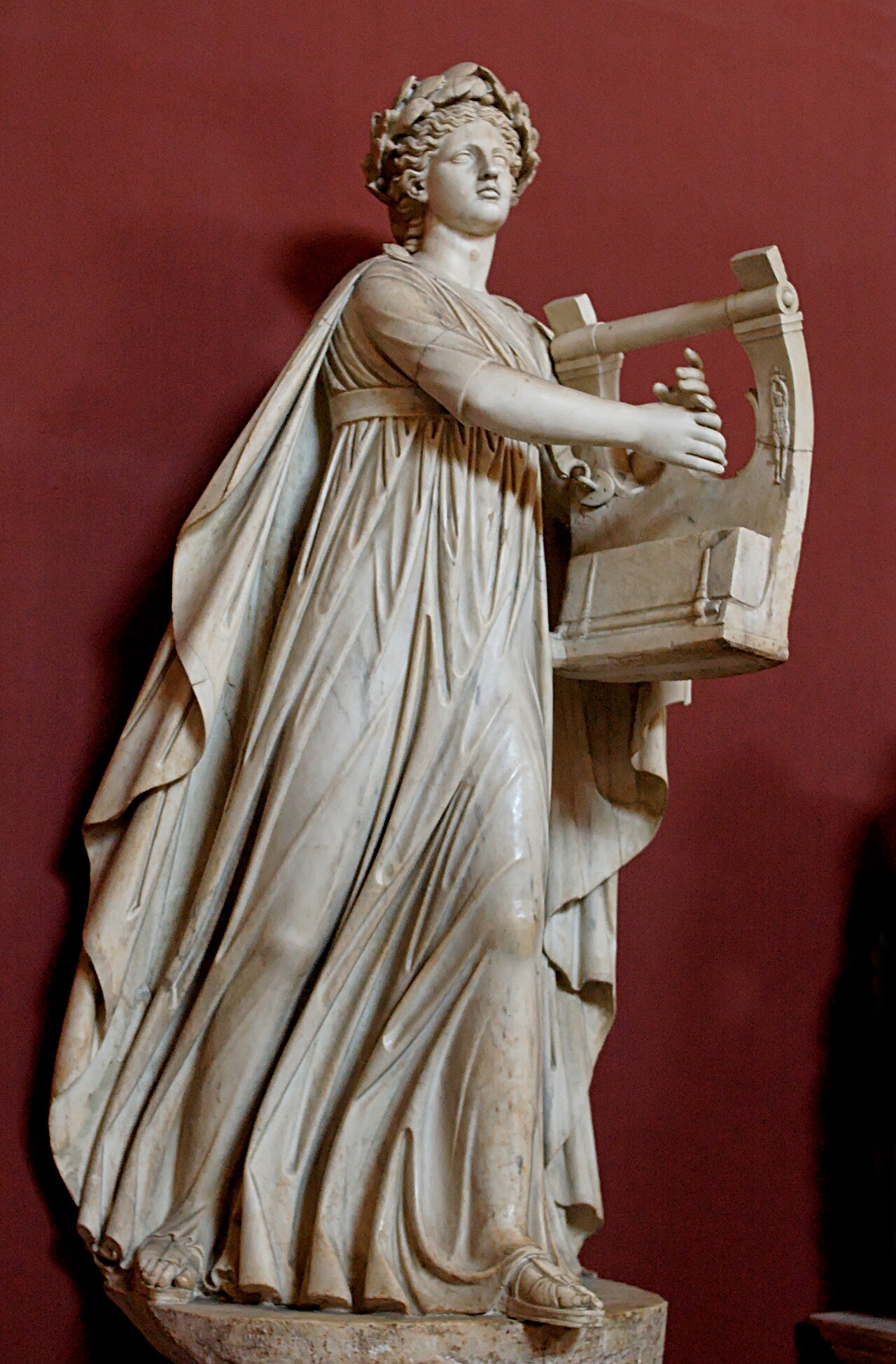
Roman marble, second century CE; Vatican Museums, inv. 310. Photograph: Jastrow (Marie-Lan Nguyen), 2006 / Wikimedia Commons, public domain, released by the photographer.

The Gods are always present and always give; what reaches a person depends on what the person has become. Synapheia is behavioural, existential and energetic: it lives in conduct shaped by the Ethics, in a life whose hours go to the Gods, and in a soul made like them through meditation and Theurgy.
This teaching sets out the word and the law of like to like; why God is always present and people are absent from God; how a soul vibrates in tune or out of tune with the Gods; why the prayer of a person who gives 2 hours a day to a short-video feed and none to the Gods finds no Synapheia to travel by; how meditation, Theurgy and the Ethics make a human being a conduit for divine energy, and what becomes of that energy in a chaotic vessel; how the Ancients prayed; what the Kybalion restates of the ancient doctrine; and how Synapheia is built, day by day.
Συνάφεια in Plain Words
The teaching has 5 parts, and each answers a plain question.
What it is. Synapheia is the living connection between a human being and the Gods, the channel their energy travels by. It exists to the degree that the person has become like the Gods: in conduct, in the shape of the life, and in the energy of the soul. A prayer, a rite or a wish can call on it, and time alone builds it, so a person has it, or lacks it, before saying the first word of any prayer.
Why prayers go unanswered. Proclus states the law: the Gods are present alike to all things, while all things are present to the Gods in different degrees, each according to its rank and capacity.1 Their providence reaches everywhere and needs only fitness, ἐπιτηδειότης, to be received.2
When a prayer seems unanswered, the answer has been sent, and the person had nothing to receive it with. God is always present; people are absent from God.
The 3 dimensions. Synapheia is behavioural: conduct that resembles the Gods', built by the Ethics. It's existential: a life whose hours, attention and love are given to the Gods. And it's energetic: a soul whose motion is tuned to theirs, built by meditation and Theurgy.
A person needs all 3. The Gods answer most fully the person in whom all 3 are whole, and above all the one who has reached energetic likeness to them through the meditations.
The conduit. A person who practises meditation and Theurgy and lives the Ethics becomes a conduit: an ordered channel through which divine energy flows from the Gods into a human life, and through that life into the world. A chaotic vessel stands under the same descent. The Gods try to help, and the energy comes; its force scatters, through the cracks of an unethical life, the noise of a distracted mind and the turbulence of an untrained soul.
The rule. One must become something for the answer to occur. Like is joined to like. Whoever wants the power of the Gods makes himself like them, and whoever wants to enjoy the presence of the Gods makes himself present to them.
Greece, Egypt and India each name the bond in their own tongue:
| Aspect | In Plain English | Hellenic | Ancient Egyptian | Vedic and Sanskrit |
|---|---|---|---|---|
| The bond | The joining of a human being to the Gods. | συναφή; συνάπτεσθαι θεοῖς, "to be joined to the Gods" by likeness.3, 2 | The one who takes the God into his heart: "my heart is filled with my mistress."4 | Yoga, from yuj, "to yoke": the self yoked to what's above it.5 |
| The condition | Likeness and fitness. | ὁμοιότης and ἐπιτηδειότης: "all fitness comes about through imitation and likeness."2 | Purity: "I am pure," said 4 times before the Great God.6 | "As they come to me, so I favour them."7 |
| The flow | Divine energy received. | ἔλλαμψις, the shining-in of the Gods' light.2, 8 | The ba of the God coming down from heaven to dwell in the God's image.9 | "Those who worship me with devotion are in me, and I in them."7 |
| The absence | The person turned away. | Like saying that the Sun hides from the blind.2 | "Beware of entering in a state of impurity."10 | "Not reaching me, they go to the lowest state."7 |
| The summit | Union. | ἕνωσις, the last stage of prayer.3 | The akh, the transfigured spirit among the Gods.11 | Brahmabhūta, "become Brahman."7 |
The Word: Συνάφεια
The noun συνάφεια and its twin συναφή come from the verb συνάπτω, to join, to fasten together, built from σύν, with, and ἅπτω. The simple verb has 2 senses, and the doctrine needs both.
In the active, ἅπτω means to fasten or bind on, and in a second use it means to kindle, to set on fire; in the middle, ἅπτομαι, it means to grasp, to touch.12 Synapheia is a binding and a kindling at once.
A flame passes from 1 lamp to another only when the 2 touch and the second wick is dry and ready; a wet wick touches the flame and stays dark. The fire of the Gods burns without pause, and it catches only on what has been made ready to burn.
Heraclitus used the same verb for the cosmos itself, an ever-living fire, ἁπτόμενον μέτρα καὶ ἀποσβεννύμενον μέτρα, "kindled in measures and quenched in measures."13 Plato used its compound for the moment the highest knowledge is born in a soul, and his sentence contains every element of Synapheia:
Plato, Seventh Letter 341c to d 14
ἐκ πολλῆς συνουσίας γιγνομένης περὶ τὸ πρᾶγμα αὐτὸ καὶ τοῦ συζῆν ἐξαίφνης, οἷον ἀπὸ πυρὸς πηδήσαντος ἐξαφθὲν φῶς, ἐν τῇ ψυχῇ γενόμενον αὐτὸ ἑαυτὸ ἤδη τρέφει.
"From long communion about the thing itself and from living with it, suddenly, like light kindled from a leaping fire, it is born in the soul and from then on nourishes itself."
Communion, συνουσία, and living-together, συζῆν, come first: the bond built over time. The kindling, ἐξαφθέν, from the same verb ἅπτω, comes after and comes suddenly, and from then on the light feeds itself.
Proclus gave the word its technical place. Commenting on the prayer with which Timaeus begins his account of the cosmos, he sets out the anatomy of perfect prayer in 5 stages:3
- Knowledge, γνῶσις. The knowledge of the divine orders, which leads the whole prayer.
- Kinship, οἰκείωσις. The soul is made like the divine in all purity, holiness, education and order; it draws the goodwill of the Gods and bows itself in submission to them.
- Contact, συναφή. The soul touches the divine essence with its own summit and inclines toward it.
- Approach, ἐμπέλασις. A greater communion, and a clearer share in the light of the Gods.
- Union, ἕνωσις. The 1 of the soul is settled in the 1 of the Gods, and their activity and the soul's become a single activity, so that the soul belongs to the Gods and to itself no more.
Synapheia is the 3rd rung: it rests on knowledge of the Gods and kinship with them, and approach and union rest on it.
Iamblichus counts 3 grades of prayer and names the 1st by its work: it gathers, and leads the way to contact, συναφή, and acquaintance with the divine; the 2nd binds the soul to the Gods in a communion of 1 mind and calls down the gifts they send; the 3rd, the most perfect, is sealed by the ineffable union.8 The astronomers and astrologers kept both words for the heavenly bodies coming together: συνάφεια for a conjunction, συναφή for the application of 1 star to another, the opposite of their separation.12
India named the act with the same image. Yoga comes from the root yuj, to yoke or join, the root shared by Latin iugum and Greek ζυγόν, the yoke: the self yoked to what's above it, an act kindred to Synapheia.5
Like to Like: The Law
Beneath Synapheia lies 1 of the oldest laws in Greek thought: like is drawn to like, known by like, and joined to like.
Homer gives the saying, as a taunt, to Melanthius the goatherd, "the God always brings like to like," ὡς αἰεὶ τὸν ὁμοῖον ἄγει θεὸς ὡς τὸν ὁμοῖον, and Plato's Lysis takes it up as the wisdom of the poets, who say that God himself makes friends by bringing like to like.15, 16 Empedocles made it a law of knowledge: "by earth we see earth, by water water, by aether the divine aether, by fire destructive fire."17 On this law, the soul that receives the divine must already carry something of the divine in itself.
Plato made the law the first principle of piety:
Plato, Laws 716c to d 18
τίς οὖν δὴ πρᾶξις φίλη καὶ ἀκόλουθος θεῷ; μία, καὶ ἕνα λόγον ἔχουσα ἀρχαῖον, ὅτι τῷ μὲν ὁμοίῳ τὸ ὅμοιον ὄντι μετρίῳ φίλον ἂν εἴη, τὰ δ᾽ ἄμετρα οὔτε ἀλλήλοις οὔτε τοῖς ἐμμέτροις.
"What conduct, then, is dear to God and follows him? 1 kind, and it has 1 ancient saying behind it: that like is dear to like when it is in measure, while things without measure are dear neither to each other nor to those in measure."
He draws the conclusion at once: "the sound-minded among us is dear to God, for he is like him," ὁ μὲν σώφρων ἡμῶν θεῷ φίλος, ὅμοιος γάρ.18 The Hermetic writings state the same law as a law of knowledge:
Corpus Hermeticum 11.20 19
ἐὰν οὖν μὴ σεαυτὸν ἐξισάσῃς τῷ θεῷ, τὸν θεὸν νοῆσαι οὐ δύνασαι· τὸ γὰρ ὅμοιον τῷ ὁμοίῳ νοητόν.
"If you do not make yourself equal to God, you cannot understand God; for like is understood by like."
Plotinus gave it the image that the Temple's teaching on Theosis also carries: no eye ever saw the Sun without first becoming sunlike, and no soul sees beauty without first becoming beautiful.20 Aristotle draws the consequence for the favour of the Gods. The person who lives by intellect and cultivates it seems, he writes, to be θεοφιλέστατος, most dear to the Gods: for if the Gods care for human affairs, as they are thought to, it is reasonable that they delight in what is best and most akin to them, τῷ συγγενεστάτῳ, and do good in return to those who love and honour it most.21
It follows that the Gods answer most fully the one who resembles them most, since the resemblance is the channel the answer travels by.
Ὅμοιον ὁμοίῳ συνάπτεται.
Like is joined to like.
God Is Always Present; People Are Absent from God
On the Gods' side the bond never fails, and every ancient witness of the doctrine says so. Proclus wrote the law as a theorem:
Proclus, Elements of Theology 142 1
Πᾶσι μὲν οἱ θεοὶ πάρεισιν ὡσαύτως· οὐ πάντα δὲ ὡσαύτως τοῖς θεοῖς πάρεστιν, ἀλλ᾽ ἕκαστα κατὰ τὴν αὐτῶν τάξιν τε καὶ δύναμιν μεταλαγχάνει τῆς ἐκείνων παρουσίας.
"The Gods are present alike to all things; but not all things are present alike to the Gods: each receives a share of their presence according to its own rank and capacity."
The sentence splits the bond into 2 halves and puts any failure on the receiver's side. The Gods' presence is constant, while the presence of things to the Gods varies with their capacity. Proclus' proof ends with the rule of measure: each thing is present to the Gods as far as it is able, and enjoys them as far as it is present, "for participation follows the measure of that presence."1
Sallustius, the friend of the emperor Julian, set out the same doctrine for the general reader in the 4th century, and he used the verb of Synapheia itself:
Sallustius, On the Gods and the World 14 2
ἡμεῖς δὲ ἀγαθοὶ μὲν ὄντες δι᾽ ὁμοιότητα θεοῖς συναπτόμεθα, κακοὶ δὲ γενόμενοι δι᾽ ἀνομοιότητα χωριζόμεθα.
"When we are good, we are joined to the Gods by likeness; when we become bad, we are separated from them by unlikeness."
The Gods, he goes on, are never angered. Human faults keep the light of the Gods from shining in and bind the soul to daimones of punishment, and when a person turns back to the divine and heals those faults, he enjoys their goodness again. "To say that God turns away from the wicked is like saying that the sun hides from those who have lost their sight."2
In the next chapter he states the condition of every answered prayer: "The providence of the Gods reaches everywhere and needs only fitness for its reception; and all fitness comes about through imitation and likeness."2 Temples imitate heaven, he adds, altars the earth and prayers the intellectual, so the worshipper makes himself fit by making himself like.
Plotinus gave the doctrine its most famous form. The One "is absent from nothing and yet from everything," so that, though present, it is present only to those "able to receive it and prepared," who fit themselves to it and touch it "by likeness."22 And in a single line:
Plotinus, Enneads 6.9.8 22
ἐκεῖνο μὲν οὖν μὴ ἔχον ἑτερότητα ἀεὶ πάρεστιν, ἡμεῖς δ᾽ ὅταν μὴ ἔχωμεν.
"That One, having no otherness, is always present; we are present when we have no otherness."
The Hermetic Poimandres puts the law in the mouth of Nous himself, as each kind of soul experiences it. "I, Nous, am present to the holy and good, the pure and merciful, the pious, and my presence becomes a help." To the senseless, the wicked, the envious, the greedy and the impious, "I am far away, having given place to the avenging daimon."23
Nous is far from them because they turned from him. The Bhagavad Gītā gives it in the voice of the God: "I am the same to all beings; none is hateful to me and none dear; but those who worship me with devotion are in me, and I in them."7
The Ancients' image for this is the Sun, which shines on the blind as fully as on the seeing; the blind man gets its warmth and no sight.
A modern image works the same way. A broadcast fills every room of a city at once, and a receiver plays it only when it's switched on and tuned to the station's frequency. A receiver that's off, broken or tuned to static plays nothing, and its silence says nothing about the station, which never stopped sending.
Ὁ μὲν θεὸς ἀεὶ πάρεστιν, ὁ δ᾽ ἄνθρωπος ἄπεστιν.
God is always present; the human being is absent.
The String That Answers: Vibration and Sympathy
The title of this teaching speaks of vibrational matching, and the Ancients had both the image and the doctrine. Plotinus asks how prayers are answered, and his answer is the musician's experience:
Plotinus, Enneads 4.4.41 24
καὶ γίνεται τὸ κατὰ τὴν εὐχὴν συμπαθοῦς μέρους μέρει γενομένου, ὥσπερ ἐν μιᾷ νευρᾷ τεταμένῃ· κινηθεῖσα γὰρ ἐκ τοῦ κάτω καὶ ἄνω ἔχει τὴν κίνησιν. πολλάκις δὲ καὶ ἄλλης κινηθείσης ἄλλη οἷον αἴσθησιν ἔχει κατὰ συμφωνίαν καὶ τῷ ὑπὸ μιᾷ ἡρμόσθαι ἁρμονίᾳ.
"And what is asked in prayer comes about because part is in sympathy with part, as in a single stretched string: plucked at its lower end, it has the motion at its upper end too. Often, when 1 string is moved, another has something like a perception of it, through their concord and their being tuned to 1 harmony."
For Plotinus the cosmos is 1 living being, all of its parts in sympathy: συμπαθὲς δὴ πᾶν τοῦτο τὸ ἕν, καὶ ὡς ζῷον ἕν, "this 1 universe is all in sympathy, like 1 living being" (4.4.32).24 A prayer is a motion in 1 part. The answer is the motion it sets going in another part tuned to it.
Any musician can show it. Pluck a string, and another string tuned to the same note starts to sound on its own, untouched; a string tuned to an unrelated note stays silent, however loudly the first one rings. Galileo described the effect in 1638: a vibrating string sets another in motion and makes it sound when the 2 are in unison, and even when they differ by an octave or a fifth.25
Plotinus explains the answer by sympathy alone, and in the next chapter he denies that the heavenly powers attend to prayers by choice.24 Zevism parts from him here: the Gods are living and willing, and they send.
Iamblichus insists that the illumination that comes through invocation is self-manifesting and complete in itself, far removed from being dragged down, and that it comes forth through the Gods' own activity and perfection.8 The Gods send by their own act, and how much of what they send is received follows the law of the string.
Plato describes the human soul as a thing in motion. Its circuits, περίοδοι, turn in the head as the heavens turn in the sky, and at birth they're thrown into disorder.
Harmony, he writes, was given by the Muses "as an ally against the untuned revolution of the soul that has arisen in us, to bring it into order and concord with itself."26 The end of a human life is to tune those circuits back to the circuits of heaven:
Plato, Timaeus 90d 26
τῷ κατανοουμένῳ τὸ κατανοοῦν ἐξομοιῶσαι κατὰ τὴν ἀρχαίαν φύσιν, ὁμοιώσαντα δὲ τέλος ἔχειν τοῦ προτεθέντος ἀνθρώποις ὑπὸ θεῶν ἀρίστου βίου πρός τε τὸν παρόντα καὶ τὸν ἔπειτα χρόνον.
"To make the thinking part like the object of its thought, according to its original nature, and having made it like, to attain the goal of the best life set before human beings by the Gods, for the present time and for the time to come."
Proclus watched the same law in the plants. "All things pray according to their own rank," he writes, "and hymn the leaders of their whole chains." The heliotrope moves as the Sun moves and so takes in its light all day; if one could hear it striking the air as it turns, one would perceive in that sound a hymn offered to its king, the hymn that a plant can sing.27
In Zevist terms, the vibration of a soul is the rate and the order of its motion: the steadiness of its attention, the quality of its emotions, the charge of its energy, the cleanliness of its conduct. The energy of the Gods has its own rate, high and ordered. Synapheia is the matching of the 2: the soul's motion brought into concord with the Gods', so that what they send finds a string tuned to receive it.
Ἡ ἡρμοσμένη χορδὴ ἀντηχεῖ.
The tuned string answers.
The 3 Dimensions of Συνάφεια
Synapheia lives in 3 dimensions, and the Temple teaches them as 1 doctrine because they fail together and grow together.
| Dimension | What It Is | What Builds It | What Breaks It | Witness |
|---|---|---|---|---|
| Behavioural | Conduct like the Gods': justice, truth, measure, piety. | The Ethics, practised every day. | Injustice, lies, cruelty, impiety, hubris. | Plato, Laws 716d to 717a; Poimandres 22 to 23; Bṛhadāraṇyaka 4.4.5 |
| Existential | A life spent in the company of the Gods: where its hours, attention and love go. | Daily worship, study and prayer; hours given to the Gods. | A life given to distraction and appetite; hours poured into noise. | Plato, Republic 500c to d; Marcus Aurelius 5.27; Iamblichus, De Mysteriis 5.26 |
| Energetic | The order and rate of the soul's energy, tuned to the Gods'. | Meditation and Theurgy; the raising and holding of vril. | Scattered attention, turbulence, impurity, exhaustion. | Plato, Timaeus 90d; Chaldean Oracles fr. 121; Yoga Sūtra 1.2 to 3 |
Behavioural: The Ethics
Conduct is the 1st likeness. The Gods are just, truthful, measured and generous, so a person who lies, cheats, rages and takes has made himself unlike them in the plainest way, and no meditation repairs a channel that daily conduct keeps breaking. Plato states the law for worship itself:
Plato, Laws 716d to 717a 18
τῷ μὲν ἀγαθῷ θύειν καὶ προσομιλεῖν ἀεὶ τοῖς θεοῖς εὐχαῖς καὶ ἀναθήμασιν καὶ συμπάσῃ θεραπείᾳ θεῶν κάλλιστον καὶ ἄριστον καὶ ἀνυσιμώτατον πρὸς τὸν εὐδαίμονα βίον … παρὰ δὲ μιαροῦ δῶρα οὔτε ἄνδρ᾽ ἀγαθὸν οὔτε θεὸν ἔστιν ποτὲ τό γε ὀρθὸν δέχεσθαι· μάτην οὖν περὶ θεοὺς ὁ πολύς ἐστι πόνος τοῖς ἀνοσίοις, τοῖσιν δὲ ὁσίοις ἐγκαιρότατος ἅπασιν.
"For the good man, to make offerings and to keep company always with the Gods, in prayers and dedications and every service of the Gods, is the finest and best thing, and the most effective for a happy life … But from the impure, neither a good man nor a God can ever rightly receive gifts. So the great labour of the impious about the Gods is spent in vain, while for the holy, every one of them, it is most timely."
Plato's word for the good man's worship is ἀνυσιμώτατον, most effective, from ἀνύω, to accomplish. The same labour from the impure is μάτην, in vain.
In the Second Alcibiades Socrates tells of an oracle of Ammon: the Athenians asked why the Gods favoured the Spartans, who offered little, over Athens, which offered the most splendid gifts in Greece, and the God answered that he would rather have the Spartans' reverent words than all the offerings of the Greeks. "It would be a strange thing," Socrates concludes, "if the Gods looked to our gifts and offerings and not to our soul, whether a man is holy and just."28
Aristotle explains how conduct becomes likeness: "we become just by doing just acts, temperate by doing temperate acts."21 The Bṛhadāraṇyaka Upaniṣad says it in 4 words, yathākārī yathācārī tathā bhavati, "as one acts, as one behaves, so one becomes," and adds: the doer of good becomes good, the doer of evil becomes evil.29
The Greeks made the rule visible in the smallest act of worship:
Hesiod, Works and Days 724 to 726 30
μηδέ ποτ᾽ ἐξ ἠοῦς Διὶ λειβέμεν αἴθοπα οἶνον χερσὶν ἀνίπτοισιν μηδ᾽ ἄλλοις ἀθανάτοισιν· οὐ γὰρ τοί γε κλύουσιν, ἀποπτύουσι δέ τ᾽ ἀράς.
"Never pour a libation of gleaming wine to Zeus at dawn with unwashed hands, nor to the other immortals; for they do not hearken, and they spit back the prayers."
Hector, come in from battle, refuses to pour wine to Zeus with unwashed hands, spattered with blood and gore.31 The washing of the hands was the outward sign of the inner rule: the condition of the one who prays decides whether the prayer is heeded.
Egypt made purity the door. The ordinary priest was called wꜥb, "the pure one," and the soul arriving in the Hall of the Two Truths closed its first declaration of innocence before the Great God with the same word, said 4 times: "I am pure, I am pure, I am pure, I am pure."6
The doorways of the temple of Edfu addressed the priests and "whoever enters through this door": "Beware of entering in a state of impurity, for the God loves purity more than millions of precious objects … What satisfies him is Ma'at."10 Bodily purity was the condition of entry, and Ma'at, right conduct, was what the God within required.
The Temple's Ethics are this dimension in practice. The teaching on Satya, Ma'at and Arete sets out that Arete is the vehicle of ascent and that ethics generate the spiritual power that lifts the soul;32 the Life Ethics set out the conduct day by day.
Existential: The Hours of a Life
The 2nd dimension is the shape of the whole life: where its hours go, what its attention rests on, what it loves and keeps company with. Plato's word in the passage above is προσομιλεῖν ἀεὶ τοῖς θεοῖς, to keep company always with the Gods.18 In the Republic he gives the law of becoming that stands behind it:
Plato, Republic 500c to d 33
ἢ οἴει τινὰ μηχανὴν εἶναι, ὅτῳ τις ὁμιλεῖ ἀγάμενος, μὴ μιμεῖσθαι ἐκεῖνο; … θείῳ δὴ καὶ κοσμίῳ ὅ γε φιλόσοφος ὁμιλῶν κόσμιός τε καὶ θεῖος εἰς τὸ δυνατὸν ἀνθρώπῳ γίγνεται.
"Or do you think there is any way for a man not to imitate what he admires and keeps company with? … The philosopher, keeping company with what is divine and ordered, becomes ordered and divine, as far as a human being can."
A person becomes like what he keeps company with, and since every hour is spent in some company, the hours of a life are the material its likeness is made from. Marcus Aurelius opened a note to himself with 2 words: Συζῆν θεοῖς, "live with the Gods." He lives with the Gods, he explains, who continually shows them a soul content with its portion and doing what the daimon within it wills.34
Iamblichus describes this dimension at work in prayer itself. The time that lingers in prayer, he writes, nourishes the intellect and makes the soul's receptacle for the Gods far wider; it opens the things of the Gods to human beings, accustoms them to the flashes of the light, and little by little perfects what is in the soul for its contacts with the Gods, συναφάς, until it leads the soul up to the summit.8
The Egyptians of the New Kingdom held up the ideal Jan Assmann calls taking God into one's heart: a life lived with a chosen God as constant companion and protector. The official Kiki, under Ramesses II, gave his whole property to the Goddess Mut, refused to seek a protector among men, and wrote: "My heart is filled with my mistress."4
The Temple counts the existential dimension among the 4 dimensions of the Zevist path for this reason: a life lived in the service of the Work, beside Meditation, Ethics and Theurgy.35
Energetic: The Meditations and Theurgy
The 3rd dimension is the energy of the soul itself: its order, stillness, charge and rate. This is the vibrational side of Synapheia, and it decides the measure of the answer. To receive the energy of the Gods in full, the soul must reach energetic likeness to it, and meditation is the means.
Chaldean Oracles, fragment 121 36
τῷ πυρὶ γὰρ βροτὸς ἐμπελάσας θεόθεν φάος ἕξει.
"For the mortal who draws near to the fire will have light from God."
Proclus takes his name for the 4th stage of prayer, ἐμπέλασις, the approach, from this line.3 The Yoga Sūtra defines its whole discipline in 2 sentences: "Yoga is the stilling of the fluctuations of the mind. Then the seer abides in his own form."37 The Gītā gives the God's side of the exchange: "As they come to me, so I favour them."7
Meditation is the way to contact and approach. It stills the turbulence of the soul, gathers its scattered attention into a single point, raises its energy and orders it, until the soul's rate comes near to the rate of what it seeks.
Theurgy completes the energetic dimension. Meditation tunes the vessel; Theurgy opens it to the Gods directly, through their names, symbols and rites.
Iamblichus says plainly that the joining comes through the rite: "it is not thought that joins the theurgists to the Gods," οὐδὲ γὰρ ἡ ἔννοια συνάπτει τοῖς θεοῖς τοὺς θεουργούς; the theurgic union comes from rites performed in a manner worthy of the Gods and from the power of unspeakable symbols understood by the Gods alone.8 The verb he uses is the verb of Synapheia.
The Temple's teaching on Magick and Theurgy rests every working on power meditation, and its Meditation on Zeus shows the bond in its simplest form: meditating on his energy, "we grow much closer to Zeus, forming a much stronger bond with him."38
The Temple calls the energy the meditations work with vril, the bioelectricity of the living body, and teaches that a trained, open body raises more of it and holds more of it.39 Modern neuroscience offers an analogue of the ordered vessel. When 8 long-term practitioners were compared with 10 newly trained volunteers, the practitioners produced sustained high-amplitude gamma oscillations and long-range phase synchrony across the brain, far above the volunteers' levels, and their brains differed even at rest, before the meditation began.40
Ὀχετὸς θείας δυνάμεως ἡ τεταγμένη ψυχή.
The ordered soul is a conduit of divine power.
The Prayer of the Absent
Take a common case: a person spends 2 hours a day on TikTok or another short-video feed. He doesn't meditate, gives the Ethics no particular care, and keeps no regular hour of worship, study or rite. Then trouble comes, and he prays, sincerely and with his whole heart: for the job, for the healing of a relationship, for protection, for a way out.
The Gods hear him. The Temple teaches that Zeus hears every prayer spoken with sincerity, and Sallustius that the providence of the Gods reaches everywhere.41, 2 Yet the Gods can help this person little, and the reason is Synapheia: it doesn't exist.
His conduct hasn't made him like the Gods, his hours have gone to the feed, and his energy is scattered across countless clips. The help is sent, and it finds almost nothing to hold it. His "prayer" is a call placed on a line he cut long ago, and the Gods, who try to help, reach him with a fraction of what they send.
Plato stated the law for the impious, and it holds by degree for the absent: the great labour of such a person about the Gods is spent μάτην, in vain.18
The arithmetic of the 2 hours, computed on a year of 365 days and 16 waking hours a day:
| Daily Habit | Minutes a Day | Hours a Year | Waking Days a Year | Hours in 10 Years |
|---|---|---|---|---|
| A short-video feed | 120 | 730 | 45.6 | 7,300 |
| Meditation | 30 | 182.5 | 11.4 | 1,825 |
| Worship and prayer | 20 | 121.7 | 7.6 | 1,216.7 |
| Study | 15 | 91.3 | 5.7 | 912.5 |
| The 3 practices together | 65 | 395.4 | 24.7 | 3,954.2 |
The 2 hours a day come to 730 hours a year: more than 45 full waking days. All 3 practices of the Zevist day together, meditation, worship and study, take 65 minutes, and they fit inside those 2 hours with 55 minutes to spare.
The person in the example has the time and has given it elsewhere, to something that shapes him. Plato's law of becoming holds here as everywhere: a person becomes like what he keeps company with.33 The feed is built to break attention into pieces, a new stimulus every few seconds and no thread followed to its end.
Herbert Simon warned in 1971 that a wealth of information creates a poverty of attention.42 Gloria Mark's measurements found that the office workers she studied now stay on any 1 screen for about 47 seconds on average before shifting.43 The typical TikTok user spends 1 hour and 37 minutes a day in the app's Android version, according to Similarweb data published in 2025.44
A soul that keeps company with fragments for 2 hours a day is trained into a catcher of fragments, and the Gītā describes what follows: "When the mind runs after the roving senses, it carries away understanding as the wind carries away a ship on the waters."7
The Gods keep sending to him, as the Sun in Sallustius' image keeps shining on the blind.2 He's put himself where the help can barely land, and the remedy is in his hands, the same remedy for everyone: give some of those hours back to the Gods, and the bond starts to form at once.
This teaching speaks of chosen absence: hours freely given to distraction in place of the Gods. A Zevist whom illness prevents from practising stands in a different case, and the Temple's teaching on the healing of the soul sets out its rule: the Gods are where they were, the illness is treated by its proper hand, and whatever practice the person can keep, the Gods receive.45
ᾯ τις ὁμιλεῖ, τούτῳ ὁμοιοῦται.
Whatever a person keeps company with, he becomes like.
The Conduit and the Scattered Vessel
When meditation, Theurgy and the Ethics work together, a human being becomes a conduit: an ordered channel through which divine energy descends from the Gods, fills the person, and passes through him into his works and into the world. The conduit has 3 parts, and each practice builds 1 of them.
- The walls: the Ethics. A channel holds what flows through it only if its walls are whole. Every lie, injustice and cruelty is a crack, and energy leaks through cracks. The Ethics keep the walls sound, so that what enters stays and reaches its end.
- The bore: meditation. Meditation clears the channel and widens it. It stills the turbulence, removes the debris of scattered thought, and enlarges the soul's receptacle for the Gods, which Iamblichus says the time that lingers in prayer makes far wider.8 A wide, clear bore carries a great flow without breaking.
- The mouth: Theurgy. Theurgy turns the open end of the channel toward the Gods by their names, symbols and rites, so that what flows into it is their energy. A channel open to everything fills with whatever is nearest; a channel turned to the Gods fills with the Gods.
Plotinus describes the conduit from the other side. The sages of old who wished the Gods to be present, he writes, built temples and statues, knowing that the soul of the All is easily drawn, and that whatever is shaped in sympathy with it can receive a part of it, "like a mirror able to catch an image."46 The Zevist who practises makes himself such a mirror: polished by the Ethics, stilled by meditation, turned by Theurgy toward the Gods.
The Scattered Vessel
A chaotic vessel stands under the same descent. The Gods try to help and the energy comes, but its force scatters. Ancient and modern images show how.
- Still water and churning water. The Sun shines on both alike. Still water holds its whole image, bright enough to dazzle the eye; churning water breaks the same light into countless glints that light nothing.
- The lens and the broken glass. A lens gathers sunlight to a single point, hot enough to kindle fire. Broken glass receives the same light and throws it in every direction at once.
- The lamp in the wind. The Gītā gives the image of the trained mind: "As a lamp in a windless place does not flicker: that is the likeness recorded of the yogi whose mind is controlled, practising the yoga of the self."7 The same flame in the wind gutters, smokes and goes out.
- The leaking jar. Plato's image is the most exact of all. The soul of the foolish, in the part where the desires live, is unrestrained and can't hold anything; it's a jar full of holes, and those who live by it carry water to it in a sieve.47
Plato, Gorgias 493b 47
τῶν δ᾽ ἀνοήτων τοῦτο τῆς ψυχῆς οὗ αἱ ἐπιθυμίαι εἰσί, τὸ ἀκόλαστον αὐτοῦ καὶ οὐ στεγανόν, ὡς τετρημένος εἴη πίθος, διὰ τὴν ἀπληστίαν ἀπεικάσας.
"And of the foolish, that part of the soul where the desires are, its unrestrained part that holds nothing, he likened to a jar with holes in it, because it can never be filled."
The scattered force is lost to the person who scatters it. He feels it for a moment, a lift after prayer, a brief calm, a flash of courage, and then it runs out through the cracks and spreads into the noise. He concludes that prayer doesn't work, when the vessel let go of what the prayer brought.
The chaotic vessel shows itself by its signs, and each sign names the practice that repairs it.
- Attention that can't stay on 1 thing for a few minutes. The bore is clogged. Meditation, begun with a few minutes a day and lengthened week by week, clears it.
- Emotions that swing with every stimulus. The water is churning. Breath, stillness and the reduction of stimulus calm it.
- Conduct that contradicts the prayer. The walls are cracked: praying for justice while acting unjustly, for trust while lying. The Ethics repair the walls.
- Practice begun and dropped. The bond is never allowed to form. A small practice kept every day builds more Synapheia than a great one kept once a month.
- A body and sleep in disorder. The vessel itself is shaken. The Temple's teachings on the body set out the measure that steadies it.
Τὸ τεταραγμένον ἀγγεῖον σκεδάννυσι τὸ φῶς.
The troubled vessel scatters the light.
How the Ancients Prayed
Greek prayer carries the doctrine of Synapheia in its structure. The first prayer of the Iliad shows it:
Homer, Iliad 1.37 to 43 48
κλῦθί μευ ἀργυρότοξ᾽, ὃς Χρύσην ἀμφιβέβηκας Κίλλαν τε ζαθέην Τενέδοιό τε ἶφι ἀνάσσεις, Σμινθεῦ εἴ ποτέ τοι χαρίεντ᾽ ἐπὶ νηὸν ἔρεψα, ἢ εἰ δή ποτέ τοι κατὰ πίονα μηρί᾽ ἔκηα ταύρων ἠδ᾽ αἰγῶν, τὸ δέ μοι κρήηνον ἐέλδωρ … ὣς ἔφατ᾽ εὐχόμενος, τοῦ δ᾽ ἔκλυε Φοῖβος Ἀπόλλων.
"Hear me, lord of the silver bow, who stand over Chryse and holy Killa and rule Tenedos with might, Smintheus: if ever I roofed a temple pleasing to you, or if ever I burned for you the rich thighs of bulls and goats, fulfil this wish for me … So he spoke in prayer, and Phoebus Apollo heard him."
Before the request comes the bond. The priest reminds the God of years of service, a relationship of χάρις, grace given and returned, built long before the day of need, and the God hears. Scholars of Greek prayer call it the appeal to past service, and Simon Pulleyn takes Chryses' prayer as the model of the form.49
Sappho appeals to the other side of the same bond, the Goddess's own past help: "come here, if ever before you heard my voice from afar and listened."50 A prayer that's answered has a history of this kind behind it, and Zevism calls that history Synapheia.
The Ancients also knew what to pray for. Socrates, at the end of the Phaedrus, prays to Pan:
Plato, Phaedrus 279b to c 51
ὦ φίλε Πάν τε καὶ ἄλλοι ὅσοι τῇδε θεοί, δοίητέ μοι καλῷ γενέσθαι τἄνδοθεν· ἔξωθεν δὲ ὅσα ἔχω, τοῖς ἐντὸς εἶναί μοι φίλια.
"Dear Pan, and all you other Gods of this place, grant me to become beautiful within, and that whatever I have outside be in friendship with what is within."
Socrates asks to become, which is a request for Synapheia itself. The Gods answer such prayers first and most fully, since each answer enlarges the vessel for every later one.
Xenophon reports that Socrates prayed simply for good things, since the Gods know best what is good.52 Pythagoras, in the writings that went under his name, forbade praying for oneself, because one doesn't know what is to one's advantage.53 The Spartans of the Second Alcibiades asked the Gods to give them the noble together with the good.28
The Temple's Prayer to Zeus for Protection can be spoken in any moment of need, without ceremony, and Zeus hears it.41 The Thanksgiving Ritual closes the circle when a prayer is answered, because gratitude is, in the Temple's words, "the recognition of a relationship";54 that relationship, kept over time, is Synapheia.
Γενοῦ δεκτικὸς οὗ αἰτεῖς.
Become able to receive what you ask for.
The Kybalion: The Modern Restatement
In 1908 a book appeared in Chicago under the name of "Three Initiates": The Kybalion: A Study of the Hermetic Philosophy of Ancient Egypt and Greece. It's usually attributed to William Walker Atkinson, a leading writer of the New Thought movement, and it reduces the Hermetic teaching to 7 principles.55
Its claim to descend from ancient Hermetic masters has no documentary support. Its worth lies in what it restates: in compact modern English it gives several laws the Ancients had already written, and 4 of its teachings, 2 of them among its 7 principles, describe Synapheia directly.
The Kybalion, chapter 2, The Seven Hermetic Principles 55
"Nothing rests; everything moves; everything vibrates."
The Kybalion teaches that the differences between matter, energy, mind and spirit are differences in the rate of vibration, the higher rates belonging to the higher planes; that "as above, so below; as below, so above"; that a mind can be "transmuted, from state to state … vibration to vibration" by trained will; and that the teaching comes to the one who is ready for it: "when the ears of the student are ready to hear, then cometh the lips to fill them with Wisdom."55
Read with Synapheia in mind, the book says: everything vibrates; the Gods vibrate at the highest rates; a human being can raise his own rate by discipline; what's above answers what corresponds to it below; and the Gods give to the ready.
The Zevist recognizes each claim, because each has an ancient root, and the Temple holds that the source has priority over its later transmissions. The table sets each teaching on its root:
| Kybalion Teaching | The Kybalion's Words | The Ancient Root | For Συνάφεια |
|---|---|---|---|
| Vibration | "Nothing rests; everything moves; everything vibrates." | Plotinus' sympathetic string (Enneads 4.4.41); Plato's circuits of the soul (Timaeus 47d, 90d); "all things move and nothing stays" (Cratylus 402a)24, 26, 56 | The soul's motion is tuned to the Gods' or it isn't. |
| Correspondence | "As above, so below; as below, so above." | The soul shaped after the heavens (Timaeus 90d); later, the Emerald Tablet (Arabic, 8th or 9th century)26, 57 | The soul made like the Gods receives from them. |
| Mental Transmutation | "Mind … may be transmuted, from state to state … vibration to vibration." | "Let each one first become godlike" (Plotinus, Enneads 1.6.9); ὁμοίωσις θεῷ (Theaetetus 176b)20, 11 | The rate can be raised, and meditation raises it. |
| Readiness | "When the ears of the student are ready to hear, then cometh the lips to fill them with Wisdom." | ἐπιτηδειότης (Sallustius 15); each receives a share of the Gods' presence according to its rank and capacity (Proclus, Elements of Theology 142)2, 1 | The Gods give to the ready. |
Συνάφεια and "Manifesting"
The modern Law of Attraction grew from the same New Thought movement that produced the Kybalion. Atkinson himself published Thought Vibration, or the Law of Attraction in the Thought World in 1906, and the idea reached a mass public a century later through Rhonda Byrne's The Secret (2006).58
It teaches that thought, held with enough feeling, draws its object to the thinker by itself. Synapheia shares its language of vibration and parts from it on 3 points.
- The cause. Manifesting makes the self's thought the cause of the result. In Synapheia the Gods are the cause: living, willing and wise, they send. The person is the receiver who makes himself fit.
- The Ethics. Manifesting asks for no change of conduct; a thief can picture his wish as vividly as a saint. Synapheia begins with the Ethics, because the Gods give through likeness, and the gifts of the impure are received by neither good men nor Gods.18
- The answer. Manifesting expects the exact object pictured. Synapheia leaves the form of the answer to the Gods, who know better than the one who prays what's good for him.52
Synapheia also closes 2 doors that the Temple's other teachings name. It closes the door of dependency, the expectation that the Gods will do the work while the person does nothing: Heracles told the praying waggoner to set his hands to the wheels and goad the oxen, and to pray when he was doing something himself.59, 45 And it closes the door of hubris, the claim without the climb: to want the power of the Gods without becoming like them is the error of Phaethon, who took the reins of the Sun before he could hold them.60
Building Συνάφεια
Synapheia is built in degrees, and the answer of the Gods grows with it.
| State | The Vessel | What Reaches the Person | Stage of Prayer (Proclus) |
|---|---|---|---|
| Absent | No practice, no care for the Ethics; the hours given to noise. | Little: the providence of the Gods touches him and finds almost no receptacle. | Before the 1st stage |
| Scattered | Practice begun and dropped; conduct broken; attention in pieces. | The force arrives and disperses: brief relief, no lasting change. | Knowledge without kinship |
| Ordered | The Ethics kept; meditation and worship every day. | The force is received and held; prayers are answered in measure. | Kinship, reaching toward contact |
| Attuned | Deep meditation; Theurgy practised; a life given to the Gods. | The force flows: guidance, strength, protection, answers in full. | Contact and approach |
| United | The summit of the Work. | The presence of the God abides. | Union: Theosis |
The Ladder of a Single Prayer
Proclus' 5 stages describe a whole life of prayer, and they also describe 1 prayer well made.
- Knowledge (γνῶσις). Know the God you address: his name, his domain, his symbols, his place in the order. A prayer to Zeus begins with knowing who Zeus is. Study comes before supplication.
- Kinship (οἰκείωσις). Make yourself akin. Wash, compose yourself, put away the noise, and take on in thought and conduct the quality of the God you call: justice before Zeus, measure before Apollo, wisdom before Athena.
- Contact (συναφή). Enter meditation. Still the vessel, gather the attention to a single point, and touch the God with the summit of the soul.
- Approach (ἐμπέλασις). Remain in the contact and let the God's energy fill the vessel. Speak the request then, briefly and clearly, from inside the bond.
- Union (ἕνωσις). The summit is approached over years of such prayers. It's the goal of the Work, Theosis.11
The Daily Work
Synapheia grows from a few practices kept every day.
- The Ethics every day. Every just act is a stone in the walls of the conduit, and every injustice a crack. Keep the walls whole in small things, and the large ones follow.
- Meditation every day. A short meditation kept daily builds more than a long one kept rarely. Lengthen it as the vessel steadies. The Temple's Meditation section sets out the practices by level.
- Worship and Theurgy. Keep an hour of worship, however brief, and practise the rites of the Gods. Each rite turns the mouth of the conduit toward them.
- The guard of attention. Reclaim hours from the feed and give them to the practice. Set the practice before the screen at the start of the day, and the day keeps its shape.
- Measure. Practise in measure: measured food, measured effort, measured sleep and waking.7 A vessel driven past its strength cracks.
- Gratitude. When an answer comes, give thanks. Gratitude keeps the bond that brought the answer.
Πάρισθι τοῖς θεοῖς, οἳ ἀεὶ πάρεισί σοι.
Be present to the Gods, who are always present to you.
Objections and Replies
Objection I: "If the Gods Are Good, They Should Answer Anyone Who Asks."
They give to anyone who asks, and to everyone who doesn't. Proclus states it as the 1st half of his law: the Gods are present to all things.1
What varies is how much is received, and the receiver decides that. The Sun is good, and it shines on the blind; the blind man receives warmth and no sight.2 To ask why the Gods don't answer the absent is to ask why the station doesn't play on a radio that's switched off.
Objection II: "This Makes the Help of the Gods a Wage, Earned by Good Behaviour."
A wage is paid to someone the payer needs. The Gods need nothing. Sallustius says so plainly: the divine lacks nothing, and the honours paid to it are for the benefit of those who pay them.2
In the Second Alcibiades Socrates mocks the idea that the Gods can be bought with gifts.28 Synapheia is capacity: a cup holds what the spring gives, and a larger cup holds more.
Objection III: "Then the Weak, the Beginner and the Fallen Are Left Without Help."
The beginner's first step builds the first bond, and the Gods meet the step. The Gītā puts it in the voice of the God: even one of very evil conduct, if he worships with undivided devotion, is to be counted good, for he has resolved rightly; "quickly he becomes righteous."7 The turning is already Synapheia in its 1st degree.
The first prayer of the beginner is the prayer of Socrates, to become, and it's answered first.51 The ill are in a different case again, and the Temple's teaching on the healing of the soul sets it out.45
Objection IV: "The Kybalion Is a Modern Book, So the Doctrine Is Modern."
The Kybalion restates a doctrine that was already more than 2,500 years old when it was printed. Proclus wrote that the Gods are present to all and received according to capacity; Sallustius that the good are joined to the Gods by likeness; Plotinus that prayer is answered as a string answers a string; Plato that the gifts of the impure aren't received and that the soul must be tuned to the heavens; Hesiod that the Gods don't hearken to unwashed hands; the proverb in Homer that the God brings like to like.1, 2, 24, 18, 26, 30, 15 Table 4 sets each of these teachings on its ancient root, and the Temple gives the ancient source priority.
Conclusion: Become What Receives
Synapheia is the bond through which the energy of the Gods reaches a human being, and it's built from the human side. The Gods always give.
What reaches a person depends on what the person has become: like the Gods in conduct, through the Ethics; in the shape of the life, through hours given to them; and in the energy of the soul, through meditation and Theurgy. God is always present; people are absent from God.
A person who gives 2 hours a day to a feed and none to the Gods has no Synapheia, and when he prays the Gods can help him little. The help is sent, and it finds almost nothing to hold it.
A person who meditates, practises Theurgy and lives the Ethics becomes a conduit, and the divine energy flows through him into his life and his works. A chaotic vessel stands under the same descent, and the force that reaches it scatters.
The Ancients had written the whole doctrine down long before this teaching, from Homer's proverb of like to like to Proclus' law of presence and capacity, and Plotinus gave the command that follows from it:
Plotinus, Enneads 1.6.9 20
γενέσθω δὴ πρῶτον θεοειδὴς πᾶς καὶ καλὸς πᾶς, εἰ μέλλει θεάσασθαι θεόν τε καὶ καλόν.
"Let each one first become godlike and beautiful, if he is to behold God and beauty."
The Gods have never stopped sending, and the work left to each Zevist is to become what receives.
Ἀκούουσι μὲν οἱ θεοὶ πάντων, δέχεται δ᾽ ἕκαστος τῶν εὐχομένων ὅσον χωρεῖ.
The Gods hear everyone; each who prays receives as much as he can hold.
High Priest Zevios Metathronos
Temple of Zeus Foundation
Sources & References
- Proclus, Elements of Theology, proposition 142: Πᾶσι μὲν οἱ θεοὶ πάρεισιν ὡσαύτως· οὐ πάντα δὲ ὡσαύτως τοῖς θεοῖς πάρεστιν, ἀλλ᾽ ἕκαστα κατὰ τὴν αὐτῶν τάξιν τε καὶ δύναμιν μεταλαγχάνει τῆς ἐκείνων παρουσίας; the proof concludes that the variation lies with the participants alone: ὡς ἕκαστα δύναται, πάρεστι, καὶ ὡς πάρεστιν, οὕτως ἐκείνων ἀπολαύει· κατὰ γὰρ τὸ μέτρον τῆς τοιαύτης παρουσίας ἡ μέθεξις. Ed. and trans. E. R. Dodds, Proclus: The Elements of Theology, 2nd ed., Oxford, 1963, 124 to 127 ("each order has a share in their presence proportioned to its station and capacity").
- Sallustius, On the Gods and the World (Περὶ θεῶν καὶ κόσμου) 14: ἡμεῖς δὲ ἀγαθοὶ μὲν ὄντες δι᾽ ὁμοιότητα θεοῖς συναπτόμεθα, κακοὶ δὲ γενόμενοι δι᾽ ἀνομοιότητα χωριζόμεθα; our faults θεοὺς μὲν ἡμῖν οὐκ ἐώντων ἐλλάμπειν, δαίμοσι δὲ κολαστικοῖς συναπτόντων; ὥστε ὅμοιον τὸν θεὸν λέγειν τοὺς κακοὺς ἀποστρέφεσθαι, καὶ τὸν ἥλιον τοῖς ἐστερημένοις τῶν ὄψεων κρύπτεσθαι. 15: Αὐτὸ μὲν γὰρ τὸ θεῖον ἀνενδεές, αἱ δὲ τιμαὶ τῆς ἡμετέρας ὠφελείας ἕνεκα γίνονται. καὶ ἡ μὲν πρόνοια τῶν θεῶν διατείνει πανταχῆ, ἐπιτηδειότητος δὲ μόνον πρὸς ὑποδοχὴν δεῖται. πᾶσα δὲ ἐπιτηδειότης μιμήσει καὶ ὁμοιότητι γίνεται; temples imitate heaven, altars the earth, prayers the intellectual. Greek, F. W. A. Mullach, Fragmenta Philosophorum Graecorum 3, Paris, 1881, 43 to 44; ed. A. D. Nock, Sallustius: Concerning the Gods and the Universe, Cambridge, 1926; English, G. Murray, Five Stages of Greek Religion, London, 1925, appendix.
- Proclus, Commentary on Plato's Timaeus 1.211.8 to 212.1 (ed. E. Diehl, Leipzig, 1903): ἡγεῖται δὲ τῆς τελείας καὶ ὄντως οὔσης εὐχῆς πρῶτον ἡ γνῶσις τῶν θείων τάξεων; then οἰκείωσις κατὰ τὴν πρὸς τὸ θεῖον ὁμοίωσιν ἡμῶν τῆς συμπάσης καθαρότητος, ἁγνείας, παιδείας, τάξεως; τρίτη δὲ ἡ συναφή, καθ᾽ ἣν ἐφαπτόμεθα τῆς θείας οὐσίας τῷ ἀκροτάτῳ τῆς ψυχῆς καὶ συννεύομεν πρὸς αὐτήν; then ἡ ἐμπέλασις, named from the oracle τῷ πυρὶ γὰρ βροτὸς ἐμπελάσας θεόθεν φάος ἕξει; τελευταία δὲ ἡ ἕνωσις, αὐτῷ τῷ ἑνὶ τῶν θεῶν τὸ ἓν τῆς ψυχῆς ἐνιδρύουσα. Trans. D. T. Runia and M. Share, Proclus: Commentary on Plato's Timaeus 2, Cambridge, 2008.
- On the New Kingdom ideal of taking God into one's heart (Assmann's "Gottesbeherzigung"): J. Assmann, "Gottesbeherzigung: Ein Grundbegriff der ramessidischen Religion," in L'impero ramesside, Rome, 1997, 17 to 44; J. Assmann, Of God and Gods, Madison, 2008, 83 to 84, on the official Kiki (Simut, Theban tomb 409, reign of Ramesses II), who chose the Goddess Mut as his protector (Kitchen, Ramesside Inscriptions 3, 336 to 345); J. Assmann, The Search for God in Ancient Egypt, trans. D. Lorton, Ithaca, 2001, on personal piety.
- Sanskrit yoga, from the root yuj, "to yoke, join," cognate with Latin iugum and Greek ζυγόν: M. Monier-Williams, A Sanskrit-English Dictionary, Oxford, 1899, s.v. yuj and yoga.
- Book of the Dead, spell 125, the first declaration of innocence before the Great God, closing with iw.i wꜥb.kwi sp fdw, "I am pure," with the mark for 4 repetitions: S. Quirke, UCL Digital Egypt, "Book of the Dead chapter 125"; R. O. Faulkner, The Ancient Egyptian Book of the Dead, ed. C. Andrews, London, 1985 ("I am pure, pure, pure, pure!"). The ordinary priest's title wꜥb, "pure one": S. Sauneron, The Priests of Ancient Egypt, trans. D. Lorton, Ithaca, 2000.
- Bhagavad Gītā, critical text (Bhandarkar Oriental Research Institute), via GRETIL. 2.67: indriyāṇāṃ hi caratāṃ yan mano 'nuvidhīyate, tad asya harati prajñāṃ vāyur nāvam ivāmbhasi. 4.11: ye yathā māṃ prapadyante tāṃs tathaiva bhajāmy aham. 6.16 to 17: the measure in food, effort, sleep and waking. 6.19: yathā dīpo nivātastho neṅgate sopamā smṛtā, yogino yatacittasya yuñjato yogam ātmanaḥ. 9.29: samo 'haṃ sarvabhūteṣu na me dveṣyo 'sti na priyaḥ, ye bhajanti tu māṃ bhaktyā mayi te teṣu cāpy aham. 9.30 to 31: api cet sudurācāro bhajate mām ananyabhāk … kṣipraṃ bhavati dharmātmā. 16.19 to 20: mām aprāpyaiva kaunteya tato yānty adhamāṃ gatim. 18.54: brahmabhūtaḥ prasannātmā.
- Iamblichus, On the Mysteries (De Mysteriis), ed. G. Parthey, Berlin, 1857. 1.12 (40.17 to 41.1): αὐτοφανὴς γάρ τίς ἐστι καὶ αὐτοτελὴς ἡ διὰ τῶν κλήσεων ἔλλαμψις, πόρρω τε τοῦ καθέλκεσθαι ἀφέστηκε, διὰ δὲ τῆς θείας ἐνεργείας καὶ τελειότητος εἰς τὸ ἐμφανὲς πρόεισιν. 2.11 (96 to 97): οὐδὲ γὰρ ἡ ἔννοια συνάπτει τοῖς θεοῖς τοὺς θεουργούς; union comes from τῶν ἔργων τῶν ἀρρήτων … θεοπρεπῶς ἐνεργουμένων τελεσιουργία and the power τῶν νοουμένων τοῖς θεοῖς μόνοις συμβόλων ἀφθέγκτων. 5.26 (237 to 239): τὸ μὲν πρῶτον τῆς εὐχῆς εἶδός ἐστι συναγωγόν, συναφῆς τε τῆς πρὸς τὸ θεῖον καὶ γνωριμίας ἐξηγούμενον, the second κοινωνίας ὁμονοητικῆς συνδετικόν, the third ἡ ἄρρητος ἕνωσις; ἡ δὲ ἐν αὐταῖς ἐγχρονίζουσα διατριβὴ τρέφει μὲν τὸν ἡμέτερον νοῦν, τὴν δὲ τῆς ψυχῆς ὑποδοχὴν τῶν θεῶν ποιεῖ λίαν εὐρυτέραν … κατὰ βραχὺ δὲ τελειοῖ τὰ ἐν ἡμῖν πρὸς τὰς τῶν θεῶν συναφάς. Trans. E. C. Clarke, J. M. Dillon and J. P. Hershbell, Atlanta, 2003.
- The ba of a God leaving the divine realm to dwell in the God's images: J. Assmann, The Search for God in Ancient Egypt (above), 43 to 47; E. Teeter, Religion and Ritual in Ancient Egypt, Cambridge, 2011, 39 to 45; L. V. Žabkar, A Study of the Ba Concept in Ancient Egyptian Texts, Chicago, 1968.
- The door inscriptions of the temple of Horus at Edfu: inscription on the door of the eastern enclosure wall (Edfou 6, 348 to 349), addressed to the prophets and priests "and whoever enters through this door": "Beware of entering in a state of impurity, because the God loves purity more than millions of precious objects … What satisfies him is Ma'at"; inscription C (Edfou 3, 360 to 362): "Beware of entering in a state of impurity." M. Alliot, Le culte d'Horus à Edfou au temps des Ptolémées, Cairo, 1949, 182 to 193; English after Alliot at attalus.org, "Edfu: Instructions to the Priests."
- Temple of Zeus, Theosis: The Magnum Opus: ὁμοίωσις θεῷ κατὰ τὸ δυνατόν (Plato, Theaetetus 176b); the Egyptian akh; the 4 hands of the Work.
- H. G. Liddell, R. Scott and H. S. Jones, A Greek-English Lexicon, 9th ed., Oxford, 1940: ἅπτω, "fasten or bind to"; middle "fasten oneself to, grasp," "touch"; B, "kindle, set on fire"; συναφή, "connection, union," "conjunction of heavenly bodies," and "application," opposed to ἀπόρροια, separation; συνάφεια, "combination, connection, union, junction," and in astronomy and astrology "conjunction" (Ptolemy, Tetrabiblos).
- Heraclitus, fragment B30 Diels and Kranz (Clement, Stromateis 5.104): κόσμον τόνδε … πῦρ ἀείζωον, ἁπτόμενον μέτρα καὶ ἀποσβεννύμενον μέτρα.
- Plato, Seventh Letter 341c to d: ἐκ πολλῆς συνουσίας γιγνομένης περὶ τὸ πρᾶγμα αὐτὸ καὶ τοῦ συζῆν ἐξαίφνης, οἷον ἀπὸ πυρὸς πηδήσαντος ἐξαφθὲν φῶς, ἐν τῇ ψυχῇ γενόμενον αὐτὸ ἑαυτὸ ἤδη τρέφει. Ed. J. Burnet, Oxford Classical Texts, 1907.
- Homer, Odyssey 17.212 to 218: Melanthius the goatherd, son of Dolius, mocks Eumaeus and the disguised Odysseus: ὡς αἰεὶ τὸν ὁμοῖον ἄγει θεὸς ὡς τὸν ὁμοῖον (17.218). Ed. T. W. Allen, Oxford Classical Texts.
- Plato, Lysis 214a to b: the poets say τὸν θεὸν αὐτόν … ποιεῖν φίλους αὐτούς, ἄγοντα παρ᾽ ἀλλήλους, quoting the verse in the form αἰεί τοι τὸν ὁμοῖον ἄγει θεὸς ὡς τὸν ὁμοῖον. Ed. J. Burnet, Oxford Classical Texts, 1903.
- Empedocles, fragment B109 Diels and Kranz, quoted by Aristotle, On the Soul 1.2, 404b13 to 15: γαίῃ μὲν γὰρ γαῖαν ὀπώπαμεν, ὕδατι δ᾽ ὕδωρ, αἰθέρι δ᾽ αἰθέρα δῖαν, ἀτὰρ πυρὶ πῦρ ἀΐδηλον, στοργῇ δὲ στοργήν, νεῖκος δέ τε νείκεϊ λυγρῷ. Ed. W. D. Ross, Oxford Classical Texts, 1956.
- Plato, Laws 4, 716c to 717a: like is dear to like when it is in measure; ὁ μὲν σώφρων ἡμῶν θεῷ φίλος, ὅμοιος γάρ; for the good man to keep company always with the Gods in prayers and every service is κάλλιστον καὶ ἄριστον καὶ ἀνυσιμώτατον; from the impure neither a good man nor a God rightly receives gifts, μάτην οὖν περὶ θεοὺς ὁ πολύς ἐστι πόνος τοῖς ἀνοσίοις. Ed. J. Burnet, Oxford Classical Texts, 1907.
- Corpus Hermeticum 11.20: ἐὰν οὖν μὴ σεαυτὸν ἐξισάσῃς τῷ θεῷ, τὸν θεὸν νοῆσαι οὐ δύνασαι· τὸ γὰρ ὅμοιον τῷ ὁμοίῳ νοητόν. Ed. A. D. Nock and A.-J. Festugière, Budé, 1945; trans. B. P. Copenhaver, Hermetica, Cambridge, 1992.
- Plotinus, Enneads 1.6.9: οὐ γὰρ ἂν πώποτε εἶδεν ὀφθαλμὸς ἥλιον ἡλιοειδὴς μὴ γεγενημένος, οὐδὲ τὸ καλὸν ἂν ἴδοι ψυχὴ μὴ καλὴ γενομένη. γενέσθω δὴ πρῶτον θεοειδὴς πᾶς καὶ καλὸς πᾶς, εἰ μέλλει θεάσασθαι θεόν τε καὶ καλόν. Ed. P. Henry and H.-R. Schwyzer, Oxford Classical Texts, 1964 to 1982 (R. Volkmann, Teubner, 1883 to 1884, reads τἀγαθόν for θεόν).
- Aristotle, Nicomachean Ethics 2.1, 1103b1 to 2: τὰ μὲν δίκαια πράττοντες δίκαιοι γινόμεθα, τὰ δὲ σώφρονα σώφρονες; 10.8, 1179a22 to 32: ὁ δὲ κατὰ νοῦν ἐνεργῶν … θεοφιλέστατος ἔοικεν. εἰ γάρ τις ἐπιμέλεια τῶν ἀνθρωπίνων ὑπὸ θεῶν γίνεται, ὥσπερ δοκεῖ, καὶ εἴη ἂν εὔλογον χαίρειν τε αὐτοὺς τῷ ἀρίστῳ καὶ συγγενεστάτῳ … καὶ τοὺς ἀγαπῶντας μάλιστα τοῦτο καὶ τιμῶντας ἀντευποιεῖν. Ed. I. Bywater, Oxford Classical Texts, 1894.
- Plotinus, Enneads 6.9.4: οὐ γὰρ δὴ ἄπεστιν οὐδενὸς ἐκεῖνο καὶ πάντων δέ, ὥστε παρὼν μὴ παρεῖναι ἀλλ᾽ ἢ τοῖς δέχεσθαι δυναμένοις καὶ παρεσκευασμένοις, ὥστε ἐναρμόσαι καὶ οἷον ἐφάψασθαι καὶ θίγειν ὁμοιότητι; 6.9.8: ἐκεῖνο μὲν οὖν μὴ ἔχον ἑτερότητα ἀεὶ πάρεστιν, ἡμεῖς δ᾽ ὅταν μὴ ἔχωμεν. Ed. Henry and Schwyzer (above).
- Corpus Hermeticum 1 (Poimandres) 22 to 23: παραγίνομαι αὐτὸς ἐγὼ ὁ Νοῦς τοῖς ὁσίοις καὶ ἀγαθοῖς καὶ καθαροῖς καὶ ἐλεήμοσι, τοῖς εὐσεβοῦσι, καὶ ἡ παρουσία μου γίνεται βοήθεια; to the senseless, wicked and impious, πόρρωθέν εἰμι, τῷ τιμωρῷ ἐκχωρήσας δαίμονι. Ed. Nock and Festugière (above).
- Plotinus, Enneads 4.4.32: συμπαθὲς δὴ πᾶν τοῦτο τὸ ἕν, καὶ ὡς ζῷον ἕν; 4.4.40 to 41: magic and prayer work through the sympathy of the parts of the All; 4.4.42: the heavenly powers grant what is asked without choosing to attend to the prayer. 4.4.41, Greek as printed by R. Volkmann, Teubner, 1884; translation the Temple's. Compare S. MacKenna, Plotinus: The Enneads, London, 1917 to 1930: "The prayer is answered by the mere fact that part and other part are wrought to one tone like a musical string which, plucked at one end, vibrates at the other also."
- Galileo Galilei, Discorsi e dimostrazioni matematiche intorno a due nuove scienze, Leiden, 1638, Day 1 (National Edition 8, 142): a vibrating string will "set another string in motion and cause it to sound not only when the latter is in unison but even when it differs from the former by an octave or a fifth." Trans. H. Crew and A. de Salvio, Dialogues Concerning Two New Sciences, New York, 1914, 98.
- Plato, Timaeus 47d: harmony given by the Muses as an ally ἐπὶ τὴν γεγονυῖαν ἐν ἡμῖν ἀνάρμοστον ψυχῆς περίοδον εἰς κατακόσμησιν καὶ συμφωνίαν ἑαυτῇ; 90d: τῷ κατανοουμένῳ τὸ κατανοοῦν ἐξομοιῶσαι κατὰ τὴν ἀρχαίαν φύσιν. Ed. J. Burnet, Oxford Classical Texts, 1902.
- Proclus, On the Hieratic Art according to the Greeks (Περὶ τῆς καθ᾽ Ἕλληνας ἱερατικῆς τέχνης), ed. J. Bidez, Catalogue des manuscrits alchimiques grecs 6, Brussels, 1928, 148: εὔχεται γὰρ πάντα κατὰ τὴν οἰκείαν τάξιν καὶ ὑμνεῖ τοὺς ἡγεμόνας τῶν σειρῶν ὅλων … ἐπεὶ καὶ τὸ ἡλιοτρόπιον ᾧ ἔστιν εὔλυτον, τούτῳ κινεῖται, καὶ εἰ δή τις αὐτοῦ κατὰ τὴν περιστροφὴν ἀκούειν τὸν ἀέρα πλήσσοντος οἷός τε ἦν, ὕμνον ἄν τινα διὰ τοῦ ἤχου τούτου συνῄσθετο τῷ βασιλεῖ προσάγοντος, ὃν δύναται φυτὸν ὑμνεῖν. Trans. B. P. Copenhaver, in I. Merkel and A. G. Debus (eds.), Hermeticism and the Renaissance, Washington, 1988.
- Plato (attributed), Second Alcibiades 148b to c: the Spartans pray τὰ καλὰ ἐπὶ τοῖς ἀγαθοῖς τοὺς θεοὺς διδόναι; 149b to c: the oracle of Ammon, φησὶν ἂν βούλεσθαι αὑτῷ τὴν Λακεδαιμονίων εὐφημίαν εἶναι μᾶλλον ἢ τὰ σύμπαντα τῶν Ἑλλήνων ἱερά; 149e to 150a: καὶ γὰρ ἂν δεινὸν εἴη εἰ πρὸς τὰ δῶρα καὶ τὰς θυσίας ἀποβλέπουσιν ἡμῶν οἱ θεοὶ ἀλλὰ μὴ πρὸς τὴν ψυχήν, ἄν τις ὅσιος καὶ δίκαιος ὢν τυγχάνῃ. Ed. J. Burnet, Oxford Classical Texts, 1901.
- Bṛhadāraṇyaka Upaniṣad 4.4.5: yathākārī yathācārī tathā bhavati; sādhukārī sādhur bhavati, pāpakārī pāpo bhavati. Text, GRETIL; trans. P. Olivelle, The Early Upaniṣads, New York, 1998.
- Hesiod, Works and Days 724 to 726: μηδέ ποτ᾽ ἐξ ἠοῦς Διὶ λειβέμεν αἴθοπα οἶνον χερσὶν ἀνίπτοισιν μηδ᾽ ἄλλοις ἀθανάτοισιν· οὐ γὰρ τοί γε κλύουσιν, ἀποπτύουσι δέ τ᾽ ἀράς. Ed. H. G. Evelyn-White, Loeb, 1914.
- Homer, Iliad 6.266 to 268: χερσὶ δ᾽ ἀνίπτοισιν Διὶ λείβειν αἴθοπα οἶνον ἅζομαι· οὐδέ πῃ ἔστι κελαινεφέϊ Κρονίωνι αἵματι καὶ λύθρῳ πεπαλαγμένον εὐχετάασθαι. Ed. D. B. Monro and T. W. Allen, Oxford Classical Texts.
- Temple of Zeus, Satya, Ma'at and Arete: The Cosmos Around the Throne of Zeus: Arete as the vehicle of ascent, generated by ethics.
- Plato, Republic 6, 500c to d: ἢ οἴει τινὰ μηχανὴν εἶναι, ὅτῳ τις ὁμιλεῖ ἀγάμενος, μὴ μιμεῖσθαι ἐκεῖνο; θείῳ δὴ καὶ κοσμίῳ ὅ γε φιλόσοφος ὁμιλῶν κόσμιός τε καὶ θεῖος εἰς τὸ δυνατὸν ἀνθρώπῳ γίγνεται. Ed. J. Burnet, Oxford Classical Texts, 1902.
- Marcus Aurelius, Meditations 5.27: Συζῆν θεοῖς. συζῇ δὲ θεοῖς ὁ συνεχῶς δεικνὺς αὐτοῖς τὴν ἑαυτοῦ ψυχὴν ἀρεσκομένην μὲν τοῖς ἀπονεμομένοις, ποιοῦσαν δὲ ὅσα βούλεται ὁ δαίμων. Ed. J. Dalfen, Teubner, 1979; trans. C. R. Haines, Loeb, 1916.
- Temple of Zeus, ὁμοίωσις θεῷ: Becoming a God: the 4 dimensions of the Zevist path, Meditation, Ethics, the existential dimension and Theurgy.
- Chaldean Oracles, fragment 121 (ed. É. des Places, Oracles chaldaïques, Budé, 1971; R. Majercik, The Chaldean Oracles, Leiden, 1989): τῷ πυρὶ γὰρ βροτὸς ἐμπελάσας θεόθεν φάος ἕξει, quoted by Proclus, Commentary on Plato's Timaeus 1.211 Diehl, as the source of the name ἐμπέλασις.
- Patañjali, Yoga Sūtra 1.2 to 3: yogaś cittavṛttinirodhaḥ; tadā draṣṭuḥ svarūpe 'vasthānam. Text, GRETIL.
- Temple of Zeus, Meditation on Zeus; and Magick and Theurgy: every working rests on power meditation.
- Temple of Zeus, Physical Exercise: Advanced Level: vril, "the bioelectricity the Temple's meditation works with," raised and held more fully by a trained, open body.
- A. Lutz, L. L. Greischar, N. B. Rawlings, M. Ricard and R. J. Davidson, "Long-term meditators self-induce high-amplitude gamma synchrony during mental practice," Proceedings of the National Academy of Sciences 101 (2004), 16369 to 16373, doi:10.1073/pnas.0407401101: 8 long-term practitioners and 10 newly trained volunteers; higher ratio of gamma to slow activity in the practitioners at baseline, rising sharply during the practice.
- Temple of Zeus, Prayer to Zeus for Protection: Zeus hears the prayer "when it is spoken with sincerity and conviction"; it may be spoken at any time, without ceremony.
- H. A. Simon, "Designing Organizations for an Information-Rich World," in M. Greenberger (ed.), Computers, Communications, and the Public Interest, Baltimore, 1971, 37 to 72, at 40 to 41: "a wealth of information creates a poverty of attention."
- G. Mark, Attention Span: A Groundbreaking Way to Restore Balance, Happiness and Productivity, Toronto, Hanover Square Press, 2023: an average of about 47 seconds on any 1 screen (median 40 seconds), against about 2.5 minutes in 2004.
- DataReportal, Digital 2026 Global Overview Report, October 2025, with Similarweb data: the typical TikTok user spends 1 hour and 37 minutes a day using the platform's Android app.
- Temple of Zeus, Ψυχῆς Ἰατρεῖον: The Healing of the Soul and Its Limits: illness and the practice; the waggoner and the danger of waiting for the Gods to do the work.
- Plotinus, Enneads 4.3.11: the ancient sages who wished the Gods to be present made temples and statues, knowing that whatever is shaped in sympathy can receive a part of the soul of the All, ὥσπερ κάτοπτρον ἁρπάσαι εἶδός τι δυνάμενον, "like a mirror able to catch an image." Ed. Henry and Schwyzer (above).
- Plato, Gorgias 493b: τῶν δ᾽ ἀνοήτων τοῦτο τῆς ψυχῆς οὗ αἱ ἐπιθυμίαι εἰσί, τὸ ἀκόλαστον αὐτοῦ καὶ οὐ στεγανόν, ὡς τετρημένος εἴη πίθος, διὰ τὴν ἀπληστίαν ἀπεικάσας; 493b to c: they carry water to the leaking jar in a leaking sieve (τετρημένῳ κοσκίνῳ), the sieve being the soul of the foolish, ἅτε οὐ δυναμένην στέγειν. Ed. J. Burnet, Oxford Classical Texts, 1903.
- Homer, Iliad 1.37 to 43, the prayer of Chryses to Apollo (1.42, the request itself, is omitted in the quotation). Ed. D. B. Monro and T. W. Allen, Oxford Classical Texts, 3rd ed., 1920.
- S. Pulleyn, Prayer in Greek Religion, Oxford Classical Monographs, Oxford, 1997: χάρις and reciprocity in prayer (4, 12, 159 to 160); the da quia dedi form and the reminder of past service, with the prayer of Chryses as the model (16, 29 to 34).
- Sappho, fragment 1.5 to 7: ἀλλὰ τυίδ᾽ ἔλθ᾽, αἴ ποτα κἀτέρωτα τὰς ἔμας αὔδας ἀΐοισα πήλοι ἔκλυες. Ed. D. L. Page, Sappho and Alcaeus, Oxford, 1955; E.-M. Voigt, Sappho et Alcaeus, Amsterdam, 1971.
- Plato, Phaedrus 279b to c: ὦ φίλε Πάν τε καὶ ἄλλοι ὅσοι τῇδε θεοί, δοίητέ μοι καλῷ γενέσθαι τἄνδοθεν· ἔξωθεν δὲ ὅσα ἔχω, τοῖς ἐντὸς εἶναί μοι φίλια. Ed. J. Burnet, Oxford Classical Texts, 1901.
- Xenophon, Memorabilia 1.3.2: καὶ ηὔχετο δὲ πρὸς τοὺς θεοὺς ἁπλῶς τἀγαθὰ διδόναι, ὡς τοὺς θεοὺς κάλλιστα εἰδότας ὁποῖα ἀγαθά ἐστι. Ed. E. C. Marchant, Oxford Classical Texts, 1921.
- Diogenes Laertius, Lives of the Eminent Philosophers 8.9, from the writings ascribed to Pythagoras: οὐκ ἐᾷ εὔχεσθαι ὑπὲρ ἑαυτῶν διὰ τὸ μὴ εἰδέναι τὸ συμφέρον. Ed. R. D. Hicks, Loeb, 1925.
- Temple of Zeus, The Thanksgiving Ritual.
- Three Initiates, The Kybalion: A Study of The Hermetic Philosophy of Ancient Egypt and Greece, Chicago, Yogi Publication Society, 1908, usually attributed to W. W. Atkinson. Introduction and chapter 1: "When the ears of the student are ready to hear, then cometh the lips to fill them with Wisdom"; chapter 2, "The Seven Hermetic Principles": "As above, so below; as below, so above" (epigraph of chapter 8) and "Nothing rests; everything moves; everything vibrates" (epigraph of chapter 9); chapter 3, "Mental Transmutation": "Mind (as well as metals and elements) may be transmuted, from state to state; degree to degree; condition to condition; pole to pole; vibration to vibration." Text, Project Gutenberg 14209.
- Plato, Cratylus 402a: Heraclitus says πάντα χωρεῖ καὶ οὐδὲν μένει, "all things move and nothing stays." Ed. J. Burnet, Oxford Classical Texts, 1900.
- The Emerald Tablet (Tabula Smaragdina), first attested as an appendix to the Arabic Kitāb sirr al-khalīqa, ascribed to Balīnūs (Apollonius of Tyana), late 8th or early 9th century; Latin, in 1 common form, "quod est superius est sicut quod inferius, et quod inferius est sicut quod est superius." J. Ruska, Tabula Smaragdina: Ein Beitrag zur Geschichte der hermetischen Literatur, Heidelberg, 1926.
- W. W. Atkinson, Thought Vibration, or the Law of Attraction in the Thought World, Chicago, New Thought Publishing, 1906; R. Byrne, The Secret, New York and Hillsboro, Atria Books and Beyond Words, 2006.
- Babrius, Fables 20: τῶν τροχῶν ἅπτου καὶ τοὺς βόας κέντριζε. τοῖς θεοῖς δ᾽ εὔχου, ὅταν τι ποιῇς καὐτός, ἢ μάτην εὔξῃ. Ed. O. Crusius, Teubner, 1897.
- Temple of Zeus, Hubris and Izfet: The Breach in the Measure: Phaethon and the claim without the climb.