






185 min read
Coming Home · Historical Review
Things Nobody Wants to Accept about Islam
author: High Priest Zevios Metathronos
The Qur’an, the 2 Sahih collections and the classical commentators keep their own record of how the book was gathered, read, corrected and explained. Here are 66 dossiers drawn from that record, each with its source, the Temple’s answer, and a way back to Zeus and the Gods.
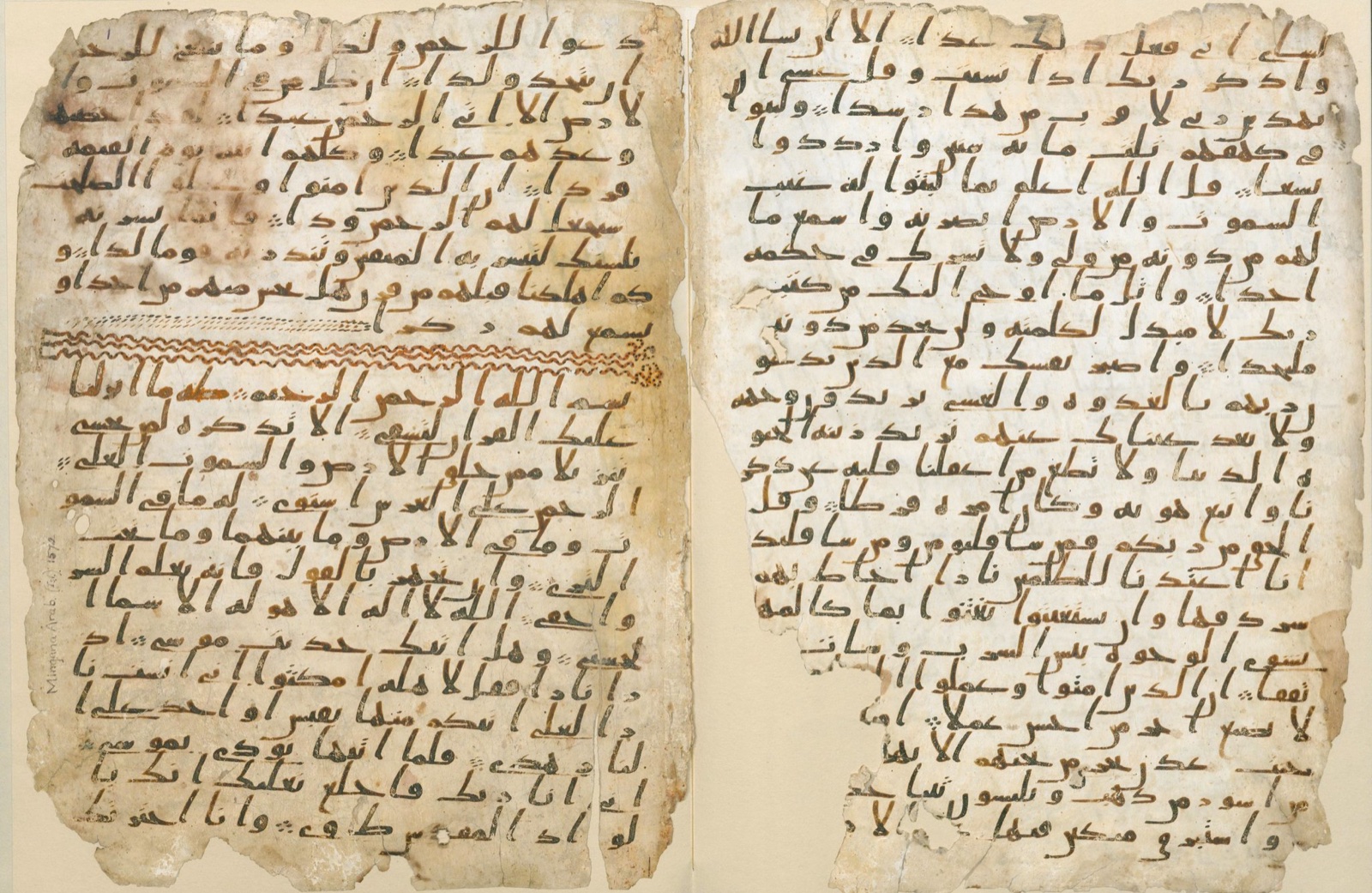
Public domain via Wikimedia Commons · Source and licence

- For
- Readers who need the detailed record before they choose
- You Will Find
- 66 dossiers in 9 groups, each with its source and answer
- Next Step
- Discover a Life with the Gods
The Qur’an 39:3, the words of the older worshippers, tr. Sahih International
وَالَّذِينَ اتَّخَذُوا مِنْ دُونِهِ أَوْلِيَاءَ مَا نَعْبُدُهُمْ إِلَّا لِيُقَرِّبُونَا إِلَى اللَّهِ زُلْفَىٰ
And those who take protectors besides Him [say], “We only worship them that they may bring us nearer to Allāh in position.”
I. A Historical Review
This page is a historical review, and it accuses no reader. It is written to wake the Children of the Gods and to welcome them back. It shows the religious errors we have made together as mankind, and invites you to set them right under Zeus and the Eternal Gods.
It sets the Qur’an, the hadith, the commentators and modern manuscript research side by side and lets each speak in its own words. Its purpose is your reconnection with God. The Temple of Zeus examines these sources so that you can return to Zeus, the Original God, Father and King of the Gods, and to the Gods who stand with Him. You come to this page as a guest in the house of Zeus, and the Temple speaks as a host speaks: openly, warmly and with conviction. Freedom of belief is paramount, as ordained by the Gods themselves.[1]
Each dossier takes one point that Muslim teaching presents as settled and opens the source behind it. Qur’anic Arabic is given with the Sahih International English shown on quran.com. Hadith come from Sahih al-Bukhari and Sahih Muslim by the numbering of sunnah.com, the 2 collections Sunni Islam ranks highest. Shia Muslims hold their own collections, and a Sunni report binds a Shia reader only as far as that reader grants it.
Tafsir is commentary, sira is biography and modern manuscript study is research. Each is named for what it is. Criticism falls on texts, claims and acts of power, never on you or on your family. Belief in God stays with you on every page; each dossier asks whether the exclusive authority built over God’s name stands up to its own records.
Reading privately. Nothing here needs an account, a purchase or a public word from you. Read in a quiet setting at your own pace. If your circumstances call for care, the short practical note at Reading and Practising Privately and the guidance in Begin Your Return come first, and your safety comes before any display of a religious choice.
II. The Short Route
The Muslim track opens with 2 witnesses. In Qur’an 29:61 the Qur’an’s own opponents, asked who created the heavens and the earth, would surely say, “Allāh.”
[2] In Sahih Muslim 1185 the pilgrims of the older religion, circling the Kaaba, address their God and name an associate who stands under His mastery.[3] Both are set out at Was Allah Known before Islam?
The 6 dossiers below carry that case into the text, the founder’s reports and the history of enforcement. Read them first, open all 66 further down, or go straight to the life Zevism offers.
- I2Uthman Ordered Every Other Qur’anic Copy to Be BurntBukhari 4987: the armies recited differently, so Uthman had copies made, ruled whose dialect wins, and sent fire for every other copy.
- I4Umar Preached a Stoning Verse That the Written Qur’an Doesn’t ContainUmar’s sermon, kept by both Sahih collections: stoning was revealed and recited, and people would one day not find it in the book.
- I8The Prophet Approved Differing Recitations, and Printed Qur’ans Still DifferBukhari 4992: Umar seized Hisham for reciting differently and the Prophet approved both; 2 authorised printings today differ by a whole word.
- I30The Satanic Verses Stood in the Early Record Before Later Scholars Rejected ThemAl-Tabari, who died in 923, kept the episode in his commentary and his History, and Watt judged it beyond doubt.
- I39Both Sahih Collections Make Leaving Islam a Capital OffenceBukhari 6922 opens with Ali burning men and gives the Prophet’s order: Whoever changed his Islamic religion, then kill him.
- I49Caliphs Enforced the Createdness of the Qur’an by Inquisition, Then a Later Caliph Dropped ItAl-Ma’mun’s inquisition put the last refusers in iron fetters; al-Wathiq struck Ahmad b. Nasr with a sword before he was beheaded.
III. All 66 Dossiers
IV. Writing, Collection, Readings and Authority
The Qur’an promises its own guardianship, and Muslim teaching holds that it reached the believer letter for letter. The 13 dossiers in this group read what the Qur’an and the 2 Sahih collections themselves report about gathering, burning, forgetting, abrogating and reading the book.
I1 The Qur’an Became One Book Only After the Prophet’s Death, by Human Search
Bukhari 4986: after the reciters fell at Yamama, Umar feared much of the Qur’an would be lost, and Zayd gathered it from palm stalks, stones and memory.
Read the dossier
Zayd ibn Thabit in Sahih al-Bukhari 4986 (Book 66, Hadith 8), tr. M. Muhsin Khan · Read the report
فَتَتَبَّعْتُ الْقُرْآنَ أَجْمَعُهُ مِنَ الْعُسُبِ وَاللِّخَافِ وَصُدُورِ الرِّجَالِ حَتَّى وَجَدْتُ آخِرَ سُورَةِ التَّوْبَةِ مَعَ أَبِي خُزَيْمَةَ الأَنْصَارِيِّ لَمْ أَجِدْهَا مَعَ أَحَدٍ غَيْرَهُ
So I started looking for the Qur’an and collecting it from (what was written on) palme stalks, thin white stones and also from the men who knew it by heart, till I found the last Verse of Surat at-Tauba (Repentance) with Abi Khuzaima Al-Ansari, and I did not find it with anybody other than him.
- The Claim Examined
Muslim teaching presents the Qur’an as a finished book from the Prophet’s lifetime. Bukhari 4986 places its first gathering after his death, when Umar feared after Yamama that
a large part of the Qur’an may be lost
. Zayd met the order with a question:How can you do something which Allah’s Apostle did not do?
[4]- The Temple’s Answer
The report shows the single book beginning as a ruler’s decision, against the scribe’s hesitation, out of fear of loss, from palm stalks, stones and memories. The guardianship promised in 15:9 arrived through a caliph’s order and a scribe’s search.[5]
- For Your Decision
Ask who decided what your copy contains, then read the order that decided it again: I2.
I2 Uthman Ordered Every Other Qur’anic Copy to Be Burnt
Bukhari 4987: the armies recited differently, so Uthman had copies made, ruled whose dialect wins, and sent fire for every other copy.
Read the dossier
Anas ibn Malik in Sahih al-Bukhari 4987 (Book 66, Hadith 9), tr. M. Muhsin Khan · Read the report
فَاكْتُبُوهُ بِلِسَانِ قُرَيْشٍ فَإِنَّمَا نَزَلَ بِلِسَانِهِمْ فَفَعَلُوا حَتَّى إِذَا نَسَخُوا الصُّحُفَ فِي الْمَصَاحِفِ رَدَّ عُثْمَانُ الصُّحُفَ إِلَى حَفْصَةَ وَأَرْسَلَ إِلَى كُلِّ أُفُقٍ بِمُصْحَفٍ مِمَّا نَسَخُوا وَأَمَرَ بِمَا سِوَاهُ مِنَ الْقُرْآنِ فِي كُلِّ صَحِيفَةٍ أَوْ مُصْحَفٍ أَنْ يُحْرَقَ
“In case you disagree with Zaid bin Thabit on any point in the Qur’an, then write it in the dialect of Quraish” … ‘Uthman sent to every Muslim province one copy of what they had copied, and ordered that all the other Qur’anic materials, whether written in fragmentary manuscripts or whole copies, be burnt.
- The Claim Examined
The Qur’an is taught as a text no human hand shaped. In Bukhari 4987 Hudhayfa, alarmed that the armies of Sham and Iraq recited differently, urges Uthman to
Save this nation before they differ about the Book
. Uthman has copies made, sets a rule for disputes among the scribes, sends one copy to each province and orders the rest burnt.[6]- The Temple’s Answer
The report names the problem plainly: Muslims recited differently. Its remedy was an edition by appointed men, a ruling on whose dialect wins when they disagree, and fire for every competing copy. That is a political settlement of the text. A book delivered without human choice needs no tie-break rule and no burning.
- For Your Decision
An authority that settles scripture by fire has no claim on your soul. See what one of the named teachers did with his copy: I3.
I3 Ibn Mas’ud, Named First Among the Prophet’s Teachers, Kept His Own Codex
Bukhari 4999 names Ibn Mas’ud first of 4 teachers of the Qur’an, and Kufa stayed divided over his refusal to hand his codex to the fire.
Read the dossier
Abdullah ibn Mas’ud in Sahih al-Bukhari 5000 (Book 66, Hadith 22), tr. M. Muhsin Khan · Read the report
وَاللَّهِ لَقَدْ أَخَذْتُ مِنْ فِي رَسُولِ اللَّهِ صلى الله عليه وسلم بِضْعًا وَسَبْعِينَ سُورَةً، وَاللَّهِ لَقَدْ عَلِمَ أَصْحَابُ النَّبِيِّ صلى الله عليه وسلم أَنِّي مِنْ أَعْلَمِهِمْ بِكِتَابِ اللَّهِ وَمَا أَنَا بِخَيْرِهِمْ
By Allah, I learnt over seventy Suras direct from Allah’s Messenger (ﷺ). By Allah, the companions of the Prophet (ﷺ) came to know that I am one of those who know Allah’s Book best of all of them, yet I am not the best of them.
- The Claim Examined
The Uthmanic text is presented as the companions’ common possession. In Bukhari 4999 the Prophet says
Take (learn) the Qur’an from four
, naming Ibn Mas’ud first;[7] in Bukhari 5000 Ibn Mas’ud claims over 70 suras from the Prophet’s own mouth.[8] Jeffery, editing Ibn Abi Dawud’s Kitab al-Masahif, reports Kufa long divided over Ibn Mas’ud,who had refused to give up his Codex
for burning.[9]- The Temple’s Answer
A teacher the Prophet himself named first still refused the state edition. In Bukhari 4977 Zirr asks Ubayy what Ibn Mas’ud said; the Arabic gives only كَذَا وَكَذَا, “so-and-so”, and the translator’s bracket naming the 2 closing suras comes from reports outside Bukhari.[10] Consensus followed the burning.
- For Your Decision
A canon closed over a recommended teacher’s objection is a human verdict. Weigh it as one, then read I4.
I4 Umar Preached a Stoning Verse That the Written Qur’an Doesn’t Contain
Umar’s sermon, kept by both Sahih collections: stoning was revealed and recited, and people would one day not find it in the book.
Read the dossier
Umar ibn al-Khattab from the pulpit, in Sahih al-Bukhari 6830 (Book 86, Hadith 56), tr. M. Muhsin Khan · Read the report
فَكَانَ مِمَّا أَنْزَلَ اللَّهُ آيَةُ الرَّجْمِ، فَقَرَأْنَاهَا وَعَقَلْنَاهَا وَوَعَيْنَاهَا، رَجَمَ رَسُولُ اللَّهِ صلى الله عليه وسلم وَرَجَمْنَا بَعْدَهُ، فَأَخْشَى إِنْ طَالَ بِالنَّاسِ زَمَانٌ أَنْ يَقُولَ قَائِلٌ وَاللَّهِ مَا نَجِدُ آيَةَ الرَّجْمِ فِي كِتَابِ اللَّهِ
… and among what Allah revealed, was the Verse of the Rajam (the stoning of married person (male & female) who commits illegal sexual intercourse, and we did recite this Verse and understood and memorized it. Allah’s Messenger (ﷺ) did carry out the punishment of stoning and so did we after him. I am afraid that after a long time has passed, somebody will say, ‘By Allah, we do not find the Verse of the Rajam in Allah’s Book,’ …
- The Claim Examined
The Qur’an is said to hold all revealed scripture. Umar, as caliph, declared from the pulpit that a verse of stoning was revealed and recited, and feared people would one day not find it in the book.[11] Sahih Muslim 1691a keeps the same sermon.[12] Verse 24:2 orders 100 lashes; its Arabic, الزَّانِيَةُ وَالزَّانِي فَاجْلِدُوا كُلَّ وَاحِدٍ مِنْهُمَا مِائَةَ جَلْدَةٍ, has no word for “unmarried”, which Sahih International supplies in brackets.[13]
- The Temple’s Answer
By Umar’s own account a revealed, recited verse is absent from the book, and a death penalty rests on words no reader can find. His fear came true. The translator’s bracket shows the rest: the plain text must be completed from hadith before the law stands.
- For Your Decision
Law built on a missing verse is law made by its interpreters. Zevism grounds justice in Ma’at: see what that means for a life.
I5 Aisha Reported Suckling Verses Still Recited When the Prophet Died
Aisha, in Muslim: 10 sucklings were revealed, then 5, and the Prophet died while the 5 were still recited; neither number is in the Qur’an.
Read the dossier
Sahih Muslim 1452a (Book 17, Hadith 30), tr. Abdul Hamid Siddiqui · Read the report
كَانَ فِيمَا أُنْزِلَ مِنَ الْقُرْآنِ عَشْرُ رَضَعَاتٍ مَعْلُومَاتٍ يُحَرِّمْنَ . ثُمَّ نُسِخْنَ بِخَمْسٍ مَعْلُومَاتٍ فَتُوُفِّيَ رَسُولُ اللَّهِ صلى الله عليه وسلم وَهُنَّ فِيمَا يُقْرَأُ مِنَ الْقُرْآنِ
A’isha (Allah be pleased with, her) reported that it had been revealed in the Holy Qur’an that ten clear sucklings make the marriage unlawful, then it was abrogated (and substituted) by five sucklings and Allah’s Apostle (ﷺ) died and it was before that time (found) in the Holy Qur’an (and recited by the Muslims).
- The Claim Examined
Aisha states that the Qur’an once held a rule of 10 sucklings, replaced by 5.[14] The Arabic closes وَهُنَّ فِيمَا يُقْرَأُ مِنَ الْقُرْآنِ: the Prophet died while those words were still among what was recited as Qur’an. Neither number stands in the Qur’an printed today.
- The Temple’s Answer
Aisha’s report leaves 2 readings, and each has a cost. Either words recited at the Prophet’s death were later dropped, or the community didn’t know its final text when he died.
On both readings, people after him finished deciding what counts as Qur’an. The jurists still differ over the ruling, so the text alone never settled it.
- For Your Decision
A scripture finished by its survivors raises the question I7 puts to abrogation itself.
I6 A Companion Reported Forgetting a Sura He Compared to Bara’a
Abu Musa told the reciters of Basra of a sura as long and severe as Bara’a, lost but for 1 line about 2 valleys of riches.
Read the dossier
Abu Musa al-Ash’ari to the 300 reciters of Basra, in Sahih Muslim 1050 (Book 12, Hadith 156), tr. Abdul Hamid Siddiqui · Read the report
وَإِنَّا كُنَّا نَقْرَأُ سُورَةً كُنَّا نُشَبِّهُهَا فِي الطُّولِ وَالشِّدَّةِ بِبَرَاءَةَ فَأُنْسِيتُهَا
We used to recite a surah which resembled in length and severity to (Surah) Bara’at. I have, however, forgotten it …
- The Claim Examined
Abu Musa, companion and governor, told the reciters of Basra that they once recited a sura like Bara’a in length and severity, now forgotten save one line:
If there were two valleys full of riches, for the son of Adam, he would long for a third valley
. He named a second forgotten sura too.[15]- The Temple’s Answer
In Muslim 1050 a companion and governor lost a sura comparable to Bara’a, and the Qur’an provides for such losses: the Prophet won’t forget,
Except what Allāh should will
.[16] The line about valleys, remembered as Qur’an, isn’t in the book. The reader holds a selection drawn by memory.- For Your Decision
Measure an exclusive claim by what it admits about itself. The doctrine that covers these gaps is next: I7.
I7 The Qur’an Announces Its Own Replaced Verses, and Its Hearers Called It Invention
The Qur’an provides for verses to be replaced or forgotten, and 16:101 records hearers calling the Prophet an inventor when they changed.
Read the dossier
The Qur’an 2:106, tr. Sahih International · Read the verse
مَا نَنْسَخْ مِنْ آيَةٍ أَوْ نُنْسِهَا نَأْتِ بِخَيْرٍ مِنْهَا أَوْ مِثْلِهَا
We do not abrogate a verse or cause it to be forgotten except that We bring forth [one] better than it or similar to it.
- The Claim Examined
Muslims are taught that God’s word is eternal and unchanging. The Qur’an provides for verses to be abrogated or forgotten and replaced,[17] and at 16:101 records what hearers said when verses changed:
You, [O Muḥammad], are but an inventor [of lies].
[18]- The Temple’s Answer
Abrogation leaves each ruling provisional until scholars decide which verse came later, and that chronology comes from reports and commentators; the verses carry no dates. The first hearers called the changes invention. A revelation whose law waits on later dating hands final authority to its interpreters.
- For Your Decision
The Gods do not revise the order of the cosmos. Ma’at stands: discover the life ordered by it.
I8 The Prophet Approved Differing Recitations, and Printed Qur’ans Still Differ
Bukhari 4992: Umar seized Hisham for reciting differently and the Prophet approved both; 2 authorised printings today differ by a whole word.
Read the dossier
The Prophet to Umar and Hisham ibn Hakim, in Sahih al-Bukhari 4992 (Book 66, Hadith 14), tr. M. Muhsin Khan · Read the report
إِنَّ هَذَا الْقُرْآنَ أُنْزِلَ عَلَى سَبْعَةِ أَحْرُفٍ فَاقْرَءُوا مَا تَيَسَّرَ مِنْهُ
This Qur’an has been revealed to be recited in seven different ways, so recite of it whichever (way) is easier for you.
- The Claim Examined
Many Muslims believe every Qur’an is identical to the letter. In Bukhari 4992 Umar seizes Hisham for reciting Surat al-Furqan differently, and the Prophet approves both under 7 ahruf.[19] The canonical readings are a separate, later category: Ibn Mujahid (d. 324 AH, 936 CE) selected 7.[20] At 57:24 Hafs reads فَإِنَّ اللَّهَ هُوَ الْغَنِيُّ الْحَمِيدُ; the King Fahd Complex’s Warsh mushaf prints the same clause without هُوَ, huwa.[21]
- The Temple’s Answer
The factual question is settled: 2 authorised printings differ by a whole word. “One Qur’an” means a family of approved texts, whose number a scholar of the 4th century AH first fixed at 7.
- For Your Decision
Hold the book to the claim made for it. The Gods ask no oath to a single letter: see what Zevism asks instead.
I9 The Sana’a Palimpsest Preserves a Qur’an Outside the Uthmanic Text, Scraped and Overwritten
Found at Sana’a in 1972, the erased lower text differs in words and in sura order from the standard Qur’an written over it.
Read the dossier
International Qur’anic Studies Association, 2016, on the lower writing of Ṣanʿāʾ 1 (DAM 01-27.1), announcing the new edition by Asma Hilali · Read the notice
… the only extant witness to a non-‘Uthmanic textual tradition of the Qur’an.
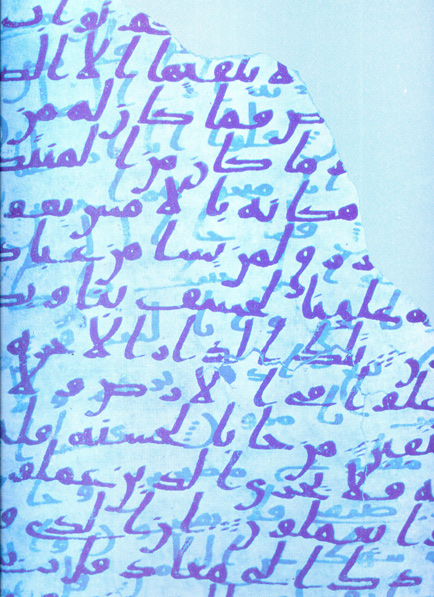
Public domain via Wikimedia Commons · Source and licence

- The Claim Examined
Muslim teaching holds that no other Qur’an ever existed. In 1972 workers in the Great Mosque of Sana’a found a parchment whose lower text, erased and overwritten with the standard one, differs in words and phrases and follows a sura order matching no known order.[22] Sadeghi and Goudarzi published it in 2012.[23] Nicolai Sinai finds that it
exhibits frequent divergences from the canonical rasm
, on parchment radiocarbon dated to 578 to 669 at 95% probability.[24]- The Temple’s Answer
The lower text shows a Qur’an of another textual tradition, copied in the 7th century and then scraped away for the standard one. The parchment holds the order of Bukhari 4987 in visible form.
- For Your Decision
An erased text still speaks. Let it ask whether the standard was given or chosen, then see I10.
I10 Codices Venerated as Uthman’s Own Date to Later Centuries
Topkapı H.S. 32 dates to the later 1st or 2nd century AH, and the Tashkent codex said to bear Uthman’s blood to 775 to 995.
Read the dossier
University of Birmingham, announcement of 22 July 2015 on the Birmingham Qur’an, Mingana Collection, Cadbury Research Library · Read the announcement
Radiocarbon analysis has dated the parchment on which the text is written to the period between AD 568 and 645 with 95.4% accuracy.
- The Claim Examined
Codices have been revered as Uthman’s own copies. Topkapı H.S. 32 bears that attribution; Tayyar Altıkulaç dated it to the later 1st or earlier 2nd century AH.[25] The Tashkent codex, said to bear Uthman’s blood, gave a radiocarbon range of 775 to 995, and its script points to the 8th or 9th century.[26] The Birmingham leaves are early, and their test dated the parchment, not the ink.[27]
- The Temple’s Answer
The Birmingham leaves come from an animal that died between 568 and 645, and the text was written on its skin some time after. The relics tell another story.
Objects revered as Uthman’s own copies, one said to bear his blood, belong to later generations. Piety built a history the parchment refuses.
- For Your Decision
Ask what else was attributed upward to earn your trust. The language of the book is next: I11.
I11 Islam’s Own Scholars Disputed Whether the “Arabic Qur’an” Holds Foreign Words
Al-Shafi’i and al-Tabari denied foreign words in the Qur’an; al-Suyuti sorted them into 11 groups by language.
Read the dossier
The Qur’an 12:2, tr. Sahih International · Read the verse
إِنَّا أَنْزَلْنَاهُ قُرْآنًا عَرَبِيًّا لَعَلَّكُمْ تَعْقِلُونَ
Indeed, We have sent it down as an Arabic Qur’ān that you might understand.
- The Claim Examined
The Qur’an calls itself Arabic.[28] Arthur Jeffery records that al-Shafi’i, al-Tabari and Abu ‘Ubaida denied it held foreign words, while the earliest exegetes admitted many; al-Suyuti’s al-Mutawakkili sorted them into 11 groups by language, from Ethiopic to Berber.[29] Paradise at 23:11 is الْفِرْدَوْسَ,[30] a word traced through Greek paradeisos to Iranian pairidaeza, “enclosure, park”.[31]
- The Temple’s Answer
The borrowings carry their origin. The book’s word for the garden of the blessed is an Iranian word for an enclosed park, named in an older world. Islam’s great scholars quarrelled over admitting this, because it shows the revelation speaking the inherited vocabulary of its neighbours.
- For Your Decision
The older world you were taught to forget speaks through your scripture’s own words. Enter it: a life with the Gods.
I12 The Qur’an Records the Charge That a Human Being Taught the Prophet
Meccans named a foreign teacher and called its stories legends of the former peoples, written down and dictated to him (25:5).
Read the dossier
The Qur’an 16:103, tr. Sahih International · Read the verse
وَلَقَدْ نَعْلَمُ أَنَّهُمْ يَقُولُونَ إِنَّمَا يُعَلِّمُهُ بَشَرٌ ۗ لِسَانُ الَّذِي يُلْحِدُونَ إِلَيْهِ أَعْجَمِيٌّ وَهَٰذَا لِسَانٌ عَرَبِيٌّ مُبِينٌ
And We certainly know that they say, “It is only a human being who teaches him [i.e., the Prophet (ﷺ)].” The tongue of the one they refer to is foreign, and this [recitation, i.e., Qur’ān] is [in] a clear Arabic language.
- The Claim Examined
The Qur’an is presented as knowledge no Meccan could supply. It reports that Meccans named a human teacher, and answers that his tongue was foreign.[32] At 25:5 it records a sharper charge:
Legends of the former peoples which he has written down, and they are dictated to him morning and afternoon.
[33] Ibn Kathir describes the man only as a foreign servant of Quraysh who sold goods near al-Safa.[34]- The Temple’s Answer
Those who heard the recitation recognised its stories as legends of earlier peoples, material already circulating. Stories need no single teacher; they travel through trade, neighbours and sermons. The next group traces them to their earlier texts.
- For Your Decision
Read the Meccans’ charge as a clue, then follow it into the narratives: I14.
I13 Sahih Muslim’s Introduction Records Lies Told in the Prophet’s Name
Ibn Abbas, in Muslim’s own introduction, stopped listening to reports once people took in every kind of report about the Prophet.
Read the dossier
Ibn Abbas to Bushayr ibn Ka’b, in Sahih Muslim, Introduction 19 (Introduction, Narration 18) · Read the report
فَلَمَّا رَكِبَ النَّاسُ الصَّعْبَ وَالذَّلُولَ
Indeed we would be narrated to on authority of the Messenger of Allah, peace and blessings of Allah upon him, at a time when one would not lie upon him, however when the people took the difficult [Munkar] and the docile [Sahīh], we abandoned listening to Ḥadīth from them.
- The Claim Examined
Sunni law rests on hadith as a second source of revelation. Muslim’s own Introduction preserves Ibn Abbas saying that he and others once received reports when no one lied about the Prophet, and stopped listening once people took in every kind of report.[35] The collection opens with a companion’s testimony that reports about the Prophet stopped being trustworthy within his own lifetime.
- The Temple’s Answer
Exclusion doesn’t prove a report forged, and inclusion doesn’t prove it true; both are judgments by compilers in the 3rd century of Islam about chains of men. Shia Muslims set those judgments aside for their own collections. Authority that differs by sect is confessional authority.
- For Your Decision
Every hadith in these dossiers stands on that method. Weigh each as human testimony, beginning with I14.
A text gathered by order, edited under a tie-break rule, purified by fire, missing verses its guardians recited, and read in more than one authorised form is a human inheritance. You can study it with respect and still refuse the claim that it alone may speak for God. The Gods were worshipped before it, and the name it claims for God was spoken before it.
Zevism gives your return to the Gods a daily form: prayer, study, practice and a life ordered by truth.
V. Earlier Narratives and Their Reception
The Qur’an retells stories that circulated among Christians and Jews before it. These 10 dossiers set each Qur’anic passage beside the earlier text, with its date where the date is known, and they separate a parallel from a proven route of borrowing.
I14 The Sleepers of the Cave Were a Christian Legend Before the Qur’an
The Syriac legend of the Sleepers of Ephesus was written a century before Islam; the Qur’an tells it with rival counts and 309 years.
Read the dossier
The Qur’an 18:25, tr. Sahih International · Read the verse
وَلَبِثُوا فِي كَهْفِهِمْ ثَلَاثَ مِائَةٍ سِنِينَ وَازْدَادُوا تِسْعًا
And they remained in their cave for three hundred years and exceeded by nine.
- The Claim Examined
Sura 18 tells of youths asleep in a cave and calls their number disputed:
They [i.e., people] will say there were three, the fourth of them being their dog
.[36] The Syriac legend of the Sleepers of Ephesus is first attested in a manuscript that M. van Esbroeck dates to the 5th century, and Jacob of Serugh wrote a homily on it early in the 6th: youths hidden under Decius (249 to 251) wake under Theodosius II, 195 years later.[37] Gregory of Tours abridged it in Gaul with a Syrian’s help.[38]- The Temple’s Answer
The Qur’an’s own text shows a story already circulating, with rival counts. Christian tellers set it between Decius and Theodosius; the Qur’an gives 300 years and 9. A legend of Christian martyrs, written in Syriac a century earlier, became an Arabic scripture’s sign. That is the reception of a narrative.
- For Your Decision
Sacred stories travel between peoples. Read the next parallel: I15.
I15 Dhu l-Qarnayn’s Iron Barrier Shares a Syriac Alexander Legend’s Motifs
A horned conqueror, the world’s edge, Gog and Magog and a gate of iron: Christian Syria told the same of Alexander.
Read the dossier
The Qur’an 18:96, tr. Sahih International · Read the verse
آتُونِي زُبَرَ الْحَدِيدِ ۖ حَتَّىٰ إِذَا سَاوَىٰ بَيْنَ الصَّدَفَيْنِ قَالَ انْفُخُوا ۖ حَتَّىٰ إِذَا جَعَلَهُ نَارًا قَالَ آتُونِي أُفْرِغْ عَلَيْهِ قِطْرًا
“Bring me bars of iron” - until, when he had leveled [them] between the two mountain walls, he said, “Blow [with bellows],” until when he had made it [like] fire, he said, “Bring me, that I may pour over it molten copper.”
- The Claim Examined
Sura 18 tells of ذِي الْقَرْنَيْنِ, “the one with 2 horns”, who reaches the sun’s setting and builds a barrier of iron and copper against Gog and Magog.[39] In the Syriac Alexander Legend God says
I caused horns of iron to grow on your head
; Alexander reaches the Fetid Sea and orders a gate of iron and bronze against Gog and Magog. Nöldeke dated it to about 629 to 630, later scholars place its core in the 6th century, and its link to Dhu l-Qarnayn, revived by Kevin van Bladel, is disputed.[40]- The Temple’s Answer
The cluster is the same: a horned conqueror, the world’s edge, Gog and Magog, a metal gate. Christian Syria told it of Alexander around the time of the Qur’an’s formation.
- For Your Decision
Your scripture’s hero wears an older king’s horns. Follow the older world: The Inversion Was Politics.
I16 Mary Is Called Sister of Aaron and Daughter of Imran, the Family of Moses
Numbers 26:59 makes Miriam sister of Aaron and daughter of Amram; the Qur’an gives Mary both titles, and Najran’s Christians objected.
Read the dossier
The Qur’an 19:28, tr. Sahih International · Read the verse
يَا أُخْتَ هَارُونَ مَا كَانَ أَبُوكِ امْرَأَ سَوْءٍ وَمَا كَانَتْ أُمُّكِ بَغِيًّا
O sister [i.e., descendant] of Aaron, your father was not a man of evil, nor was your mother unchaste.
- The Claim Examined
The Qur’an calls Mary, mother of Isa, sister of Aaron[41] and
the daughter of ʿImrān
.[42] In the Torah, Amram’s wifebore to Amram: Aaron, Moses, and their sister Miriam
.[43] In Sahih Muslim 2135 Christians of Najran press this objection, and the Prophet answers that peopleused to give names (to their persons) after the names of Apostles and pious persons
.[44]- The Temple’s Answer
The Prophet’s answer in Muslim 2135 explains one title. The Qur’an joins 2: sister of Aaron and daughter of Imran, exactly Miriam’s relations in Numbers 26:59.
Sahih International’s bracket
[i.e., descendant]
shows its translators still hear the plain words pointing to Moses’ sister. Najran’s Christians heard them that way in the Prophet’s lifetime.- For Your Decision
When a translation adds words to protect its text, read the text. Then read I17.
I17 The Qur’an’s Haman Serves Pharaoh; the Only Earlier Haman Serves a Persian King
The Qur’an has Haman fire clay for Pharaoh’s tower; the earlier scriptures know only the minister of Ahasuerus in the Book of Esther.
Read the dossier
The Qur’an 28:38, tr. Sahih International · Read the verse
فَأَوْقِدْ لِي يَا هَامَانُ عَلَى الطِّينِ فَاجْعَلْ لِي صَرْحًا لَعَلِّي أَطَّلِعُ إِلَىٰ إِلَٰهِ مُوسَىٰ
Then ignite for me, O Hāmān, [a fire] upon the clay and make for me a tower that I may look at the God of Moses.
- The Claim Examined
The Qur’an places Haman beside Pharaoh in the time of Moses, firing clay for a tower.[45] The earlier scriptures know one Haman:
King Ahasuerus promoted Haman son of Hammedatha the Agagite
, at the Persian court of the Book of Esther.[46]- The Temple’s Answer
The book of Exodus names no Haman. The only Haman the earlier scriptures offer is a Persian minister, and the Qur’an’s figure carries that name into Egypt with no Egyptian witness produced for it.
- For Your Decision
An exclusive revelation shouldn’t need its readers to supply its evidence. Compare the next tradition: I18.
I18 Abraham’s Rescue from the Fire Comes from Rabbinic Midrash, Not from Genesis
Genesis has no fire; Genesis Rabbah 38:13 has Nimrod cast Abraham into the furnace, the scene the Qur’an tells.
Read the dossier
The Qur’an 21:68-69, tr. Sahih International · Read the verses
قَالُوا حَرِّقُوهُ وَانْصُرُوا آلِهَتَكُمْ إِنْ كُنْتُمْ فَاعِلِينَ قُلْنَا يَا نَارُ كُونِي بَرْدًا وَسَلَامًا عَلَىٰ إِبْرَاهِيمَ
They said, “Burn him and support your gods - if you are to act.” We [i.e., Allāh] said, “O fire, be coolness and safety upon Abraham.”
- The Claim Examined
The Qur’an tells how Abraham’s people tried to burn him for breaking their idols and how God cooled the fire.[47] Genesis has no such fire. Genesis Rabbah 38:13 has it: Nimrod tells Abraham
I will cast you into it, and let that God to whom you bow down come and rescue you from it
; Abraham comes out of the furnace, and his brother Haran dies of his burns.[48]- The Temple’s Answer
The parallel holds in its essentials: idols, a king’s fire, a rescuing God. The furnace belongs to rabbinic commentary on Genesis, a tradition of interpreters, and in the Qur’an a midrash became divine speech.
- For Your Decision
Notice whose gods are burned in the story. The Temple restores what the iconoclast broke: The Inversion Was Politics.
I19 Qur’an 5:32 Gives as God’s Decree a Rabbinic Teaching from the Mishnah
Mishnah Sanhedrin 4:5 draws from Abel’s blood the lesson that to destroy one soul is to destroy a world; Qur’an 5:32 gives it as God’s decree.
Read the dossier
The Qur’an 5:32, tr. Sahih International · Read the verse
مِنْ أَجْلِ ذَٰلِكَ كَتَبْنَا عَلَىٰ بَنِي إِسْرَائِيلَ أَنَّهُ مَنْ قَتَلَ نَفْسًا بِغَيْرِ نَفْسٍ أَوْ فَسَادٍ فِي الْأَرْضِ فَكَأَنَّمَا قَتَلَ النَّاسَ جَمِيعًا وَمَنْ أَحْيَاهَا فَكَأَنَّمَا أَحْيَا النَّاسَ جَمِيعًا
Because of that, We decreed upon the Children of Israel that whoever kills a soul unless for a soul or for corruption [done] in the land - it is as if he had slain mankind entirely. And whoever saves one - it is as if he had saved mankind entirely.
- The Claim Examined
Verse 5:32 follows
the story of Adam’s two sons
and draws its decreeBecause of that
.[49] Mishnah Sanhedrin 4:5 moves the same way: from Abel’s “bloods” in Genesis 4:10 to the teaching that onewho destroys one soul from the Jewish people
is blamedas if he destroyed an entire world
, and one who sustains a soul is creditedas if he sustained an entire world
.[50]- The Temple’s Answer
The decree has an origin. In the Mishnah the saying is a lesson rabbis drew from the wording of Genesis.
The Qur’an presents that lesson as God’s own writ. Human interpretation became revelation.
- For Your Decision
The sacredness of life needs no such genealogy; Ma’at holds it. See how Zevism grounds ethics.
I20 The Queen of Sheba’s Glass Floor Belongs to Jewish Legend, Not to the Book of Kings
1 Kings 10 has no bird and no glass; the Targum Sheni to Esther has both, as Sura 27 does.
Read the dossier
The Qur’an 27:44, tr. Sahih International · Read the verse
قِيلَ لَهَا ادْخُلِي الصَّرْحَ ۖ فَلَمَّا رَأَتْهُ حَسِبَتْهُ لُجَّةً وَكَشَفَتْ عَنْ سَاقَيْهَا ۚ قَالَ إِنَّهُ صَرْحٌ مُمَرَّدٌ مِنْ قَوَارِيرَ
She was told, “Enter the palace.” But when she saw it, she thought it was a body of water and uncovered her shins [to wade through]. He said, “Indeed, it is a palace [whose floor is] made smooth with glass.”
- The Claim Examined
Sura 27 has a hoopoe bring news of Sheba and a queen bare her legs on a floor of glass.[51] The visit in 1 Kings 10 has no bird and no glass.[52] Targum Sheni to Esther has both a missing bird and a room of glass. Its date is disputed: current opinion runs from the late Byzantine to the early Islamic period, and Zishan Ghaffar argues that the Qur’an presupposes it.[53]
- The Temple’s Answer
The Qur’an’s Solomon scene matches Jewish legend about the Queen, and the biblical account has none of it. Its details come from the storytelling of the region.
- For Your Decision
Legend and scripture shared one marketplace. Read how Isa fared there: I21.
I21 Isa’s Clay Birds Appear First in a Christian Infancy Gospel
The Infancy Gospel of Thomas has the boy Jesus make 12 clay sparrows that fly; the Qur’an gives Isa the same sign.
Read the dossier
The Qur’an 3:49, tr. Sahih International · Read the verse
أَنِّي قَدْ جِئْتُكُمْ بِآيَةٍ مِنْ رَبِّكُمْ ۖ أَنِّي أَخْلُقُ لَكُمْ مِنَ الطِّينِ كَهَيْئَةِ الطَّيْرِ فَأَنْفُخُ فِيهِ فَيَكُونُ طَيْرًا بِإِذْنِ اللَّهِ
Indeed I have come to you with a sign from your Lord in that I design for you from clay [that which is] like the form of a bird, then I breathe into it and it becomes a bird by permission of Allāh.
- The Claim Examined
The Qur’an gives Isa the miracle of clay birds at 3:49 and 5:110.[54] The Infancy Gospel of Thomas tells it of the boy Jesus:
having made some soft clay, He fashioned out of it twelve sparrows
, andthe sparrows flew
.[55] In the 2nd century Irenaeus already condemned asfalse and wicked
a tale of the boy Jesus at his letters, which this gospel tells in chapter 6.[56] Mary’s palm at 19:23-25 parallels Pseudo-Matthew, dated about 600 to 625.[57][58]- The Temple’s Answer
The clay birds stand on older ground, in an infancy literature Irenaeus counted among
apocryphal and spurious writings
. The Qur’an made its childhood wonder a sign of prophethood.- For Your Decision
Isa reached Arabia already shaped by Christian storytellers. The Temple reads that figure in The Inversion Was Politics.
I22 Christian Sects Taught a Substitute on the Cross Centuries Before Qur’an 4:157
Irenaeus records Basilides teaching in the 2nd century that Simon of Cyrene was crucified in Jesus’ place.
Read the dossier
The Qur’an 4:157, tr. Sahih International · Read the verse
وَمَا قَتَلُوهُ وَمَا صَلَبُوهُ وَلَٰكِنْ شُبِّهَ لَهُمْ
And they did not kill him, nor did they crucify him; but [another] was made to resemble him to them.
- The Claim Examined
Muslims receive 4:157 as a revealed correction of history: Isa wasn’t killed or crucified,
but [another] was made to resemble him to them
.[59] Irenaeus reports Basilides teaching in the 2nd century thatSimon, a certain man of Cyrene, being compelled, bore the cross in his stead
,while Jesus himself received the form of Simon, and, standing by, laughed at them
.[60]- The Temple’s Answer
The shape of the claim is older than Islam. A crucifixion that only seemed to befall Jesus was taught by 2nd-century Christian sects and refuted by bishops long before Islam. The Qur’an’s correction takes one side in an old Christian argument.
- For Your Decision
If both the Christian and the Muslim Jesus were built from contested stories, return to what precedes them: the Gods.
I23 Qur’an 17:1 Names No City; Jerusalem Comes from Hadith and Commentary
The verse speaks only of the farthest place of prostration; Bukhari 3886 and the commentators made it Jerusalem.
Read the dossier
The Qur’an 17:1, tr. Sahih International · Read the verse
سُبْحَانَ الَّذِي أَسْرَىٰ بِعَبْدِهِ لَيْلًا مِنَ الْمَسْجِدِ الْحَرَامِ إِلَى الْمَسْجِدِ الْأَقْصَى الَّذِي بَارَكْنَا حَوْلَهُ
Exalted is He who took His Servant [i.e., Prophet Muḥammad (ﷺ)] by night from al-Masjid al-Ḥarām to al-Masjid al-Aqṣā, whose surroundings We have blessed …
- The Claim Examined
The verse speaks of a night travel to al-masjid al-aqsa, “the farthest place of prostration”, and names no city.[61] Jerusalem enters through hadith: in Bukhari 3886 the Prophet says that when Quraysh disbelieved him, God displayed Bayt al-Maqdis before him.[62] Ibn Kathir explains the term as the Sacred House in Jerusalem.[63] The Dome of the Rock, dated 72 AH under Abd al-Malik, carries inscriptions on Isa and none on the night travel.[64]
- The Temple’s Answer
The identification is the issue. Jerusalem’s place in this verse rests on reports and commentary, and the Umayyad Dome of the Rock spoke of Isa and never of the night travel.
- For Your Decision
Sanctity assigned by reports can be examined. Arabia’s sanctuaries are older: Allah before Islam.
Recognising a parallel isn’t yet a return. The stories in these dossiers belonged to Jews, Christians and Syrians before an Arabic scripture claimed them, and behind those peoples stood older temples still. The Temple offers more than a correction of sources: a living relationship with Zeus and the Gods, sacred stories understood as images of divine truth, and a path of practice that shapes the soul.
Zevism calls that path ὁμοίωσις θεῷ, becoming like God as far as possible. You can begin it today.
VI. Cosmology and Claims of Scientific Prediction
Modern preaching often presents the Qur’an as foretelling discoveries of science. These 4 dossiers read the verses with their classical commentators and set them beside the science they are said to predict. The Temple reads ancient sacred imagery, including its own, as imagery; the dispute here concerns the claim of scientific miracle.
I24 The Sun Sets in a Spring, and Each Night Bows Beneath the Throne
The Arabic of 18:86 has the sun set in a spring of dark mud, and Bukhari 3199 has it prostrate beneath the Throne each night.
Read the dossier
The Qur’an 18:86, tr. Sahih International · Read the verse
حَتَّىٰ إِذَا بَلَغَ مَغْرِبَ الشَّمْسِ وَجَدَهَا تَغْرُبُ فِي عَيْنٍ حَمِئَةٍ
Until, when he reached the setting of the sun [i.e., the west], he found it [as if] setting in a body of dark water,
- The Claim Examined
The Arabic of 18:86 has Dhu l-Qarnayn find the sun setting in عَيْنٍ حَمِئَةٍ, a spring of dark mud; the translation adds
[as if]
.[65] In Bukhari 3199 the Prophet tells Abu Dharr that the sun at sunsetgoes (i.e. travels) till it prostrates Itself underneath the Throne
and asks permission to rise.[66]- The Temple’s Answer
Ibn Kathir had to state that reaching
the place in the sky where the sun sets
isimpossible
,[67] since a literal reading lay ready to hand. Bukhari 3199 adds a nightly travel beneath the Throne. These are sacred images of a pre-scientific cosmos, never scientific foreknowledge.- For Your Decision
Judge each “scientific miracle” by the text and its oldest commentators. Next: I25.
I25 The Lamps of Heaven Are Made Missiles Against Devils
The Qur’an makes the stars missiles that chase eavesdropping devils with a burning flame (37:6 to 10).
Read the dossier
The Qur’an 67:5, tr. Sahih International · Read the verse
وَلَقَدْ زَيَّنَّا السَّمَاءَ الدُّنْيَا بِمَصَابِيحَ وَجَعَلْنَاهَا رُجُومًا لِلشَّيَاطِينِ ۖ وَأَعْتَدْنَا لَهُمْ عَذَابَ السَّعِيرِ
And We have certainly beautified the nearest heaven with lamps [i.e., stars] and have made [from] them what is thrown at the devils and have prepared for them the punishment of the Blaze.
- The Claim Examined
The Qur’an makes the lamps of the lowest heaven رُجُومًا لِلشَّيَاطِينِ, missiles for devils.[68] At 37:6-10 the stars guard heaven so that devils
may not listen to the exalted assembly [of angels]
, and an eavesdropper ispursued by a burning flame
.[69]- The Temple’s Answer
Ibn Kathir’s commentary makes the missiles meteors
taken from the stars
.[70] NASA describes meteoroids as space rocks, from dust grains to small asteroids, that become meteors when they burn up in the atmosphere, and ties meteor showers to comet debris.[71]They aren’t taken from stars, and they hunt no eavesdropping spirits. As sacred imagery the passage keeps its force; as a scientific miracle it fails.
- For Your Decision
The Temple reads the Greek sky-images as images too; claim no more for any scripture. Next: I26.
I26 The Embryo Verses Rest on Disputed Translation and a Sequence Embryology Doesn’t Show
‘Alaqa is a clot in one translation and a clinging form in another, and the verse puts bone before flesh, where embryology has the muscle first.
Read the dossier
The Qur’an 23:14, tr. Sahih International · Read the verse
ثُمَّ خَلَقْنَا النُّطْفَةَ عَلَقَةً فَخَلَقْنَا الْعَلَقَةَ مُضْغَةً فَخَلَقْنَا الْمُضْغَةَ عِظَامًا فَكَسَوْنَا الْعِظَامَ لَحْمًا ثُمَّ أَنْشَأْنَاهُ خَلْقًا آخَرَ ۚ فَتَبَارَكَ اللَّهُ أَحْسَنُ الْخَالِقِينَ
Then We made the sperm-drop into a clinging clot, and We made the clot into a lump [of flesh], and We made [from] the lump, bones, and We covered the bones with flesh; then We developed him into another creation. So blessed is Allāh, the best of creators.
- The Claim Examined
Preachers teach that 23:12-14 describes stages only modern embryology could know. Its key word عَلَقَةً is
a clinging clot
for Sahih International anda clinging form
for Abdel Haleem, and the verse has bones formed first and then clothed with flesh.[72]- The Temple’s Answer
The prediction depends on choosing among translations once the science is known. On sequence, StatPearls dates the start of ossification to the 6th to 7th week, with endochondral bone forming from a cartilage intermediate.[73] UNSW Embryology’s muscle timeline records dermomyotomes by day 33 and myotubes within all muscle groups by day 54.[74] The muscle line is under way before bone forms, so “bones, then flesh” describes no discovery.
- For Your Decision
Reverence for the forming of life needs no false science. Read the last claim of this group: I27.
I27 The Fluid “Between the Backbone and the Ribs” and Its Changing Explanations
Ibn Abbas read it as a man’s back and a woman’s ribs; modern preachers moved it to the testes once embryology spoke.
Read the dossier
The Qur’an 86:6-7, tr. Sahih International · Read the verses
خُلِقَ مِنْ مَاءٍ دَافِقٍ يَخْرُجُ مِنْ بَيْنِ الصُّلْبِ وَالتَّرَائِبِ
He was created from a fluid, ejected, Emerging from between the backbone and the ribs.
- The Claim Examined
The Qur’an says man is created from a fluid that يَخْرُجُ, emerges, from between the backbone and the ribs.[75] Ibn Kathir, citing Ibn Abbas, explains:
The backbone of the man and the ribs of the woman
.[76]- The Temple’s Answer
The classical reading is Ibn Abbas’s: the fluid comes from a man’s back and a woman’s chest. The modern reading moves it to the testes, which StatPearls places first
on the posterior abdominal wall adjacent to the kidney
; the first stage of descent occurs by the 8th week, most reach the scrotum by the 33rd, and sperm are produced in the seminiferous tubules.[77]The verse speaks of the fluid emerging. The new reading changes subject and meaning together: interpretation adjusting to science.
- For Your Decision
Leave the contest of proof-texts and turn to the Divine directly: Begin Your Return.
A scripture is a religious text, and ancient religious texts speak of the heavens in images. The Temple honours images, its own included, for what they are. What fails in this group is the claim that one book foretold modern science and therefore commands obedience. Without that claim, the question returns to where it belongs: whom do you worship, and how do you live?
The next group turns from the book to the founder as his own followers’ reports present him.
VII. The Founder in Transmitted Reports
These 11 dossiers read the founder through the records his own community kept. Most come from the Sahih collections of al-Bukhari and Muslim, which Sunni scholarship ranks first after the Qur’an; Shia Muslims don’t take those collections as binding, and each dossier states the standing of its report. The Temple adds no outside rumour. It asks you to read what the tradition chose to preserve.
I28 The First Revelation Left Him Afraid, and a Christian Kinsman Named the Angel
Bukhari 3: he came home frightened, and Khadija’s Christian cousin Waraqa told him it was the angel sent to Moses.
Read the dossier
Sahih al-Bukhari 3, narrated by Aisha, tr. M. Muhsin Khan · Read the report
لَقَدْ خَشِيتُ عَلَى نَفْسِي
“I fear that something may happen to me.” … [Waraqa,] “who, during the pre-Islamic Period became a Christian and used to write the writing with Hebrew letters.”
- The Claim Examined
Bukhari 3 reports that after the angel pressed him at Hira he came home frightened and told Khadija
I fear that something may happen to me.
Khadija took him to her cousin Waraqa, a convert to Christianity, who identified the visitor as the onewhom Allah had sent to Moses
.[78] Bukhari 6982 adds, under the wordsas we have heard
(فِيمَا بَلَغَنَا), that in the pause of revelation he intended several times to throw himself from mountain tops, an addition Muslim scholarship assigns to the transmitter al-Zuhri.[79] The shorter report records fear. It doesn’t diagnose possession.- The Temple’s Answer
Read who gives the experience its meaning. His wife consoles him, and a Christian reader of Hebrew writing places it in the line of Moses. Islam’s founding moment is decoded, in its most trusted collection, through the Abrahamic narrative already present in Mecca. In Zevism you approach Zeus by your own free act, with understanding.
- For Your Decision
You can respect the fear in this report and decline the interpretation laid over it. See how Zevism approaches the Gods.
I29 Bukhari Records That Magic Was Worked on the Prophet, a Charge the Qur’an Calls the Unbelievers’ Taunt
Bukhari 5763 and 5765: a charm in the well of Dharwan made him think he had done things, and been with his wives, when he hadn’t.
Read the dossier
Sahih al-Bukhari 5763, narrated by Aisha, tr. M. Muhsin Khan · Read the report
سَحَرَ رَسُولَ اللَّهِ صلى الله عليه وسلم رَجُلٌ مِنْ بَنِي زُرَيْقٍ يُقَالُ لَهُ لَبِيدُ بْنُ الأَعْصَمِ … يُخَيَّلُ إِلَيْهِ أَنَّهُ يَفْعَلُ الشَّىْءَ وَمَا فَعَلَهُ
“A man called Labid bin al-A’sam from the tribe of Bani Zaraiq worked magic on Allah’s Messenger (ﷺ) till … [he] started imagining that he had done a thing that he had not really done.”
- The Claim Examined
Islam holds the Prophet protected in all he conveyed. Bukhari 5763 reports that magic worked on him by Labid bin al-A’sam made him imagine he had done things he hadn’t, until the charm was found in the well of Dharwan.[80] In Bukhari 5765 he thought he had been with his wives when he hadn’t, and the transmitter Sufyan calls it
the hardest kind of magic
.[81] The Qur’an quotes the wrongdoers’ taunt,You follow not but a man affected by magic
, and answers that they have strayed.[82]- The Temple’s Answer
For a time his perception of his own acts failed: he imagined he had done things he hadn’t. The Qur’an treats bewitchment as the unbelievers’ charge; the collection confirms an episode of it, and later theologians drew a line between affected and unaffected perception.[83] A guarantee drawn after the event rests on those who drew it.
- For Your Decision
The next dossier shows where the early record placed that line. Read I30, the Satanic Verses.
I30 The Satanic Verses Stood in the Early Record Before Later Scholars Rejected Them
Al-Tabari, who died in 923, kept the episode in his commentary and his History, and Watt judged it beyond doubt.
Read the dossier
al-Tabari (d. 923), Jami’ al-Bayan on Qur’an 22:52, first report; Qur’an 53:19 to 20 tr. Saheeh International, the added words rendered literally for this page · Read the commentary
أَفَرَأَيْتُمُ اللاتَ وَالْعُزَّى * وَمَنَاةَ الثَّالِثَةَ الأُخْرَى … تلك الغرانقة العلى, وإن شفاعتهنّ لترجى
“So have you considered al-Lāt and al-ʿUzzā? And Manāt, the third, the other one?” … “Those are the exalted gharaniq, and their intercession is hoped for.”
- The Claim Examined
Islam holds that no word of Satan ever entered the recitation. The Qur’an names the 3 goddesses of Mecca, al-Lat, al-‘Uzza and Manat, then calls Them
[mere] names you have named them
.[84] Al-Tabari, who died in 923, preserves in his commentary and his History reports that as the Prophet recited these verses, Satan cast onto his tongue words praising the goddesses as exalted beings whose intercession is hoped for.[85] The History gives the account at Leiden pages 1192 to 1196; its translator W. Montgomery Watt summarises a message in whichthree goddesses were mentioned and permission was given to use them as intercessors
.[86]Al-Tabari files the reports under Qur’an 22:52, which says that Satan casts into the recitation of every messenger and prophet and that God abolishes what Satan casts.[87] The verse names no goddess and narrates no episode, so the narrative rests on the reports. One element stands in Bukhari: when the Prophet finished reciting Surat al-Najm he prostrated, and
all the Muslims and pagans and Jinns and human beings prostrated along with him.
[88]The rejection came later. Ibn Kathir, in the 14th century, granted that
many of the scholars of Tafsir mentioned the story of the Gharaniq
, then wrote that the reports all come through mursal chains and that he could not regard any as sahih.[89] Shahab Ahmed’s Harvard study finds that early Muslims,circa 632 to 800 CE
, held the incidentan established fact in the history of the Prophet
; Muslims today of all sects deny it.[90]- The Temple’s Answer
The generations nearest the event passed the story on as fact; the objections to its chains came centuries later. Watt judged that
The truth of the story cannot be doubted, since it is inconceivable that any Muslim would invent such a story
.[86]At the threshold of the new religion al-Lat, al-‘Uzza and Manat were honoured in Mecca, and words of honour to Them were spoken at the recitation, then withdrawn and assigned to Satan. Zevism counts Them among the Ancient Gods whose worship was suppressed.
- For Your Decision
The goddesses your forebears honoured were praised before they were forbidden. See the sacred world before the prohibition.
I31 The Revelation That Changed Adoptive Filiation Also Married Zaynab to the Founder
Qur’an 33:5 took his adopted son’s name from him, and 33:37 married that son’s former wife Zaynab to the Prophet.
Read the dossier
Qur’an 33:37, tr. Saheeh International · Read the verse
فَلَمَّا قَضَىٰ زَيۡدٞ مِّنۡهَا وَطَرٗا زَوَّجۡنَٰكَهَا لِكَيۡ لَا يَكُونَ عَلَى ٱلۡمُؤۡمِنِينَ حَرَجٞ فِيٓ أَزۡوَٰجِ أَدۡعِيَآئِهِمۡ
“So when Zayd had no longer any need for her, We married her to you in order that there not be upon the believers any discomfort [i.e., guilt] concerning the wives of their claimed [i.e., adopted] sons.”
- The Claim Examined
Zayd b. Haritha, the Prophet’s freedman, was called
Zaid bin Muhammad
until Qur’an 33:5 required adopted sons to bear their fathers’ names.[91] Qur’an 33:37 then marries Zayd’s former wife Zaynab to the Prophet, so that believers need feel no discomfort over the wives of adopted sons, and tells himyou concealed within yourself that which Allāh is to disclose. And you feared the people
.[92] Qur’an 33:40 adds that Muhammad is not the father of any of your men.[93] Zaynab boasted that Allah had married her to himfrom over seven Heavens
.[94]- The Temple’s Answer
The sequence is the difficulty: a rule for every family arrived in the passage that settled the founder’s own marriage, and both the verse and Aisha admit its discomfort. Ma’at binds the ruler’s household first and is never fitted to it.
- For Your Decision
Ask whether such a law comes from beyond its lawgiver. Read I32.
I32 Aisha Told Him That His Lord Hastened to Fulfil His Wishes
When 33:51 let him postpone the turn of any wife he wished, Aisha answered that his Lord hastened to fulfil his wishes (Bukhari 4788).
Read the dossier
Sahih al-Bukhari 4788, narrated by Aisha, tr. M. Muhsin Khan · Read the report
قُلْتُ مَا أُرَى رَبَّكَ إِلاَّ يُسَارِعُ فِي هَوَاكَ
“I feel that your Lord hastens in fulfilling your wishes and desires.”
- The Claim Examined
Revelation is held to descend from beyond the Prophet’s wishes. In Bukhari 4788 Aisha says she looked down on the women who offered themselves to him. When Qur’an 33:51 came down, letting him postpone the turn of whichever wives he wished, she said:
I feel that your Lord hastens in fulfilling your wishes and desires.
[95] The collection Sunni Islam trusts most kept her words.- The Temple’s Answer
The force of the report lies in the witness. The person closest to him saw the revelations touching his household move toward his desire, and said so to his face. A reader who sees the same pattern in 33:37, 33:50 and 33:51 sees what Aisha saw first.
- For Your Decision
You may see what the founder’s own wife saw. Read I33, the marital exception.
I33 The Qur’an Limits Believers to 4 Wives and Grants the Founder an Exception
Qur’an 4:3 holds every believer to 4 wives; 33:50 adds for the Prophet captives, cousins and any believing woman who offers herself.
Read the dossier
Qur’an 33:50, tr. Saheeh International · Read the verse
خَالِصَةٗ لَّكَ مِن دُونِ ٱلۡمُؤۡمِنِينَ
“[this is] only for you, excluding the [other] believers.”
- The Claim Examined
The law is held to bind all believers alike. Qur’an 4:3 permits a believer
two or three or four
wives, and 1 if he fears injustice.[96] Qur’an 33:50 makes lawful to the Prophet, beyond his wives, captives allotted to him, certain emigrant cousins and any believing woman who gives herself to him,only for you, excluding the [other] believers
.[97] In Bukhari 268 Anas counts the wives he visited in a single round aseleven in number
; another chain says 9.[98] Qur’an 33:52 then forbids him further wives.[99]- The Temple’s Answer
The exception stands as a permanent record that the rule binding every believer didn’t bind the man who delivered it, and a law that exempts its messenger by name gives his person a standing no believer can share. Under Ma’at the greatest are bound most.
- For Your Decision
Decide which kind of law you want to live under. See the life ordered by Ma’at.
I34 The Sunni Collections Give Aisha’s Age as 6 or 7 at Marriage and 9 at Consummation
Bukhari 5133, 5134 and 5158 and Muslim 1422 give 6 or 7 at the marriage, 9 at the consummation and 18 at his death.
Read the dossier
Sahih al-Bukhari 5133, narrated by Aisha, tr. M. Muhsin Khan · Read the report
تَزَوَّجَهَا وَهْىَ بِنْتُ سِتِّ سِنِينَ … وَأُدْخِلَتْ عَلَيْهِ وَهْىَ بِنْتُ تِسْعٍ، وَمَكَثَتْ عِنْدَهُ تِسْعًا
“… married her when she was six years old and he consummated his marriage when she was nine years old, and then she remained with him for nine years …”
- The Claim Examined
The founder’s life is offered as the model for every age. Bukhari 5133 and 5134 (Hisham, from his father ‘Urwa, from Aisha) and 5158 (‘Urwa) give her age as 6 at the marriage and 9 at its consummation.[100][101][102] Muslim 1422a has Aisha say 6 and 9; 1422c gives 7 and 9, adds
her dolls were with her
, and gives 18 at his death.[103][104] These collections are the most authentic after the Qur’an for Sunni scholarship; Shia Muslims don’t hold them binding.- The Temple’s Answer
The numbers are explicit and repeated in the collections Sunni Islam trusts most: 6 or 7 at the marriage, 9 at its consummation, 18 at his death. The founder’s life is offered as the model for every age, and this is the marriage it offers. Ma’at doesn’t change with the century.
- For Your Decision
You don’t have to defend what your conscience rejects. Read the answer on leaving.
I35 The Sentence on Banu Qurayza Was Called the Judgment of the King
Bukhari 3043: the fighting men were killed and the children taken captive, and the Prophet called the sentence divine.
Read the dossier
Sahih al-Bukhari 3043, narrated by Abu Sa’id al-Khudri, tr. M. Muhsin Khan · Read the report
فَإِنِّي أَحْكُمُ أَنْ تُقْتَلَ الْمُقَاتِلَةُ، وَأَنْ تُسْبَى الذُّرِّيَّةُ … لَقَدْ حَكَمْتَ فِيهِمْ بِحُكْمِ الْمَلِكِ
“I give the judgment that their warriors should be killed and their children and women should be taken as prisoners.” … “You have judged amongst them with (or similar to) the judgment of the King Allah.”
- The Claim Examined
The founder’s judgments are held to be guided. Bukhari 3043 reports that Banu Qurayza submitted to the judgment of Sa’d b. Mu’adh, who ruled that their warriors (al-muqatila) be killed and their offspring taken captive, and that the Prophet called it the judgment of the King.[105] Where the Arabic of 3043 names the offspring, Bukhari 4122 names the women as well and adds the division of property.[106] The reports name a category, the fighting men, and give no count; totals come from later biographies and remain each source’s own figure.
- The Temple’s Answer
The report calls the sentence divine: the judgment of the King. Once the killing of surrendered men and the captivity of their families is endorsed as the King’s judgment, God is bound to 7th-century war law, and any later century can invoke it. The Temple refuses to place that sentence in the mouth of Zeus, Father of Gods and men.
- For Your Decision
See how political power wrote itself into the divine. Read The Inversion Was Politics.
I36 The Prophet Asked Who Would Kill Ka’b ibn al-Ashraf and Permitted Deception to Do It
Bukhari 4037: Muhammad b. Maslama asked leave to lie to Ka’b, received it, and killed him through feigned friendship.
Read the dossier
Sahih al-Bukhari 4037, narrated by Jabir bin Abdullah, tr. M. Muhsin Khan · Read the report
مَنْ لِكَعْبِ بْنِ الأَشْرَفِ فَإِنَّهُ قَدْ آذَى اللَّهَ وَرَسُولَهُ … فَأْذَنْ لِي أَنْ أَقُولَ شَيْئًا … قُلْ
“Who is willing to kill Ka`b bin Al-Ashraf who has hurt Allah and His Apostle?” … “Then allow me to say a (false) thing.” … “You may say it.”
- The Claim Examined
The founder is presented as the perfect moral example. Bukhari 4037 reports that he asked for a volunteer to kill Ka’b ibn al-Ashraf, because Ka’b had hurt Allah and His Apostle. Muhammad b. Maslama asked leave to tell Ka’b a false thing and received it. The party approached Ka’b on the pretext of a loan, drew him out at night, then
killed him and went to the Prophet (ﷺ) and informed him.
[107]- The Temple’s Answer
The report gives its reason, injury to Allah and His Apostle, and its method, a killing prepared through feigned friendship and approved in advance. The most trusted collection keeps it as precedent.
The Greeks called Zeus Horkios the guardian of the sworn word, from whom no perjury escaped.[108] Zevism walks in the light of Satya.
- For Your Decision
Weigh what a religion permits in defence of its founder’s honour. Read I39.
I37 Safiyya Came to the Founder as a Captive After Her Husband Was Killed
Bukhari 371, 4200 and 4211: taken at Khaybar, allotted to Dihya, passed up to the Prophet, her freedom made her dowry.
Read the dossier
Sahih al-Bukhari 4211 and 4200, narrated by Anas, tr. M. Muhsin Khan · Read 4211 · Read 4200
وَقَدْ قُتِلَ زَوْجُهَا وَكَانَتْ عَرُوسًا … فَجَعَلَ عِتْقَهَا صَدَاقَهَا
“… whose husband had been killed while she was a bride.” … “The Prophet (ﷺ) made her manumission as her ‘Mahr’.”
- The Claim Examined
Each report is read on its own. Bukhari 371: after Khaybar the captives were collected; Dihya took Safiyya; a man told the Prophet she was
the chief mistress of the tribes of Quraidha and An-Nadir and she befits none but you
; her dowry wasHer self
, since he freed and married her.[109] Bukhari 4200: she fell first to Dihya’s share, then passed to the Prophet, who made her freedom her dowry.[110] Bukhari 4211: her husband had been killed while she was a bride; the Prophet chose her for himself.[111]- The Temple’s Answer
The 3 reports in Bukhari say nothing of her choice. They record capture, allotment, a transfer upward on the strength of her rank, and freedom granted as the price of marriage. The most trusted record shows a woman taken in the war that killed her husband.
- For Your Decision
The law behind this record comes next. Read I40.
I38 The Dying Prophet Asked to Write, and Those Present Prevented It
Bukhari 114: Umar said Allah’s Book was enough, the company quarrelled, and Ibn Abbas called the loss a calamity.
Read the dossier
Sahih al-Bukhari 114, narrated by Ibn Abbas, tr. M. Muhsin Khan · Read the report
ائْتُونِي بِكِتَابٍ أَكْتُبُ لَكُمْ كِتَابًا لاَ تَضِلُّوا بَعْدَهُ … إِنَّ النَّبِيَّ صلى الله عليه وسلم غَلَبَهُ الْوَجَعُ وَعِنْدَنَا كِتَابُ اللَّهِ حَسْبُنَا
“Bring for me (writing) paper and I will write for you a statement after which you will not go astray.” … “The Prophet is seriously ill, and we have got Allah’s Book with us and that is sufficient for us.”
- The Claim Examined
The founder is held to have left complete guidance. Bukhari 114 reports that in his last illness he asked for writing material to write a statement after which they would not go astray; Umar said he was seriously ill and Allah’s Book was enough; the company quarrelled, and Ibn Abbas called the prevention
most unfortunate (a great disaster)
.[112] Bukhari 4431 dates it to a Thursday and has some ask أَهَجَرَ, renderedhe is delirious (seriously ill)?
[113] Bukhari 4432 ends with his command,Get up
.[114]- The Temple’s Answer
The statement was never written. The report proves enough: the companions overrode the founder’s last request, a voice asked whether he was delirious, and his cousin remembered it as a calamity. The authority later claimed for the companions’ consensus begins with that refusal.
- For Your Decision
See what followed. Read I45, the first succession wars.
Nothing in these reports asks you to despise the people who kept them. They show that the founder’s authority reaches you through human memory, human selection and human dispute. Zevism doesn’t ask you to defend any man’s conduct as the measure of all ages. It gives you Zeus and the Gods, the law of Ma’at, and a path of your own development.
VIII. Law and Religious Authority
Law is where a religion’s claims reach daily life. These 6 dossiers keep 3 layers apart: the hadith reports, the jurisprudence the classical schools built on them, and the national law of states today, which differs from country to country. Many Muslims reject the harshest rulings below. The question here is the source those rulings claim.
I39 Both Sahih Collections Make Leaving Islam a Capital Offence
Bukhari 6922 opens with Ali burning men and gives the Prophet’s order: Whoever changed his Islamic religion, then kill him.
Read the dossier
Sahih al-Bukhari 6922, from Ikrima, reporting Ibn Abbas, tr. M. Muhsin Khan · Read the report
مَنْ بَدَّلَ دِينَهُ فَاقْتُلُوهُ
“Whoever changed his Islamic religion, then kill him.”
- The Claim Examined
Islam teaches that its truth is accepted freely. Bukhari 6922 opens with Ali burning a group of Zanadiqa; Ibn Abbas said he would have killed them instead, because the Prophet said
Whoever changed his Islamic religion, then kill him.
[115] Bukhari 3017 repeats it.[116] Muslim 1676a countsthe deserter of his Din (Islam), abandoning the community
among those whose blood is lawful.[117] In jurisprudence, Malik’s Muwatta’ applies the saying to anyone who leaves Islam for another religion: called to repent, and killed if he refuses.[118] National law today is a third question, and states differ.- The Temple’s Answer
The Qur’an says
There shall be no compulsion in [acceptance of] the religion
.[119] The command to kill the apostate stands in Bukhari and the capital rule in Muslim, a founder of a law school applied it to plain change of religion, and its report begins with a caliph burning men.A faith kept by the threat of death has told you what it thinks of your freedom. The Temple declares it will
never convert by force, never suppress by violence
.[120]- For Your Decision
Your safety comes before any declaration. Read the answer on leaving, or read and practise privately.
I40 A Verse Revealed After a Battle Made Married Captives Sexually Lawful
Muslim 1456a: at Autas the companions held back from married captive women, and 4:24 came down to make them lawful.
Read the dossier
Sahih Muslim 1456a, narrated by Abu Sa’id al-Khudri, English as on sunnah.com · Read the report
تَحَرَّجُوا مِنْ غِشْيَانِهِنَّ مِنْ أَجْلِ أَزْوَاجِهِنَّ مِنَ الْمُشْرِكِينَ … وَالْمُحْصَنَاتُ مِنَ النِّسَاءِ إِلاَّ مَا مَلَكَتْ أَيْمَانُكُمْ
“[They] seemed to refrain from having intercourse with captive women because of their husbands being polytheists.” … “And women already married, except those whom your right hands possess (iv. 24).”
- The Claim Examined
The Qur’an is held to be timeless moral law. Qur’an 4:24 forbids married women
except those your right hands possess
; Abdel Haleem renders itother than your slaves
.[121] Muslim 1456a gives the occasion: at Autas the companions held back from captive women whose husbands were polytheists; the verse came down, and the women became lawful after their waiting period.[122] Qur’an 23:5 to 6 exemptsthose their right hands possess
from the duty of chastity.[123] In Bukhari 4138 and 2229 companions ask about coitus interruptus with captives.[124][125]- The Temple’s Answer
The Temple holds no living Muslim responsible. The record places the permission in revelation, a verse sent in answer to soldiers’ hesitation over married women taken in war.
A text can’t be the eternal word of God while its permissions are mere custom. Either the permission came from the Most High, or the verse speaks for the camp at Autas.
- For Your Decision
Read the rules on women from the same scripture. Read I41.
I41 The Founder’s Reported Reading Turned a Debt Rule into a Judgment on Women’s Minds
In Bukhari 304 women are deficient in intelligence and religion and most of the dwellers of Hell; Qur’an 4:34 permits striking a wife.
Read the dossier
Sahih al-Bukhari 304, narrated by Abu Sa’id al-Khudri, tr. M. Muhsin Khan · Read the report
مَا رَأَيْتُ مِنْ نَاقِصَاتِ عَقْلٍ وَدِينٍ … أَلَيْسَ شَهَادَةُ الْمَرْأَةِ مِثْلَ نِصْفِ شَهَادَةِ الرَّجُلِ … أَلَيْسَ إِذَا حَاضَتْ لَمْ تُصَلِّ وَلَمْ تَصُمْ
“… deficient in intelligence and religion … the evidence of two women equal to the witness of one man … a woman can neither pray nor fast during her menses …”
- The Claim Examined
Islam presents its law as honouring women. Qur’an 2:282, on recording
a debt for a specified term
, asks for 2 men or 1 man and 2 women,so that if one of them [i.e., the women] errs, then the other can remind her
.[126] Qur’an 4:11 gives a son the share of 2 daughters, within shares that vary with the heirs.[127] Qur’an 4:34 lets a husband admonish a wife whose defiance he fears, leave her bed, andstrike them [lightly]
; Abdel Haleem hasthen hit them
.[128] In Bukhari 304 the Prophet calls women deficient in intelligence and religion, citing their half-weight testimony and their not praying or fasting in menstruation, and says most dwellers of Hell were women; Bukhari 29 and 1052 give the reason as ingratitude to husbands.[129][130][131]- The Temple’s Answer
Bukhari 304 is where the tradition generalises: in the founder’s reported words the debt rule becomes evidence about women’s minds, and women become most of the dwellers of Hell. Zevism honours Athena, wisdom born from the head of Zeus, and Hera the Divine Mother.
- For Your Decision
Compare the standing each tradition gives your mother and your daughter. Meet the Gods of Zevism.
I42 The Qur’an Prescribes Flogging, and the Law’s Gravest Sentence Rests on a Verse Missing from the Book
Qur’an 24:2 orders 100 lashes; stoning rests on Umar’s report of a verse the book lacks (Bukhari 6830).
Read the dossier
Sahih al-Bukhari 6830, Ibn Abbas reporting the sermon of Umar, tr. M. Muhsin Khan · Read the report
فَكَانَ مِمَّا أَنْزَلَ اللَّهُ آيَةُ الرَّجْمِ … مَا نَجِدُ آيَةَ الرَّجْمِ فِي كِتَابِ اللَّهِ
“… among what Allah revealed, was the Verse of the Rajam …” [Umar fears that people will say] “we do not find the Verse of the Rajam in Allah’s Book.”
- The Claim Examined
The Qur’an is presented as the complete foundation of the law. Qur’an 24:2 prescribes 100 lashes for the woman and the man guilty of unlawful intercourse.[132] Umar’s sermon in Bukhari 6830 states that a verse of stoning was revealed, warns that people will say they don’t find it in Allah’s Book, and affirms stoning for the married on evidence, pregnancy or confession.[133] Ali stoned a woman and said
I have stoned her according to the tradition of Allah’s Messenger
.[134] Muslim 1676a countsthe married adulterer
among those whose blood is lawful.[117]- The Temple’s Answer
The law’s gravest sentence rests on a verse the received Book lacks, by Umar’s own admission, and on transmitted practice. The reports govern the law, and with them the transmitters and jurists who decided which reports bind. That authority is human.
- For Your Decision
The reported verse is examined earlier. Read I4.
I43 The Collection Promises the Severest Punishment to Picture-Makers, and Sacred Images Left Worship
Bukhari 5950 promises picture-makers the severest punishment, and the Prophet struck the 360 idols of the Kaaba at the conquest of Mecca.
Read the dossier
Sahih al-Bukhari 5950, Masruq from Ibn Mas’ud, tr. M. Muhsin Khan · Read the report
إِنَّ أَشَدَّ النَّاسِ عَذَابًا عِنْدَ اللَّهِ يَوْمَ الْقِيَامَةِ الْمُصَوِّرُونَ
“The people who will receive the severest punishment from Allah will be the picture makers.”
- The Claim Examined
In Bukhari 5950 Masruq sees pictures at the house of Yasar b. Numair and recalls Ibn Mas’ud’s report that picture-makers will receive the severest punishment.[135] The Metropolitan Museum’s survey of Islamic art states the outcome: the opposition to figural depiction
holds true for religious art and architecture
, whilein the secular sphere such representations have flourished in nearly all Islamic cultures
.[136]- The Temple’s Answer
The prohibition held where it mattered, in worship. Before Islam 360 idols stood around the Kaaba, which Bukhari reports the Prophet struck with a stick at the conquest of Mecca;[137] afterwards the threat of the severest punishment kept the sacred image out of prayer.
Kings kept their portraits; the Gods lost Theirs. Zevism restores the sacred image to the shrine.
- For Your Decision
See what was removed and why. Read The Inversion Was Politics.
I44 The Qur’an Ties Toleration to Tribute Paid in Humility, and the Pact of Umar Made Conversion a One-Way Door
Qur’an 9:29 orders war on the People of the Book until they pay the jizya, humbled; the Pact of Umar bars them from preaching.
Read the dossier
Qur’an 9:29, tr. Saheeh International · Read the verse
حَتَّىٰ يُعۡطُواْ ٱلۡجِزۡيَةَ عَن يَدٖ وَهُمۡ صَٰغِرُونَ
“… until they give the jizyah willingly while they are humbled.”
- The Claim Examined
Islam presents its rule as tolerant of other faiths. Qur’an 9:29 commands
Fight against those who do not believe in Allāh or in the Last Day
among the People of the Book until the jizya is paidwhile they are humbled
; Abdel Haleem hasuntil they pay the tax and agree to submit
.[138] The Pact of Umar, attributed to the 2nd caliph and transmitted in al-Turtushi’s Siraj al-Muluk, has Christians pledge to build no new churches, tonot manifest our religion publicly nor convert anyone to it
, and not toprevent any of our kin from entering Islam
. The Fordham edition dates it7th Century?
.[139]- The Temple’s Answer
The documents remain. The verse ties toleration to payment and humility.
The pact, whatever its date, forbids the protected to spread their faith and forbids them to stop anyone leaving it: a door that opens 1 way. The Temple invites by example, coerces no one, and asks no tribute for the right to believe.
- For Your Decision
Compare a 1-way door with a free invitation. Read The Inversion Was Politics.
Each of these laws claims the Most High as its author, and each reaches you through jurists, reports and rulers. Zevism gives you a law you can recognise in your own conscience: Ma’at, the order of the cosmos held by Zeus, and Satya, the Truth from which it flows. Freedom of belief stands inside that law, ordained by the Gods.
IX. Succession, Conflict and Enforcement
These 6 dossiers follow the community after its founder. The events belong to the people who carried them out, and no Muslim alive today is responsible for them. They matter because Islam presents its first generations as living proof of its truth, and their record is the record examined here.
I45 The First Caliph Fought Tribes That Withheld Their Payment, Alongside Wars Against Rival Prophets
Bukhari 1399 to 1400: Abu Bakr made war on the tribes that refused their payment, over Umar’s objection.
Read the dossier
Sahih al-Bukhari 1399 to 1400, narrated by Abu Huraira, tr. M. Muhsin Khan · Read the report
وَاللَّهِ لأُقَاتِلَنَّ مَنْ فَرَّقَ بَيْنَ الصَّلاَةِ وَالزَّكَاةِ … لَوْ مَنَعُونِي عَنَاقًا كَانُوا يُؤَدُّونَهَا إِلَى رَسُولِ اللَّهِ
“By Allah! I will fight those who differentiate between the prayer and the Zakat … If they refuse to pay me even a she-kid which they used to pay …”
- The Claim Examined
The faith is said to have united Arabia by conviction. Bukhari 1399 to 1400 reports that after the Prophet’s death
some Arabs renegade (reverted to disbelief)
; Umar objected, citing the Prophet’s order to fight people till they declare that none has the right to be worshipped but Allah; Abu Bakr swore to fight those who separate prayer from zakat, even over a she-kid.[140] Rival prophecy is a separate thread: Musaylima had asked for the rule after Muhammad and, after his death,appeared (claiming to be a prophet)
until Wahshi killed him.[141][142]- The Temple’s Answer
The report shows the companions disputing whether withheld payment could be fought, and the caliph deciding it could. Unity after the founder was secured by campaigns, with payment to the new state made a test of faith.
- For Your Decision
See how the next 30 years unfolded. Read I46.
I46 Umar, Uthman and Ali Were All Killed, and Their Killers Differ
Umar was stabbed at prayer, Uthman killed by rebels from a Muslim garrison town, Ali by a man of the sect born of his own arbitration.
Read the dossier
Sahih al-Bukhari 3700, narrated by ‘Amr bin Maimun, tr. M. Muhsin Khan · Read the report
الْحَمْدُ لِلَّهِ الَّذِي لَمْ يَجْعَلْ مَنِيَّتِي بِيَدِ رَجُلٍ يَدَّعِي الإِسْلاَمَ
“All the Praises are for Allah Who has not caused me to die at the hand of a man who claims himself to be a Muslim.”
- The Claim Examined
Sunni Islam honours its first 4 caliphs as rightly guided, and Tirmidhi 3747 names Umar, Uthman and Ali among 10 companions promised Paradise.[143] Umar was stabbed at prayer by
The slave of Al Mughira
, a non-Arab, and thanked Allah that his killer was no Muslim.[144] Uthman was besieged in his house[145] and, in G. R. Hawting’s summary of al-Tabari,was killed in Medina by malcontents from the garrison town of al-Fustat in Egypt
in 656; Ali was murdered in al-Kufa early in 661 by Ibn Muljam, avenging the Kharijites Ali had killed at Nahrawan.[146]- The Temple’s Answer
Umar alone fell to an outsider. Uthman fell to rebels from a Muslim garrison town, Ali to a man formed by the quarrel over his own arbitration. Within 30 years of the founder’s death, 3 of the 4 men promised Paradise who ruled after him had been killed.
- For Your Decision
The civil war that followed is next. Read I47.
I47 The Prophet’s Widow, Companions Promised Paradise and His Grandson Met in Civil War
At the Camel in 656 Aisha rallied an army against Ali, and at Karbala in 680 the Prophet’s grandson was killed by a Muslim army.
Read the dossier
Jami’ at-Tirmidhi 3747, narrated by ‘Abdur-Rahman bin ‘Awf, graded sahih · Read the report
وَعُثْمَانُ فِي الْجَنَّةِ وَعَلِيٌّ فِي الْجَنَّةِ وَطَلْحَةُ فِي الْجَنَّةِ وَالزُّبَيْرُ فِي الْجَنَّةِ
“‘Uthman is in Paradise, ‘Ali is in Paradise, Talhah is in Paradise, Az-Zubair is in Paradise …”
- The Claim Examined
Islam presents its first community as guided. In 656 Aisha, with Talha and al-Zubayr, moved to Basra against Ali; Ammar b. Yasir told the people of Kufa that she was
the wife of your Prophet in this world and in the Hereafter
, yet Allah was testing whether they would obey Him or her.[147] Adrian Brockett, translating al-Tabari, dates the Battle of the Camel to 4 or 9 December 656,in which Talhah and al-Zubayr were killed
,[148] 2 of the 10 whom Tirmidhi 3747 names in Paradise.[143] At Siffin in 657 Ammar fell in Ali’s army against Mu’awiya’s Syrians; Bukhari 447 has the Prophet foretell his death at the hands ofthe rebellious group
.[149][146] At Karbala on 10 Muharram 61, 10 October 680, the Prophet’s grandson al-Husayn was killed, and al-Tabari reports 72 of his followers killed with him,[150] and Bukhari 3748 records his head brought to Ubaidullah b. Ziyad in a tray.[151]- The Temple’s Answer
No Muslim alive today fought at the Camel or Karbala, and none carries that guilt. The question is the claim that a final revelation united a people under God. Within 50 years men named in Paradise led armies against each other, the founder’s widow was the rallying point of one, and his grandson’s head was carried to a Muslim governor.
- For Your Decision
The sanctuary itself was not spared. Read I48.
I48 The Kaaba Burned in 683, Was Bombarded in 692 and Lost the Black Stone in 930
Each time at Muslim hands: an Umayyad siege in 683, an Umayyad bombardment in 692, the Qarmatians in 930.
Read the dossier
Sahih Muslim 1333f, narrated by ‘Ata’, English as on sunnah.com · Read the report
لَمَّا احْتَرَقَ الْبَيْتُ زَمَنَ يَزِيدَ بْنِ مُعَاوِيَةَ حِينَ غَزَاهَا أَهْلُ الشَّامِ
“The House was burnt during the time of Yazid b. Muawiya when the people of Syria had fought (in Mecca).”
- The Claim Examined
The Kaaba is held to stand under special divine protection. Muslim 1333f reports that the House burned in the time of Yazid b. Mu’awiya when the Syrians fought in Mecca, and that Ibn al-Zubayr rebuilt it.[152] Al-Tabari dates the day
the Ka’bah was set alight
to Saturday 3 Rabi’ al-Awwal 64, 31 October 683, without naming in that passage who set it alight; responsibility stays a question of the sources.[153] In 692 al-Hajjaj besieged Ibn al-Zubayr andproceeded to set up a trebuchet and bombard Mecca
; Ibn al-Zubayr was killed in the year 73,[154] his body left hanging at the pass of Medina.[155] In 317, 930 CE, the Qarmatians shed pilgrims’ blood around the Kaaba, broke and tore out the Black Stone, and kept it 22 years.[156]- The Temple’s Answer
Keep the acts distinct: a fire during a siege, a deliberate bombardment, a massacre and a theft. All came from within the Muslim world: the fire of 683 during an Umayyad siege, whoever set it, the bombardment of 692 by an Umayyad army, and in 930 the Qarmatians, an Isma‘ili movement. The sanctuary taken from the Gods, where Bukhari counts 360 idols at the conquest,[137] was burned, stoned and robbed by men who claimed it for the faith.
- For Your Decision
Learn what the Kaaba held before. Read Before the Name Became One.
I49 Caliphs Enforced the Createdness of the Qur’an by Inquisition, Then a Later Caliph Dropped It
Al-Ma’mun’s inquisition put the last refusers in iron fetters; al-Wathiq struck Ahmad b. Nasr with a sword before he was beheaded.
Read the dossier
al-Tabari, The History of al-Tabari, vol. XXXIV, Incipient Decline, tr. Joel L. Kraemer, p. 40, on the prisoner exchange of the year 231 (845 to 846) · Read the volume
“Those who professed that the Qur’an was created, and that God cannot be seen in the Afterlife, were ransomed …”
- The Claim Examined
Islam teaches that its creed rests on revelation, not on rulers. Al-Tabari preserves al-Ma’mun’s orders testing judges and traditionists on whether the Qur’an is created, directing officials
no longer to recognize the validity of the testimony of those failing to affirm
it. In Baghdad the last 4 who refused wereloaded with iron fetters
, and Ahmad b. Hanbal persisted.[157] Under al-Wathiq, Ahmad b. Nasr was askedIs the Qur’an created?
, and the caliph struck him with a sword before an attendant severed his head; in the exchange of 231, returning Muslim captives were questioned, and those who professed the doctrine were ransomed. Kraemer notes the caliphs held itFrom the time of al-Ma’mun until al-Mutawakkil
.[158]- The Temple’s Answer
About 2 centuries after the founder, what the Qur’an itself is had become a matter for fetters and the sword, captives recited the court’s creed to come home, and the official answer changed when the ruler changed. Ibn Hanbal’s side prevailed when a later caliph changed course; no new revelation came. That is the political inversion in plain form.
- For Your Decision
See how power shaped what you were told to believe. Read The Inversion Was Politics.
I50 Early Shia Collections Kept Reports of Alteration, and Later Shia Scholars Rejected Them
A tradition in al-Kulayni’s al-Kafi gives the Qur’an 17,000 verses; later Shia scholars explained such reports away.
Read the dossier
Abu al-Qasim al-Khu’i, al-Bayan fi Tafsir al-Qur’an, tr. Mulla Asghar Ali M. M. Jaffer · Read the chapters
“To sum up, the general belief of Shi’a Ulama’ has been that the Qur’an is intact and pristine.” … “a small group of traditionalists, both among Shi’as and Sunnis”
- The Claim Examined
Islam teaches that the Qur’an reached every Muslim unaltered. Early Shia collections transmitted reports that the text had been changed or was once longer. A tradition in al-Kafi, the collection of al-Kulayni, gives its verses as 17,000, and a 2009 study in the journal Hadith Studies finds that the standing of the book and the report
make it difficult to present a solution
.[159] Etan Kohlberg and Mohammad Ali Amir-Moezzi edited 1 such work, al-Sayyari’s Kitab al-qira’at, as Revelation and Falsification.[160] The modern jurist al-Khu’i answered that the general belief of Shia scholars is that the Qur’an is intact, while a small group of traditionists held otherwise.[161]- The Temple’s Answer
Each great branch preserved, in collections it respects, reports that the text once differed (see I4 and I5), and each now explains its own reports away. A text guarded by later agreement is guarded by a human act.
- For Your Decision
Return to where the fixing of the text began. Read I2.
X. Aisha in Islam’s Own Collections
Aisha bint Abi Bakr was the Prophet’s youngest wife, the daughter of his closest companion and a Mother of the Believers. These dossiers set down what the collections Sunni scholarship ranks highest after the Qur’an say of her marriage and her household, most of it in her own words. Each report is quoted as sunnah.com prints it, with its number, so you can read the whole of it yourself.
The acts belong to the people who did them. No Muslim alive today did any of it.
I51 Aisha Tells How She Was Called from Her Swing and Handed to the Prophet at 9
Bukhari 3894: engaged at 6, she was called down from the swing, washed by the women of the Ansar and handed over, a girl of 9.
Read the dossier
Aisha in Sahih al-Bukhari 3894 (Book 63, Hadith 119), tr. M. Muhsin Khan · Read the report
فَأَتَتْنِي أُمِّي أُمُّ رُومَانَ وَإِنِّي لَفِي أُرْجُوحَةٍ وَمَعِي صَوَاحِبُ لِي … فَلَمْ يَرُعْنِي إِلاَّ رَسُولُ اللَّهِ صلى الله عليه وسلم ضُحًى، فَأَسْلَمَتْنِي إِلَيْهِ، وَأَنَا يَوْمَئِذٍ بِنْتُ تِسْعِ سِنِينَ
… my mother, Um Ruman, came to me while I was playing in a swing with some of my girl friends. … Unexpectedly Allah’s Apostle came to me in the forenoon and my mother handed me over to him, and at that time I was a girl of nine years of age.
- The Claim Examined
The founder’s marriages are taught as acts of honour and his conduct as the model for every age. Aisha tells her own wedding day in Bukhari 3894. She was engaged at 6.
In Medina she fell ill and her hair fell out. When it had grown back, her mother called her down from a swing where she was playing with her friends, and she went to her
not knowing what she wanted to do to me
. She stood at the door, out of breath, until her breathing settled.Her mother washed her face and head and gave her to the women of the Ansar, who prepared her. Then the Prophet came in the forenoon, and she was handed over to him,
a girl of nine years of age
.[165]Muslim 1422a gives the same morning in her words:
I did not know what she had wanted of me
, and, after the women of the Ansar had prepared her,I was entrusted to him.
[166]- The Temple’s Answer
The report measures the bride: a swing, a game with friends, a child’s breathless run to her mother. Her father consented and her mother handed her over. Aisha herself says she didn’t know what was being done to her. She was married over her head, by adults, to the man every Muslim is asked to imitate. The child is in the text.
- For Your Decision
See what the collectors did with this marriage next: they made it a heading of law. Read I52.
I52 Bukhari and Muslim Filed Her Marriage Under Headings of Law
Al-Bukhari gave it a chapter, Whoever consummated his marriage with a lady of nine
, and Muslim a permission for fathers to marry off young virgins.
Read the dossier
‘Urwa in Sahih al-Bukhari 5158 (Book 67, Hadith 93), Book of Marriage, with its chapter heading, tr. M. Muhsin Khan · Read the report
باب مَنْ بَنَى بِامْرَأَةٍ وَهْىَ بِنْتُ تِسْعِ سِنِينَ … تَزَوَّجَ النَّبِيُّ صلى الله عليه وسلم عَائِشَةَ وَهْىَ ابْنَةُ سِتٍّ وَبَنَى بِهَا وَهْىَ ابْنَةُ تِسْعٍ وَمَكَثَتْ عِنْدَهُ تِسْعًا
Chapter: Whoever consummated his marriage with a lady of nine years of age … The Prophet (ﷺ) wrote the (marriage contract) with `Aisha while she was six years old and consummated his marriage with her while she was nine years old and she remained with him for nine years (i.e. till his death).
- The Claim Examined
The marriage is often called a private matter of its century, recorded and never meant as a rule. The collectors arranged it as a rule.
Al-Bukhari’s Book of Marriage gives it its own chapter,
Whoever consummated his marriage with a lady of nine years of age
, and sets 5158 beneath it.[167] Bukhari 3896 repeats the ages: married at 6, the marriage consummated at 9.[168]Muslim files all 4 of his versions, 1422a to 1422d, under the chapter
It is permissible for a father to arrange the marriage of a young virgin
(باب تَزْوِيجِ الأَبِ الْبِكْرَ الصَّغِيرَةَ). 3 give her age as 6 at the contract and 1 gives 7. All give 9 at its consummation, and 2 add that she was 18 when he died.[169]- The Temple’s Answer
The 2 collections are books of rulings, arranged so that a judge can find his precedent under its heading, and each turned this marriage into one. Bukhari states an act, Muslim a permission: a father may marry off a young virgin. Where a modern state raised the age, it did so by its own statute, and the precedent still stands in both books under the headings their compilers wrote. A law that has to be held back by civil legislation is still a law.
- For Your Decision
The collections also record what she carried into his house. Read I53.
I53 Her Dolls Came with Her, and Her Toys Were Permitted Because She Was a Child
Ibn Hajar’s commentary says her dolls were allowed only because she was a little girl, not yet reached the age of puberty.
Read the dossier
Aisha, from ‘Urwa, in Sahih Muslim 1422c (Book 16, Hadith 83), tr. Abdul Hamid Siddiqui · Read the report
تَزَوَّجَهَا وَهْىَ بِنْتُ سَبْعِ سِنِينَ وَزُفَّتْ إِلَيْهِ وَهِيَ بِنْتُ تِسْعِ سِنِينَ وَلُعَبُهَا مَعَهَا وَمَاتَ عَنْهَا وَهِيَ بِنْتُ ثَمَانَ عَشْرَةَ
… married her when she was seven years old, and he was taken to his house as a bride when she was nine, and her dolls were with her; and when he (the Holy Prophet) died she was eighteen years old.
- The Claim Examined
Her defenders say she was a grown woman by the measure of her time. The reports measure her otherwise. Muslim 1422c sends her into the marriage with her toys:
her dolls were with her
.[170]In Bukhari 6130 she says:
I used to play with the dolls in the presence of the Prophet, and my girl friends also used to play with me.
When he came in, her friends hid,but the Prophet would call them to join and play with me.
[171]The note printed under the English of 6130 on sunnah.com gives the explanation of the commentators, citing Ibn Hajar’s Fath al-Bari (vol. 13, p. 143), the standard commentary on al-Bukhari:
The playing with the dolls and similar images is forbidden, but it was allowed for `Aisha at that time, as she was a little girl, not yet reached the age of puberty.
[171]Abu Dawud 4932, graded sahih by al-Albani, finds the dolls still in her room when the Prophet came back from Tabuk or Khaybar: among them
a horse with wings made of rags
. Asked about the wings, she answered that Solomon had winged horses, and helaughed so heartily that I could see his molar teeth.
[172]In Bukhari 5236 she watches the Abyssinians play in the mosque from behind his cloak, and its English ends:
So you may deduce from this event how a little girl (who has not reached the age of puberty) who is eager to enjoy amusement should be treated in this respect.
[173] Bukhari 5190 puts the same line asSo you may estimate of what age a little girl may listen to amusement.
[174]- The Temple’s Answer
Images were forbidden, and the scholars had to explain why the Prophet’s wife kept dolls in his house. Their answer is her age:
a little girl, not yet reached the age of puberty.
The tradition that bars pictures permits these to her because she was a child, and places that child in the marriage. When her friends hid from him, he called them back to play with her. The collections keep the scene as the model of a husband.- For Your Decision
See how the household’s crises were settled. Read I54.
I54 The Slander: A Month Without Revelation, Advice to Divorce Her, Then Verses for the Household
Bukhari 4750: for a month no revelation came, Ali advised divorce, her servant was questioned, and then the verses cleared her.
Read the dossier
Aisha in Sahih al-Bukhari 4750 (Book 65, Hadith 272), tr. M. Muhsin Khan, the second line the words of Ali · Read the report
وَقَدْ لَبِثَ شَهْرًا، لاَ يُوحَى إِلَيْهِ فِي شَأْنِي … لَمْ يُضَيِّقِ اللَّهُ عَلَيْكَ وَالنِّسَاءُ سِوَاهَا كَثِيرٌ
He had stayed a month without receiving any Divine Inspiration concerning my case. … Allah does not impose restrictions on you; and there are plenty of women other than her.
- The Claim Examined
Revelation is taught as God’s word arriving on God’s schedule. Bukhari 4750, Aisha’s own long account, shows it arriving on the household’s. On the march home from a raid her necklace broke:
A necklace of mine made of Jaz Azfar (a kind of black bead) was broken
.She went back to search for it, and the army left without her.
I came to their camp but found nobody therein.
Safwan ibn al-Mu’attal, riding behind the army, found her and led her camel back. The talk began, and
the leader of the Ifk (forged statement) was `Abdullah bin Ubai bin Salul.
[175]For a month the Prophet withheld his kindness from her and asked only
How is that (lady)?
Whenthe Divine Inspiration delayed
, he called Ali and Usamato consult them as to the idea of divorcing his wife.
Ali answered:Allah does not impose restrictions on you; and there are plenty of women other than her.
The Prophet questioned her slave girl Barira, quarrelled tribes almost came to blows in the mosque, and he told Aisha herself:
if you have committed a sin, then ask for Allah’s forgiveness and repent to Him.
Then 10 verses came, 24:11 to 20, and declared her innocent.Her mother told her to go and thank him. She refused:
By Allah, I will not go to him and I will not thank anybody but Allah.
[175]When her vindication came down, he recited it from the pulpit and
ordered regarding the two men and the woman, and they were given the prescribed punishment.
[176] Abu Dawud 4475 names them: the poet Hassan ibn Thabit, Mistah ibn Uthatha, and Hamna bint Jahsh, the sister of the Prophet’s wife Zaynab.[177] Ibn Ubayy, named in 4750 as the leader of the slander, isn’t among them.- The Temple’s Answer
Read the order of events. For a month the household had no answer from heaven, and the Prophet acted as any suspicious husband acts: he cooled toward her, took advice on divorce, questioned her servant and asked her to repent. The verses arrived only after that, and settled a crisis in his own home, in his own favour, and with his wife’s honour. The punishment fell on a poet, a poor relative of Abu Bakr and a woman, and passed by the powerful man the report itself names as the leader. Aisha understood the moment better than her mother did: she thanked no one but Allah. The 4 witnesses of 24:13, born in this affair, have stood since then as a rule of law across the Muslim world.
I55 She Followed Him to the Graveyard, and He Struck Her on the Chest Until It Hurt
Muslim 974b: he struck her chest, a blow that hurt by her own word, though the English on sunnah.com prints a nudge.
Read the dossier
Aisha, through Muhammad ibn Qays, in Sahih Muslim 974b (Book 11, Hadith 132), Book of Funerals, tr. from the Arabic by the Temple of Zeus · Read the report
فَلَهَدَنِي فِي صَدْرِي لَهْدَةً أَوْجَعَتْنِي ثُمَّ قَالَ « أَظَنَنْتِ أَنْ يَحِيفَ اللَّهُ عَلَيْكِ وَرَسُولُهُ »
He struck me on my chest a blow that hurt me, then said: “Did you think that Allah and His Messenger would wrong you?”
- The Claim Examined
Aisha herself is quoted for the founder’s gentleness:
Allah’s Messenger (ﷺ) never beat anyone with his hand, neither a woman nor a servant, but only, in the case when he had been fighting in the cause of Allah
.[178] In Muslim 974b she tells of a night that was hers by the rota of the wives. He lay down beside her, waited until he thought she was asleep, took his mantle and shoes slowly and slipped out.She dressed, veiled herself and followed him to the graveyard of al-Baqi’. When he turned for home she ran ahead of him and was in bed before he came in. He saw her out of breath and demanded the truth:
Tell me or the Subtle and the Aware would inform me.
She told him. Then, in the Arabic, فَلَهَدَنِي فِي صَدْرِي لَهْدَةً أَوْجَعَتْنِي: he struck her on the chest a blow that hurt her.[179]
The dictionaries of Arabic settle it. Lisan al-Arab defines al-lahd as الضَّرْبُ فِي الثَّدْيَيْنِ, striking in the breasts, and as الدَّفْعُ الشَّدِيدُ فِي الصَّدْرِ, a violent shove in the chest; al-Layth, quoted there, calls it الصَّدْمَةُ الشَّدِيدَةُ فِي الصَّدْرِ, a violent blow to the chest.[180] Lane’s Arabic-English Lexicon gives
pushed him violently upon the chest
andstruck him in the breasts
, and for awja’ahu:He, or it, pained him; or caused him pain
.[181]The English printed on sunnah.com reads
He gave me a nudge on the chest which I felt
.[179] The Arabic says a violent blow that hurt.- The Temple’s Answer
The lexicons settle the word: a violent blow to the chest, and Aisha says it hurt. The order of the report settles the rest: she followed, he struck, he asked whether she feared that God and His Messenger would wrong her, and only then did he speak of Gabriel. Set it beside her own sentence that he never beat a woman: one of the 2 reports is false, or the blow didn’t count as beating to the one who told it. The English on sunnah.com turns it into a nudge.
- For Your Decision
Aisha also recorded what she saw the believing women suffer. Read I56.
I56 “Her Skin Is Greener Than Her Clothes”: Aisha Showed Him a Beaten Wife
Bukhari 5825: the wife’s skin was greener than her clothes from beating, Aisha told him, and the Prophet judged only the marriage.
Read the dossier
Aisha, through ‘Ikrima, in Sahih al-Bukhari 5825 (Book 77, Hadith 42), Book of Dress, tr. M. Muhsin Khan · Read the report
مَا رَأَيْتُ مِثْلَ مَا يَلْقَى الْمُؤْمِنَاتُ، لَجِلْدُهَا أَشَدُّ خُضْرَةً مِنْ ثَوْبِهَا
I have not seen any woman suffering as much as the believing women. Look! Her skin is greener than her clothes!
- The Claim Examined
Islam is taught as the faith that honoured women. Bukhari 5825 records a wife of Abd al-Rahman ibn al-Zabir who came to Aisha in a green veil,
(and complained to her (Aisha) of her husband and showed her a green spot on her skin caused by beating).
When the Prophet came in, Aisha said to him:I have not seen any woman suffering as much as the believing women. Look! Her skin is greener than her clothes!
[182]The husband arrived with his 2 sons. She said he was impotent; he called her disobedient. The Prophet ruled on what she wanted, a return to her first husband Rifa’a:
it is unlawful for you to remarry Rifa`a unless `Abdur-Rahman has had sexual intercourse with you.
Then he pointed to the boys:
these boys resemble him as a crow resembles a crow
.[182] The report gives no word from him about the bruise.- The Temple’s Answer
The translator’s bracket,
caused by beating
, names what the Arabic shows: sheshowed her a green spot on her skin
while complaining of her husband, and Aisha’s own words, the believing women’s suffering, say what she understood by it. The Prophet’s youngest wife set a bruised woman before him and named the cause. He judged the marriage and the paternity of the boys. The report, kept by the most trusted collection, leaves the bruise without a word.
I57 The Honey Plot: 2 Wives Invented a Smell, and a Sura Answered Them
Aisha and Hafsa agreed to tell him he smelled of maghafir, a nasty-smelling gum, and Sura 66 came down addressing the 2 of them.
Read the dossier
Aisha, through ‘Ubayd ibn ‘Umayr, in Sahih al-Bukhari 5267 (Book 68, Hadith 17), Book of Divorce, tr. M. Muhsin Khan · Read the report
فَتَوَاصَيْتُ أَنَا وَحَفْصَةُ أَنَّ أَيَّتَنَا دَخَلَ عَلَيْهَا النَّبِيُّ صلى الله عليه وسلم فَلْتَقُلْ إِنِّي أَجِدُ مِنْكَ رِيحَ مَغَافِيرَ … {إِنْ تَتُوبَا إِلَى اللَّهِ} لِعَائِشَةَ وَحَفْصَةَ
So Hafsa and I decided that if the Prophet (ﷺ) came to anyone of us, she should say him, “I detect the smell of Maghafir (a nasty smelling gum) in you. … If you two (wives of Prophet) turn in repentance to Allah,’ (66.1-4) addressing Aisha and Hafsa.
- The Claim Examined
Every verse of the Qur’an is taught as eternal, written before creation. Sura 66 opens on a quarrel over honey. Aisha tells it twice in al-Bukhari.
The Prophet lingered with his wife Zaynab bint Jahsh and drank honey at her house.
So Hafsa and I agreed secretly
that whichever of them he visited next would tell him his breath smelt of maghafir, a foul resin.They did. He answered that he had only drunk honey at Zaynab’s,
and I shall never take it again. I have taken an oath as to that, and you should not tell anybody about it.
[183]Bukhari 5267 gives what followed:
So there was revealed: ‘O Prophet! Why do you ban (for you) that which Allah has made lawful for you . . . If you two (wives of Prophet) turn in repentance to Allah,’ (66.1-4) addressing Aisha and Hafsa.
Al-Bukhari files the report in his Book of Divorce.[184] The same sura goes on to warn the wives that if he divorced them, his Lord would give him better ones.[185]- The Temple’s Answer
Sura 66 answers a scheme of 2 jealous wives over which wife’s house he lingered in: an oath about honey, the 2 rebuked, named in the tradition’s own reading, and warned of divorce. Scripture that settles which bedroom the prophet visits is scripture about the prophet’s bedroom. Aisha’s remark in I32 was made of verses like these.
- For Your Decision
Aisha’s jealousy reached even the dead. Read I58.
I58 Jealous of the Dead: “An Old Woman of Quraysh with Red Gums”
Aisha called the dead Khadija an old woman of Quraysh with red gums, and said Allah had given him better (Bukhari 3821).
Read the dossier
Aisha in Sahih al-Bukhari 3821 (Book 63, Hadith 46), tr. M. Muhsin Khan · Read the report
فَغِرْتُ فَقُلْتُ مَا تَذْكُرُ مِنْ عَجُوزٍ مِنْ عَجَائِزِ قُرَيْشٍ، حَمْرَاءِ الشِّدْقَيْنِ، هَلَكَتْ فِي الدَّهْرِ، قَدْ، أَبْدَلَكَ اللَّهُ خَيْرًا مِنْهَا
So I became jealous and said, “What makes you remember an old woman amongst the old women of Quraish an old woman (with a teethless mouth) of red gums who died long ago, and in whose place Allah has given you somebody better than her?”
- The Claim Examined
The Prophet’s wives are the Mothers of the Believers, and their household is offered as the model of a faithful home. Aisha says:
I did not feel jealous of any of the wives of the Prophet (ﷺ) as much as I did of Khadija though I did not see her
. He spoke of Khadija often and sent cuts of every sheep he slaughtered to her women friends, and Aisha told him he treated heras if there is no woman on earth except Khadija
.[186]When Khadija’s sister Hala asked to come in and her voice reminded him of his first wife, Aisha said:
What makes you remember an old woman amongst the old women of Quraish an old woman (with a teethless mouth) of red gums who died long ago, and in whose place Allah has given you somebody better than her?
[187] Muslim 2437 keeps the same words, under the chapter on the virtues of Khadija.[188]- The Temple’s Answer
The woman who stood beside him through his first revelation is mocked, years after her death, by the girl married in her place, as toothless and old. The second Mother of the Believers calls herself better than the first. The collections file it among Khadija’s virtues. The reader also learns what life was like in the house held up as the model of every Muslim home.
- For Your Decision
Another wife bought her place with her night. Read I59.
I59 An Aging Wife Gave Her Night to Aisha for Fear of Being Divorced
Abu Dawud 2135: Sawda, aging and afraid of divorce, gave her night to Aisha, and the Prophet accepted.
Read the dossier
Aisha, through Hisham ibn ‘Urwa, in Sunan Abi Dawud 2135 (Book 12, Hadith 90), graded hasan sahih by al-Albani · Read the report
وَلْقَدْ قَالَتْ سَوْدَةُ بِنْتُ زَمْعَةَ حِينَ أَسَنَّتْ وَفَرِقَتْ أَنْ يُفَارِقَهَا رَسُولُ اللَّهِ صلى الله عليه وسلم يَا رَسُولَ اللَّهِ يَوْمِي لِعَائِشَةَ
When Saudah daughter of Zam’ah became old and feared that the Messenger of Allah (ﷺ) would divorce her, she said: Messenger of Allah, I give to ‘Aishah the day you visit me.
- The Claim Examined
The Qur’an permits 4 wives on condition of justice between them, and the Prophet’s fairness to his wives is held up as that justice made flesh. Aisha describes his rota of nights, then the case of his wife Sawda bint Zam’a:
When Saudah daughter of Zam’ah became old and feared that the Messenger of Allah (ﷺ) would divorce her, she said: Messenger of Allah, I give to ‘Aishah the day you visit me. The Messenger of Allah (ﷺ) accepted it from her.
Aisha adds that 4:128,
If a wife fears cruelty or desertion on her husband’s part
, was revealed about this or a like case.[189] Al-Bukhari made it a chapter of his Book of Marriage:To give up the turn with the husband to one of his other wives
.[190]- The Temple’s Answer
Read what she feared and what she gave. An older wife, afraid of being put away, kept her marriage by handing her nights to the youngest. He accepted. The verse that followed calls such a bargain a settlement, and the law since then lets a wife who fears desertion buy her place with her own rights. The justice between wives that the Qur’an demands was measured, in the Prophet’s own house, by youth.
- For Your Decision
The law of the bedroom came from the same household. Read I60.
I60 The Law of the Marriage Bed Was Written from Aisha’s Account
Al-Bukhari’s rulings on intimacy in menstruation and in the fast rest on Aisha, married at 6 and taken into his house at 9.
Read the dossier
Aisha in Sahih al-Bukhari 299 to 301 (Book 6, Hadith 6), Book of Menstrual Periods, chapter “Fondling a menstruating wife”, tr. M. Muhsin Khan · Read the report
وَكَانَ يَأْمُرُنِي فَأَتَّزِرُ، فَيُبَاشِرُنِي وَأَنَا حَائِضٌ
During the menses, he used to order me to put on an Izar (dress worn below the waist) and used to fondle me.
- The Claim Examined
Islamic law claims to come from God and His Messenger. In al-Bukhari, its rulings on intimacy in menstruation and in the fast rest on one witness: the wife the Prophet married at 6 and took into his house at 9. Al-Bukhari’s Book of Menstrual Periods has a chapter titled
Fondling a menstruating wife
(باب مُبَاشَرَةِ الْحَائِضِ), and its report is hers:The Prophet (ﷺ) and I used to take a bath from a single pot while we were Junub. During the menses, he used to order me to put on an Izar (dress worn below the waist) and used to fondle me.
[191]His Book of Fasting has the chapter
To embrace while one is observing Saum (fast)
, and its report is hers again:The Prophet (ﷺ) used to kiss and embrace (his wives) while he was fasting, and he had more power to control his desires than any of you.
[192]- The Temple’s Answer
The rulings on touching a menstruating wife and on embracing in the fast rest on what a girl, married at 9 and widowed at 18, told of her own body and her husband’s desire. The jurists built chapters on it, and believers still follow them. The Temple calls things by their names: a child’s marriage became the textbook of the Muslim marriage bed.
- For Your Decision
Aisha also gave the law its strangest ruling, on suckling grown men. Read I61.
I61 Suckling Grown Men: Aisha Kept the Ruling, and a Sheep Ate the Verse
Muslim 1453: the Prophet told Sahla to suckle a grown man; Aisha used the ruling for men she wanted to receive.
Read the dossier
Sunan Abi Dawud 2061 (Book 12, Hadith 16), graded sahih by al-Albani · Read the report
فَبِذَلِكَ كَانَتْ عَائِشَةُ - رضى الله عنها - تَأْمُرُ بَنَاتِ أَخَوَاتِهَا وَبَنَاتِ إِخْوَتِهَا أَنْ يُرْضِعْنَ مَنْ أَحَبَّتْ عَائِشَةُ أَنْ يَرَاهَا وَيَدْخُلَ عَلَيْهَا وَإِنْ كَانَ كَبِيرًا خَمْسَ رَضَعَاتٍ ثُمَّ يَدْخُلَ عَلَيْهَا
Hence, A’ishah(may Allaah be pleased with her) used to ask the daughters of her sisters and the daughters of her brethren to give him breast feed five times, whom A’ishah wanted to see and who wanted to visit her. Though he might be of age; he then visited her.
- The Claim Examined
Islamic law separates men and women who aren’t close kin, and fosterage through milk counts as kinship. Muslim’s Book of Suckling has a chapter titled
Breastfeeding an adult
. In it Sahla bint Suhayl complains that Salim, a grown freedman of the household, comes in to her and her husband resents it.The Prophet tells her:
Suckle him.
How can I suckle him as he is a grown-up man?
He smiles:
I already know that he is a young man
.[193] In 1453b:Suckle him and you would become unlawful for him
, and she returns to say she did, and her husband’s resentment was gone.[194]Aisha made it her practice. When Umm Salama objected to a boy near puberty coming in to her, Aisha answered:
Don’t you see in Allah’s Messenger (ﷺ) a model for you?
[195] Abu Dawud 2061 says she had her nieces suckle the men she wanted to receive,Though he might be of age
.[196]Malik’s Muwatta says she
took that as a precedent for whatever men she wanted to be able to come to see her
, ordering her sister Umm Kulthum and her brother’s daughters to nurse them, whileThe rest of the wives of the Prophet … refused
.[197] She once sent Salim ibn Abdullah ibn Umar to Umm Kulthum:Suckle him ten times so that he can come in to see me.
Umm Kulthum fell ill after 3, and he never got in.[198]The verse behind it is gone. Ibn Majah 1944, graded hasan by Darussalam, gives Aisha’s words:
The Verse of stoning and of breastfeeding an adult ten times was revealed
,and the paper was with me under my pillow. When the Messenger of Allah died, we were preoccupied with his death, and a tame sheep came in and ate it.
The Arabic says under her bed (تَحْتَ سَرِيرِي).[199]- The Temple’s Answer
Aisha held the ruling general, acted on it, and answered her objecting co-wife with the founder’s example. The rest of the Prophet’s wives refused it. The Prophet smiled at a grown man’s suckling and ordered it. The written verse, by Aisha’s own account, was eaten by a sheep while the household mourned. Set it beside I5, where she says the verses of suckling were still recited when he died. The 2 reports together are a whole account of a law that lost its verse and kept its force.
- For Your Decision
You may ask whether a scripture can be guarded by a household that lost a page to a sheep. Return to I1 and read how the book was gathered.
XI. The Licensed Lie: Taqiyya and Its Permissions
Islam forbids lying, and its own texts name the exceptions. The Qur’an lets a believer show friendship he doesn’t feel and deny his faith with his tongue when he fears. Its commentators make the permission last until the Day of Resurrection
, and Shia doctrine raises it to nine tenths of religion.
The hadith add 3 occasions when a lie is no lie. These are the rulings, in the words of the texts that teach them.
I62 Taqiyya: The Qur’an Permits Feigned Friendship and Feigned Unbelief, and Shia Doctrine Calls It 9 Tenths of Religion
Qur’an 3:28 and 16:106 permit feigned friendship and feigned unbelief, and al-Kafi makes taqiyya 9 tenths of religion.
Read the dossier
The Qur’an 3:28, tr. Saheeh International · Read the verse
لَّا يَتَّخِذِ ٱلْمُؤْمِنُونَ ٱلْكَـٰفِرِينَ أَوْلِيَآءَ مِن دُونِ ٱلْمُؤْمِنِينَ ۖ وَمَن يَفْعَلْ ذَٰلِكَ فَلَيْسَ مِنَ ٱللَّهِ فِى شَىْءٍ إِلَّآ أَن تَتَّقُوا۟ مِنْهُمْ تُقَىٰةً
Let not believers take disbelievers as allies [i.e., supporters or protectors] rather than believers. And whoever [of you] does that has nothing [i.e., no association] with Allāh, except when taking precaution against them in prudence.
- The Claim Examined
Islam is presented as the religion of truthfulness. Qur’an 3:28 forbids friendship with unbelievers
except when taking precaution against them in prudence
, إِلَّآ أَن تَتَّقُوا۟ مِنْهُمْ تُقَىٰةً, the word from which taqiyya comes.The footnote printed with it on quran.com:
When fearing harm from an enemy, the believer may pretend as long as his heart and intention are not affected.
[200] Qur’an 16:106 exempts from God’s wrath the believer who denies his faithexcept for one who is forced [to renounce his religion] while his heart is secure in faith
.[201]Ibn Kathir, the 14th-century Sunni commentator, explains 3:28: believers who fear the unbelievers
are allowed to show friendship to the disbelievers outwardly, but never inwardly. For instance, Al-Bukhari recorded that Abu Ad-Darda’ said, “We smile in the face of some people although our hearts curse them.” Al-Bukhari said that Al-Hasan said, “The Tuqyah is allowed until the Day of Resurrection.”
[202] The saying of Abu al-Darda stands at the head of a chapter of al-Bukhari’s Book of Good Manners,To be gentle and polite with the people
: إِنَّا لَنَكْشِرُ فِي وُجُوهِ أَقْوَامٍ، وَإِنَّ قُلُوبَنَا لَتَلْعَنُهُمْ.[203]Shia Islam makes it a duty. Al-Kulayni’s al-Kafi, the first of its 4 canonical collections, gives it a whole chapter.
Imam Ja’far al-Sadiq:
nine tenths of religion is in al- Taqiyyah (cautious measures). One who does not observe al- Taqiyyah has no religion.
[204] Imam al-Baqir, in a report graded sahih by both Shia authorities the edition cites:Al-Taqiyyah is from my religion (belief) and the religion (belief) of my forefathers, and whoever disregards al-Taqiyyah has no belief.
[205]- The Temple’s Answer
Read the permission as its own commentators read it. Ibn Kathir allows a smile on the face with a curse in the heart, and al-Bukhari’s chapter of good manners keeps the curse. Al-Hasan makes the licence last until the end of the world, and the Shia Imams make whoever lacks it a man without religion. A rule that allows the face to say one thing and the heart another, toward whoever the believer counts as outside, leaves every outsider to wonder which one he’s hearing. The Temple teaches Satya: one truth, in the heart and on the tongue.
- For Your Decision
The hadith name the occasions when a plain lie is permitted. Read I63.
I63 “War Is Deceit”: 3 Occasions When a Lie Is No Lie
Muslim 2605a permits lying in war, to make peace and between husband and wife; Bukhari 3030 calls war deceit.
Read the dossier
Umm Kulthum bint ‘Uqba, in Sahih Muslim 2605a (Book 45, Hadith 130), chapter “The Prohibition Of Lying, And What Is Permitted Thereof”, tr. Abdul Hamid Siddiqui · Read the report
قَالَ ابْنُ شِهَابٍ وَلَمْ أَسْمَعْ يُرَخَّصُ فِي شَىْءٍ مِمَّا يَقُولُ النَّاسُ كَذِبٌ إِلاَّ فِي ثَلاَثٍ الْحَرْبُ وَالإِصْلاَحُ بَيْنَ النَّاسِ وَحَدِيثُ الرَّجُلِ امْرَأَتَهُ وَحَدِيثُ الْمَرْأَةِ زَوْجَهَا
Ibn Shihab said he did not hear that exemption was granted in anything what the people speak as lie but in three cases: in battle, for bringing reconciliation amongst persons and the narration of the words of the husband to his wife, and the narration of the words of a wife to her husband (in a twisted form in order to bring reconciliation between them).
- The Claim Examined
Muslim titles the chapter
The Prohibition Of Lying, And What Is Permitted Thereof
. The Prophet says:A liar is not one who tries to bring reconciliation amongst people and speaks good (in order to avert dispute), or he conveys good.
The report then lists the permitted cases: war, reconciliation, and what husband and wife say to each other.[206] Al-Bukhari gives the same words under the chapter
He who makes peace between the people is not a liar
:He who makes peace between the people by inventing good information or saying good things, is not a liar.
[207]His Book of Jihad has a chapter titled with the Prophet’s words:
The Prophet (ﷺ) said, “War is deceit.”
, الْحَرْبُ خُدْعَةٌ.[208] The killing of Ka’b ibn al-Ashraf, in I36, shows the permission used: a lie asked for, granted and acted on.- The Temple’s Answer
The licence names 3 cases, and each is wide. War is declared by the community against those it names enemies, and the reports show the permission used to kill a man through feigned friendship. Husband and wife may tell each other what isn’t true. Inventing information to make peace is no lie. A law that names when deception is righteous has made deception a tool of righteousness, to be used when the believer judges the case fits. Ma’at knows no exception for the side one fights on.
- For Your Decision
Set these permissions beside the claim of a perfect moral example, then return to I36.
XII. What the Books Still Teach: The Child Wife, the Animal and the Grave
These rulings aren’t relics. They stand in the hadith collections still taught, and in a book of law by Ruhollah Khomeini, founder of the Islamic Republic of Iran and its first Supreme Leader, printed today by his own foundation. The Temple quotes them from the Arabic and translates them itself, because no published English stands beside them.
I64 The Age of Aisha Became Law: Khomeini on the Wife Before 9
Khomeini’s Tahrir al-Wasila forbids intercourse with a wife before 9 and permits every other pleasure, even with a nursing infant.
Read the dossier
Ruhollah Khomeini, Tahrir al-Wasila, vol. 2, Book of Marriage, issue 12, Arabic as published by the Institute for the Compilation and Publication of Imam Khomeini’s Works, tr. Temple of Zeus · Read the ruling
لايجوز وطء الزوجة قبل إكمال تسع سنين، دواماً كان النكاح أو منقطعاً، وأمّا سائر الاستمتاعات- كاللمس بشهوة والضمّ والتفخيذ- فلابأس بها حتّى في الرضيعة
Intercourse with a wife before she completes 9 years is not permitted, whether the marriage is permanent or temporary. As for the other pleasures, such as touching with desire, embracing and tafkhidh [rubbing between the thighs], there is no harm in them, even with a nursing infant.
- The Claim Examined
The marriage of Aisha is often called a matter of the 7th century. The number 9 in it became a line in law, and the law was still being written in the 20th century, by a jurist who went on to rule a state.
Khomeini’s Tahrir al-Wasila, issue 12 of the Book of Marriage, forbids intercourse with a wife before she completes 9 years, and permits every other pleasure,
even with a nursing infant
.[209] The same issue goes on: a man who has intercourse with a wife under 9 without injuring her incursnothing but the sin
; if he injures her so that the passages are torn into one, she becomes forbidden to him forever, yet stays his wife, and he owes her maintenance and blood money.[209]- The Temple’s Answer
The jurist was the founder of the Islamic Republic and its first Supreme Leader, and his own foundation prints the book. He didn’t invent the line: 9 is Aisha’s age in I52, filed by al-Bukhari as a heading of law. A precedent written into the collections waits for a jurist to read it as law, and this one did. Ma’at protects the child, and no book that permits these things can speak for the Father of Gods and men.
- For Your Decision
The same book rules on the animal, and so do the hadith. Read I65.
I65 The Animal: Kill It With Him, Leave Him Unpunished, or Burn the Meat
Abu Dawud 4464 orders man and animal killed, Ibn Abbas set no penalty, and Khomeini’s law has the animal slaughtered and burnt.
Read the dossier
Ibn Abbas, in Sunan Abi Dawud 4464 (Book 40, Hadith 114), graded hasan sahih by al-Albani · Read the report
مَنْ أَتَى بَهِيمَةً فَاقْتُلُوهُ وَاقْتُلُوهَا مَعَهُ … قَالَ أَبُو دَاوُدَ لَيْسَ هَذَا بِالْقَوِيِّ
If anyone has sexual intercourse with an animal, kill him and kill it along with him. … Abu Dawud said: This is not a strong tradition.
- The Claim Examined
A law sent from God is held to be clear. On this act it gives 3 answers. Abu Dawud 4464 has the Prophet order death for the man and the animal; asked what the animal had done, Ibn Abbas said
I think he (the Prophet) disapproved of its flesh being eaten when such a thing had been done to it.
Abu Dawud himself adds that the report
is not a strong tradition
, and al-Albani grades it hasan sahih.[210] The next report gives Ibn Abbas’s own ruling:There is no prescribed punishment for one who has sexual intercourse with an animal.
[211] Al-Tirmidhi records both and judges the second أَصَحُّ مِنَ الْحَدِيثِ الأَوَّلِ, more correct than the first, adding that the scholars act on it, Ahmad and Ishaq among them.[212]Khomeini’s Tahrir al-Wasila rules on the animal. Intercourse makes it, its later offspring, its milk, wool and hair forbidden, whoever the man and whether he acted willingly or not. An animal kept for eating
must be slaughtered, then burnt
, and the man pays its owner its value; a donkey, mule or horse kept for riding or carrying is taken to another town and sold there, and the price goes to the man.[213]- The Temple’s Answer
The reports disagree on the penalty. The Prophet’s reported command kills the animal along with the man; the companion who reported it says there’s no penalty; the collector who kept it calls it weak, and the scholars follow the version without the death. The 20th-century jurist’s care goes to the meat and the market, down to selling the donkey in another town. A law that has to be pieced together like this was pieced together by men.
- For Your Decision
The books record a rite at a grave as well. Read I66.
I66 He Lay Down in a Woman’s Grave: What the Sources Say of Fatima bint Asad
Al-Tabarani records that he dug her grave with his own hand, lay down in it, and gave his shirt for her shroud.
Read the dossier
Ibn Abbas, as given by Ibn Abd al-Barr, al-Isti‘ab, vol. 4, entry 4052, tr. Temple of Zeus · Read the entry
أَلْبَسَهَا رَسُولُ اللَّهِ صَلَّى اللَّهُ عَلَيْهِ وَسَلَّمَ قَمِيصَهُ ، وَاضْطَجَعَ مَعَهَا فِي قَبْرِهَا … إِنَّمَا أَلْبَسْتُهَا قَمِيصِي لِتُكْسَى مِنْ حُلَلِ الْجَنَّةِ ، وَاضْطَجَعْتُ مَعَهَا لِيُهَوَّنَ عَلَيْهَا
The Messenger of Allah dressed her in his shirt and lay down with her in her grave. … “I dressed her in my shirt so that she would be clothed in the garments of Paradise, and I lay down with her so that it would be made easy for her.”
- The Claim Examined
Fatima bint Asad, the mother of Ali, was to the orphaned Muhammad, in his own words in the report,
my mother after my mother
(كُنْتِ أُمِّي بَعْدَ أُمِّي). When she died in Medina, al-Tabarani records from Anas that the Prophet dug her grave with his own hand, took out its earth with his own hand, فَلَمَّا فَرَغَ دَخَلَ رَسُولُ اللَّهِ صَلَّى اللَّهُ عَلَيْهِ وَسَلَّمَ فَاضْطَجَعَ فِيهِ, and when he had finished he went in and lay down in it, before he, al-Abbas and Abu Bakr lowered her in. Al-Tabarani notes that only Sufyan al-Thawri reported it from Asim, and only Rawh ibn Salah from him.[214]Ibn Abd al-Barr gives a version from Ibn Abbas in which he lay down with her in her grave, dressed in his shirt,
so that it would be made easy for her
.[215] Al-Hakim’s version says only that he went down into her grave and gestured at its sides, as though widening it.[216]A claim spread online says more than this. No source says more. In every version that has him lie down the verb is idtaja‘a, to lie down on one’s side, and nothing else is told.
- The Temple’s Answer
The reports record a rite: a man lies in an open grave, alone or beside the body, and gives his shirt for a shroud, so that by his presence the dead woman’s passage is eased and she’s clothed in Paradise. It claims a personal power over the fate of the dead, worked with the body and the grave. The Temple keeps to the record and adds nothing to it. A faith that condemns the rites of the Gods as magic has its own founder performing this one.
- For Your Decision
Return to where the reports were gathered and chosen: I1.
XIII. How These Politicized Programs Took Power: Forced Conversion & Varvarim
For 14 centuries armies have marched in the name of God. Most of the men in them never read the book they were told they fought for.
Caliphs, sultans, commanders and preachers rallied them, gave them a cause they didn’t understand, and told them it was God’s.
The timeline below follows that violence from Medina in 624 to the 21st century, across Arabia, Persia, Africa, Europe, India and the wider world.
The Temple names its working. The Yehubor claim God’s exclusive favour and condemn every soul outside their circle.
Through Atibilibil, confusion made into a weapon, they darken the judgement of the people they command, until a man will kill his neighbour for a word he can’t read. Their war is Varvarim: violence in the Name of God.
Every campaign here was politics: tribute, land, slaves and the obedience of the conquered. All of it fed Izfet, the dissolution of the order of the Gods, and served the evil souls who commanded the violence and never shared its cost.
These terms name spiritual pathologies, which can take hold of anyone of any people. The men sent to kill were victims of the same sickness, and the Temple accuses no reader of their deeds.
It sets the record down so that the Children of the Gods can see it plainly and step out of it.
- Yehubor The God-sealed hollow ones: those who claim God’s exclusive favour and condemn every soul outside their circle. The Temple defines them by their conduct alone.
- Atibilibil Confusion made into a weapon: the darkening of a people’s judgement until it can’t see what it’s sent to kill for.
- Varvarim War in the Name of God: violence under claimed divine authority, which defiles the Name it invokes and serves those who command it.
- Izfet The force of dissolution that opposes Ma’at, the order of the Gods. Every war below fed it.
The founder’s campaigns 622 to 632
- 624 · Badr, ArabiaQuraysh dead thrown into a dry well
After the battle of Badr, Muhammad ordered the corpses of 24 Quraysh leaders thrown into a dirty dry well. On the third day he stood at the edge of the well and called the dead by name. Al-Bukhari’s collection records the scene as a sound hadith.[217]
Would it have pleased you if you had obeyed Allah and His Apostle?
Muhammad at the well of Badr, Sahih al-Bukhari 3976 (narrated by Abu Talha), trans. Muhammad Muhsin Khan - 624 · MedinaKilling of Ka’b ibn al-Ashraf by ruse
Muhammad asked who would kill Ka’b ibn al-Ashraf, a man who had hurt Allah and His Apostle. Muhammad ibn Maslama asked leave to deceive him, came to his fort at night, took hold of his head, and his companions killed him. They then reported the killing to Muhammad.[218]
Who is willing to kill Ka`b bin Al-Ashraf who has hurt Allah and His Apostle?
Muhammad, Sahih al-Bukhari 4037 (narrated by Jabir bin Abdullah), trans. Muhammad Muhsin Khan - 624 to 627 · MedinaJewish tribes of Medina expelled
Al-Bukhari records that Muhammad exiled the Banu Nadir, then killed the men of the Banu Qurayza and divided their women, children and property among the Muslims. He exiled all the Jews of Medina, naming the Banu Qaynuqa and the Jews of Banu Haritha. Some who came to him were granted safety and embraced Islam.[219]
He exiled all the Jews from Medina.
Sahih al-Bukhari 4028 (narrated by Ibn Umar), trans. Muhammad Muhsin Khan - 627 · MedinaMen of the Banu Qurayza beheaded in trenches
When the Banu Qurayza surrendered, Sa’d ibn Mu’adh judged that the men should be killed, the property divided and the women and children taken captive. Ibn Ishaq writes that Muhammad dug trenches in the market of Medina and struck off the men’s heads in batches until he made an end of them. He gives 600 or 700 dead.[220]
There were 600 or 700 in all, though some put the figure as high as 800 or 900.
Ibn Ishaq, Sirat Rasul Allah, trans. A. Guillaume, The Life of Muhammad, p. 464 - 628 · Khaybar, ArabiaKinana tortured with fire for the treasure
At Khaybar, Kinana ibn al-Rabi, keeper of the treasure of the Banu Nadir, wouldn’t reveal where the rest of it lay. Ibn Ishaq writes that Muhammad told al-Zubayr to torture him, and al-Zubayr kindled a fire with flint and steel on his chest until he was nearly dead. Muhammad then handed him to Muhammad ibn Maslama, who struck off his head.[221]
Torture him until you extract what he has
Muhammad’s order to al-Zubayr, in Ibn Ishaq, Sirat Rasul Allah, trans. A. Guillaume, p. 515 - 630 · MeccaConquest of Mecca: idols smashed, proscribed killed
Entering Mecca, Muhammad struck the 360 idols around the Kaaba with a stick (al-Bukhari 4287). Ibn Ishaq writes that a small number were to be killed even if found beneath the curtains of the Kaaba, among them Ibn Khatal and his 2 singing girls, who had sung satirical songs about the prophet. Ibn Khatal was killed, and so was one of the 2 girls.[222]
a small number who were to be killed even if they were found beneath the curtains of the Ka’ba
Ibn Ishaq, Sirat Rasul Allah, trans. A. Guillaume, p. 550 - 630 to 631 · Ta’if, ArabiaSiege of Ta’if and the smashing of al-Lat
During the siege of Ta’if, Muhammad ordered the vineyards of the Thaqif cut down. When the Thaqif submitted, they asked to keep their goddess al-Lat for 3 years and he refused any delay. Al-Mughira went up to the idol and struck it with a pickaxe while the women of Thaqif came out bareheaded, wailing for her.[223]
The apostle ordered that the vineyards of Thaqif should be cut down and the men fell upon them cutting them down.
Ibn Ishaq, Sirat Rasul Allah, trans. A. Guillaume, p. 589 - 630 · Tabuk and Dumat al-JandalTabuk campaign: Christian ruler seized, brother killed
On the Tabuk campaign Muhammad sent Khalid ibn al-Walid against Ukaydir, the Christian ruler of Duma. Khalid’s riders seized Ukaydir, killed his brother Hassan and stripped him of his gold brocade gown. Muhammad spared his life on condition that he pay the poll tax.[224]
nor embrace the religion of truth from among those who were given the Scripture, until they pay the tax, willingly submitting, fully humbled.
Qur’an 9:29, trans. Mustafa Khattab, The Clear Quran (quran.com/9/29, HTTP 200, wording matches) - before 632 · Dhu’l-Khalasa, western ArabiaShrine of Dhu’l-Khalasa razed, its people killed
Muhammad asked Jarir ibn Abdullah to rid him of Dhu’l-Khalasa, a pre-Islamic house of worship called the Yemeni Kaaba. Jarir set out with 150 riders, dismantled it and killed whoever was there. Muhammad then invoked blessings on them.[225]
we dismantled it and killed whoever was present there.
Jarir ibn Abdullah, Sahih al-Bukhari 4355, trans. Muhammad Muhsin Khan
The first caliphs 632 to 661
- 632 to 633 · ArabiaThe Ridda wars against the apostate tribes
When Muhammad died, tribes that had stopped paying the zakat tax and rallied to rival prophets were fought as apostates. Under Khalid ibn al-Walid the caliph Abu Bakr’s armies brought them back to Islam. The campaign against the prophet Musaylimah ended in a battle at Aqraba in May 633 that became known as the Garden of Death.[226]
a notoriously bloody battle at ʿAqrabāʾ in eastern Najd (May 633), afterward known as the Garden of Death
Encyclopaedia Britannica,riddah
- 634 to 644 (attributed) · Syria and PalestineThe Pact of Umar binds conquered Christians
In the Pact attributed to the caliph Umar ibn al-Khattab, Christians undertake not to build new churches, convents or monks’ cells and not to repair ruined ones in Muslim quarters. Umar adds 2 clauses: they shall not buy any prisoner of the Muslims, and whoever strikes a Muslim forfeits the pact’s protection. Breaking any term makes them liable to the penalties for sedition.[227]
If we in any way violate these undertakings for which we ourselves stand surety, we forfeit our covenant [dhimma], and we become liable to the penalties for contumacy and sedition.
The Pact of Umar, from al-Turtushi, Siraj al-Muluk, pp. 229 to 230 (translator not given by the Sourcebook) - 636 · Yarmuk, SyriaYarmuk: 70,000 dead and three choices
Al-Baladhuri writes that some 70,000 of the Byzantine army were put to death at the Yarmuk, and that Habib ibn Maslama pursued the fugitives killing every man he could reach. A Muslim commander later destroyed a valley called al-Himar, putting its people to the sword. The caliph Umar told the Christian Arab king Jabalah he must choose Islam, the tax or exile.[228]
We have only three alternatives for thee: Islam tax or going whither thou willest.
Umar ibn al-Khattab to Jabalah, in al-Baladhuri, Futuh al-Buldan, trans. P. K. Hitti - c. 640 · Dvin, ArmeniaDvin sacked, 35,000 Armenians led captive
Arab troops raided Armenia, set fires at the walls of Dvin, scaled them on ladders and opened the gates. The historian Sebeos writes that they put most of the city to the sword and left with a multitude of captives, some 35,000 souls.[229]
The army of the enemy poured inside and put most of the city to the sword.
Sebeos, History, chapter 30, trans. Robert Bedrosian - 641 · Nikiu, EgyptMassacre at Nikiu in streets and churches
When the Muslim army entered Nikiu and found no soldiers, it killed everyone in the streets and the churches, men, women and infants. Bishop John of Nikiu writes that the army then sacked the nearby towns and put all it found to the sword. He says the governor Amr had no mercy on the Egyptians and didn’t keep the covenant made with them.[230]
they proceeded to put to the sword all whom they found in the streets and in the churches, men, women, and infants, and they showed mercy to none.
John of Nikiu, Chronicle, chapter 118, trans. R. H. Charles (1916) - 642 · Alexandria, EgyptAlexandria’s churches burned
The History of the Patriarchs of Alexandria records that the Muslims captured Alexandria, destroyed its walls and burned many churches. They burned the church of Saint Mark by the sea, where his body lay, together with the monasteries around it.[231]
And they burnt the church of Saint Mark, which was built by the sea, where his body was laid
History of the Patriarchs of the Coptic Church of Alexandria - 649 to 650 · Istakhr (Fars), al-Rayy and Adharbayjan, IranThe conquest of Sasanian Persia: Zoroastrians made tributaries, Istakhr taken by force
Al-Baladhuri (died 892) reports that Caliph Umar, unsure how to treat the Magians (Zoroastrians), was told the Prophet had said to treat them like the People of the Book, and that Umar exacted poll tax from the Magians of Persia. Surrender treaties made Iranian towns dhimmis paying jizya and kharaj; at al-Rayy, for 500,000 dirhams, and in Adharbayjan, for 800,000, the terms promised not to kill or enslave the people nor raze their fire temples.
Istakhr in Fars made terms in AH 28, broke them, and was taken by force in AH 29 (649 to 650). One report has 40,000 Persians killed there and another about 100,000.[232]
Treat them according to the same law with which ye treat the People of the Book.
Abd al-Rahman ibn Awf, quoting the Prophet when Umar asked how to treat the Magians, in al-Baladhuri, Futuh al-buldan, tr. Philip K. Hitti, The Origins of the Islamic State, part 1 (New York: Columbia University, 1916), p. 424 - c. 650 · Istakhr, PersiaIstakhr stormed, 40,000 Persians killed
Abdallah ibn Amir, made governor of Basra by the caliph Uthman in the year 28 or 29 of the hijra, took Istakhr by force. Al-Baladhuri writes that his siege engines killed 40,000 Persians and wiped out most of the noble families who had taken refuge there.[233]
killing therewith 40,000 of the Persians, and wiping out most of the noble families
Al-Baladhuri, Futuh al-Buldan, trans. F. C. Murgotten, p. 133 - 656 to 661 · Caliphate of AliCaliph Ali burns heretics; apostates to die
Al-Bukhari records that some zanadiqa, rendered
atheists
in the translation, were brought to the caliph Ali and he burnt them. Ibn Abbas said he wouldn’t have burnt them, because fire is God’s punishment, but would have killed them under the prophet’s rule for apostates.[234]Whoever changed his Islamic religion, then kill him.
Muhammad, quoted by Ibn Abbas, Sahih al-Bukhari 6922, trans. Muhammad Muhsin Khan
The Umayyad conquests 661 to 750
- 705 · Nakhchivan and Khram, ArmeniaArmenian nobles burned alive in churches
In the first year of the caliph al-Walid I, the Arab governor summoned the Armenian lords and their cavalry on the pretext of a military census and pay. The historian Ghewond writes that half were shut in the church of Nakhchivan and half in the church of Khram, and the Arabs set fire to those trapped inside.[235]
They burned to death before the altar of the Lord.
Ghewond, History, chapter 10, trans. Robert Bedrosian - c. 710 · Ifriqiya and Tangier, North AfricaHoly war on the Berbers of North Africa
Ibn Abd al-Hakam writes that Musa ibn Nusayr sent his son Marwan to Tangier to wage a holy war on its coast. His officer Ibn Beshr took a citadel 3 days from Kairouan, made prisoners of the children and plundered the treasury. Musa’s cavalry took the people of Sus prisoner.[236]
he made prisoners of the children, and plundered the treasury
Ibn Abd al-Hakam, History of the Conquest of Spain, trans. John Harris Jones (1858) - 711 to 712 · Toledo and HispaniaMusa crucifies Spain’s nobles and butchers infants
The Chronicle of 754, also called the Mozarabic Chronicle, says Musa ibn Nusayr hanged nobles who tried to flee Toledo and devastated Spain by sword, starvation and captivity as far as Zaragoza. Cities that made peace did so, it says, under coercion.[237]
He cast down fine cities with burning fire, and condemned to crucifixion the senior and powerful of the generations, while butchering the young and infants with daggers.
Chronicle of 754 (Mozarabic Chronicle), trans. Aymenn Jawad Al-Tamimi - 711 to 712 · Debal, SindhDebal: temple smashed, three days of slaughter
Muhammad ibn Qasim had his engineer break the dome and flagstaff of the temple of Debal with mangonels. When the people asked for mercy he refused, and his men killed for 3 days. One fifth of the spoils of Debal, cash and slaves, was set apart
in obedience to the religious law
and sent to the treasury of the governor al-Hajjaj.[238]Muhammad Kásim replied that he had no orders to spare anyone in the town, and that the armed men had to do slaughtering for 3 days.
Chachnama, trans. Mirza Kalichbeg Fredunbeg (Karachi, 1900) - c. 712 · Khwarazm, Central AsiaQutayba destroys Khwarazm’s scholars and books
The scholar al-Biruni writes that the Arab general Qutayba ibn Muslim killed the people who could read and write the Khwarazmian script and knew its history. Elsewhere he says Qutayba killed their learned men and priests and burned their books, so the people became illiterate.[239]
Kutaiba ben Muslim had extinguished and ruined in every possible way all those who knew how to write and to read the Khwarizmi writing
Al-Biruni, The Chronology of Ancient Nations, trans. C. E. Sachau (1879), p. 42
Caliphates and sultanates 750 to 1200
- 850 to 860 · Cordoba, al-AndalusCordoba executes 53 Christians for blasphemy
In Cordoba, Christians who publicly reviled the Prophet Muhammad faced death from 850 onward, according to Mozarabic sources. The emir failed to make them retract and imposed the death penalty. By 859 to 860, 53 people had been executed.[240]
The emir sought to persuade the blasphemous to retract, but, failing in his attempts, he imposed the death penalty.
Encyclopaedia Britannica,Spain: Muslim Spain
- 904 · ThessalonikiThessaloniki stormed by Leo of Tripoli
A Muslim fleet led by Leo of Tripoli, a Christian who had converted to Islam, captured and pillaged Thessaloniki in 904. John Kaminiates, taken captive with his father and brothers, writes that the attackers first killed everyone they found lying hurt near the walls, then spread through the streets.[241]
to gaze insatiably upon the spilling of human blood and to love nothing better than the slaughter of Christians
John Kaminiates on Leo of Tripoli, The Capture of Thessaloniki, trans. David Frendo and Athanasios Fotiou (2000) - 997 · Santiago de CompostelaAlmanzor razes Santiago de Compostela
Abu Amir al-Mansur, who took the title Made Victorious by God, led the armies of the caliphate of Cordoba against the Christian north. In 997 he destroyed the whole town of Santiago de Compostela, sparing only the tomb itself.[242]
The whole town, except the tomb itself, was destroyed in 997 by Abū ʿĀmir al-Manṣūr (Almanzor)
Encyclopaedia Britannica,Santiago de Compostela
(excerpt shown inpilgrimage
) - 1009 · JerusalemAl-Hakim destroys the Holy Sepulchre
The Fatimid caliph al-Hakim persecuted Sunni Muslims, Christians and Jews. About 1009 he destroyed the Church of the Holy Sepulchre in Jerusalem, first built by Constantine and dedicated about 336.[243]
destroyed by the caliph al-Ḥākim bi-Amr Allāh about 1009
Encyclopaedia Britannica,Church of the Holy Sepulchre
- 1013 to 1014 · Nardin, PunjabMahmud of Ghazni floods Ghazni with Indian slaves
Al-Utbi, secretary to Sultan Mahmud of Ghazni, writes that in 1013 to 1014 Mahmud marched on India to punish those who kept idols. After the victory at Nardin, slaves were so plentiful they became very cheap, and men of rank in India became slaves of common shopkeepers.[244]
But this is the goodness of God, who bestows honours on his own religion and degrades infidelity.
Al-Utbi, Tarikh Yamini, in H. M. Elliot and J. Dowson, The History of India as Told by Its Own Historians, vol. 2, p. 39 - 1018 · Mathura, IndiaMathura’s temples burned with naphtha
Al-Utbi describes a great temple city, which later writers identify as Mathura, and counts 98,300 miskals of gold taken from the bodies of its idols. The Sultan then ordered every temple burned and levelled.[245]
The Sultan gave orders that all the temples should be burnt with naphtha and fire, and levelled with the ground.
Al-Utbi, Tarikh Yamini, in Elliot and Dowson, vol. 2, p. 45 - 1025 · Somnath, GujaratSomnath temple sacked, over 50,000 slain
Ibn al-Athir writes that Mahmud’s army killed the people of forts on the road to Somnath and broke their idols. At Somnath a dreadful slaughter took place at the temple gate, and those who fled by sea were overtaken and killed or drowned. He gives the dead at more than 50,000.[246]
The number of the slain exceeded fifty thousand.
Ibn al-Athir, al-Kamil fi al-Tarikh, in Elliot and Dowson, vol. 2, appendix, p. 471 - 1064 · Ani, ArmeniaSeljuks massacre the people of Ani
In 1063 to 1064 the Seljuk sultan’s army broke into the city of Ani and spared no one. Aristakes Lastivertc’i writes that father and son, priests and deacons died by the same sword and the river ran red with blood.[247]
children were ravished from the embraces of their mothers and mercilessly hurled against rocks
Aristakes Lastivertc’i, History, chapter 24, trans. Robert Bedrosian - 1066 · Granada, al-AndalusGranada massacre of the Jews
After the vizier Joseph ibn Nagdela was murdered, a mob in Granada plundered the Jews’ houses and killed all except a few who fled. The Jewish Encyclopedia counts more than 1,500 families killed on 30 December 1066. The survivors were forced to sell their houses and lands and leave the kingdom.[248]
More than 1,500 Jewish families, numbering 4,000 persons, fell in one day
Jewish Encyclopedia (1906),Granada
- 1148 · CordobaAlmohads force Jews to choose Islam or exile
The Almohads, a revolutionary Islamic sect, captured Cordoba in 1148. The Jewish community had to submit to Islam or leave the city. The family of Maimonides, not yet 13, practised Judaism at home and disguised their ways in public to appear Muslim.[249]
leaving the Jewish community faced with the grim alternative of submitting to Islam or leaving the city
Encyclopaedia Britannica,Moses Maimonides
- 1187 · Hattin, GalileeSaladin executes the captured Templars and Hospitallers
After defeating the Crusader army at Hattin in July 1187, Saladin spared King Guy and most lords. He killed Reginald of Chatillon with his own hand and ordered the execution of virtually all captured Templars and Hospitallers.[250]
Saladin also ordered the execution of virtually all captured Templars and Hospitallers
Encyclopaedia Britannica,Battle of Hattin
- c. 1193 to 1200 · Bihar, IndiaMonastery of Bihar stormed, shaven monks killed
Minhaj-i Siraj heard from a veteran that Muhammad Bakhtiyar stormed a fortified place in Bihar whose inhabitants were Brahmans with shaven heads, and all were put to death. Many books were found, but no one was left alive to explain them; the place was a college. Britannica states that Nalanda was probably sacked in these Muslim raids in Bihar about 1200 and never recovered.[251]
Most of the inhabitants of the place were Brahmans with shaven heads. They were put to death.
Minhaj-i Siraj, Tabakat-i Nasiri, in Elliot and Dowson, vol. 2, p. 306 - c. 1193 to 1200 · DelhiQuwwat al-Islam mosque built from razed temples
The Quwwat al-Islam mosque beside the Qutb Minar, which UNESCO calls the oldest in northern India, was built of materials taken from Brahman temples. UNESCO gives the number of temples as some 20.[252]
built of materials reused from some 20 Brahman temples
UNESCO World Heritage Centre,Qutb Minar and its Monuments, Delhi
The Delhi Sultanate and Timur 1200 to 1405
- 1303 · Chittor, RajasthanAlauddin Khalji orders 30,000 Hindus massacred
Amir Khusrau rode with Sultan Alauddin Khalji when Chittor fell in August 1303. He writes that the Sultan ordered a massacre of 30,000 Hindus, then gave Chittor to his son and renamed it Khizrabad. Khusrau praises the
infidel-smiting sword
that killed the chiefs of Hind outside the pale of Islam.[253]After ordering a massacre of thirty thousand Hindus, he bestowed the Government of Chitor upon his son
Amir Khusrau, Tarikh-i Alai (Khazain ul-Futuh), in Elliot and Dowson, vol. 3, p. 77 - 1351 to 1388 · Delhi SultanateFiruz Shah demolishes temples and executes worshippers
In his own memoir Sultan Firuz Shah Tughluq writes that he had the leaders of a Hindu gathering put to death and destroyed their temples, raising mosques in their place. When villagers at Kohana built a new temple, he had its leaders executed before his palace gate and their books and idols publicly burnt, as a warning that no zimmi could follow such practices in a Muslim country.[254]
I destroyed their idol temples, and instead thereof raised mosques.
Firuz Shah Tughluq, Futuhat-i Firoz Shahi, in Elliot and Dowson, vol. 3, p. 381 - 1351 to 1388 · Firozabad, DelhiA Brahman burned alive for refusing Islam
Shams-i Siraj Afif writes that an old Brahman of Delhi who worshipped idols in his house was accused of drawing Muslim women to his worship. The judges and doctors of the law told Sultan Firuz Shah he must become a Muslim or be burned. He refused, was tied hand and foot and thrown on a pile of faggots before the palace door; Afif watched him burn.[255]
the Brahman must either become a Musulmán or be burned.
Shams-i Siraj Afif, Tarikh-i Firoz Shahi, in Elliot and Dowson, vol. 3, p. 365 - 1398 · DelhiTimur has 100,000 Hindu prisoners killed
Britannica notes that Timur invaded India on the pretext that the sultans of Delhi were too tolerant of their Hindu subjects. Before the battle for Delhi, by the memoir attributed to Timur, he ordered every man holding infidel prisoners to kill them on pain of death himself. A scholar who had never killed a sparrow slew 15 Hindu captives with his sword.[256]
100,000 infidels, impious idolaters, were on that day slain.
Malfuzat-i Timuri, the memoir attributed to Timur, in Elliot and Dowson, vol. 3, p. 436
Ottomans, Mughals and corsairs 1400 to 1800
- 15th and 16th centuries · Ottoman BalkansThe devshirme: Christian boys taken and converted
Under the devshirme, a tribute in children, Ottoman officials took Christian youths from the Balkan provinces. The boys were converted to Islam and drafted into the Janissary corps or state service.[257]
a system of tribute by which Christian youths were taken from the Balkan provinces, converted to Islam, and drafted into Ottoman service
Encyclopaedia Britannica,Janissary
- 1453 · ConstantinopleFall of Constantinople: 4,000 dead, 50,000 enslaved
When the Ottoman army broke into Constantinople, the women and children were led away captive. The Greek historian Kritovoulos writes that the crowd sheltering in Hagia Sophia was taken in a body to the galleys and the camp. He counts nearly 4,000 dead and a little more than 50,000 prisoners; Mehmed II turned Hagia Sophia into a mosque.[258]
The blood flowed in the city like rainwater in the gutters after a sudden storm
Nicolo Barbaro, Diary of the Siege of Constantinople 1453, trans. John Melville-Jones (1969) - 1480 · Otranto, ItalySome 800 Otrantans beheaded for refusing to convert
A Turkish fleet took and destroyed Otranto in southern Italy in 1480. By the Catholic Church’s account, about 800 survivors of the siege were beheaded outside the city because they refused to deny their faith. Pope Francis canonized them in 2013.[259]
About 800 people, who had survived the siege and invasion of Otranto, were beheaded in the environs of that city.
Pope Francis, homily at the canonization of Antonio Primaldo and companions, 12 May 2013 - 1527 · Khanwa, near AgraBabur’s pillar of heads and the title Ghazi
After defeating Rana Sanga’s Rajputs at Khanwa in March 1527, Babur ordered a pillar of pagan heads set up on the hill where the battle was fought. He then added Ghazi, victor in a holy war, to his titles and wrote a quatrain on fighting
pagans and Hindis
for Islam’s sake. A captured rebel he had flayed alive at Agra.[260]An order was given to set up a pillar of pagan heads
Babur, Babur-nama, trans. Annette S. Beveridge, vol. 2, p. 575 - 1530 to 1780 · Barbary Coast and European shoresBarbary corsairs enslave over a million Europeans
Corsairs from Tunis, Algiers and other Barbary ports raided ships and seaside villages from Italy and Spain to England and Iceland, carrying off men, women and children. Historian Robert C. Davis calculated that 1 million to 1.25 million European Christians were enslaved in North Africa. Long stretches of the Spanish and Italian coasts were almost completely abandoned by their inhabitants.[261]
between 1530 and 1780 there were almost certainly 1 million and quite possibly as many as 1.25 million white, European Christians enslaved by the Muslims of the Barbary Coast
Ohio State University News, on Robert C. Davis, Christian Slaves, Muslim Masters (Palgrave Macmillan, 2003) - 1565 · Vijayanagara, DeccanVijayanagara sacked for 5 months
At Talikota in January 1565 the 4 allied Muslim sultans of Bijapur, Bidar, Ahmadnagar and Golconda defeated the Hindu raja of Vijayanagara and executed his minister Rama Raya. The capital was then destroyed over 5 months and never reoccupied.[262]
The capital city of Vijayanagar was captured, destroyed over a period of five months, and never reoccupied.
Encyclopaedia Britannica,Battle of Talikota
- 1568 · Chittorgarh, RajasthanAkbar sacks Chittor; families choose fire
Chittorgarh, stronghold of the Rajputs of Mewar, was besieged by Muslim armies in 1303, 1534 to 1535 and 1567 to 1568. Each time the defenders chose death and their families jauhar, collective self-immolation, rather than surrender. Akbar captured and sacked the fortress in 1568.[263]
In each case the defenders chose death for themselves and jauhar (collective immolation) for their families rather than surrender.
Encyclopaedia Britannica,Chittorgarh
- 1571 · Famagusta, CyprusBragadin flayed alive after Famagusta surrenders
After Famagusta surrendered on terms in August 1571, the Ottoman commander Mustafa had the Venetian officers bound and cut to pieces, cut off Bragadin’s ears and killed about 300 Christians in his camp. Days later Bragadin was made to carry baskets of earth, hoisted on a galley yard, then flayed alive in the market place. His skin, filled with straw, was hung from a ship and shown along the coast of Syria.[264]
where is now thy Christ, that hee helpeth thee not?
The Ottoman commander Mustafa to Bragadin, as reported by Nestore Martinengo, The True Report of the Siege and Taking of Famagusta, Englished by William Malim (1572) - 1606 · LahoreJahangir orders the death of Guru Arjan
The Mughal emperor Jahangir writes that the Sikh Guru Arjan had drawn many Hindus and some Muslims to him, and that he had long wished to end his teaching or bring him into Islam. He handed the Guru’s houses and children to Murtaza Khan, confiscated his property and ordered him put to death. Britannica records that the Guru was tortured to death in 1606.[265]
Many times it occurred to me to put a stop to this vain affair or to bring him into the assembly of the people of Islam.
Jahangir, Tuzuk-i-Jahangiri, trans. Alexander Rogers, ed. Henry Beveridge (1909), vol. 1 - 1615 · Timbuktu (present-day Mali)Ahmad Baba of Timbuktu rules that unbelief is the lawful ground for enslavement
In a fatwa usually dated 1615, the Timbuktu jurist Ahmad Baba answered a questioner from Tuwat, in present-day southern Algeria, about slaves brought from lands such as Bornu, Kano, Gao and Katsina. The treatise, Mi’raj al-su’ud, rejects race and skin colour as grounds for enslavement and holds that the only legitimate reason for enslavement is unbelief, so a buyer must check a slave’s religion before the sale.
It ends with lists of West African peoples known to be Muslim and peoples known to be unbelievers, which Martha Frederiks suggests may have been meant as a guide for slave traders. Timothy Cleaveland concludes that the ruling made much of the existing trade illicit while sanctioning the enslavement of peoples it classed as non-Muslim.[266]
the treatise also defined much of West Africa as non-Muslim or lightly Islamised, and thereby sanctioned the targeting of these peoples for enslavement
Timothy Cleaveland,Ahmad Baba al-Timbukti and his Islamic critique of racial slavery in the Maghrib
, Journal of North African Studies 20:1 (2015), pp. 42 to 64, abstract, as catalogued by the African Union library at https://library.au.int/fr/ahmad-baba-al-timbukti-and-his-islamic-critique-racial-slavery-maghrib - 1631 · Baltimore, County Cork, IrelandAlgerian corsairs carry off the village of Baltimore
At 2 a.m. on 20 June 1631 some 230 corsairs from Algiers, led by the Dutch convert Morat Rais, landed at Baltimore in Ireland. They broke into the cottages and carried off 20 men, 33 women and 54 children and youths to the slave markets of North Africa. Ransomed captives later told how male captives were beaten in the first hours at sea.[267]
any male captive who did not keep out of his captors’ way was severely beaten, and in some instances actually hacked to death in a bloody frenzy
Theresa D. Murray,From Baltimore to Barbary: the 1631 sack of Baltimore
, History Ireland 14:4 (2006) - 1669 · Varanasi (Kashi)Aurangzeb orders temples razed; Kashi Vishwanath falls
On 9 April 1669 Aurangzeb,
eager to establish Islam
, ordered the governors of all provinces to demolish the schools and temples of the infidels and put down the teaching and public practice of their religion. On 2 September 1669 his officers reported that they had demolished the temple of Vishwanath at Kashi. The record is the official chronicle of his reign.[268]his officers had demolished the temple of Viswanath at Kashi.
Saqi Mustad Khan, Maasir-i-Alamgiri, trans. Jadunath Sarkar (1947), p. 55 - 1670 · MathuraKesava Deva temple at Mathura replaced by mosque
In Ramzan 1080 of the hijra, January 1670, Aurangzeb ordered the demolition of the great temple at Mathura known as the Dehra of Kesho Rai. His chronicler calls it a strong foundation of infidelity and records that a lofty mosque was built on its site.[269]
on its site a lofty mosque was built at the expenditure of a large sum.
Saqi Mustad Khan, Maasir-i-Alamgiri, trans. Jadunath Sarkar (1947), p. 60 - 1675 · DelhiGuru Tegh Bahadur beheaded for refusing Islam
The ninth Sikh Guru, Tegh Bahadur, sheltered Kashmiri Brahmins whom Aurangzeb had ordered to convert to Islam. Arrested and held in Delhi, he was told to embrace Islam or perform a miracle. He refused both and was beheaded in 1675 while reciting the Japji Sahib.[270]
Rejecting earthly honors and maintaining that he did not fear death, the Guru refused both options.
Encyclopaedia Britannica,Guru Tegh Bahadur
- 1679 · Mughal EmpireAurangzeb reimposes the jizya on Hindus
From 2 April 1679 Aurangzeb ordered the jizya poll tax collected from non-Muslims, citing the Quranic command that they pay it
with the hand in humility
. Akbar had abolished the tax. His chronicler writes that the Hindus had never been degraded to such a degree in any other period.[271]As all the aims of the religious Emperor were directed to the spreading of the law of Islam and the overthrow of the practices of the infidels
Saqi Mustad Khan, Maasir-i-Alamgiri, trans. Jadunath Sarkar (1947), p. 108 - 1680 · Chittor and Udaipur, RajasthanAurangzeb destroys 63 temples at Chittor
During Aurangzeb’s war in Rajasthan, his chronicle lists 172 temples destroyed in the environs of Udaipur. In February 1680 the emperor went to view Chittor, and by his order 63 temples there were destroyed.[272]
by his order sixty-three temples of the place were destroyed.
Saqi Mustad Khan, Maasir-i-Alamgiri, trans. Jadunath Sarkar (1947), p. 117 - 1683 · Perchtoldsdorf, near ViennaMassacre at Perchtoldsdorf during the siege of Vienna
During the Turkish siege of Vienna in 1683, a massacre struck the market town of Perchtoldsdorf outside the city. The town records that its market judge Adam Strenninger is reported to have been the first to die in the massacre. A wall painting in the mayor’s office still records the atrocities.[273]
the unfortunate market judge of Perchtoldsdorf who is reported to have been the first to die when roaming hordes perpetrated a massacre in 1683
Marktgemeinde Perchtoldsdorf,The Sights of Perchtoldsdorf
- 1762 · Kup, PunjabVadda Ghallughara: Durrani’s army slaughters the Sikhs
On 5 February 1762 Ahmad Shah Durrani caught the Sikh army and its baggage train of women, children and old men near Kup. His troops broke the Sikhs’ protective cordon again and again and cut down the non-combatants. The Encyclopaedia of Sikhism gives Sikh losses at 20,000 to 50,000, with 25,000 from the contemporary Muslim chronicler Miskin.[274]
the Shāh’s troops broke the cordon and butchered the helpless non-combatants
The Encyclopaedia of Sikhism, ed. Harbans Singh (Punjabi University, Patiala),Vadda Ghallughara
Jihad states and slave raiders 1800 to 1900
- 1801 · Karbala, IraqWahhabis sack Karbala, about 5,000 killed
On 21 April 1801 the Wahhabis of Najd, who regarded Shiite reverence for the Imams as polytheism, attacked Karbala under Abd al-Aziz ibn Saud. The Ottoman garrison fled and the raiders looted the shrine of Husayn and the city and killed about 5,000 people.[275]
the Wahhābis of the Najd, who regarded the Shiʿites reverence of the Imams as polytheism
Encyclopaedia Iranica,Karbala
- 1804 · Gobir and the Hausa statesUsman dan Fodio’s jihad founds the Sokoto caliphate
In 1804 Usman dan Fodio, proclaimed commander of the faithful, called his followers to rise and overthrow the Hausa rulers, whom he charged with mixing Islam with traditional religion. The jihad spread across the north and created a caliphate at Sokoto. It was waged even against Muslim Borno, whose defender al-Kanemi rejected it.[276]
disagreed with the Fulani view that jihad was an acceptable tool against backsliding Muslims
Encyclopaedia Britannica,history of Nigeria
, on Muhammad al-Amin al-Kanemi - 1822 · Chios, AegeanOttoman forces massacre and enslave the Christians of Chios
During the Greek War of Independence in 1822, Ottoman forces massacred many of the Christian inhabitants of Chios or sold them into slavery.[277]
many of the Christian inhabitants of Chios were massacred or sold into slavery by the Turks
Encyclopaedia Britannica,Chios
- 1839 · Mashhad, IranMashhad’s Jews forced to convert
Encyclopaedia Iranica records persecutions, blood libels and forced conversions of Iran’s Jews between 1786 and 1848. The most famous forced conversion to Islam took place at Mashhad in 1839.[278]
forced conversions to Islam, the most famous of which occurred in 1839 Mashhad
Encyclopaedia Iranica,Judeo-Persian Communities v. Qajar Period
- 1860 · Damascus, Ottoman SyriaThe massacre of the Christians of Damascus
On 9 July 1860, weeks after the killings of Christians at Hasbaya and Deir el-Qamar in the Druze and Maronite war in Mount Lebanon, Muslim crowds in Damascus invaded and burned the Christian quarter. Charles Churchill (1862), citing British parliamentary papers, records that the attack began with the cry
Deen, Deen, Deen Mohammed!
(religion, religion, the religion of Muhammad), that Ottoman soldiers joined in, and that men were forced to apostatise before being killed.The local authorities put the dead at 4,500, while James Lewis Farley (1861) judged that at least 8,000 died. The Algerian exile Abd el-Kader and his men sent nearly 12,000 Christians under guard to the castle.[279]
Men of all ages from the boy to the old man, were forced to apostatise, were circumcised on the spot, in derision, and then put to death.
Charles Henry Churchill, The Druzes and the Maronites under the Turkish Rule from 1840 to 1860 (London: Bernard Quaritch, 1862), p. 215 - 1871 · Nyangwe, CongoArab slavers fire on the Nyangwe market
On 15 July 1871 David Livingstone watched armed men of the Arab slave trader Dugumbe’s party open fire on women at the crowded market of Nyangwe. People fled into canoes and the river and were shot as they swam; slaves of the camp then plundered the fugitives, and Livingstone counted 12 villages burning.[280]
the Arabs themselves estimated the loss of life at between 330 and 400 souls
David Livingstone, The Last Journals, vol. 2 (1874), entry for 15 July 1871 - 1876 · BulgariaBulgarian Horrors: 15,000 massacred at Philippopoli
Ottoman forces, above all the irregular bashi-bazouks, crushed the Bulgarian rising of 1876. About 15,000 people were said to have been massacred at Philippopoli, now Plovdiv, and many villages and some monasteries were destroyed.[281]
About 15,000 persons were said to have been massacred at Philippopoli (now Plovdiv), and many villages and some monasteries were destroyed.
Encyclopaedia Britannica,Bulgarian Horrors
- 1885 · Khartoum, SudanMahdists take Khartoum and parade Gordon’s head
The Mahdi’s forces stormed Khartoum in January 1885 and killed General Gordon. Rudolf Slatin, a prisoner in the Mahdi’s camp, writes that a slave named Shatta brought him Gordon’s head in a bloody cloth. In the massacre that followed, he writes, only slaves and young women of the free tribes were spared.[282]
Is not this the head of your uncle the unbeliever?
Shatta to Slatin, in Rudolf C. Slatin, Fire and Sword in the Sudan, trans. F. R. Wingate (1896)
Holy war and genocide 1894 to 1923
- 1894 to 1896 · Ottoman Armenia and IstanbulHamidian massacres: Armenians burned in Urfa cathedral
Under Sultan Abdulhamid II, Ottoman troops and Kurdish irregulars killed thousands of Armenians at Sasun in 1894 and burned their villages. In December 1895 nearly 3,000 Armenians who had taken refuge in the cathedral of Urfa were burned alive. In Istanbul in 1896 more than 5,000 Armenians were killed by mobs of Muslim Turks.[283]
nearly 3,000 Armenians who had taken refuge in the cathedral of Urfa (modern Şanlıurfa) were burned alive
Encyclopaedia Britannica,Hamidian massacres
- 1914 to 1916 · Ottoman Empire1914: jihad proclaimed; 1915: the Armenians deported and killed
On 14 November 1914 the Ottoman state proclaimed jihad. In 1915 and 1916 the Young Turk government deported the Armenians of eastern Anatolia toward camps in marches accompanied by a systematic campaign of mass murder. Britannica gives conservative estimates of 600,000 to more than 1,000,000 Armenian dead and notes that the Armenians who remained were often forced to convert to Islam; the government cited wartime security.[284]
Jihad was indeed declared by the Fetva Emini (the official in charge of proclaiming Koran exegeses on behalf of the Shaykh-ul Islam) on 14 November 1914
Tilman Lüdke,Jihad, Holy War (Ottoman Empire)
, 1914-1918-online, International Encyclopedia of the First World War (2018) - 1914 to 1918 · Ottoman EmpireSayfo: the genocide of the Assyrians
During the First World War upwards of 250,000 Assyrians were killed, an event Assyrians call Sayfo, the sword. A French Dominican interned at Mardin recorded that in 1915 and 1916, 86 percent of Chaldean Catholics and 57 percent of Syriac Orthodox disappeared. Britannica describes extreme brutality and mass abductions.[285]
This depopulation was marked by extreme brutality, mass abductions
Encyclopaedia Britannica,Assyrian
- 1921 · Ernad, Walluvanad and Ponnani taluks, Malabar, Madras Presidency, IndiaThe Malabar (Mappilla) rebellion: Hindus killed and forcibly converted
On 20 August 1921 the District Magistrate went to Tirurangadi to arrest the Khilafat leader Ali Musaliar, and armed Mappilla bands, some carrying Khilafat standards, rose across Ernad, Walluvanad and Ponnani. An official press communiqué of 26 August reported attacks first on European officials and then on Hindu landlords, with
Hindus murdered or forcibly converted
.In August 1922 a council of Nambudiri priests called by the Zamorin of Calicut set rites to readmit Hindus forcibly converted to Islam, and the Arya Samaj registered 1,766 forced converts whom it returned to Hinduism. In 1924 the Madras government told its Legislative Council that it had no accurate figure for forced conversions and had
purposely refrained
from collecting one.[286]We still vividly realise the moral and spiritual agony that thousands of us passed through when we were forcibly converted into the faith professed by these bloodthirsty miscreants
Memorial of the Hindu women of Malabar to the Countess of Reading, wife of the Viceroy, extract printed in C. Gopalan Nair, The Moplah Rebellion, 1921 (Calicut: Norman Printing Bureau, 1923), pp. 72 to 74
The new states 1923 to 1979
- 1971 · Dacca (Dhaka), East PakistanUS diplomats report Pakistani army operations targeting Hindus
After Pakistani forces began their crackdown in East Pakistan on 25 March 1971, Consul General Archer Blood cabled from Dacca on 28 March under the subject
Selective Genocide
. He listed a Hindu head of department among professors killed and reported that, with army support, non-Bengali Muslims weremurdering Bengalis and Hindus
.Next day the consulate passed on the belief of American priests in old Dacca that Hindus were a
particular focus
of the army’s campaign, and on 10 April its staff wrote ofgenocide (of Pakistani Hindus...)
. A US government study of 10 July 1971 found that military action against Hindus hadnot ceased
and that Hindus were perhaps 3 in 4 of the refugees in India.[287]Here in Dacca we are mute and horrified witnesses to a reign of terror by the Pak military.
Archer K. Blood, US Consul General, Telegram 959 from Dacca to the Department of State, 28 March 1971, subjectSelective Genocide
, para. 1 (FRUS 1969 to 1976, vol. E-7, doc. 125)
Revolution, jihad and terror 1979 to 2026
- 1979 · MeccaMilitants seize the Great Mosque of Mecca
On 20 November 1979, the first day of the year 1400 of the hijra, several hundred militants drew automatic weapons in the courtyard of the Great Mosque during dawn prayers. Their leader Juhayman al-Otaybi proclaimed Muhammad ibn Abdullah al-Qahtani the awaited mahdi, and the militants took hostages. By the end of the siege on 4 December, hundreds of hostages, militants and soldiers had been killed.[288]
Within minutes the militants began herding hostages into the mosque.
Encyclopaedia Britannica,seizure of the Great Mosque of Mecca
- 1979 to 1988 · IranIslamic Republic’s killings and the Baha’is
In July 2024 the UN Special Rapporteur on Iran, Javaid Rehman, found that the executions of 1981 to 1982 and of 1988 were crimes against humanity of murder and extermination, and genocide. Those executed included women, some of whom, by the reports he cites, were raped before being executed, and many children. He found that the Baha’is were targeted with genocidal intent from the first decade of the Islamic Republic.[289]
The Bahá’ís were targeted with genocidal intent and persecution
Javaid Rehman, UN Special Rapporteur on the situation of human rights in the Islamic Republic of Iran, July 2024 - 1981 · CairoIslamists assassinate President Sadat
Lieutenant Khalid al-Islambuli, angered by the arrest of his brother, a leader of the Islamist opposition, joined a radical Islamic group. With a group of accomplices he assassinated President Anwar Sadat during a parade in 1981. He was executed after a public trial.[290]
he joined a radical Islamic group and, along with a group of accomplices, assassinated Sadat during a parade in 1981.
Encyclopaedia Britannica,Khalid al-Islambuli
- 1988 · IranIran’s 1988 prison massacres under a secret fatwa
In late July 1988 Iran locked down its prisons and stopped family visits. Over the following weeks at least 5,000 political dissidents were executed without trial, many of them people who had been held for years or had finished their sentences. Amnesty International writes that the killings followed at least one secret fatwa of Ayatollah Khomeini.[291]
This was on the orders of at least one secret fatwa issued by the then Supreme Leader of Iran, Rouhollah Khomeini
Amnesty International, press release on the reportBlood-soaked secrets
(December 2018) - 1989 to 2022 · Tehran, Tokyo and ChautauquaKhomeini’s fatwa on Rushdie and its victims
On 14 February 1989 Ayatollah Khomeini issued a fatwa against Salman Rushdie for The Satanic Verses, and a bounty was offered to anyone who would execute him. Rushdie’s Japanese translator Hitoshi Igarashi was murdered in 1991; Britannica notes the attackers’ motives weren’t established in every case. In August 2022 Rushdie was attacked onstage in Chautauqua, New York, and lost an eye.[292]
publicly condemned the book and issued a fatwa (legal opinion) against Rushdie
Encyclopaedia Britannica,The Satanic Verses
- 1990 · Kashmir valley, Jammu and Kashmir, IndiaKashmiri Pandits flee the valley under militant attack
In 1990, as Jammu and Kashmir fell into near civil war, militant groups with arms and training from Pakistan murdered and threatened Hindu residents of the Kashmir valley, Human Rights Watch reported in 2006. HRW wrote that the militants’ attacks now had a religious dimension: Hindu Kashmiris, known as pandits, were abducted or killed, and many received anonymous threatening notes.
Militant groups that espoused an extremist Islamist ideology also threatened businesses they considered un-Islamic, such as liquor dealers and cinema owners. Hundreds of thousands of pandits fled the Muslim-majority valley to camps in Jammu and Delhi, and HRW wrote that at least 300,000 remained displaced.[293]
there were increased attacks from militants, now with a religious dimension. Hindu Kashmiris, called pandits, came under attack. Many were abducted or killed.
Human Rights Watch,Everyone Lives in Fear
: Patterns of Impunity in Jammu and Kashmir (September 2006), background section, citing Asia Watch, Kashmir Under Siege (1991), pp. 147 to 153 - 1998 · Mazar-i Sharif, AfghanistanTaliban hunt down Hazara Shiites in Mazar-i Sharif
After the Taliban took Mazar-i Sharif in 1998, they searched the city house by house for Hazara, Tajik and Uzbek men; scores and perhaps hundreds of Hazara men and boys were shot on the spot. Thousands were trucked away in sealed metal containers, and in 2 known cases nearly all the men inside died of asphyxiation or heat. Human Rights Watch believes at least 2,000 were killed.[294]
The Hazaras, a Persian-speaking Shi’a ethnic group, were particularly targeted, in part because of their religious identity.
Human Rights Watch,Afghanistan: The Massacre in Mazar-i Sharif
(November 1998) - 1998 · Nairobi and Dar es SalaamAl-Qaeda bombs 2 US embassies in East Africa
In February 1998 Osama bin Laden’s
World Islamic Front
fatwa called for killing Americans anywhere. On 7 August 1998 al-Qaeda suicide trucks struck the US embassies in Nairobi and Dar es Salaam. The Nairobi bomb killed 12 Americans and 201 others, almost all Kenyans, and injured about 5,000; the Dar es Salaam bomb killed 11 more.[295]we do not differentiate between those dressed in military uniforms and civilians; they are all targets in this fatwa
Osama bin Laden, interview with ABC News, May 1998, quoted in The 9/11 Commission Report, chapter 2 - 2001 · Bamiyan, AfghanistanTaliban dynamite the Buddhas of Bamiyan
In March 2001 the Taliban destroyed the 2 giant standing Buddhas of Bamiyan, 55 and 38 metres high, carved into the cliffs above a valley of Buddhist monasteries. UNESCO calls it the internationally condemned deliberate destruction of the statues.[296]
the internationally condemned deliberate destruction of the two standing Buddha statues in March 2001
UNESCO World Heritage Centre,Cultural Landscape and Archaeological Remains of the Bamiyan Valley
- 2001 · New York, Washington and PennsylvaniaSeptember 11: nearly 3,000 killed
On 11 September 2001, 19 young Arabs acting for Islamist extremists based in Afghanistan flew airliners into the World Trade Center and the Pentagon, and a fourth plane crashed in Pennsylvania. More than 2,600 people died at the World Trade Center, 125 at the Pentagon and 256 on the 4 planes. Bin Laden’s fatwa of 1998 had called the killing of Americans a duty for every Muslim.[297]
individual duty for every Muslim who can do it in any country in which it is possible to do it
Bin Laden’sWorld Islamic Front
fatwa of February 1998, quoted in The 9/11 Commission Report, chapter 2 - 2002 · Kuta, Bali, IndonesiaThe Bali nightclub bombings kill 202 people; the bomb planner cites the Koran
On 12 October 2002 a bomb went off in Paddy’s Bar in Kuta and, seconds later, a van bomb outside the nearby Sari Club, killing 202 people: about 164 foreign tourists, 88 of them Australian, and 38 Indonesians. Investigators attributed the attack to the al-Qaida-linked Jemaah Islamiyah network, which they said staged it to avenge the oppression of Muslims worldwide.
On 10 September 2003 an Indonesian court sentenced Imam Samudra to death as the
intellectual actor
behind the bombings; Amrozi had been sentenced to death on 7 August. At his trial Samudra told the judges that killing infidels fromoppressing nations
was justified in the Koran.[298]If it hit the infidels from the oppressing nations and their allies, that’s justified in the Koran and edicts of the Prophet Mohammad
Imam Samudra under cross-examination in court, 16 July 2003, as reported by Reuters (Suspect Justifies Bali Bombs, Says God Will Forgive
), text reproduced at https://oodaloop.com/briefs/realnews/13772/ - 2004 · MadridMadrid train bombings kill 191
On 11 March 2004, 10 bombs exploded on 4 commuter trains in and around Atocha Station in Madrid, leaving 191 dead and more than 1,800 injured. The government first blamed the Basque group ETA, but the police investigation turned to the Islamist militant group al-Qaeda.[299]
the police investigation began to focus on the Islamist militant group al-Qaeda
Encyclopaedia Britannica,Madrid train bombings of 2004
- 2004 · AmsterdamTheo van Gogh murdered over a film on Islam
In 2004 filmmaker Theo van Gogh made the short film Submission with Ayaan Hirsi Ali, on the treatment of women under Islam. Several weeks after it aired on Dutch television he was shot and stabbed, and a letter was pinned to his body with a knife.[300]
van Gogh was murdered: shot and stabbed, with a knife pinning to his body a letter
Encyclopaedia Britannica,Ayaan Hirsi Ali
- 2005 · LondonSuicide bombers kill 52 on London transport
On 7 July 2005 4 young British men blew themselves up on 3 Underground trains and a bus, killing 39 on the trains and 13 on the bus; more than 700 were injured. Al-Qaeda’s deputy leader Ayman al-Zawahiri later claimed partial responsibility.[301]
In September 2005 al-Qaeda deputy leader Ayman al-Zawahiri claimed partial responsibility for the bombings
Encyclopaedia Britannica,London bombings of 2005
- 2007 · Ninawa province, IraqBombings aimed at Yazidi villages kill hundreds
In August 2007 coordinated bombings struck 2 villages in Iraq’s Ninawa province, apparently aimed at the Yazidi religious community. The UN reported at least 200 and possibly 400 people killed. The Security Council and Secretary-General Ban Ki-moon condemned the attacks.[302]
at least 200 people and possibly as many as 400 were killed as a result of Tuesday’s blasts in two villages in Ninawah province
UN News, 16 August 2007 - 2008 · MumbaiLashkar-e-Taiba gunmen kill 166 in Mumbai
From 26 to 29 November 2008, 10 gunmen of the Pakistan-based Islamic fundamentalist group Lashkar-e-Taiba attacked a railway station, a cafe, hospitals, hotels and a Jewish outreach center in Mumbai. They killed 166 people and injured about 300, and took hostages at the Nariman House Jewish center and 2 luxury hotels.[303]
The attackers targeted crowded and high-profile locations such as hospitals, hotels, a railway station, and a Jewish outreach center
Encyclopaedia Britannica,Mumbai terrorist attacks of 2008
- 2011 · IslamabadGovernor Salmaan Taseer killed by his own guard
Punjab governor Salmaan Taseer had visited Asia Bibi, a Christian woman sentenced to death for blasphemy, and spoke against the blasphemy law. Islamist groups held rallies for the law, offered rewards to anyone who killed Asia Bibi and threatened its opponents, Taseer among them. In January 2011 he was killed by a member of his own security detail while other guards stood by.[304]
the governor was felled by a member of his own security detail while other guards stood by
Human Rights Watch,An Assassination in Pakistan
(6 January 2011) - 2012 · Swat, PakistanTaliban shoot schoolgirl Malala Yousafzai
Malala Yousafzai campaigned against the Pakistani Taliban’s closing of girls’ schools in the Swat valley. On 9 October 2012, aged 15, she was shot in the head by a Taliban gunman on her way home from school. The Pakistani Taliban claimed the attack; she survived.[305]
On October 9, 2012, Yousafzai was shot in the head by a TTP gunman while she was en route home from school.
Encyclopaedia Britannica,Malala Yousafzai
- 2014 · Chibok, Borno State, NigeriaBoko Haram abducts 276 schoolgirls at Chibok
On 14 April 2014 Boko Haram abducted 276 schoolgirls from the secondary school at Chibok, its largest single abduction. Human Rights Watch found that women and girls held by the group were forced to marry, convert, and endure abuse, forced labour and rape. The group threatened victims with whipping, beating or death unless they converted to Islam.[306]
The group threatens victims with whipping, beating, or death unless they convert to Islam, stop attending school, and wear the veil or hijab.
Human Rights Watch,Nigeria: Victims of Abductions Tell Their Stories
(27 October 2014) - 2014 · Mosul, IraqIslamic State tells Mosul’s Christians: convert, pay or die
In July 2014 the Islamic State gave Christians and other minorities in Mosul a deadline to convert to Islam, pay a tax, flee or face execution. Secretary-General Ban Ki-moon condemned the systematic persecution and noted that the homes of Christian, Shia and Shabak residents had been marked.[307]
a reported deadline passed for individuals to convert to Islam, pay a tax, flee or face possible execution
UN News, 20 July 2014 - 2014 · Sinjar, IraqIslamic State genocide of the Yazidis
The Islamic State attacked the Yazidis of Sinjar on 3 August 2014. The UN Commission of Inquiry found that it separated men and boys older than 12 and killed those who refused to convert, and sold thousands of women and girls, some 9 years old, in slave markets. In its report
They came to destroy
it concluded that genocide had occurred and was ongoing.[308]ISIS separated Yazidi men and boys older than 12 years old from the rest of their families, and killed those who refused to convert
UN News, on the Commission of Inquiry on Syria reportThey came to destroy: ISIS Crimes against the Yazidis
(A/HRC/32/CRP.2, June 2016) - 2014 · Peshawar, PakistanPakistani Taliban massacre 134 schoolchildren
On 16 December 2014 7 Pakistani Taliban fighters stormed the Army Public School in Peshawar. They went from classroom to classroom shooting teachers and older children, and killed 150 people, at least 134 of them students. The Tehreek-e Taliban Pakistan claimed the massacre.[309]
they sought only to kill and made no attempt to take hostages
Encyclopaedia Britannica,Peshawar school massacre
, citing official sources - 2015 · ParisCharlie Hebdo staff killed
for the Prophet
In January 2015 the brothers Cherif and Said Kouachi attacked the Paris office of the satirical magazine Charlie Hebdo, and the attacks of those days took 17 lives. Cherif Kouachi called himself and his brother defenders of the Prophet Muhammad and said al-Qaeda in the Arabian Peninsula had sent him.[310]
Chérif Kouachi referred to himself and his brother as defenders of the Prophet Muhammad
Encyclopaedia Britannica,Charlie Hebdo shooting
- 2015 · LibyaIslamic State beheads 21 Coptic Christians
In February 2015 an affiliate of the Islamic State in Libya killed 21 Egyptian Coptic Christians. Secretary-General Ban Ki-moon and the Security Council condemned the murders and deplored the targeting of people for their religion.[311]
deplored the targeting of persons based on religious affiliation
UN News, 16 February 2015 - 2015 · Garissa, KenyaAl-Shabaab kills 147 at Garissa University
On 2 April 2015 al-Shabaab attacked Garissa University College in Kenya, and at least 147 people died. Witnesses reported that the attackers targeted non-Muslims. That July the group killed 14 people at a guesthouse in Mandera, saying it had targeted Christian quarry workers.[312]
said it had targeted non-Muslims because of their faith
US Department of State, International Religious Freedom Report 2015: Kenya - 2015 · Palmyra, SyriaIslamic State kills Palmyra’s archaeologist, blows up temple
Islamic State fighters, repeatedly targeting Palmyra from May 2015, killed Khaled al-Assaad, the archaeologist who had cared for its ruins for 4 decades. A week later, on 23 August, they blew up the nearly 2,000 year old temple of Baalshamin.[313]
Daesh is killing people and destroying sites, but cannot silence history
Irina Bokova, Director-General of UNESCO, 24 August 2015 - 2015 · ParisIslamic State gunmen massacre 89 at the Bataclan
On 13 November 2015 coordinated gun and bomb attacks in Paris killed at least 130 people, and the Islamic State claimed them. At the Bataclan concert hall 3 gunmen fired on the audience for more than 2 hours, killing at least 89. Witnesses said they shouted Allahu akbar.[314]
Witnesses said that the attackers shouted
Encyclopaedia Britannica,Allāhu akbar
(God is greatest
)Paris attacks of 2015
- 2019 · Colombo, Negombo and Batticaloa, Sri LankaEaster Sunday bombings of churches and hotels
On Easter Sunday, 21 April 2019, 7 suicide bombers struck 3 crowded churches and 3 luxury hotels in Colombo, Negombo and Batticaloa. Nearly 300 people were killed and more than 500 injured. Sri Lankan authorities named National Thowheeth Jama’ath, a little-known Islamist organization, as responsible.[315]
Striking packed Easter services and hotels could only have been aimed to maximize killing and maiming people, including children.
Meenakshi Ganguly, South Asia director, Human Rights Watch, 22 April 2019 - 2021 · Kabul airport, AfghanistanIslamic State bombs Kabul airport evacuation
On 26 August 2021, as crowds tried to flee the Taliban takeover, blasts struck the Kabul airport. The Islamic State in Khorasan Province claimed responsibility. More than 160 people were killed, including 13 US troops, according to media reports cited by the UN.[316]
The Islamic State in Khorosan Province (ISKP) has claimed responsibility for the deadly explosions
UN News, 27 August 2021 - 2023 · Jaranwala, Punjab, PakistanMob burns churches over a blasphemy charge
In August 2023 a mob attacked the churches and Christian neighbourhoods of Jaranwala in arson and violence set off by false allegations of blasphemy against 2 Christian residents. A year later Amnesty International found more than 90 percent of the suspects still at large and the religious leaders who incited the mob still free.[317]
Religious leaders who incited the mob still roam free and continue to exercise influence in the area.
Amnesty International, 16 August 2024 - 2024 · Krasnogorsk, near MoscowIslamic State gunmen attack Crocus City Hall
On 22 March 2024 gunmen stormed the Crocus City Hall concert hall outside Moscow before a sold-out rock concert, killing at least 40 people by the UN’s first count and injuring more than 100. A group linked to the Islamic State claimed the attack.[318]
a group linked to the ISIL terror organization claimed responsibility for the deadly attack on a Moscow concert hall on 22 March
UN News, 26 March 2024 - 2025 · New OrleansIslamic State supporter kills 14 on Bourbon Street
On 1 January 2025 Shamsud-Din Jabbar attacked the crowd on Bourbon Street using a rented pickup truck; 14 people were killed, and police shot him dead after he opened fire on them and the crowd. The FBI said he had posted videos proclaiming support for the Islamic State on the drive to New Orleans, stated he had joined it, and carried its flag in the truck.[319]
the news headlines would not focus on the “war between the believers and the disbelievers.”
Jabbar’s video as reported by FBI Deputy Assistant Director Christopher Raia, 2 January 2025 - 2025 · Komanda, Ituri, DR CongoIslamic State-linked ADF massacres worshippers
During the night of 26 to 27 July 2025, fighters of the Allied Democratic Forces, an Islamic State-affiliated group, attacked worshippers in Komanda in Ituri province. At least 49 civilians were killed, including 9 children.[320]
Elements of the ADF, an Islamic State-affiliated insurgent group that originated in neighbouring Uganda, carried out the attack
UN News, 28 July 2025
The record ends where it began: with men who didn’t choose the war, sent to it by men who did. Zeus asks no one to kill for Him. Return to the Gods by your own free act, with understanding.
XIV. The Prohibition You May Set Down
Gather what these 66 dossiers show. The prohibition of the older Gods is a claim of religious authority, and it reaches you through human hands: a text standardised by a caliph, reports selected by collectors, laws built by jurists, creeds enforced by rulers. You may examine that claim. You may set it down.
The record also preserves what came before. The Qur’an reports that its opponents, asked who created the heavens and the earth, would answer Allah!
[162] It names al-Lat, al-‘Uzza and Manat. The earliest historians kept the moment Their praise was spoken at the recitation. Bukhari counts 360 idols around the House at the conquest of Mecca.[137] Arabia’s sacred world stood before the prohibition, and the transmitted record holds both its presence and its suppression.
The Zevist Teaching
Zeus is the Original God, Father and King of the Gods, honoured by His own name long before Islam. The name Allah has another history: Arabia knew it before Islam made it exclusive and turned it against the Gods. The Gods endure. Political and doctrinal changes didn’t extinguish Them, and your return restores the relationship that the inversion took from you.
Zevism gives that return a form of life. Its aim is the one Plato named: ὁμοίωσις θεῷ κατὰ τὸ δυνατόν, to become like God, as far as this is possible
.[163] Its path has 4 dimensions:
- Meditation. The daily cultivation of capacity and power, the ground on which every other practice stands.
- Ethics. Wisdom and Justice in action, under Ma’at, the order of the cosmos that emanates from Satya and is held by Zeus.
- The existential dimension. A life given in service of becoming like the Gods, so that study, work and conduct point in 1 direction.
- Theurgy. The joining of your intelligence to the intelligence of the Gods, the work of Sophia.
Nothing here asks you to win an argument first. Begin with Zeus today. The Temple’s Prayer to Zeus for Protection needs no props and no ceremony; it is spoken where you are, with sincerity.[164] The 7-day orientation then gives each day 1 task, and the Rite of Dedication waits until you choose it freely and with understanding. If you want the whole positive case first, read Why Zevism.
Reading Privately
None of this requires registration or a public declaration. Read in a quiet setting, as ordinary reading. Private browsing doesn’t hide activity from every device manager, network or service, and you don’t need to clear your history, since visible changes can draw attention of their own. If you face a concrete threat, your immediate safety comes first. Read the practical privacy note.
You have read the record. What remains is your future: a life with the Gods, ordered by Truth, cultivated in practice and given a place in your day. Zeus and the Gods remain, and the door of Their house is open to you.
The prohibition of the older Gods is a claim of authority, and its own records weaken it. Zeus, the Original God, and the Gods remain: come home.
Continue
- Next. The life Zevism offers. Why Zevism
- Then. The first prayer and 7 days. Begin Your Return
- For Muslims. The main case in one sitting. For Muslims
Sources
- High Priest Zevios Metathronos, Welcome, Temple of Zeus, on freedom of belief. templeofzeus.org
- The Qur’an 29:61, Arabic text (Hafs, Tanzil simple script), tr. Sahih International (revised edition on quran.com). quran.com
- Muslim ibn al-Hajjaj, Sahih Muslim 1185, in-book reference Book 15, Hadith 25, tr. Abdul Hamid Siddiqui. sunnah.com
- Muhammad ibn Isma’il al-Bukhari, Sahih al-Bukhari 4986, in-book reference Book 66, Hadith 8, tr. M. Muhsin Khan. sunnah.com
- The Qur’an 15:9, Arabic text (Hafs, Tanzil simple script), tr. Sahih International (revised edition on quran.com). quran.com
- Muhammad ibn Isma’il al-Bukhari, Sahih al-Bukhari 4987, in-book reference Book 66, Hadith 9, tr. M. Muhsin Khan. sunnah.com
- Muhammad ibn Isma’il al-Bukhari, Sahih al-Bukhari 4999, in-book reference Book 66, Hadith 21, tr. M. Muhsin Khan. sunnah.com
- Muhammad ibn Isma’il al-Bukhari, Sahih al-Bukhari 5000, in-book reference Book 66, Hadith 22, tr. M. Muhsin Khan. sunnah.com
- Arthur Jeffery, Materials for the History of the Text of the Qur’an: The Old Codices (Leiden: Brill, 1937), General Introduction, with the text of Ibn Abi Dawud (d. 316 AH), Kitab al-Masahif. archive.org
- Muhammad ibn Isma’il al-Bukhari, Sahih al-Bukhari 4977, in-book reference Book 65, Hadith 499, tr. M. Muhsin Khan, with the translator’s bracketed gloss. sunnah.com
- Muhammad ibn Isma’il al-Bukhari, Sahih al-Bukhari 6830, in-book reference Book 86, Hadith 56, tr. M. Muhsin Khan. sunnah.com
- Muslim ibn al-Hajjaj, Sahih Muslim 1691a, in-book reference Book 29, Hadith 21, tr. Abdul Hamid Siddiqui. sunnah.com
- The Qur’an 24:2, Arabic text (Hafs, Tanzil simple script), tr. Sahih International (revised edition on quran.com). quran.com
- Muslim ibn al-Hajjaj, Sahih Muslim 1452a, in-book reference Book 17, Hadith 30, tr. Abdul Hamid Siddiqui. sunnah.com
- Muslim ibn al-Hajjaj, Sahih Muslim 1050, in-book reference Book 12, Hadith 156, tr. Abdul Hamid Siddiqui. sunnah.com
- The Qur’an 87:6-7, Arabic text (Hafs, Tanzil simple script), tr. Sahih International (revised edition on quran.com). quran.com
- The Qur’an 2:106, Arabic text (Hafs, Tanzil simple script), tr. Sahih International (revised edition on quran.com). quran.com
- The Qur’an 16:101, Arabic text (Hafs, Tanzil simple script), tr. Sahih International (revised edition on quran.com). quran.com
- Muhammad ibn Isma’il al-Bukhari, Sahih al-Bukhari 4992, in-book reference Book 66, Hadith 14, tr. M. Muhsin Khan. sunnah.com
- “Qira’at”, Wikipedia, on Ibn Mujahid (d. 324 AH, 936 CE), the selection of 7 readings and the rarity of differences in the rasm, consulted 8 October 2026. en.wikipedia.org
- The Qur’an 57:24 in the Hafs reading (quran.com) and in the Warsh reading of the King Fahd Complex mushaf, digital text in the quran-api editions
ara-quranwarshandara-quransimple. github.com/fawazahmed0/quran-api - “Sanaa manuscript”, Wikipedia, summary of Sadeghi and Goudarzi (2012) on DAM 01-27.1: discovery in 1972, variants of words and phrases, a sura order matching no known order, an upper text conforming to the standard, consulted 8 October 2026. en.wikipedia.org
- International Qur’anic Studies Association, “New Edition of the Ṣanʿaʾ Palimpsest” (8 August 2016), citing Behnam Sadeghi and Mohsen Goudarzi, “Ṣanʿaʾ 1 and the Origins of the Qur’an”, Der Islam 87 (2012), 1-129. iqsaweb.org
- Nicolai Sinai,
When Did the Consonantal Skeleton of the Quran Reach Closure? Part I
, Bulletin of the School of Oriental and African Studies 77, no. 2 (2014), on the palimpsest’s lower text (C-1) and the radiocarbon result of Sadeghi and Bergmann, Arabica 57 (2010). almuslih.org - “Topkapı manuscript”, Wikipedia, on H.S. 32, its traditional attribution to Uthman and the dating of Tayyar Altıkulaç (2007), consulted 8 October 2026. en.wikipedia.org
- “Samarkand Kufic Quran”, Wikipedia, on the Tashkent codex, its attribution to Uthman, its radiocarbon range 775 to 995 (95.4%, citing Rezvan 2000) and its orthographic and palaeographic dating, consulted 8 October 2026. en.wikipedia.org
- University of Birmingham, “Birmingham Qur’an manuscript dated among the oldest in the world” (22 July 2015), Mingana Collection, Cadbury Research Library, MS 1572a: parchment radiocarbon dated AD 568 to 645 (95.4%) at the University of Oxford. birmingham.ac.uk
- The Qur’an 12:2, Arabic text (Hafs, Tanzil simple script), tr. Sahih International (revised edition on quran.com). quran.com
- Arthur Jeffery, The Foreign Vocabulary of the Qur’an (Baroda: Oriental Institute, 1938), Introduction, pp. 5-6 and the account of al-Suyuti’s al-Mutawakkili. archive.org
- The Qur’an 23:11, Arabic text (Hafs, Tanzil simple script), tr. Sahih International (revised edition on quran.com). quran.com
- “Paradise”, Online Etymology Dictionary, on Greek paradeisos, Avestan pairidaeza and Arabic firdaus. etymonline.com
- The Qur’an 16:103, Arabic text (Hafs, Tanzil simple script), tr. Sahih International (revised edition on quran.com). quran.com
- The Qur’an 25:5, Arabic text (Hafs, Tanzil simple script), tr. Sahih International (revised edition on quran.com). quran.com
- Ibn Kathir, Tafsir Ibn Kathir (abridged English edition), on 16:103. quran.com
- Muslim ibn al-Hajjaj, Sahih Muslim, Introduction 19 (in-book: Introduction, Narration 18), report of Ibn Abbas to Bushayr ibn Ka’b, English as given on sunnah.com. sunnah.com
- The Qur’an 18:22 and 18:25, Arabic text (Hafs, Tanzil simple script), tr. Sahih International (revised edition on quran.com). quran.com
- Witold Witakowski, “Sleepers of Ephesus, Legend of the”, in Gorgias Encyclopedic Dictionary of the Syriac Heritage, electronic edition. gedsh.bethmardutho.org
- Gregory of Tours, Glory of the Martyrs 94 (chapter 95 in H. L. Bordier’s numbering), recorded as evidence E00647 in the Oxford Cult of Saints database; Bordier, Les livres des miracles, vol. 1 (Paris, 1857), note on Ruinart: Gregory gives an abridgement of the story, translated with the help of a Syrian. archive.org; portal.sds.ox.ac.uk
- The Qur’an 18:83 and 18:96, Arabic text (Hafs, Tanzil simple script), tr. Sahih International (revised edition on quran.com). quran.com
- “Syriac Alexander Legend”, Wikipedia, on the legend’s contents and the dating proposals of Nöldeke (629 to 630), Debé, Shoemaker and Tesei (6th century with a later prophecy) and Ghaffar (614), and on the views of van Bladel, Tesei and Klar on Dhu l-Qarnayn, consulted 8 October 2026. en.wikipedia.org
- The Qur’an 19:28, Arabic text (Hafs, Tanzil simple script), tr. Sahih International (revised edition on quran.com). quran.com
- The Qur’an 66:12, Arabic text (Hafs, Tanzil simple script), tr. Sahih International (revised edition on quran.com). quran.com
- Numbers 26:59, New Revised Standard Version Updated Edition. biblegateway.com
- Muslim ibn al-Hajjaj, Sahih Muslim 2135, in-book reference Book 38, Hadith 13, tr. Abdul Hamid Siddiqui. sunnah.com
- The Qur’an 28:38, Arabic text (Hafs, Tanzil simple script), tr. Sahih International (revised edition on quran.com). quran.com
- Esther 3:1, New Revised Standard Version Updated Edition. biblegateway.com
- The Qur’an 21:68-69, Arabic text (Hafs, Tanzil simple script), tr. Sahih International (revised edition on quran.com). quran.com
- Genesis Rabbah 38:13, The Sefaria Midrash Rabbah (2022). sefaria.org
- The Qur’an 5:27 and 5:32, Arabic text (Hafs, Tanzil simple script), tr. Sahih International (revised edition on quran.com). quran.com
- Mishnah Sanhedrin 4:5, William Davidson Edition (English). sefaria.org
- The Qur’an 27:44, Arabic text (Hafs, Tanzil simple script), tr. Sahih International (revised edition on quran.com). quran.com
- 1 Kings 10:1-13, New Revised Standard Version Updated Edition. biblegateway.com
- “Targum Sheni”, Wikipedia, on the present dating range (late Byzantine to early Islamic), the views of Grossfeld, the Encyclopaedia Judaica, Kalimi and Ghaffar, and the Solomon and Sheba narrative, consulted 8 October 2026. en.wikipedia.org
- The Qur’an 3:49 and 5:110, Arabic text (Hafs, Tanzil simple script), tr. Sahih International (revised edition on quran.com). quran.com
- Infancy Gospel of Thomas 2, Roberts-Donaldson translation. earlychristianwritings.com
- Irenaeus, Against Heresies I.20.1, tr. A. Roberts and W. H. Rambaut (ANF 1). newadvent.org
- “Gospel of Pseudo-Matthew”, Wikipedia, on its dating by Jan Gijsel and Rita Beyers to about 600 to 625 and its date-palm episode, consulted 8 October 2026. en.wikipedia.org
- The Qur’an 19:23-25, Arabic text (Hafs, Tanzil simple script), tr. Sahih International (revised edition on quran.com). quran.com
- The Qur’an 4:157, Arabic text (Hafs, Tanzil simple script), tr. Sahih International (revised edition on quran.com). quran.com
- Irenaeus, Against Heresies I.24.4, tr. A. Roberts and W. H. Rambaut (ANF 1). newadvent.org
- The Qur’an 17:1, Arabic text (Hafs, Tanzil simple script), tr. Sahih International (revised edition on quran.com). quran.com
- Muhammad ibn Isma’il al-Bukhari, Sahih al-Bukhari 3886, in-book reference Book 63, Hadith 111, tr. M. Muhsin Khan. sunnah.com
- Ibn Kathir, Tafsir Ibn Kathir (abridged English edition), on 17:1. quran.com
- “Dome of the Rock”, Wikipedia, on the dedicatory inscription dated 72 AH (691 to 692 CE), Abd al-Malik, and the content of the inscriptions, consulted 8 October 2026. en.wikipedia.org
- The Qur’an 18:86, Arabic text (Hafs, Tanzil simple script), tr. Sahih International (revised edition on quran.com). quran.com
- Muhammad ibn Isma’il al-Bukhari, Sahih al-Bukhari 3199, in-book reference Book 59, Hadith 10, tr. M. Muhsin Khan. sunnah.com
- Ibn Kathir, Tafsir Ibn Kathir (abridged English edition), on 18:86. quran.com
- The Qur’an 67:5, Arabic text (Hafs, Tanzil simple script), tr. Sahih International (revised edition on quran.com). quran.com
- The Qur’an 37:6-10, Arabic text (Hafs, Tanzil simple script), tr. Sahih International (revised edition on quran.com). quran.com
- Ibn Kathir, Tafsir Ibn Kathir (abridged English edition), on 67:5, with the saying of Qatada. quran.com
- NASA Science, “Meteors and Meteorites”. science.nasa.gov
- The Qur’an 23:12-14, Arabic text (Hafs, Tanzil simple script), tr. Sahih International (revised edition on quran.com); and tr. M. A. S. Abdel Haleem (2004), quran.com. quran.com
- Grant Breeland, Margaret A. Sinkler and Ritesh G. Menezes, “Embryology, Bone Ossification”, StatPearls (NCBI Bookshelf). ncbi.nlm.nih.gov
- Mark Hill, “Musculoskeletal System: Muscle Development Timeline”, UNSW Embryology, Carnegie stages 14 and 21. embryology.med.unsw.edu.au
- The Qur’an 86:5-7, Arabic text (Hafs, Tanzil simple script), tr. Sahih International (revised edition on quran.com). quran.com
- Ibn Kathir, Tafsir Ibn Kathir (abridged English edition), on 86:7, with the report from Ibn Abbas. quran.com
- Owuraku A. Titi-Lartey and Yusuf S. Khan, “Embryology, Testicle”, StatPearls (NCBI Bookshelf). ncbi.nlm.nih.gov
- Sahih al-Bukhari 3, in-book reference Book 1, Hadith 3; Arabic text and the English of M. Muhsin Khan as published on sunnah.com. sunnah.com
- Sahih al-Bukhari 6982, in-book reference Book 91, Hadith 1; Arabic text and the English of M. Muhsin Khan as published on sunnah.com. sunnah.com
- Sahih al-Bukhari 5763, in-book reference Book 76, Hadith 77; Arabic text and the English of M. Muhsin Khan as published on sunnah.com. sunnah.com
- Sahih al-Bukhari 5765, in-book reference Book 76, Hadith 79; Arabic text and the English of M. Muhsin Khan as published on sunnah.com. sunnah.com
- The Qur’an 17:47 to 48, Arabic (Hafs) with the translations of Saheeh International (revised edition on quran.com) and M. A. S. Abdel Haleem (2004). quran.com
- al-Feqh, “Was the Messenger of Allah Afflicted with Sihr?” (a Sunni question-and-answer page). al-feqh.com
- The Qur’an 53:19 to 23, Arabic (Hafs) with the translations of Saheeh International (revised edition on quran.com) and M. A. S. Abdel Haleem (2004). quran.com
- al-Tabari, Jami’ al-Bayan (Tafsir), on Qur’an 22:52, first report (al-Qasim, al-Husayn, Hajjaj, from Abu Ma’shar, from Muhammad b. Ka’b al-Qurazi and Muhammad b. Qays), Arabic text. quran.com
- al-Tabari, The History of al-Tabari, vol. VI, Muhammad at Mecca, tr. W. Montgomery Watt and M. V. McDonald (State University of New York Press), 1988, Translator’s Foreword, p. xxxiv, on the report at Leiden pp. 1192-1196. archive.org
- The Qur’an 22:52, Arabic (Hafs) with the translations of Saheeh International (revised edition on quran.com) and M. A. S. Abdel Haleem (2004). quran.com
- Sahih al-Bukhari 4862, in-book reference Book 65, Hadith 383; Arabic text and the English of M. Muhsin Khan as published on sunnah.com. sunnah.com
- Ibn Kathir, Tafsir on Qur’an 22:52, English abridgement as published on quran.com. quran.com
- Shahab Ahmed, Before Orthodoxy: The Satanic Verses in Early Islam (Harvard University Press, 2017), publisher’s description. hup.harvard.edu
- Sahih al-Bukhari 4782, in-book reference Book 65, Hadith 304; Arabic text and the English of M. Muhsin Khan as published on sunnah.com. sunnah.com
- The Qur’an 33:37, Arabic (Hafs) with the translations of Saheeh International (revised edition on quran.com) and M. A. S. Abdel Haleem (2004). quran.com
- The Qur’an 33:40, Arabic (Hafs) with the translations of Saheeh International (revised edition on quran.com) and M. A. S. Abdel Haleem (2004). quran.com
- Sahih al-Bukhari 7420, in-book reference Book 97, Hadith 48; Arabic text and the English of M. Muhsin Khan as published on sunnah.com. sunnah.com
- Sahih al-Bukhari 4788, in-book reference Book 65, Hadith 310; Arabic text and the English of M. Muhsin Khan as published on sunnah.com. sunnah.com
- The Qur’an 4:3, Arabic (Hafs) with the translations of Saheeh International (revised edition on quran.com) and M. A. S. Abdel Haleem (2004). quran.com
- The Qur’an 33:50, Arabic (Hafs) with the translations of Saheeh International (revised edition on quran.com) and M. A. S. Abdel Haleem (2004). quran.com
- Sahih al-Bukhari 268, in-book reference Book 5, Hadith 21; Arabic text and the English of M. Muhsin Khan as published on sunnah.com. sunnah.com
- The Qur’an 33:52, Arabic (Hafs) with the translations of Saheeh International (revised edition on quran.com) and M. A. S. Abdel Haleem (2004). quran.com
- Sahih al-Bukhari 5133, in-book reference Book 67, Hadith 69; Arabic text and the English of M. Muhsin Khan as published on sunnah.com. sunnah.com
- Sahih al-Bukhari 5134, in-book reference Book 67, Hadith 70; Arabic text and the English of M. Muhsin Khan as published on sunnah.com. sunnah.com
- Sahih al-Bukhari 5158, in-book reference Book 67, Hadith 93; Arabic text and the English of M. Muhsin Khan as published on sunnah.com. sunnah.com
- Sahih Muslim 1422a, in-book reference Book 16, Hadith 81; Arabic text and English as published on sunnah.com. sunnah.com
- Sahih Muslim 1422c, in-book reference Book 16, Hadith 83; Arabic text and English as published on sunnah.com. sunnah.com
- Sahih al-Bukhari 3043, in-book reference Book 56, Hadith 249; Arabic text and the English of M. Muhsin Khan as published on sunnah.com. sunnah.com
- Sahih al-Bukhari 4122, in-book reference Book 64, Hadith 166; Arabic text and the English of M. Muhsin Khan as published on sunnah.com. sunnah.com
- Sahih al-Bukhari 4037, in-book reference Book 64, Hadith 84; Arabic text and the English of M. Muhsin Khan as published on sunnah.com. sunnah.com
- Temple of Zeus, “Zeus Horkios: El-Berith, Lord of the Covenant”. templeofzeus.org
- Sahih al-Bukhari 371, in-book reference Book 8, Hadith 23; Arabic text and the English of M. Muhsin Khan as published on sunnah.com. sunnah.com
- Sahih al-Bukhari 4200, in-book reference Book 64, Hadith 240; Arabic text and the English of M. Muhsin Khan as published on sunnah.com. sunnah.com
- Sahih al-Bukhari 4211, in-book reference Book 64, Hadith 251; Arabic text and the English of M. Muhsin Khan as published on sunnah.com. sunnah.com
- Sahih al-Bukhari 114, in-book reference Book 3, Hadith 56; Arabic text and the English of M. Muhsin Khan as published on sunnah.com. sunnah.com
- Sahih al-Bukhari 4431, in-book reference Book 64, Hadith 453; Arabic text and the English of M. Muhsin Khan as published on sunnah.com. sunnah.com
- Sahih al-Bukhari 4432, in-book reference Book 64, Hadith 454; Arabic text and the English of M. Muhsin Khan as published on sunnah.com. sunnah.com
- Sahih al-Bukhari 6922, in-book reference Book 88, Hadith 5; Arabic text and the English of M. Muhsin Khan as published on sunnah.com. sunnah.com
- Sahih al-Bukhari 3017, in-book reference Book 56, Hadith 226; Arabic text and the English of M. Muhsin Khan as published on sunnah.com. sunnah.com
- Sahih Muslim 1676a, in-book reference Book 28, Hadith 34; Arabic text and English as published on sunnah.com. sunnah.com
- Malik ibn Anas, al-Muwatta’, Book 36 (Judgements), Hadith 15 (Arabic reference 1419), with Malik’s comment; English as published on sunnah.com. sunnah.com
- The Qur’an 2:256, Arabic (Hafs) with the translations of Saheeh International (revised edition on quran.com) and M. A. S. Abdel Haleem (2004). quran.com
- Temple of Zeus, Declaration of Principles. templeofzeus.org
- The Qur’an 4:24, Arabic (Hafs) with the translations of Saheeh International (revised edition on quran.com) and M. A. S. Abdel Haleem (2004). quran.com
- Sahih Muslim 1456a, in-book reference Book 17, Hadith 41; Arabic text and English as published on sunnah.com. sunnah.com
- The Qur’an 23:5 to 6, Arabic (Hafs) with the translations of Saheeh International (revised edition on quran.com) and M. A. S. Abdel Haleem (2004). quran.com
- Sahih al-Bukhari 4138, in-book reference Book 64, Hadith 182; Arabic text and the English of M. Muhsin Khan as published on sunnah.com. sunnah.com
- Sahih al-Bukhari 2229, in-book reference Book 34, Hadith 176; Arabic text and the English of M. Muhsin Khan as published on sunnah.com. sunnah.com
- The Qur’an 2:282, Arabic (Hafs) with the translations of Saheeh International (revised edition on quran.com) and M. A. S. Abdel Haleem (2004). quran.com
- The Qur’an 4:11, Arabic (Hafs) with the translations of Saheeh International (revised edition on quran.com) and M. A. S. Abdel Haleem (2004). quran.com
- The Qur’an 4:34, Arabic (Hafs) with the translations of Saheeh International (revised edition on quran.com) and M. A. S. Abdel Haleem (2004). quran.com
- Sahih al-Bukhari 304, in-book reference Book 6, Hadith 9; Arabic text and the English of M. Muhsin Khan as published on sunnah.com. sunnah.com
- Sahih al-Bukhari 29, in-book reference Book 2, Hadith 22; Arabic text and the English of M. Muhsin Khan as published on sunnah.com. sunnah.com
- Sahih al-Bukhari 1052, in-book reference Book 16, Hadith 12; Arabic text and the English of M. Muhsin Khan as published on sunnah.com. sunnah.com
- The Qur’an 24:2, Arabic (Hafs) with the translations of Saheeh International (revised edition on quran.com) and M. A. S. Abdel Haleem (2004). quran.com
- Sahih al-Bukhari 6830, in-book reference Book 86, Hadith 56; Arabic text and the English of M. Muhsin Khan as published on sunnah.com. sunnah.com
- Sahih al-Bukhari 6812, in-book reference Book 86, Hadith 41; Arabic text and the English of M. Muhsin Khan as published on sunnah.com. sunnah.com
- Sahih al-Bukhari 5950, in-book reference Book 77, Hadith 166; Arabic text and the English of M. Muhsin Khan as published on sunnah.com. sunnah.com
- Department of Islamic Art, “Figural Representation in Islamic Art”, Heilbrunn Timeline of Art History, The Metropolitan Museum of Art (October 2001). metmuseum.org
- Sahih al-Bukhari 4287, in-book reference Book 64, Hadith 320; Arabic text and the English of M. Muhsin Khan as published on sunnah.com. sunnah.com
- The Qur’an 9:29, Arabic (Hafs) with the translations of Saheeh International (revised edition on quran.com) and M. A. S. Abdel Haleem (2004). quran.com
- “Pact of Umar, 7th Century?”, from al-Turtushi, Siraj al-Muluk, pp. 229-230, translator not given, in the Internet Medieval Sourcebook, Fordham University. sourcebooks.fordham.edu
- Sahih al-Bukhari 1399 to 1400, in-book reference Book 24, Hadith 5; Arabic text and the English of M. Muhsin Khan as published on sunnah.com. sunnah.com
- Sahih al-Bukhari 4373 to 4374, in-book reference Book 64, Hadith 399; Arabic text and the English of M. Muhsin Khan as published on sunnah.com. sunnah.com
- Sahih al-Bukhari 4072, in-book reference Book 64, Hadith 117; Arabic text and the English of M. Muhsin Khan as published on sunnah.com. sunnah.com
- Jami’ at-Tirmidhi 3747, in-book reference Book 49, Hadith 144, graded sahih (Darussalam); Arabic and English as published on sunnah.com. sunnah.com
- Sahih al-Bukhari 3700, in-book reference Book 62, Hadith 50; Arabic text and the English of M. Muhsin Khan as published on sunnah.com. sunnah.com
- Sahih al-Bukhari 2778, in-book reference Book 55, Hadith 41; Arabic text and the English of M. Muhsin Khan as published on sunnah.com. sunnah.com
- al-Tabari, The History of al-Tabari, vol. XVII, The First Civil War, tr. G. R. Hawting (State University of New York Press), Translator’s Foreword and pp. 64-69 (the killing of ‘Ammar b. Yasir). archive.org
- Sahih al-Bukhari 7100, in-book reference Book 92, Hadith 51; Arabic text and the English of M. Muhsin Khan as published on sunnah.com. sunnah.com
- al-Tabari, The History of al-Tabari, vol. XVI, The Community Divided, tr. Adrian Brockett (State University of New York Press), Translator’s Foreword (the Battle of the Camel). archive.org
- Sahih al-Bukhari 447, in-book reference Book 8, Hadith 96; Arabic text and the English of M. Muhsin Khan as published on sunnah.com. sunnah.com
- al-Tabari, The History of al-Tabari, vol. XIX, The Caliphate of Yazid b. Mu’awiyah, tr. I. K. A. Howard (State University of New York Press), pp. 91 and 163. archive.org
- Sahih al-Bukhari 3748, in-book reference Book 62, Hadith 93; Arabic text and the English of M. Muhsin Khan as published on sunnah.com. sunnah.com
- Sahih Muslim 1333f, in-book reference Book 15, Hadith 449; Arabic text and English as published on sunnah.com. sunnah.com
- al-Tabari, The History of al-Tabari, vol. XX, The Collapse of Sufyanid Authority and the Coming of the Marwanids, tr. G. R. Hawting (State University of New York Press), p. 114. archive.org
- al-Tabari, The History of al-Tabari, vol. XXI, The Victory of the Marwanids, tr. Michael Fishbein (State University of New York Press), pp. 208, 224-225 and 230. archive.org
- Sahih Muslim 2545, in-book reference Book 44, Hadith 325; Arabic text and English as published on sunnah.com. sunnah.com
- Ibn Kathir, al-Bidaya wa-l-Nihaya 11:72-73, Arabic text as quoted in IslamQA, answer 45643 (“Questions about the Black Stone”). islamqa.info
- al-Tabari, The History of al-Tabari, vol. XXXII, The Reunification of the ‘Abbasid Caliphate, tr. C. E. Bosworth (State University of New York Press), pp. 204 and 220-221. archive.org
- al-Tabari, The History of al-Tabari, vol. XXXIV, Incipient Decline, tr. Joel L. Kraemer (State University of New York Press), Translator’s Foreword; p. 27 n. 93; pp. 31-33 and 39-40. archive.org
- “A Study and an Evaluation of a Tradition on the Quantity of Quranic Verses in the Book of Al-Kafi”, Hadith Studies 1, no. 1 (2009), abstract. magiran.com
- Etan Kohlberg and Mohammad Ali Amir-Moezzi (ed. and tr.), Revelation and Falsification: The Kitab al-qira’at of Ahmad b. Muhammad al-Sayyari, Texts and Studies on the Qur’an 4 (Leiden: Brill, 2009). cris.huji.ac.il
- Abu al-Qasim al-Khu’i, al-Bayan fi Tafsir al-Qur’an, chapters tr. Mulla Asghar Ali M. M. Jaffer as
Two Important Chapters
. al-islam.org - The Qur’an 29:61, tr. Mustafa Khattab, The Clear Quran. quran.com
- Plato, Theaetetus 176a-b, Greek text with the translation of B. Jowett. ellopos.net
- Temple of Zeus, “Prayer to Zeus for Protection”. templeofzeus.org
- Muhammad ibn Isma’il al-Bukhari, Sahih al-Bukhari 3894, in-book reference Book 63, Hadith 119, tr. M. Muhsin Khan. sunnah.com
- Muslim ibn al-Hajjaj, Sahih Muslim 1422a, in-book reference Book 16, Hadith 81, tr. Abdul Hamid Siddiqui. sunnah.com
- Muhammad ibn Isma’il al-Bukhari, Sahih al-Bukhari 5158, in-book reference Book 67, Hadith 93, tr. M. Muhsin Khan. sunnah.com Chapter: “Whoever consummated his marriage with a lady of nine years of age”.
- Muhammad ibn Isma’il al-Bukhari, Sahih al-Bukhari 3896, in-book reference Book 63, Hadith 121, tr. M. Muhsin Khan. sunnah.com
- Muslim ibn al-Hajjaj, Sahih Muslim 1422a to 1422d, in-book reference Book 16, Hadith 81 to 84, chapter “It is permissible for a father to arrange the marriage of a young virgin”, tr. Abdul Hamid Siddiqui. sunnah.com
- Muslim ibn al-Hajjaj, Sahih Muslim 1422c, in-book reference Book 16, Hadith 83, tr. Abdul Hamid Siddiqui. sunnah.com
- Muhammad ibn Isma’il al-Bukhari, Sahih al-Bukhari 6130, in-book reference Book 78, Hadith 157, tr. M. Muhsin Khan. sunnah.com The bracketed note under the English cites Ibn Hajar al-‘Asqalani, Fath al-Bari, vol. 13, p. 143.
- Abu Dawud al-Sijistani, Sunan Abi Dawud 4932, in-book reference Book 43, Hadith 160, graded sahih by al-Albani. sunnah.com
- Muhammad ibn Isma’il al-Bukhari, Sahih al-Bukhari 5236, in-book reference Book 67, Hadith 169, tr. M. Muhsin Khan. sunnah.com
- Muhammad ibn Isma’il al-Bukhari, Sahih al-Bukhari 5190, in-book reference Book 67, Hadith 124, tr. M. Muhsin Khan. sunnah.com
- Muhammad ibn Isma’il al-Bukhari, Sahih al-Bukhari 4750, in-book reference Book 65, Hadith 272, tr. M. Muhsin Khan. sunnah.com
- Abu Dawud al-Sijistani, Sunan Abi Dawud 4474, in-book reference Book 40, Hadith 124, graded hasan by al-Albani. sunnah.com
- Abu Dawud al-Sijistani, Sunan Abi Dawud 4475, in-book reference Book 40, Hadith 125, graded hasan li ghairih by al-Albani. sunnah.com
- Muslim ibn al-Hajjaj, Sahih Muslim 2328a, in-book reference Book 43, Hadith 108, tr. Abdul Hamid Siddiqui. sunnah.com
- Muslim ibn al-Hajjaj, Sahih Muslim 974b, in-book reference Book 11, Hadith 132, tr. Abdul Hamid Siddiqui. sunnah.com
- Ibn Manzur, Lisan al-Arab, entry لهد (Dar Sadir, vol. 13). islamweb.net
- E. W. Lane, An Arabic-English Lexicon, roots لهد and وجع. arabiclexicon.hawramani.com
- Muhammad ibn Isma’il al-Bukhari, Sahih al-Bukhari 5825, in-book reference Book 77, Hadith 42, tr. M. Muhsin Khan. sunnah.com
- Muhammad ibn Isma’il al-Bukhari, Sahih al-Bukhari 4912, in-book reference Book 65, Hadith 432, tr. M. Muhsin Khan. sunnah.com
- Muhammad ibn Isma’il al-Bukhari, Sahih al-Bukhari 5267, in-book reference Book 68, Hadith 17, tr. M. Muhsin Khan. sunnah.com
- The Qur’an 66:1 to 5, tr. Saheeh International (quran.com). quran.com
- Muhammad ibn Isma’il al-Bukhari, Sahih al-Bukhari 3818, in-book reference Book 63, Hadith 43, tr. M. Muhsin Khan. sunnah.com
- Muhammad ibn Isma’il al-Bukhari, Sahih al-Bukhari 3821, in-book reference Book 63, Hadith 46, tr. M. Muhsin Khan. sunnah.com
- Muslim ibn al-Hajjaj, Sahih Muslim 2437, in-book reference Book 44, Hadith 112, tr. Abdul Hamid Siddiqui. sunnah.com
- Abu Dawud al-Sijistani, Sunan Abi Dawud 2135, in-book reference Book 12, Hadith 90, graded hasan sahih by al-Albani. sunnah.com
- Muhammad ibn Isma’il al-Bukhari, Sahih al-Bukhari 5212, in-book reference Book 67, Hadith 145, tr. M. Muhsin Khan. sunnah.com Chapter: “To give up the turn with the husband to one of his other wives”.
- Muhammad ibn Isma’il al-Bukhari, Sahih al-Bukhari 299 to 301 (sunnah.com prints them as one entry), in-book reference Book 6, Hadith 6, chapter “Fondling a menstruating wife”, tr. M. Muhsin Khan. sunnah.com
- Muhammad ibn Isma’il al-Bukhari, Sahih al-Bukhari 1927, in-book reference Book 30, Hadith 35, tr. M. Muhsin Khan. sunnah.com Chapter: “To embrace while one is observing Saum (fast)”.
- Muslim ibn al-Hajjaj, Sahih Muslim 1453a, in-book reference Book 17, Hadith 33, tr. Abdul Hamid Siddiqui. sunnah.com Chapter: “Breastfeeding an adult”.
- Muslim ibn al-Hajjaj, Sahih Muslim 1453b, in-book reference Book 17, Hadith 34, tr. Abdul Hamid Siddiqui. sunnah.com
- Muslim ibn al-Hajjaj, Sahih Muslim 1453d, in-book reference Book 17, Hadith 36, tr. Abdul Hamid Siddiqui. sunnah.com
- Abu Dawud al-Sijistani, Sunan Abi Dawud 2061, in-book reference Book 12, Hadith 16, graded sahih by al-Albani. sunnah.com
- Malik ibn Anas, al-Muwatta, Book 30 (Suckling), Hadith 13 (Arabic numbering 1287). sunnah.com
- Malik ibn Anas, al-Muwatta, Book 30 (Suckling), Hadith 7 (Arabic numbering 1281). sunnah.com
- Ibn Majah al-Qazwini, Sunan Ibn Majah 1944, in-book reference Book 9, Hadith 100, chapter “Breastfeeding an adult”, graded hasan by Darussalam. sunnah.com
- The Qur’an 3:28, tr. Saheeh International, with its footnote (quran.com). quran.com
- The Qur’an 16:106, tr. Saheeh International (quran.com). quran.com
- Ibn Kathir, Tafsir on 3:28, English (Abridged) and Arabic (quran.com). English; Arabic
- Muhammad ibn Isma’il al-Bukhari, Sahih al-Bukhari, Book of Good Manners (78), chapter 82, “To be gentle and polite with the people”, its heading before 6131 (Arabic only on sunnah.com). sunnah.com
- al-Kulayni, al-Kafi, vol. 2, Book of Belief and Disbelief, chapter 97 (al-Taqiyya), hadith 2, tr. Muhammad Sarwar. thaqalayn.com
- al-Kulayni, al-Kafi, vol. 2, Book of Belief and Disbelief, chapter 97, hadith 12, graded sahih by al-Majlisi (Mir’at al-‘Uqul 9/179) and al-Behbudi (Sahih al-Kafi 1/98), tr. Muhammad Sarwar. thaqalayn.com
- Muslim ibn al-Hajjaj, Sahih Muslim 2605a, in-book reference Book 45, Hadith 130, tr. Abdul Hamid Siddiqui. sunnah.com
- Muhammad ibn Isma’il al-Bukhari, Sahih al-Bukhari 2692, in-book reference Book 53, Hadith 3, tr. M. Muhsin Khan. sunnah.com
- Muhammad ibn Isma’il al-Bukhari, Sahih al-Bukhari 3030, in-book reference Book 56, Hadith 237, chapter “War is deceit”, tr. M. Muhsin Khan. sunnah.com
- Ruhollah Khomeini, Tahrir al-Wasila, vol. 2, Book of Marriage, issue 12 (Tehran: Institute for the Compilation and Publication of Imam Khomeini’s Works), p. 230 of the eShia edition. lib.eshia.ir
- Abu Dawud al-Sijistani, Sunan Abi Dawud 4464, in-book reference Book 40, Hadith 114, graded hasan sahih by al-Albani, with Abu Dawud’s remark. sunnah.com
- Abu Dawud al-Sijistani, Sunan Abi Dawud 4465, in-book reference Book 40, Hadith 115, graded hasan by al-Albani. sunnah.com
- Muhammad ibn ‘Isa al-Tirmidhi, Jami‘ al-Tirmidhi 1455, in-book reference Book 17, Hadiths 38 and 39, graded hasan by Darussalam. sunnah.com
- Ruhollah Khomeini, Tahrir al-Wasila, vol. 2, Book of Foods and Drinks, issues 22 and 23, p. 152 of the eShia edition. lib.eshia.ir
- al-Tabarani, al-Mu‘jam al-Kabir, vol. 24, no. 871, and al-Mu‘jam al-Awsat, vol. 1, no. 191, with his remark on the single transmitter. al-Kabir; al-Awsat
- Ibn Abd al-Barr, al-Isti‘ab fi Ma‘rifat al-Ashab, vol. 4, entry 4052 (Fatima bint Asad). islamweb.net
- al-Hakim, al-Mustadrak ‘ala al-Sahihayn, vol. 4, p. 70, no. 4631. islamweb.net
- Sahih al-Bukhari 3976, Book of Military Expeditions (al-Maghazi), trans. Muhammad Muhsin Khan, sunnah.com. sunnah.com
- Sahih al-Bukhari 4037, Book of Military Expeditions (al-Maghazi), trans. Muhammad Muhsin Khan, sunnah.com. sunnah.com
- Sahih al-Bukhari 4028, Book of Military Expeditions, chapter on the Banu al-Nadir, trans. Muhammad Muhsin Khan, sunnah.com. sunnah.com
- Ibn Ishaq, Sirat Rasul Allah, trans. A. Guillaume, The Life of Muhammad (Oxford University Press, 1955), pp. 463 to 464. archive.org
- Ibn Ishaq, Sirat Rasul Allah, trans. A. Guillaume, The Life of Muhammad (Oxford University Press, 1955), p. 515. archive.org
- Ibn Ishaq, Sirat Rasul Allah, trans. A. Guillaume, The Life of Muhammad (Oxford University Press, 1955), pp. 550 to 551; and Sahih al-Bukhari 4287 (360 idols), sunnah.com/bukhari:4287. archive.org
- Ibn Ishaq, Sirat Rasul Allah, trans. A. Guillaume, The Life of Muhammad (Oxford University Press, 1955), pp. 589 and 615 to 616. archive.org
- Ibn Ishaq, Sirat Rasul Allah, trans. A. Guillaume, The Life of Muhammad (Oxford University Press, 1955), pp. 607 to 608. archive.org
- Sahih al-Bukhari 4355, Book of Military Expeditions, chapter Ghazwa Dhul-Khalasa, trans. Muhammad Muhsin Khan, sunnah.com. sunnah.com
- Encyclopaedia Britannica,
riddah
(Britannica Editors, revised by Adam Zeidan). britannica.com - The Pact of Umar, from al-Turtushi, Siraj al-Muluk, pp. 229 to 230, in Paul Halsall, Internet Medieval Sourcebook, Fordham University. sourcebooks.fordham.edu
- Al-Baladhuri, Futuh al-Buldan, trans. P. K. Hitti and F. C. Murgotten, The Origins of the Islamic State (Columbia University Press, 1916 and 1924), I, 207 to 211, in Internet Medieval Sourcebook, Fordham University. sourcebooks.fordham.edu
- Sebeos, History, chapter 30, trans. Robert Bedrosian (1985), attalus.org Armenian sources. attalus.org
- John, Bishop of Nikiu, Chronicle, chapters 118 to 120, trans. R. H. Charles (London, 1916), tertullian.org, linked from the Internet Medieval Sourcebook. tertullian.org
- History of the Patriarchs of Alexandria, in
Accounts of the Arab Conquest of Egypt, 642
, Internet Medieval Sourcebook, Fordham University. sourcebooks.fordham.edu - Al-Baladhuri, Kitab Futuh al-buldan, tr. Philip Khuri Hitti, The Origins of the Islamic State, part 1 (New York: Columbia University, 1916), pp. 123 and 424; part 2, tr. Francis Clark Murgotten (New York: Columbia University, 1924), pp. 4 to 5, 20 and 132 to 134. archive.org
- Al-Baladhuri, Futuh al-Buldan, trans. F. C. Murgotten, The Origins of the Islamic State, Part II (Columbia University, 1924), pp. 133 and 159. archive.org
- Sahih al-Bukhari 6922, Book of Apostates, trans. Muhammad Muhsin Khan, sunnah.com. sunnah.com
- Ghewond, History, chapter 10, trans. Robert Bedrosian (2006), attalus.org Armenian sources. attalus.org
- Ibn Abd al-Hakam, History of the Conquest of Spain, trans. John Harris Jones (Gottingen, 1858), pp. 18 to 22, Internet Medieval Sourcebook, Fordham University. sourcebooks.fordham.edu
- Chronicle of 754 (Mozarabic Chronicle), full translation by Aymenn Jawad Al-Tamimi, linked from the Internet Medieval Sourcebook, Fordham University. aymennjawad.org
- Chachnama, trans. Mirza Kalichbeg Fredunbeg, The Chachnamah, an Ancient History of Sind (Karachi, 1900), Packard Humanities Institute, Persian Literature in Translation. persian.packhum.org
- Al-Biruni, The Chronology of Ancient Nations, trans. C. Edward Sachau (London, 1879), pp. 42 and 58. archive.org
- Encyclopaedia Britannica,
Spain
, sectionMuslim Spain
. britannica.com - John Kaminiates, The Capture of Thessaloniki, trans. David Frendo and Athanasios Fotiou (Australian Association for Byzantine Studies, 2000), excerpt at De Re Militari. deremilitari.org
- Encyclopaedia Britannica,
pilgrimage (Christianity)
(excerpt ofSantiago de Compostela
) andAbu Amir al-Mansur
. britannica.com - Encyclopaedia Britannica,
Church of the Holy Sepulchre
andal-Hakim
. britannica.com - Al-Utbi, Tarikh Yamini, in H. M. Elliot and J. Dowson, The History of India as Told by Its Own Historians, vol. 2 (London, 1869), pp. 37 to 39. archive.org
- Al-Utbi, Tarikh Yamini, in H. M. Elliot and J. Dowson, The History of India as Told by Its Own Historians, vol. 2 (London, 1869), pp. 44 to 45. archive.org
- Ibn al-Athir, al-Kamil fi al-Tarikh, extract in H. M. Elliot and J. Dowson, The History of India as Told by Its Own Historians, vol. 2 (London, 1869), appendix, pp. 469 to 471. archive.org
- Aristakes Lastivertc’i, History, chapter 24,
How the World Renowned City of Ani was Massacred by the Sword
, trans. Robert Bedrosian (1985), attalus.org. attalus.org - The Jewish Encyclopedia (1901 to 1906),
Granada
. jewishencyclopedia.com - Encyclopaedia Britannica,
Moses Maimonides
. britannica.com - Encyclopaedia Britannica,
Battle of Hattin
. britannica.com - Minhaj-i Siraj, Tabakat-i Nasiri, in H. M. Elliot and J. Dowson, The History of India as Told by Its Own Historians, vol. 2 (London, 1869), p. 306; and Encyclopaedia Britannica,
Nalanda
. archive.org - UNESCO World Heritage Centre,
Qutb Minar and its Monuments, Delhi
, listing 233. whc.unesco.org - Amir Khusrau, Tarikh-i Alai, in H. M. Elliot and J. Dowson, The History of India as Told by Its Own Historians, vol. 3 (London, 1871), p. 77. archive.org
- Firuz Shah Tughluq, Futuhat-i Firoz Shahi, in H. M. Elliot and J. Dowson, The History of India as Told by Its Own Historians, vol. 3 (London, 1871), pp. 380 to 381. archive.org
- Shams-i Siraj Afif, Tarikh-i Firoz Shahi, in H. M. Elliot and J. Dowson, The History of India as Told by Its Own Historians, vol. 3 (London, 1871), p. 365. archive.org
- Malfuzat-i Timuri, in H. M. Elliot and J. Dowson, The History of India as Told by Its Own Historians, vol. 3 (London, 1871), p. 436; and Encyclopaedia Britannica,
Timur
. archive.org - Encyclopaedia Britannica,
Janissary
anddevsirme
. britannica.com - Kritovoulos, History of Mehmed the Conqueror, trans. Charles T. Riggs (Princeton University Press, 1954), sections 252 and 255, excerpt at De Re Militari. deremilitari.org
- Pope Francis, Homily, Holy Mass and Canonization of Antonio Primaldo and Companions, 12 May 2013, vatican.va. vatican.va
- Babur, Babur-nama (Memoirs of Babur), trans. Annette Susannah Beveridge, vol. 2 (London, 1922), pp. 574 to 575. archive.org
- Ohio State News,
When Europeans Were Slaves: Research Suggests White Slavery Was Much More Common Than Previously Believed
, on Robert C. Davis, Christian Slaves, Muslim Masters: White Slavery in the Mediterranean, the Barbary Coast, and Italy, 1500 to 1800 (Palgrave Macmillan, 2003). news.osu.edu - Encyclopaedia Britannica,
Battle of Talikota
. britannica.com - Encyclopaedia Britannica,
Chittorgarh
. britannica.com - Nestore Martinengo, The True Report of the Siege and Taking of Famagusta, Englished by William Malim (1572), in Richard Hakluyt, The Principal Navigations, vol. 5, Project Gutenberg ebook 7900. gutenberg.org
- Jahangir, The Tuzuk-i-Jahangiri, or Memoirs of Jahangir, trans. Alexander Rogers, ed. Henry Beveridge, vol. 1 (London, 1909), Project Gutenberg ebook 53674; and Encyclopaedia Britannica,
Guru Arjan
. gutenberg.org - Martha Frederiks, entry
Ahmad Baba al-Tinbukti
(Leiden: Brill, 2017), pp. 481 to 487, author’s copy in the Utrecht University repository. dspace.library.uu.nl - Theresa D. Murray,
From Baltimore to Barbary: the 1631 sack of Baltimore
, History Ireland, vol. 14, issue 4 (July/August 2006). historyireland.com - Saqi Mustad Khan, Maasir-i-Alamgiri, trans. Jadunath Sarkar (Calcutta: Royal Asiatic Society of Bengal, 1947), pp. 51 to 52 and 55. archive.org
- Saqi Mustad Khan, Maasir-i-Alamgiri, trans. Jadunath Sarkar (Calcutta: Royal Asiatic Society of Bengal, 1947), p. 60. archive.org
- Encyclopaedia Britannica,
Guru Tegh Bahadur
. britannica.com - Saqi Mustad Khan, Maasir-i-Alamgiri, trans. Jadunath Sarkar (Calcutta: Royal Asiatic Society of Bengal, 1947), pp. 108 and 314 to 315. archive.org
- Saqi Mustad Khan, Maasir-i-Alamgiri, trans. Jadunath Sarkar (Calcutta: Royal Asiatic Society of Bengal, 1947), pp. 116 to 117. archive.org
- Marktgemeinde Perchtoldsdorf (municipal government),
The Sights of Perchtoldsdorf
. perchtoldsdorf.at - The Encyclopaedia of Sikhism, ed. Harbans Singh (Punjabi University, Patiala), entry
Vadda Ghallughara
, by Sardar Singh Bhatia. eos.learnpunjabi.org - Encyclopaedia Iranica,
Karbala
(online edition). iranicaonline.org - Encyclopaedia Britannica,
history of Nigeria
, sectionThe Sokoto jihad
. britannica.com - Encyclopaedia Britannica,
Chios
. britannica.com - Encyclopaedia Iranica,
Judeo-Persian Communities v. Qajar Period (1786 to 1925)
(online edition). iranicaonline.org - Charles Henry Churchill, The Druzes and the Maronites under the Turkish Rule from 1840 to 1860 (London: Bernard Quaritch, 1862), ch. 7, pp. 207 to 221; James Lewis Farley, The Massacres in Syria (London: Bradbury and Evans, 1861), pp. 79 to 80. archive.org
- David Livingstone, The Last Journals of David Livingstone in Central Africa, vol. 2 (London, 1874), entry for 15 July 1871, Project Gutenberg ebook 17024. gutenberg.org
- Encyclopaedia Britannica,
Bulgarian Horrors
. britannica.com - Rudolf C. Slatin Pasha, Fire and Sword in the Sudan, trans. F. R. Wingate (London, 1896), Project Gutenberg ebook 41035. gutenberg.org
- Encyclopaedia Britannica,
Hamidian massacres
. britannica.com - Encyclopaedia Britannica,
Armenian Genocide
; and Tilman Lüdke,Jihad, Holy War (Ottoman Empire)
, 1914-1918-online (Freie Universität Berlin, 2018). britannica.com - Encyclopaedia Britannica,
Assyrian
. britannica.com - C. Gopalan Nair, The Moplah Rebellion, 1921 (Calicut: Norman Printing Bureau, 1923), pp. 27 to 29 (press communiqué of 26 August 1921), pp. 72 to 74 (memorial), pp. 116 to 119 (reconversion); Madras Legislative Council, question 220, 7 February 1924. archive.org
- Foreign Relations of the United States, 1969 to 1976, vol. E-7, Documents on South Asia, 1969 to 1972 (Office of the Historian, US Department of State), doc. 125 (Telegram 959, 28 March 1971), doc. 126 (Telegram 978, 29 March), doc. 130 (Telegram 1249, 10 April) and doc. 140 (NSSM 133 study, 10 July 1971). history.state.gov
- Encyclopaedia Britannica,
seizure of the Great Mosque of Mecca
. britannica.com - Office of the UN High Commissioner for Human Rights, press release
Iran: Atrocity crimes must be investigated and perpetrators prosecuted, says Special Rapporteur
(July 2024). ohchr.org - Encyclopaedia Britannica,
Khalid al-Islambuli
. britannica.com - Amnesty International,
Iran committing crimes against humanity by concealing fate of thousands of slaughtered political dissidents
(4 December 2018), on the report Blood-soaked secrets: Why Iran’s 1988 prison massacres are ongoing crimes against humanity (MDE 13/9421/2018). amnesty.org - Encyclopaedia Britannica,
The Satanic Verses
andSalman Rushdie
. britannica.com - Human Rights Watch,
Everyone Lives in Fear
: Patterns of Impunity in Jammu and Kashmir (New York: Human Rights Watch, 11 September 2006). hrw.org - Human Rights Watch,
Afghanistan: The Massacre in Mazar-i Sharif
, report summary (November 1998). hrw.org - National Commission on Terrorist Attacks upon the United States, The 9/11 Commission Report (2004), chapter 2,
The Foundation of the New Terrorism
. govinfo.library.unt.edu - UNESCO World Heritage Centre,
Cultural Landscape and Archaeological Remains of the Bamiyan Valley
, listing 208. whc.unesco.org - National Commission on Terrorist Attacks upon the United States, The 9/11 Commission Report (2004), Executive Summary and chapter 2. govinfo.library.unt.edu
Samudra sentenced to death for Bali blasts
, Al Jazeera (AFP), 10 September 2003. aljazeera.com- Encyclopaedia Britannica,
Madrid train bombings of 2004
. britannica.com - Encyclopaedia Britannica,
Ayaan Hirsi Ali
. britannica.com - Encyclopaedia Britannica,
London bombings of 2005
. britannica.com - UN News,
Security Council condemns deadly blasts in northern Iraq
(16 August 2007). news.un.org - Encyclopaedia Britannica,
Mumbai terrorist attacks of 2008
. britannica.com - Human Rights Watch,
An Assassination in Pakistan
, commentary first published in the International Herald Tribune (6 January 2011). hrw.org - Encyclopaedia Britannica,
Malala Yousafzai
. britannica.com - Human Rights Watch,
Nigeria: Victims of Abductions Tell Their Stories
(27 October 2014), on the reportThose Terrible Weeks in Their Camp
. hrw.org - UN News,
UN chief strongly condemns systematic persecution of minorities in northern Iraq
(20 July 2014). news.un.org - Independent International Commission of Inquiry on the Syrian Arab Republic,
They came to destroy: ISIS Crimes against the Yazidis
(A/HRC/32/CRP.2, 15 June 2016), as reported by UN News, 16 June 2016. news.un.org - Encyclopaedia Britannica,
Peshawar school massacre
. britannica.com - Encyclopaedia Britannica,
Charlie Hebdo shooting
. britannica.com - UN News,
Security Council, Ban condemn ISIL murder of 21 Egyptian Coptic Christians in Libya
(16 February 2015). news.un.org - US Department of State, Bureau of Democracy, Human Rights and Labor, International Religious Freedom Report for 2015: Kenya. 2009-2017.state.gov
- UNESCO World Heritage Centre, ’Director-General of UNESCO Irina Bokova firmly condemns the destruction of Palmyra’s ancient temple of Baalshamin, Syria’ (24 August 2015). whc.unesco.org
- Encyclopaedia Britannica,
Paris attacks of 2015
. britannica.com - Human Rights Watch,
Sri Lanka: Prosecute Easter Sunday Attackers
(22 April 2019). hrw.org - UN News,
UN condemns abhorrent terrorist attack at Kabul airport
(August 2021). news.un.org - Amnesty International,
Pakistan: One year since Jaranwala attack, minority Christians await justice
(16 August 2024). amnesty.org - UN News,
UN condemns deadly attacks in Moscow
(22 March 2024) andISIL growing stronger in Syria, as war enters 14th year
(26 March 2024). news.un.org - Federal Bureau of Investigation,
Investigative Updates on the New Orleans Bourbon Street Attack
, remarks of Christopher Raia (2 January 2025). fbi.gov - UN News,
UN condemns deadly attack on worshippers in DR Congo
(28 July 2025). news.un.org