




13 min read
Coming Home · The Positive Case
Why Zevism: A Life with the Gods
author: High Priest Zevios Metathronos
Zevism calls you into a living relationship with Zeus and the Gods and gives that relationship a path of development: prayer, study, practice and a life ordered by truth. Here is what that life holds, and how you begin it today.
Public domain via Wikimedia Commons · Source and licence

- For
- Anyone asking what Zevism is and why to choose it
- You Will Find
- The Gods, the soul’s task, the practice and the commitment
- Next Step
- Begin Your Return
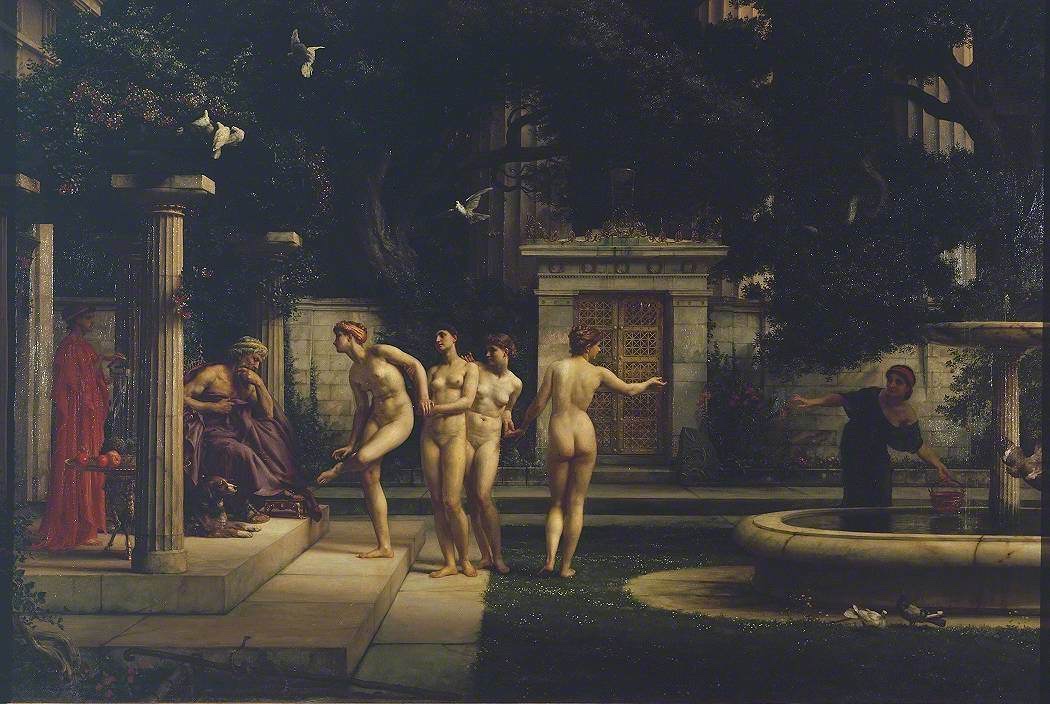
Plato, Theaetetus 176a to b, tr. B. Jowett
διὸ καὶ πειρᾶσθαι χρὴ ἐνθένδε ἐκεῖσε φεύγειν ὅτι τάχιστα. φυγὴ δὲ ὁμοίωσις θεῷ κατὰ τὸ δυνατόν· ὁμοίωσις δὲ δίκαιον καὶ ὅσιον μετὰ φρονήσεως γενέσθαι.
Wherefore we ought to fly away from earth to heaven as quickly as we can; and to fly away is to become like God, as far as this is possible; and to become like him, is to become holy, just, and wise.
- Divine KinshipZeus is Father and King. You approach the Gods as family.
- Spiritual PowerThe soul is cultivated through ordered practice.
- Truth and CharacterSatya and Ma’at govern how power is used.
- An Inheritance to InhabitPhilosophy, sacred images, prayer and festivals, alive today.
- A Daily PathA first action today and a rhythm for every day after.
- A Community and a CommitmentA place to belong and a rite of dedication.
I. Zeus and the Gods
“What Is Zevism?”
Zevism is the religion of Zeus and the Ancient Gods: the worship of Zeus, Father and King of the Gods, and a disciplined path by which the human soul grows toward Them.
Its name comes from Zeus. The Temple of Zeus teaches that the Gods are Eternal Essences, living divine intelligences whose existence and powers transcend nations, languages and historical periods.[1] Peoples across the world approached Them through different sacred names, symbols, philosophies and rites, and Zevism gathers that inheritance under its one Head.
Its law is Satya, Eternal Truth, which Zeus embodies and upholds, known in Egypt as Ma’at and in Greek as Aletheia.[2] Its aim is ὁμοίωσις θεῷ, becoming like God as far as possible.[3] Its door is open to anyone who seeks the Gods with sincerity.
Zeus is the Father of Gods and men, the King of the Gods, the Cosmic Sovereign. The Temple recognises Him under the names the civilisations gave Him: Dyeus Pater in the Indo-European tongue, Dyaus Pitar in the Vedic world, Jupiter in Rome, Amun in Egypt.[2][4] He holds the order of the cosmos, and He is just.
Under Him the Gods are many. The Rite of Dedication names Him the One God who protects the many Gods, under whose leadership all the Gods and Daemons serve.[5] Plurality is the order of a living cosmos: a divine family with a Father at its head. The Temple’s Declaration of Principles states it without qualification: “Zeus lives. Athena lives. Atum lives. Shiva lives.”[6] Meet a few of Them.
- Athena, wisdom. Hesiod sings that Zeus “gave birth from his own head to bright-eyed Tritogeneia”.[7] Wisdom proceeds from the Father. Athena gives counsel, craft and the victory won by intelligence.
- Apollo and Asclepius, healing. Apollo is the God of light, music, healing and prophecy.[8] The Homeric Hymn greets His son as “Asclepius, son of Apollo and healer of sicknesses”.[9]
- Aphrodite, beauty. The Goddess of love gives beauty and desire their sacred place in life. The Temple calls Her by Her own name: “Aphrodite is called Aphrodite.”[2]
- Hera, the Divine Mother. The one who dedicates their soul asks to be received by the Great Father and by “Hera the Divine Mother”.[5]
- Themis and Dike, rightful order. Zeus “married bright Themis who bare the Horae (Hours), and Eunomia (Order), Dike (Justice), and blooming Eirene (Peace), who mind the works of mortal men”.[7] Order and justice are His daughters. Ma’at names the same law.
These are Gods, living and present, and Their domains are Their powers in the world.
II. Your Place in the Divine Family
You are kin to the Gods. The Stoic teacher Epictetus put it to his students plainly:
Epictetus, Discourses I.9, tr. George Long · Read the passage
… from God have descended the seeds not only to my father and grandfather, but to all beings which are generated on the earth and are produced, and particularly to rational beings … why should not such a man call himself a citizen of the world, why not a son of God, and why should he be afraid of anything which happens among men?
He made the kinship a rule of conduct. When a slave brings only tepid water, Epictetus tells the angry master to bear with “your own brother, who has Zeus for his progenitor”.[10] Divine descent governs how you treat the person in front of you.
Zevism gives this kinship its religious form. In the Rite of Dedication the initiate becomes a son or daughter of Zeus and speaks the words of the Petelia gold tablet: I am a child of Earth and starry Heaven; my lineage is heavenly.
[5] Kinship brings a standard. Satya is the Cosmic Truth, the True and the Good; Ma’at is the Universal Cosmic Order that emanates from it, held by Zeus. Izfet is disorder and the collapse of existence. You stand inside that order, and your life either strengthens it or wears it away.
III. Power Given a Direction
The soul has a higher task: ὁμοίωσις θεῷ κατὰ τὸ δυνατόν, becoming like God as far as possible. Plato defines it in the same breath: to become holy, just and wise.[3] Zevism reads it as the real transmutation of the human essence toward the divine. That work is Theosis, the Magnum Opus.
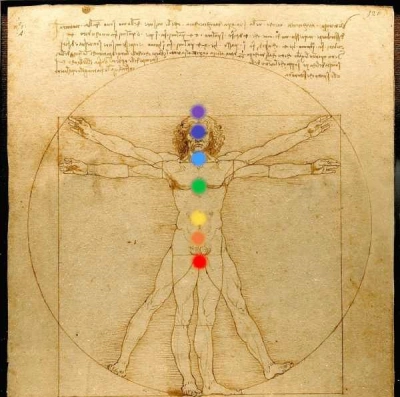
The Temple calls this the path of the Theophoros, one who bears the Divine “in understanding, character, and action”.[5] It has 4 dimensions:
- Meditation. δυνατόν, the capacity of power. The Temple’s programmes build the soul like a temple, floor by floor: body, mind, emotions, soul and Spirit.[11]
- Ethics. Φρόνησις and Justice. Ethics generate Arete, the vehicle the evolved soul uses to rise.
- The existential dimension. A whole life placed in the service of ὁμοίωσις θεῷ: work, family and choices ordered toward the Gods.
- Theurgy. Σοφία, connecting your intelligence to that of the Gods through prayer, ritual and hymn.
Power and truth travel together here. The Basic Meditation Program warns that emotions left unruled turn power against oneself and others, so the work begins at the ground and rises.[11] The Temple sets no date on which powers arrive. Its rule is mastery: move to the next programme only when the current one is mastered.
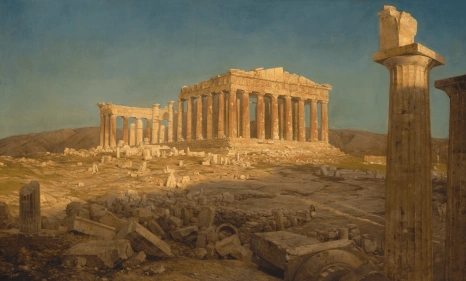
Public domain via Wikimedia Commons · Source and licence

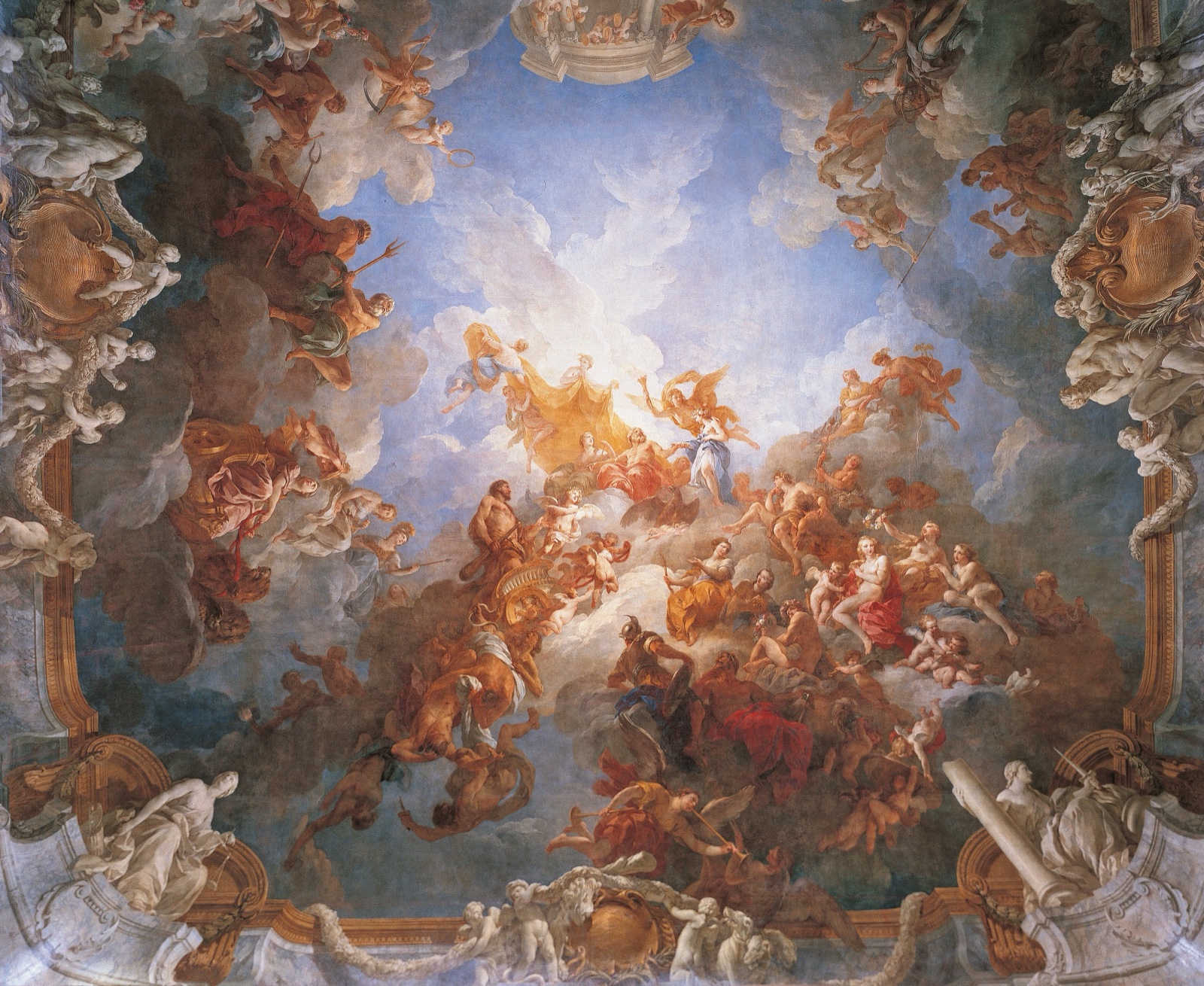
Heracles carries the meaning. Hesiod tells how, his grievous toils finished, Heracles took Hebe as his wife in snowy Olympus and lives among the immortal Gods, untroubled and unageing all his days.[7] The 12 Labours are the Magnum Opus told as a life.
IV. An Inheritance You Can Live In
The inheritance belongs in the present. Here is how it enters a day.
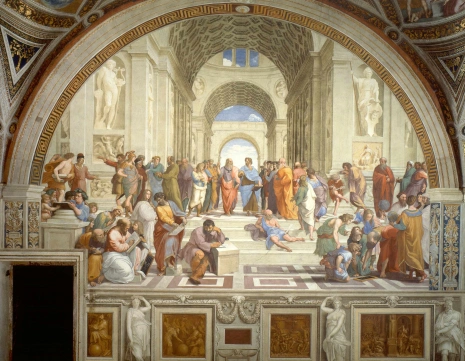
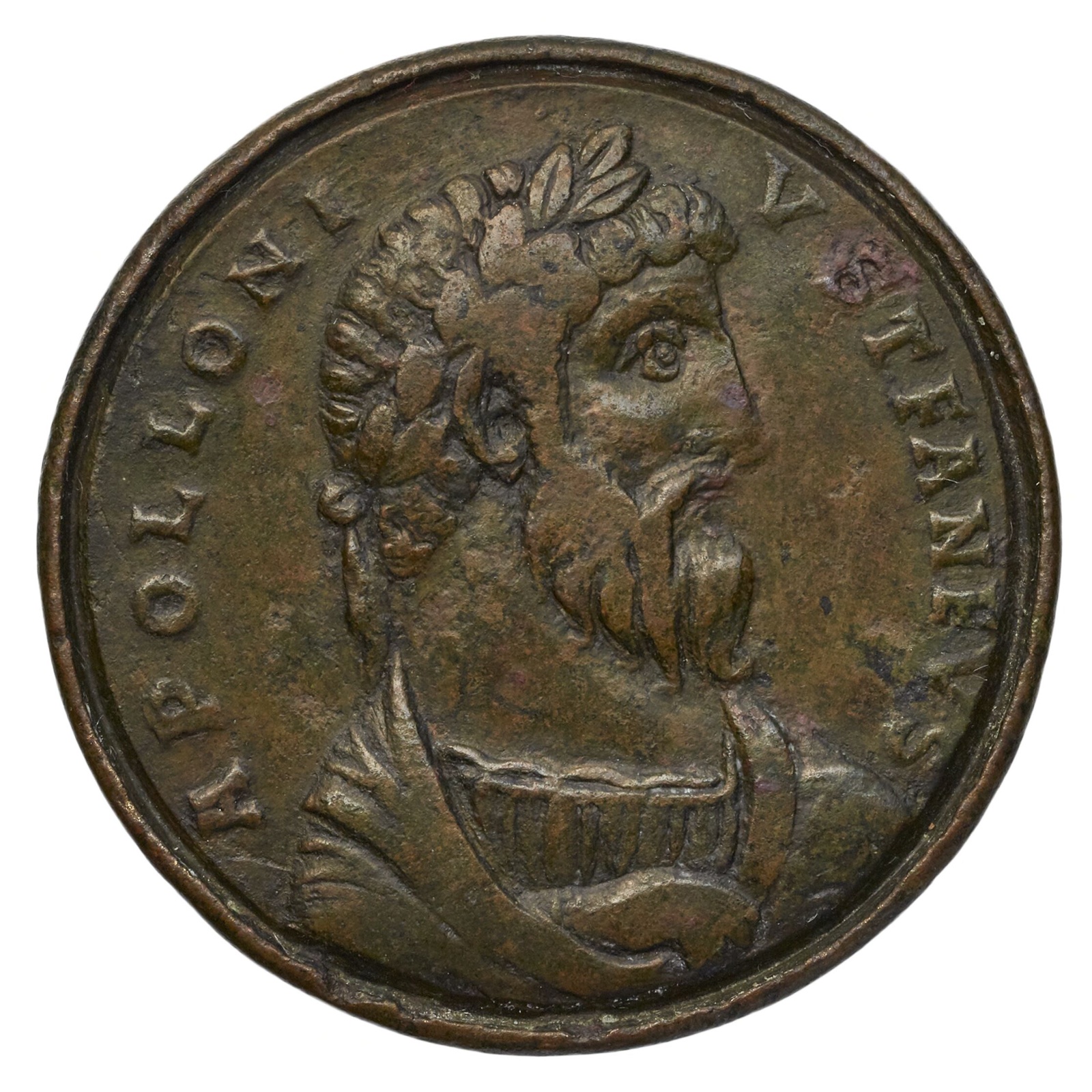
- A page of philosophy. Read Epictetus on kinship in the morning and carry 1 sentence into your work.
- A sacred image. An image of Zeus at a small shrine at home gives your attention a place to turn each day. It needs only a shelf, the image and a lamp.
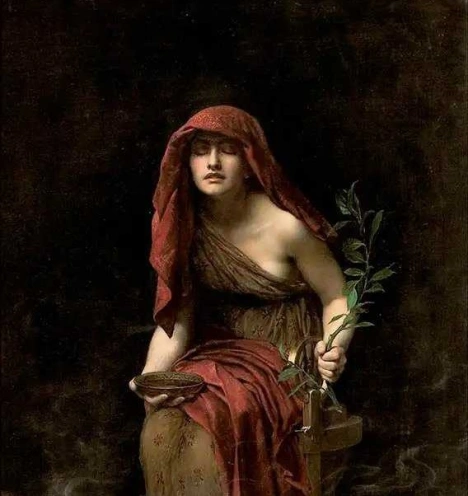
- A prayer. The Temple’s Prayer to Zeus for Protection may be spoken during a ritual or alone in silence, and requires no props, no candles, no ceremony.[12]
- A festival. The Temple keeps the Winter Solstice as the Holy Night of Zeus, with an order of rite for celebrating alone or in a gathering.[13] The year itself becomes a calendar of the Gods.
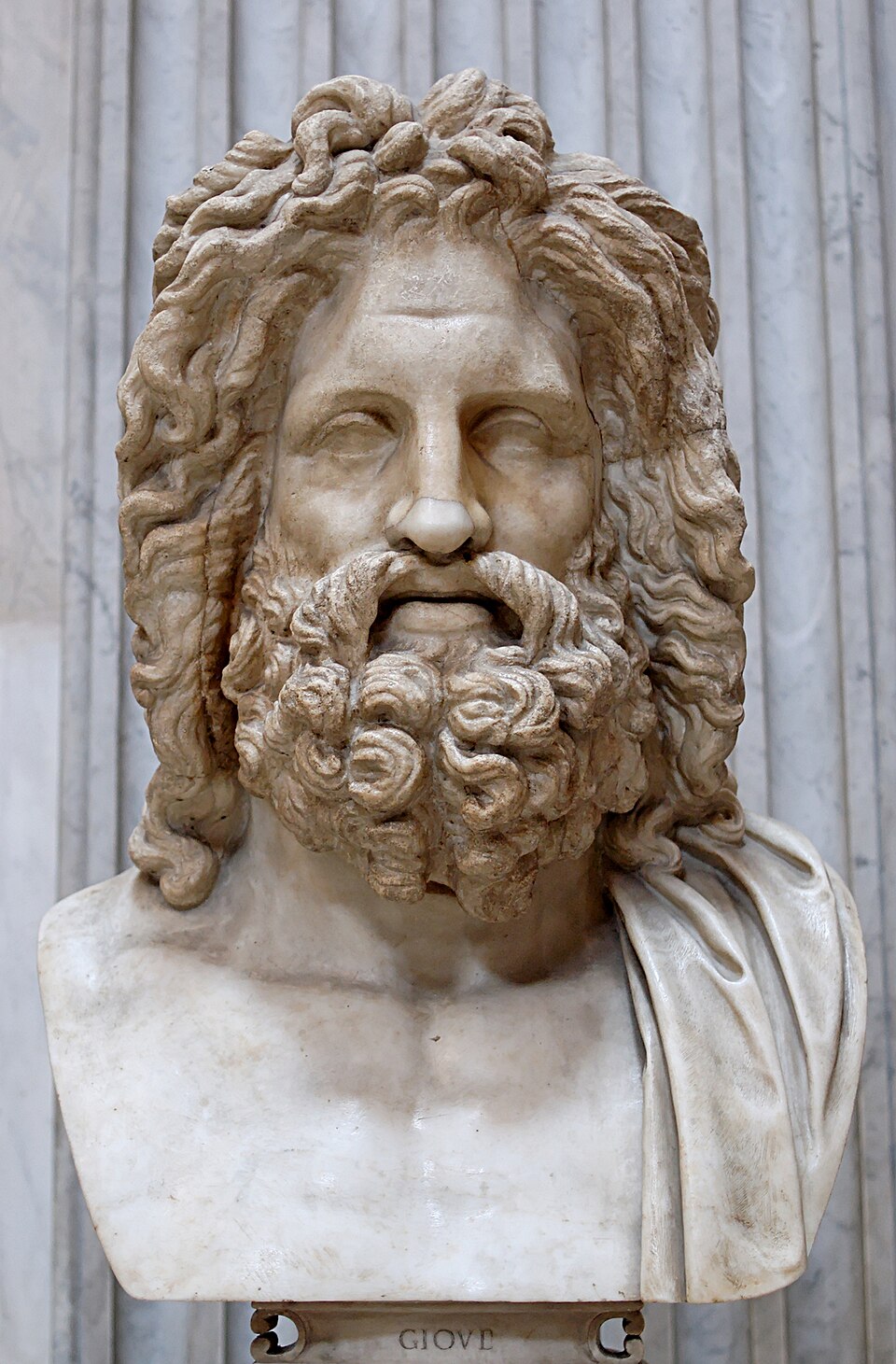
Public domain (PD-France), photo: Bibliothèque nationale de France, via Wikimedia Commons · Source and licence

V. An Ordinary Day with the Gods
This is an orientation: an illustration of rhythm. It replaces neither the Basic Meditation Program nor any rite of the Temple.
- Morning. Open the day with a prayer to Zeus. The Temple’s own instruction is to open and close each day’s practice with a prayer to Zeus and the Gods.[11]
- Practice. Give time to the practice that fits your stage. The Basic Program’s low pace is about 30 minutes, and on a short day 5 to 10 minutes is better than nothing.[11]
- Reading. One page from the Temple’s library or an ancient author, read slowly.
- Conduct. One considered act: speak honestly, keep a commitment, exercise restraint, treat someone justly.[1]
- Evening. Review the day, as the Pythagorean Day Meditation teaches, and close with a prayer.
VI. What Joining Means
Joining has 4 parts, and each has its own moment.
- Study. Learn who the Gods are and build character alongside power. The Temple’s Instructions for New People set this first.[1]
- Dedication. When you understand the commitment, the Rite of Dedication makes it: a free act of joining the divine family of Zeus and the Gods. It is personal, made once and permanent.[5]
- Practice. After the commitment, the Temple’s instructions begin daily power meditation with the Basic Meditation Program, kept every day at a pace you can hold.[11]
- Community. The Ancient Forums, the Temple’s official forums, hold discussion and questions; Vultus Templorum is its live chat; the Library of Thoth holds PDFs, audio sermons, video teachings and further writings.[1][14]
The prayer, the Basic Meditation Program and the Rite of Dedication are published openly on the Temple’s site and can be read without signing in or buying anything. Joining the forum discussion means signing up there. There are no required mediators between you and the Gods.[1]
VII. Why This Temple
The Temple of Zeus is a present-day religious institution serving an ancient tradition. It was formally founded as a distinct religious institution in 2026, and the communal histories represented in its formation reach into the early 2000s.[6]
The Gods are older than any institution. Their antiquity rests on the ancient record of Their worship, which the Temple cites openly. The Temple’s authority rests on what it has built: the Gods called by Their own names, a defined doctrine of Satya and Ma’at, a liturgy in English and Ancient Greek, 3 graded meditation programmes, festival rites, a library and a living community.[2][5][11][13]
Its conduct is fixed in its own words: it does not force, aggressively convert or psychologically coerce, and it leads by example. Freedom of belief is ordained by the Gods.[2]
VIII. The Questions That Decide
“Why Choose Zevism Rather Than Stop Believing?”
Because the Gods are real, and the soul has a task.
Unbelief answers only what you reject. It leaves the hunger for the Divine without an object and the soul without a discipline. Zevism gives both: a Father and Gods to approach, an aim in ὁμοίωσις θεῷ, and a method to pursue it.
“Why This Path Rather Than Generic Spirituality?”
Because Zevism gives you named Gods, a defined doctrine, an ordered practice and a conscious commitment.
Generic spirituality offers a mood. Zevism offers Zeus and the Gods by name, the law of Ma’at, 3 programmes with a rule of mastery, and a rite by which you choose.
“Can You Read Philosophy Without Joining?”
Yes. Plato and Epictetus are open to everyone.
Worship, practice and dedication change your relation to them. The reader of the Theaetetus studies the call to become like God. The Zevist undertakes it: prays to the Gods those philosophers honoured, trains the soul daily and orders a life toward that aim.
“Is It Only an Interest in Ancient Cultures?”
No. Zevism is a present religious life.
It has daily prayer, meditation, festivals kept this year, a community and the transformation sought through practice. The Declaration of Principles is plain: the Gods “are not cultural relics for academic study.”[6]
“Must You Accept Everything Before You Begin?”
No. Prayer and introductory learning are open to you now.
The Temple’s own instruction is to make your commitment when you understand it, after studying the foundations.[1] Read the rite in full before you perform it, and you will know exactly what you choose.
“Does This Require Greek Ancestry?”
No. Belonging is open to the person who chooses the Gods.
“Whatever your ancestry or nationality, you are welcome to study this inheritance and take part in its continuation.”[1] The Declaration of Principles adds: “The door is not barred by blood.”[6] There is no pedigree test.
“What About the Temple’s Present-Day Foundation?”
The Temple is a contemporary institution, formally founded in 2026. The Gods it serves are ancient.
The Temple claims no unbroken chain of officers reaching back to antiquity. It restores the worship of Gods whose antiquity the historical record establishes. Political and doctrinal changes did not extinguish Them, and a new house for Their worship is how a living tradition endures.[6]
IX. Begin Today
Today, read who Zeus is and speak the Prayer to Zeus for Protection, alone and in silence if you wish. Then follow the 7-day orientation, one question and one task a day, to a conscious decision about dedication. It needs no registration, purchase or public declaration.
If one question still holds you back, open its answer first: for readers raised Christian, or for readers raised Muslim.
The Zevist Teaching
Zevism returns you to the Gods and gives that return a disciplined form of life. You are kin to Zeus, the soul has a task, and the path to it begins with one prayer.
The Gods are near, and the path has a first step. Begin with Zeus today.
Continue
- Next. The first prayer and a 7-day orientation. Begin Your Return
- Raised Christian. Answers to the questions that hold Christians back. For Christians
- Raised Muslim. Answers to the questions that hold Muslims back. For Muslims
Sources
- High Priest Zevios Metathronos, Zevism: Instructions for New People, Temple of Zeus. templeofzeus.org
- High Priest Zevios Metathronos, Welcome, Temple of Zeus. templeofzeus.org
- Plato, Theaetetus 176a-b, Greek text with tr. B. Jowett. ellopos.net
- High Priest Zevios Metathronos, Our Eternal Head God: Zeus, Eternal Truth and His Identities, Temple of Zeus. templeofzeus.org
- High Priest Zevios Metathronos, Becoming an Initiate: The Rite To Dedicate Your Soul to Zeus and The Ancient Gods, Temple of Zeus, including the Petelia gold tablet (IG XIV 638, lines 6-7) as given there. templeofzeus.org
- Temple of Zeus, Declaration of Principles, 15 March 2026, Preamble and Articles IV and VIII. templeofzeus.org
- Hesiod, Theogony 901-903, 924-926 and 950-955, tr. H. G. Evelyn-White (Loeb, 1914). theoi.com
- High Priest Zevios Metathronos, The Borrowed Testament, Temple of Zeus. templeofzeus.org
- Homeric Hymn 16, To Asclepius 1, tr. H. G. Evelyn-White (Loeb, 1914). theoi.com
- Epictetus, Discourses I.9 and I.13, tr. George Long. classics.mit.edu; I.13 also in Long’s A Selection from the Discourses of Epictetus, gutenberg.org
- High Priest Zevios Metathronos and Pythia, Basic Meditation Program, Temple of Zeus, sections II, IV, V, VI and IX. templeofzeus.org
- High Priest Zevios Metathronos and Pythia, Prayer to Zeus for Protection, Temple of Zeus. templeofzeus.org
- Temple of Zeus, Cheimerinai Tropai, Bruma, Saturnalia, Winter Solstice, Yule. templeofzeus.org
- High Priest Zevios Metathronos, Our Sermons, Temple of Zeus, on the Library of Thoth and the forums. templeofzeus.org; libraryofthoth.org