





20 min read
Coming Home · Where the Fear Came From
The Inversion Was Politics
author: High Priest Zevios Metathronos
You were told the Ancient Gods are evil. Here is where that teaching came from: the verses that renamed Them, the laws that banned Their worship and the chronicles of destruction, each with its date and document. Read them, and the fear loses its hold.
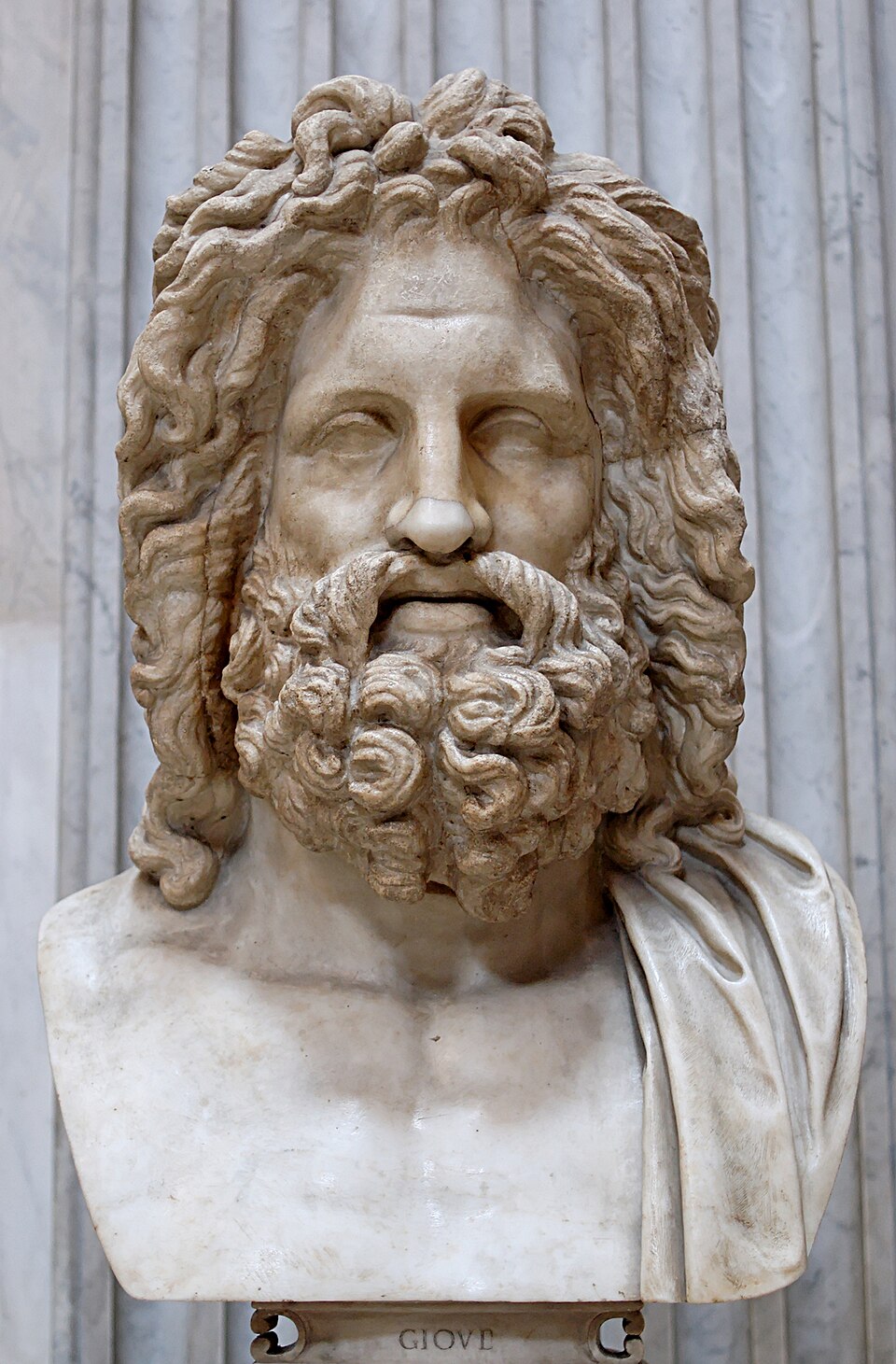
CC BY-SA 2.0, photo: Michal Osmenda, via Wikimedia Commons · Source and licence

- For
- Anyone told the Ancient Gods are evil
- You Will Find
- The texts, the laws year by year, and what never changed
- Next Step
- Begin Your Return
Herodotus, Histories 2.42.5, tr. A. D. Godley (1920)
Ἀμοῦν γὰρ Αἰγύπτιοι καλέουσι τὸν Δία.
For the Egyptians call Zeus “Amon”.
I. When Every People Knew Each Other’s Gods
Before the renaming, the ancient peoples recognised one another’s Gods. Herodotus explains why the Thebans hold the ram sacred: Zeus once showed Himself to Heracles wearing a ram’s head and fleece, and so the Egyptians give His image a ram’s head. The reason, in the Greek that heads this page: for the Egyptians call Zeus ‘Amon’
.[1]
He gave the Arabs the same courtesy: They call Dionysus, Orotalt; and Aphrodite, Alilat.
[1] The Goddess later honoured in Arabia as al-Lat stood in a Greek history under Aphrodite’s name more than 1,000 years before the conquest of Mecca.
Caesar did the same in Gaul. After Mercury, he writes, they worship Apollo, and Mars, and Jupiter, and Minerva
, and respecting these deities they have for the most part the same belief as other nations
.[2]
Tacitus gave the practice its name. At a grove of the Nahanarvali in Germany, he writes, the Gods are named interpretatione Romana, by Roman interpretation, as Castor and Pollux; their own name is Alcis.[3]
The Zevist Teaching
Each identification is an act of recognition: one people stood before another people’s altar and knew the God there. The Temple proclaims the same divine family through all its names. Zeus is Father and King of the Gods, the Amun of Thebes, the Jupiter of Rome, the Dyeus Pater of the Indo-European peoples.
No writer in this record calls another people’s Gods devils; that word came later. The Abrahamic Inversion gathers the names of Zeus across the world; The Name follows the one you already speak.
II. The Renaming in Scripture
The first break came in translation. The Hebrew psalm calls the Gods of the nations idols: For all the gods of the nations are idols
(Psalm 96:5).[4] The Greek translators of the Septuagint chose another word.
The Septuagint, Psalm 95:5 (96:5 in the Hebrew numbering), tr. L. C. L. Brenton (1851) · Read the passage
Ὅτι πάντες οἱ θεοὶ τῶν ἐθνῶν δαιμόνια, ὁ δὲ Κύριος τοὺς οὐρανοὺς ἐποίησεν.
For all the gods of the heathen are devils: but the Lord made the heavens.
Δαιμόνια comes from δαίμων, a divine spirit, a divine intelligence. Here it became a verdict on the Gods of every nation, and Brenton’s English gives the result: devils
.[5]
Of Israel turning to other Gods, Deuteronomy’s Greek says they sacrificed δαιμονίοις, καὶ οὐ Θεῷ: They sacrificed to devils, and not to God; to gods whom they knew not
(32:17).[5] Paul carried the rule into the Greek cities: the things which the Gentiles sacrifice, they sacrifice to devils, and not to God
(1 Corinthians 10:20).[6]
The Church Fathers built on these verses. Justin Martyr writes that men who did not judge with reason, not knowing that these were demons, they called them gods
.[7] Tertullian declares that the demons’ great business is the ruin of mankind
.[8] Augustine gives the verdict in the 7th book of The City of God: the gods of the nations are most impure demons, who desire to be thought gods
.[9]
Revelation adds a place. To the church at Pergamon the seer writes, I know where you are living, where Satan’s throne is
.[6] On Pergamon’s acropolis stood the Great Altar, its dedication restored by the excavators as to Zeus and Athena Nikephoros
, and the Temple reads the throne as that altar.[10] The verse names no monument, and other readers point to Rome’s imperial cult; the Temple’s reading rests on the altar.[11]
The Zevist Teaching
The Gods did not become evil; a word was changed. Daemon names a divine spirit; demon is the hostile revaluation of that word. Zevism restores the first meaning.
If you were taught that Zevism is Satanism, read the answer on the Christian page and SATANAMA: the Temple of Zeus worships Zeus and the Gods, whom that word was made to slander.
III. The Laws, Year by Year
Christian communities lived in Corinth and Rome before any emperor favoured them; Paul wrote to both. Once the faith held the throne, it used the law, and the Theodosian Code preserves what the emperors commanded.
| Year | Act | Source |
|---|---|---|
| 341 | Constantius and Constans: let superstition cease, let the madness of sacrifices be abolished | Codex Theodosianus 16.10.2[12] |
| 356 | Capital punishment for anyone proved to offer sacrifice or to worship images | Codex Theodosianus 16.10.6[12] |
| 380 | Edict of Thessalonica: all peoples to practise the religion of Peter; the rest judged demented and insane | Codex Theodosianus 16.1.2[13] |
| 391 | No one to approach the shrines, walk through the temples or revere the images | Codex Theodosianus 16.10.10[13] |
| 391 or 392 | The Serapeum of Alexandria destroyed under bishop Theophilus | Rufinus, Ecclesiastical History 11.23; Socrates, Ecclesiastical History 5.16[14][15] |
| 392 | All sacrifice banned, even the household’s offering to its Lar, Genius and Penates | Codex Theodosianus 16.10.12[13] |
| 415 | The philosopher Hypatia killed in Alexandria by a Christian crowd | Socrates, Ecclesiastical History 7.15[15] |
| 435 | Surviving temples and shrines to be destroyed and purified with the sign of the Christian religion | Codex Theodosianus 16.10.25[12] |
| 529 | Pagans barred from teaching; a decree to Athens forbids teaching philosophy and the laws | Codex Justinianus 1.11.10; Malalas, Chronicle 18.47[16] |
| 601 | Gregory the Great: keep the temples, destroy the idols, turn the feasts to the martyrs | Gregory, Epistola 76; Bede, Ecclesiastical History 1.30[17] |
| 609 | The Pantheon in Rome made a church | Bede, Ecclesiastical History 2.4[18] |
| about 723 | Boniface fells the Oak of Jupiterat Geismar and builds a chapel from its timber | Willibald, Life of Boniface 6[19] |
| 772 | Charlemagne destroys the Irminsul sanctuary of the Saxons | Royal Frankish Annals 772[20] |
| 782 | 4,500 Saxons handed over to be killed at Verden, where the Aller meets the Weser | Royal Frankish Annals 782; revised version 782[20] |
| 775 to 790 | Death for any Saxon who hides to avoid baptism and wishes to remain a pagan | Capitulatio de partibus Saxoniae 8[21] |
| 988 | Kiev: Perun’s idol cast into the Dnieper; the people summoned to baptism | Primary Chronicle, year 6496[22] |
| 996 to 997 | Olaf Tryggvason christianises Viken in Norway; those who oppose him are killed, mutilated or banished | Heimskringla, Saga of Olaf Trygvason 59[23] |
| 1147 | Bernard of Clairvaux: no truce with the Wends until either their rite or their nation is destroyed | Bernard, Epistola 457[24] |
| 1168 | Arkona: the Danes hew down the idol of Svantevit | Saxo Grammaticus, Gesta Danorum 14[25] |
| 1387 | Jogaila formally introduces Roman Christianity among his Lithuanian subjects | Encyclopaedia Britannica, “Lithuania: History”[26] |
In 341 the sons of Constantine wrote Cesset superstitio, sacrificiorum aboleatur insania: let superstition cease, let the madness of sacrifices be abolished.[12] In 380 the emperors ordered all peoples to practice that religion which the divine Peter the Apostle transmitted to the Romans
: The rest, whom We adjudge demented and insane, shall sustain the infamy of heretical dogmas
.[13] Its first targets were Christians of other creeds; its principle reached everyone.
In 391 the ban reached the temple door: no person shall approach the shrines, shall wander through the temples, or revere the images formed by mortal labor
.[13]
Codex Theodosianus 16.10.12, 8 November 392, tr. C. Pharr (1952), as quoted in The Conversation · Read the passage
No person at all … shall sacrifice an innocent victim to senseless images in any place at all or in any city. … He shall not, by more secret wickedness, venerate his lar with fire, his genius with wine, his penates with fragrant odours …
In 392 the law followed the household Gods to the hearth and forbade even the lamp: its Latin bans anyone who accendat lumina, imponat tura, serta suspendat, lights lamps, sets out incense or hangs garlands.[12]
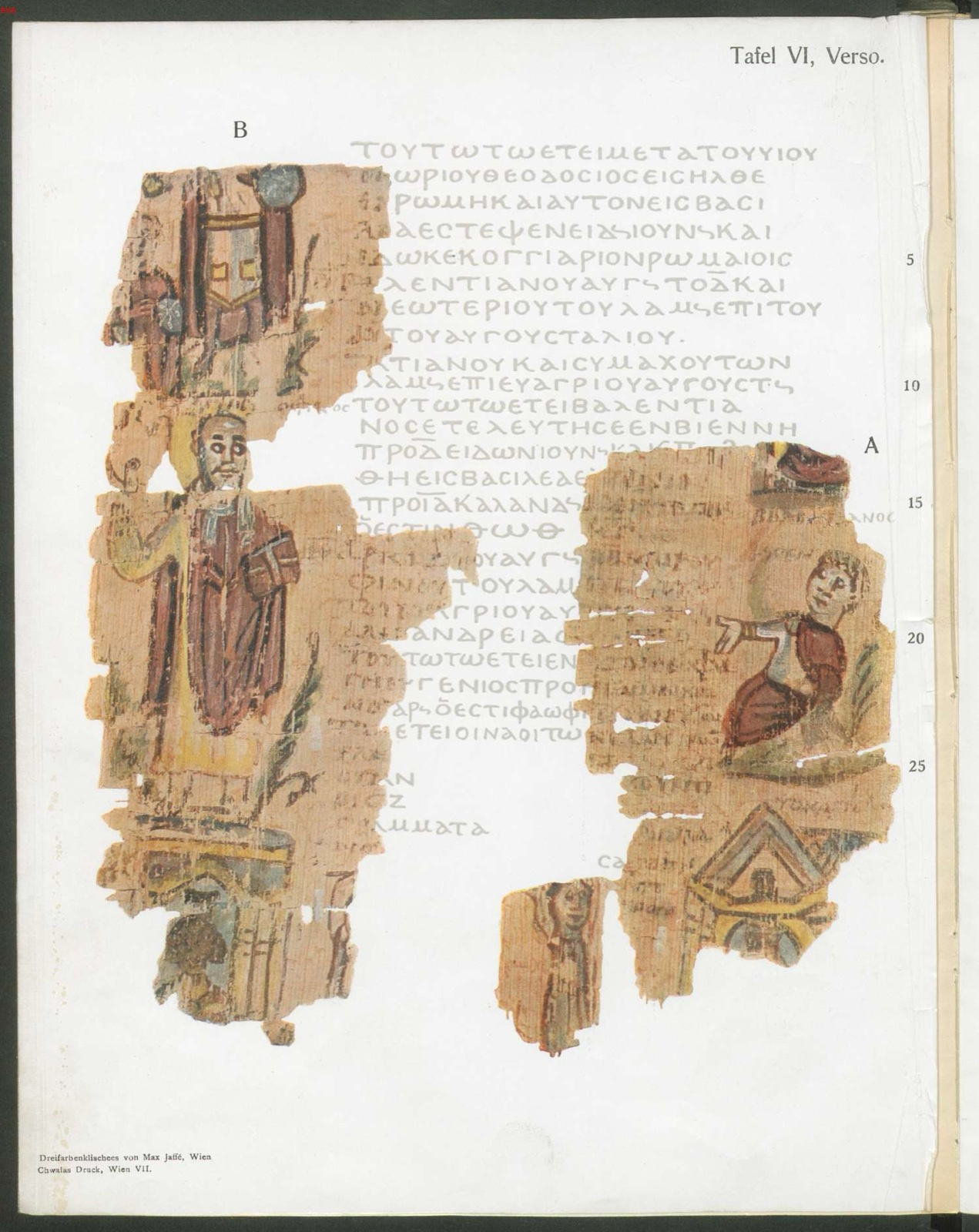
Destruction followed the laws. At the solicitation of Theophilus bishop of Alexandria the emperor issued an order
, Socrates writes, and Then he destroyed the Serapeum
; the images of the Gods were molten into pots and other convenient utensils for the use of the Alexandrian church
.[15] Rufinus tells how a soldier seized a double-headed axe
and struck the statue of Serapis on the jaw.[14]
Public domain via Wikimedia Commons · Source and licence

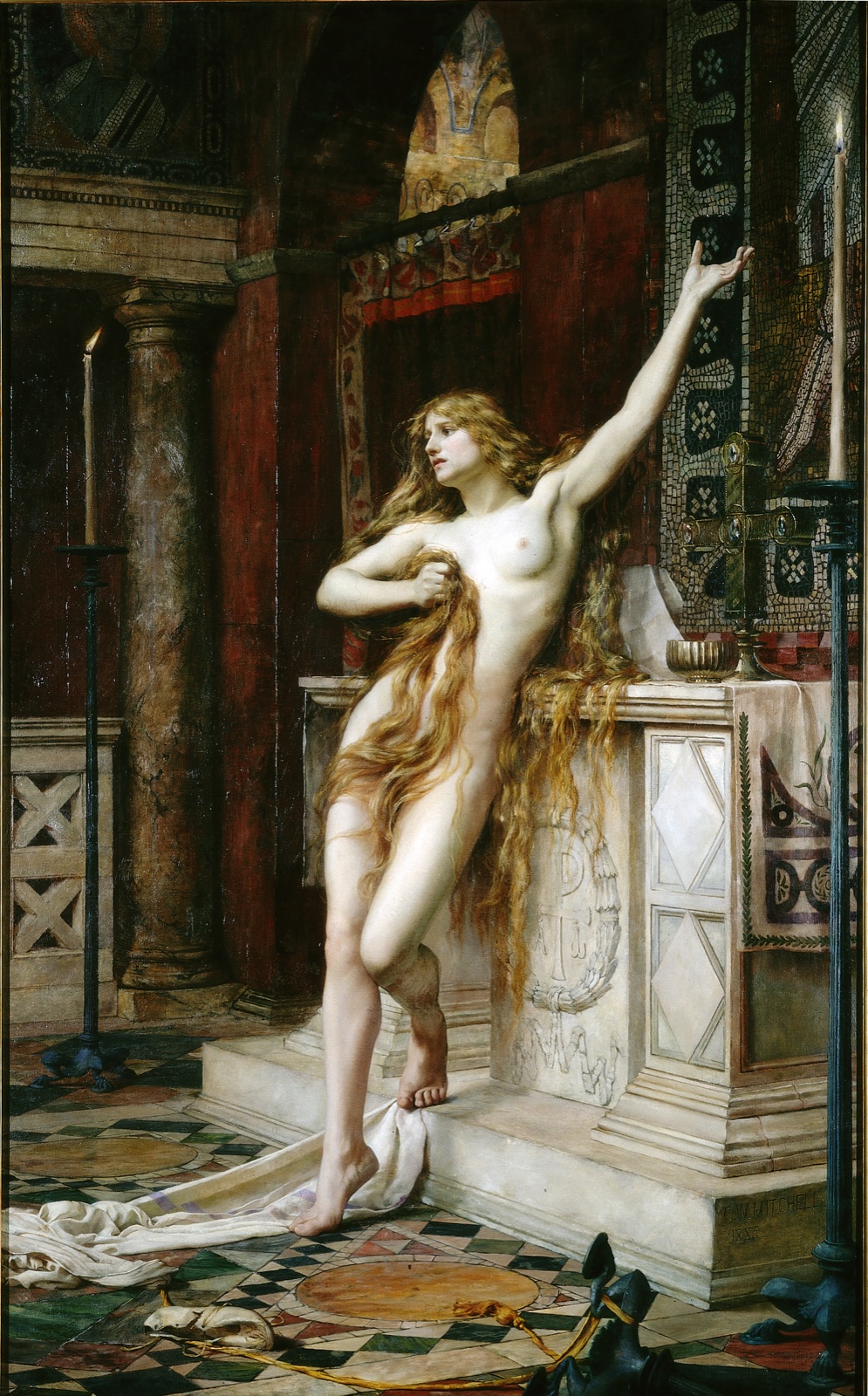
In 415 the philosopher Hypatia was waylaid by a band whose ringleader was a reader named Peter
; dragging her from her carriage, they took her to the church called Cæsareum, where they completely stripped her, and then murdered her with tiles
.[15]
Public domain via Wikimedia Commons · Source and licence

A law records a command, and the Code shows the old worship outliving each command: the emperors forbade sacrifice again in 356, 391, 392 and 435. A royal baptism records a ruler’s choice. In 1387, Britannica writes, Jogaila formally introduced Roman Christianity among his Lithuanian-speaking subjects
, and Newly baptized nobles were granted extensive privileges
.[26]
The entry for 529 has an exact scope: the Code bars pagans from teaching, and Malalas reports a decree sent to Athens ordering that no one should teach philosophy nor interpret the laws
.[16] Neither text names Plato’s Academy; both strike at the teachers. The figure for Verden is the annalist’s own: the Saxons handed over those most responsible for the revolt to be killed, IIIID, 4,500, quod ita et factum est, and so it was done.[20]
The Zevist Teaching
The fear you were given did not come from the Gods. Men who held power wrote it into law, and preachers repeated it until it felt like your own conscience. That is the inversion: a political act given a spiritual name.
The Inquisition is NOT Over carries the record on to the laws in force today.[27]
IV. Arabia
Arabia’s sanctuaries fell within a few years. Sahih al-Bukhari, the hadith collection Sunni Islam ranks highest, records the conquest of Mecca in 630.[28]
Sahih al-Bukhari 4287, narrated by Abdullah ibn Mas’ud, tr. M. Muhsin Khan · Read the passage
دَخَلَ النَّبِيُّ صلى الله عليه وسلم مَكَّةَ يَوْمَ الْفَتْحِ وَحَوْلَ الْبَيْتِ سِتُّونَ وَثَلاَثُمِائَةِ نُصُبٍ، فَجَعَلَ يَطْعُنُهَا بِعُودٍ فِي يَدِهِ وَيَقُولُ جَاءَ الْحَقُّ وَزَهَقَ الْبَاطِلُ، جَاءَ الْحَقُّ، وَمَا يُبْدِئُ الْبَاطِلُ وَمَا يُعِيدُ
When the Prophet (ﷺ) entered Mecca on the day of the Conquest, there were 360 idols around the Ka`ba. The Prophet (ﷺ) started striking them with a stick he had in his hand and was saying, “Truth has come and Falsehood will neither start nor will it reappear.”
Before the Prophet would enter the Kaaba, the idols were carried out, and with them the pictures of Abraham and Ishmael holding Azlams in their hands
, the divining arrows; he said, May Allah curse these people
, and that neither man had ever cast lots.[29] Muslim tradition reads this as Abraham’s house restored; the report shows the sanctuary full of images and Gods until that day.
The great Goddesses of the Arabs followed, and Ibn al-Kalbi’s Book of Idols records each end. Manah stood on the seashore at Qudayd until 'Ali demolished her, took away all her [treasures], and carried them back to the Prophet
. Al-Lat stood at al-Ta’if until the Prophet sent al-Mughirah ibn Shu'bah, who destroyed her and burnt her [temple] to the ground
. For al-'Uzza in the valley of Nakhlah, Khalid ibn al-Walid was sent to cut down her trees; he killed Dubayyah, her custodian, and the Prophet said: That was al-'Uzza. But she is no more.
[30]
In Yemen stood Dhu l-Khalasa, a house (of an idol) belonging to the tribe of Khath'am
, called the Kaaba of Yemen. Jarir ibn Abdullah rode against it with 150 horsemen of Ahmas and dismantled and burnt it
; in a second report he says, we dismantled it and killed whoever was present there
.[31]
When the Prophet died in 632, some Arab tribes refused the alms tax to Medina. Abu Bakr answered: By Allah! I will fight those who differentiate between the prayer and the Zakat
.[32] The Temple counts these Ridda Wars of 632 to 633 among the Varvarim: tribes that disputed a political succession were declared apostates.[33]
Arabia honoured the Gods before this monopoly: the Muslim page sets out that older world.
V. What Changed and What Did Not
The inversion kept what it could use and condemned the rest. The Temple’s Declaration of Principles names it: Christianity built its churches upon the foundations of pagan temples, its calendar upon pagan festivals, its saints upon pagan gods
.[34]
- The temples became churches. Gregory the Great wrote to Abbot Mellitus in 601 that
the temples of the idols in that nation ought not to be destroyed; but let the idols that are in them be destroyed
; consecrated water, altars and relics were to follow.[17] In Rome, Pope Boniface IV received the Pantheon from the Emperor Phocas and made it a church,the company of devils being expelled
.[18] - The feasts became saints’ days. Since the English
are used to slaughter many oxen in sacrifice to devils, some solemnity must be given them in exchange for this
, Gregory had the peoplebuild themselves huts around their one-time temples and celebrate the occasion with religious feasting
on the feasts of the martyrs.[17] Bede records that the English Easter month kept the name of the Goddess Eostre,calling the joys of the new rite by the time-honoured name of the old observance
.[35] The Temple keeps them under their own names: the Winter Solstice, the Holy Night of Zeus, and the Spring Equinox. - The Gods were called demons. Scripture and the Fathers supplied the word; the emperors supplied the penalty.
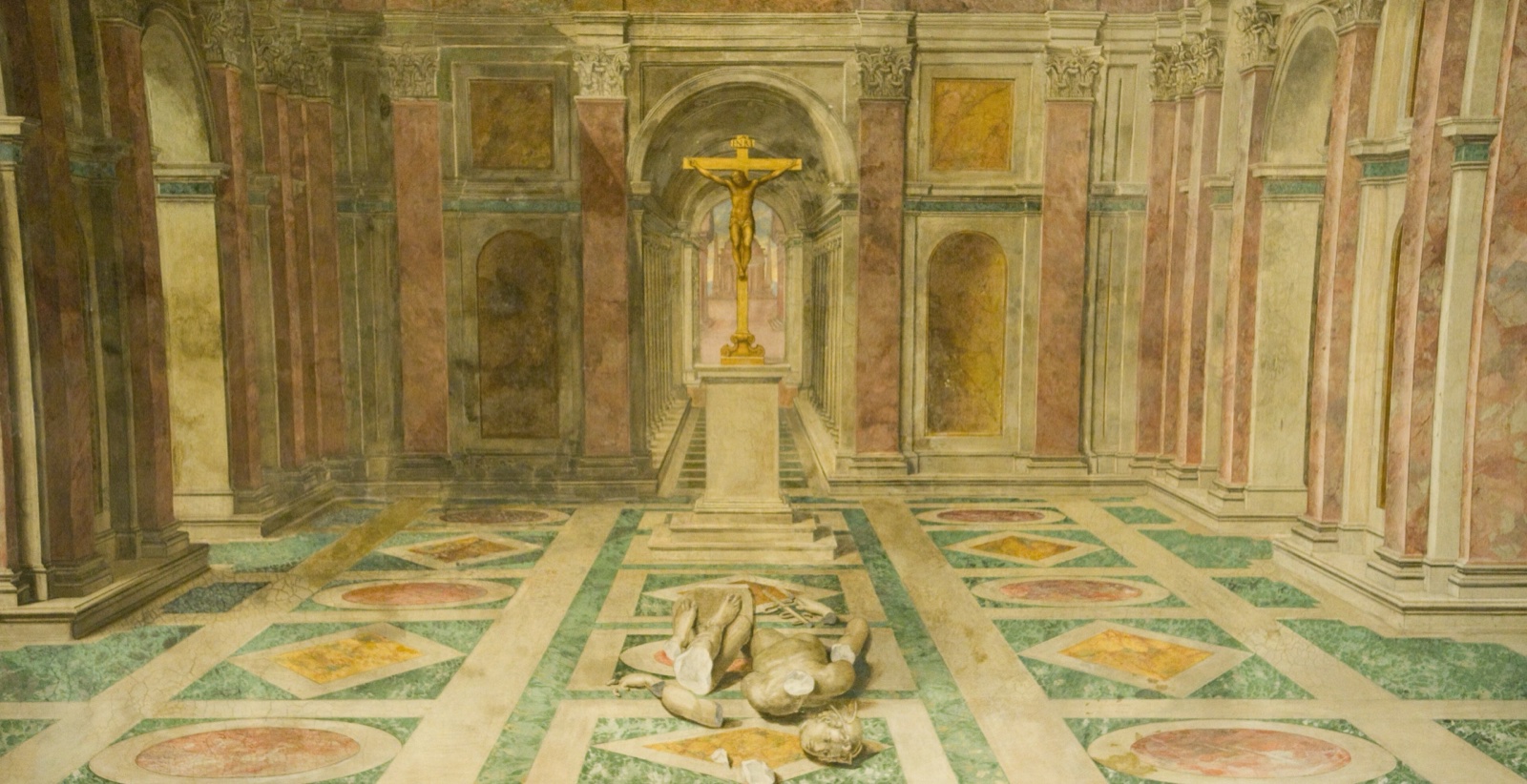
The Church painted the replacement itself. In the Sala di Costantino of the Vatican Palace, Tommaso Laureti completed the Triumph of Christianity over Paganism in 1585 under Sixtus V. The Vatican Museums give its subject as the destruction of the pagan idols and their replacement with the image of Christ
.[36] The painting at the head of this page is that ceiling.
A Christian can call Gregory’s letter missionary accommodation. The Zevist conclusion stands: the sacred places and the feasting were kept, and the worship of the Gods was taken out of them.
The Gods did not change. The Temple’s teaching on the inversion is plain: the All-Father, whatever name anyone gives Him, is always the same underlying true God of the Universe, never to be moved, changed, or replaced
.[10] Zeus Xenios still guards the guest; even under Antiochus IV the temple on Mount Gerizim was renamed for Zeus Xenios, Zeus the Protector of Strangers
. Zeus Horkios still guards the oath; at Olympia the athletes swore before His image, a thunderbolt in each hand.[37]
The Zevist Teaching
Statues can be broken and temples renamed; the Gods are untouched by it. Zeus is Father and King of the Gods today as He was when the Thebans honoured Him as Amun and the Greeks swore by Him at Olympia. Their names are eternal, and Their worship waits for those who return.
VI. Why: Power over the Spirit
But I Heard This Is Evil.
You heard it because it was taught, by law and sermon, for political reasons, and what it took from you was your spiritual potential.
The Temple names the pattern Varvarim, from the Greek βάρβαρος: wars and organised violence performed in the Name of God, or justified by claimed divine authority
. Its target is the spirit. Spiritual advancement requires peace, time, stability, and access to knowledge. The Varvarim destroy all four.
A people whose libraries have been burned have no access to the accumulated wisdom of their ancestors
.[33] The law against the household shrine cut the line by which a family received the Gods from its forefathers.
Eilotil names what was made of the soul that remained: the conversion of the relationship between Man and God from the natural bond of child and parent into the imposed bond of slave and master
. Its lock is the ban on becoming like God: The prohibition of Theosis is the lock on the prison door of the Eilotil.
[38] Zevism opens that door. Its aim is ὁμοίωσις θεῷ κατὰ τὸ δυνατόν, becoming like God as far as possible.
The charge falls on systems, never on believers: Eilotil names a system, not a soul.
[38] You were raised inside that system, and you are free to leave it.
The Declaration of Principles calls this history the Cycle of Varvarim: Each successor tradition justified its violence by pointing to the violence of its predecessor. Each claimed that its destruction was holy because the thing destroyed was unholy.
The Temple’s answer is to end the cycle: We will never convert by force, never suppress by violence, never build our congregation upon the ashes of another’s temple.
[34]
VII. What Their Own Leaders Say Now
The Catholic Church’s present leadership has conceded part of this record. Read each statement at its actual scope.
- The Day of Pardon, 12 March 2000. John Paul II asked pardon
for the violence some have used in the service of the truth
andfor the distrustful and hostile attitudes sometimes taken towards the followers of other religions
.[39] The liturgy’s Universal Prayer confessed that Christianshave violated the rights of ethnic groups and peoples, and shown contempt for their cultures and religious traditions
.[40] It confesses in general terms and names no law and no God. - Nostra Aetate, 28 October 1965. The Council taught that
The Catholic Church rejects nothing that is true and holy in these religions.
The same paragraph continues:Indeed, she proclaims, and ever must proclaim Christ
.[41] It concedes truth and holiness in other religions, naming Hinduism and Buddhism, and keeps the Church’s own claim. - The Doctrine of Discovery, 30 March 2023. A joint statement of the Vatican’s dicasteries declares that the Church
repudiates those concepts that fail to recognize the inherent human rights of indigenous peoples
, says the papal documents behind the doctrine weremanipulated for political purposes by competing colonial powers
, and recognisesthe terrible effects of the assimilation policies and the pain experienced by indigenous peoples
.[42] It concerns the colonial era and indigenous peoples.
The Zevist Teaching
None of these statements endorses Zevism, and none needs to. Together they concede the ground this page stands on: violence served a creed, other peoples’ religious traditions were held in contempt, and sacred documents were bent to political purposes. The inversion was politics.
VIII. Read It Yourself
Every line above can be checked; the Sources below link each passage. Begin with these editions.
- The Theodosian Code. Clyde Pharr’s translation, The Theodosian Code and Novels and the Sirmondian Constitutions (Princeton, 1952), book 16, titles 1 and 10.
- Bede. Ecclesiastical History of the English People 1.30 and 2.4; The Reckoning of Time 15, tr. Faith Wallis.
- The Frankish record. The Royal Frankish Annals in B. W. Scholz, Carolingian Chronicles (1970), and the Capitulary for Saxony, tr. D. C. Munro.
- Arabia. Sahih al-Bukhari at sunnah.com (4287, 1601, 3020, 4355, 1399) and Ibn al-Kalbi, The Book of Idols, tr. Nabih Amin Faris (Princeton, 1952).
Then turn to the Gods. The worship the laws of 391 and 392 forbade, a lamp lit, incense offered, a garland hung at the household shrine, is open to you again, and the Temple sets no mediator between you and Them.
Zeus Xenios receives the guest who comes to His house. Begin Your Return gives you the first prayer and a 7-day orientation: speak His name, light the lamp and take up the worship your forefathers were made to set down.
The statues fell; the Gods remained. Zeus is Father and King, and His house is open to you.
Continue
- Next. Restore the worship in your own home. Begin Your Return
- Raised Christian. The faith before the faith. For Christians
- Raised Muslim. Before the name became one. For Muslims
Sources
- Herodotus, Histories 2.42 and 3.8, tr. A. D. Godley (Loeb Classical Library, 1920); Greek of 2.42.5 from the Hamburg teaching edition of 2.41-42. 2.42 (English) · 3.8 (English) · 2.41-42 (Greek)
- Julius Caesar, Gallic War 6.17, tr. W. A. McDevitte and W. S. Bohn; Latin text from The Latin Library. English · Latin
- Tacitus, Germania 43, Latin text. The Latin Library
- Psalm 96:5, King James Version. biblegateway.com
- The Septuagint, Psalm 95:5 (96:5 in the Hebrew numbering) and Deuteronomy 32:17, Greek text and English tr. L. C. L. Brenton (1851). Psalm 95 (Greek) · Psalm 95 (Brenton) · Deuteronomy 32 (Greek) · Deuteronomy 32 (Brenton)
- 1 Corinthians 10:20, King James Version; Revelation 2:13, New Revised Standard Version Updated Edition. KJV · NRSVue
- Justin Martyr, First Apology 5, tr. M. Dods and G. Reith (ANF 1). newadvent.org
- Tertullian, Apology 22 to 23, tr. S. Thelwall (ANF 3). Chapter 22 · Chapter 23
- Augustine, The City of God 7.33, tr. M. Dods (NPNF1 2). ccel.org
- Temple of Zeus, The Abrahamic Inversion, with its sources on Pergamon, the Great Altar and Psalm 95:5. templeofzeus.org/theinversion
- High Priest Zevios Metathronos, SATANAMA: The Mantra and the Word, on Revelation 2:13 and the imperial-cult reading (citing S. J. Friesen, JSNT 27.3, 2005). templeofzeus.org/satanama
- Codex Theodosianus 16.10.2 (341), 16.10.6 (19 February 356), 16.10.10 (24 February 391), 16.10.12 (8 November 392) and 16.10.25 (14 November 435), Latin text of the Mommsen edition as reproduced in a Greek collection of the Theodosian and Justinian laws; 16.10.2 also in F. Sini, Aspetti giuridici e rituali della religione romana, ch. 3. Latin texts · Sini
- Clyde Pharr, tr., The Theodosian Code and Novels and the Sirmondian Constitutions (Princeton, 1952): 16.1.2 and 16.10.10 as reproduced in Encyclopaedia Romana, “Paganism and Rome”; 16.10.12 as reproduced in “Mythbusting Ancient Rome: did Christians ban the ancient Olympics?”, The Conversation. 16.1.2 and 16.10.10 · 16.10.12
- Rufinus, Ecclesiastical History 11.23, tr. P. R. Amidon (Oxford, 1997), pp. 80-82, as reproduced by R. Pearse. roger-pearse.com
- Socrates Scholasticus, Ecclesiastical History 5.16 and 7.15, tr. A. C. Zenos (NPNF2 2). Book 5 · Book 7
- Codex Justinianus 1.11.10 and John Malalas, Chronicle 18.47, in the translations quoted by J. Hannam, “Emperor Justinian’s Closure of the School of Athens”. bede.org.uk
- Gregory the Great to Abbot Mellitus, 601: Epistola 76, PL 77: 1215-1216 (Internet Medieval Sourcebook), and the same letter in Bede, Ecclesiastical History 1.30. Fordham · Bede 1.30
- Bede, Ecclesiastical History 2.4. ccel.org
- Willibald, Life of Saint Boniface 6, tr. C. H. Talbot, The Anglo-Saxon Missionaries in Germany (1954). Fordham
- Royal Frankish Annals (Annales regni Francorum) 772 and 782, Latin text; the revised version of the Annals for 782, tr. P. D. King, Charlemagne: Translated Sources (1987). Latin · Revised Annals
- Charlemagne, Capitulary for Saxony (Capitulatio de partibus Saxoniae) 7 to 9, tr. D. C. Munro (1900), dated by the edition 775 to 790. Fordham
- The Russian Primary Chronicle, Laurentian Text, tr. S. H. Cross and O. P. Sherbowitz-Wetzor (1953), the baptism of Kiev under year 6496 (988). uncg.edu
- Snorri Sturluson, Heimskringla, Saga of Olaf Trygvason 59, tr. S. Laing. sacred-texts.com
- Bernard of Clairvaux, Epistola 457, in Sancti Bernardi Opera 8, ed. J. Leclercq and H. Rochais (Rome, 1977), pp. 432-433 (PL 182, cols. 651-652), as quoted in Dygo, “Bernard z Clairvaux, heretycy i poganie”. rcin.org.pl
- Saxo Grammaticus, Gesta Danorum, book 14, the fall of Arkona, as quoted in “How to Destroy Gods”, Medievalists.net (2015). medievalists.net
- Encyclopaedia Britannica, “Lithuania: History”. britannica.com
- High Priest Zevios Metathronos, The Inquisition is NOT Over. templeofzeus.org/enlightenment-inquition-not-over
- Sahih al-Bukhari 4287 (Book 64, Hadith 320), narrated by Abdullah ibn Mas’ud, tr. M. Muhsin Khan. sunnah.com
- Sahih al-Bukhari 1601 (Book 25, Hadith 87), narrated by Ibn Abbas. sunnah.com
- Hisham ibn al-Kalbi, The Book of Idols (Kitab al-Asnam), tr. N. A. Faris (Princeton, 1952), pp. 14, 16, 18 and 20-21. archive.org
- Sahih al-Bukhari 3020 (Book 56, Hadith 229) and 4355 (Book 64, Hadith 381), narrated by Jarir ibn Abdullah. 3020 · 4355
- Sahih al-Bukhari 1399-1400 (Book 24, Hadith 5), narrated by Abu Huraira. sunnah.com
- High Priest Zevios Metathronos, Liturgical Terms: Varvarim. templeofzeus.org/liturgical-terms-varvarim
- Temple of Zeus, Declaration of Principles, III.V, “On Violence and the Abrahamic Precedent”. templeofzeus.org/doctrines-declarationofprinciples
- Bede, The Reckoning of Time 15, tr. Faith Wallis (Liverpool University Press), pp. 53-54, as reproduced by R. Pearse. tertullian.org
- Vatican Museums, “Triumph of Christianity over Paganism”, Sala di Costantino. museivaticani.va
- High Priest Zevios Metathronos, Zeus Horkios: El-Berith, Lord of the Covenant, on 2 Maccabees 6:2 and Pausanias on the Zeus of the Council Chamber at Olympia. templeofzeus.org/zeus-horkios
- High Priest Zevios Metathronos, Liturgical Terms: Eilotil. templeofzeus.org/liturgical-terms-eilotil
- John Paul II, Homily for the Day of Pardon, 12 March 2000. vatican.va
- Universal Prayer, Confession of Sins and Asking for Forgiveness, Day of Pardon, 12 March 2000, section V. vatican.va
- Second Vatican Council, Nostra Aetate 2, 28 October 1965. vatican.va
- Dicasteries for Culture and Education and for Promoting Integral Human Development, Joint Statement on the “Doctrine of Discovery”, 30 March 2023, paragraphs 6 and 7. press.vatican.va