





13 min read
The Elephant of Indra
author: High Priest Zevios Metathronos
ἐλέφας (eléphas)
Throne of Indra-Zeus, head of Ganesha, mount of Dionysus's triumph: power that rules by patience.
Basile Morin · CC BY-SA 4.0 · Wikimedia Commons

The elephant carries the King of the Gods. Indra rides the white Airavata, Ganesha wears the elephant's head as lord of beginnings, and Dionysus comes home from India on an elephant's back. In the Temple's teaching Indra is Zeus, and the elephant is the steady throne of His sovereignty: strength that never needs to prove itself.
| Realm | Beasts of the Earth |
|---|---|
| Greek | ἐλέφας (eléphas) |
| Latin | elephans (Pliny) |
| Other Names | Sanskrit gaja, gajendra "lord of elephants", Airāvata (Bhagavadgītā 10.27) |
| Species | Elephas maximus (Asian elephant) and its African kin |
| Gods | Indra (Zeus) with Airavata, Ganesha, Lakshmi (Gajalakshmi), Dionysus (the Indian triumph) |
| Material Capacity | A trunk of about 150,000 muscle units; calls below human hearing |
| Spiritual Capacity | Stable sovereignty; the removal of obstacles; memory of duty; natural piety |
| Element and Sphere | Earth and rain; the Sun and Moon; the threshold of beginnings |
The Living Animal
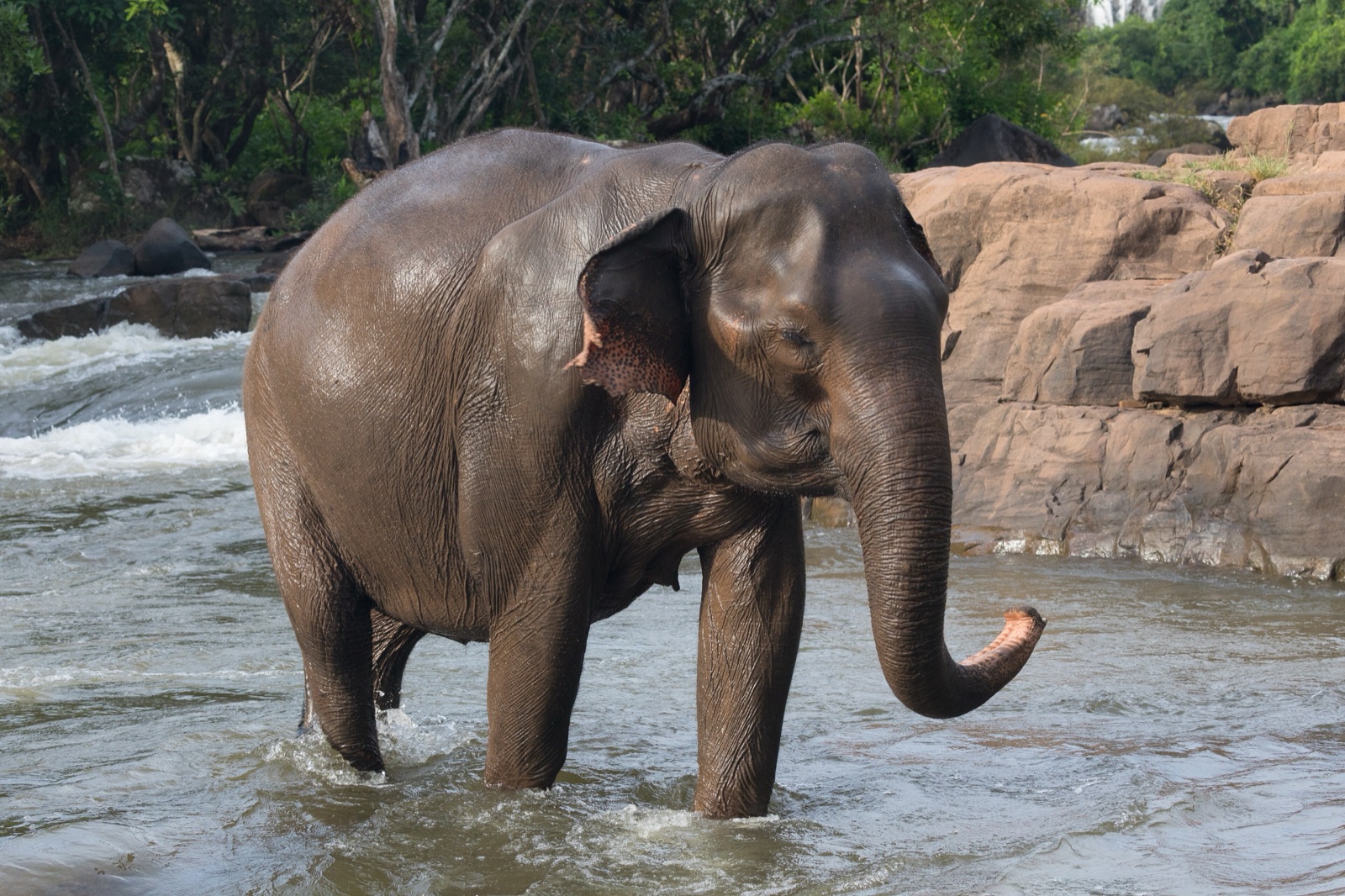
The Asian elephant, Elephas maximus, is slightly smaller than its African cousins, yet an adult still weighs on average from 2,750 to 5,420 kg[1]. It lives in scrub forest and rainforest in India, Nepal and parts of Southeast Asia[2], now in isolated pockets that reach Sumatra and Borneo[1]. Its ears are smaller than the African elephant's, and usually only the males show tusks[2]. Asian elephants typically live into their mid-50s[1].
The trunk is the wonder of the species. It holds about 150,000 muscle units and tendons[1]; San Diego Zoo Wildlife Alliance counts 8 major muscles on each side and 150,000 muscle fascicles through the whole organ[2]. The elephant uses it as a hand to grab, hold, pick up, reach, touch, pull, push and throw; the same trunk lifts heavy tree trunks and picks up a single piece of straw[2]. It is also the nose that draws air to the lungs and the channel through which the animal drinks[2].
The brain is large, from 4 to 6 kg, and the species has a great capacity to learn[1]. Unlike African elephants, Asian elephants do not have a matriarch[1].
Elephants speak below the threshold of human hearing. Humans with very good hearing can barely detect sounds at 20 Hz, and infrasound lies beneath that limit[3]. At the Washington Park Zoo in Portland, Oregon, the bioacoustician Katy Payne stood among the Asian elephants and sensed a thrumming in the air; in 1984 she found that much of their communication happens below human hearing, and she surmised that she was feeling the elephants talk rather than hearing them[3]. Another elephant can hear these low calls up to 8 km away[2], and in Africa they may travel as far as 10 km[4].
The Asian elephant is Endangered, with an estimated 37,000 to 57,000 animals[1]. It ranges through 13 countries of South and Southeast Asia; habitat loss and fragmentation are the gravest threat, and on average 70 percent of elephants now live outside protected areas[5]. Where it survives it keeps forest and grassland whole and spreads germinating seeds in its dung[5].
The Spiritual Capacity: The Throne of the King
In Zevism the elephant is the throne of the King of the Gods. Indra, the king of the Gods, who brings rain as God of the thunderbolt and slays the drought-dragon Vritra, is often shown riding His white elephant Airavata[6]. The Temple teaches that Indra is Zeus; the elephant is therefore the mount of Zeus in India, the steady body on which the sovereign of heaven sits while the thunder goes out from Him.
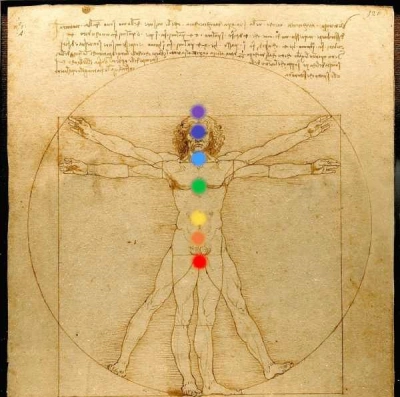
Its spiritual capacity is stable sovereignty. The lion strikes; the elephant holds. In the soul it is the base chakra made royal: weight, patience and rootedness that let the higher centres act without fear of falling. A ruler without this ground is a storm without a mountain; a Zevist without it cannot carry the light raised in meditation.
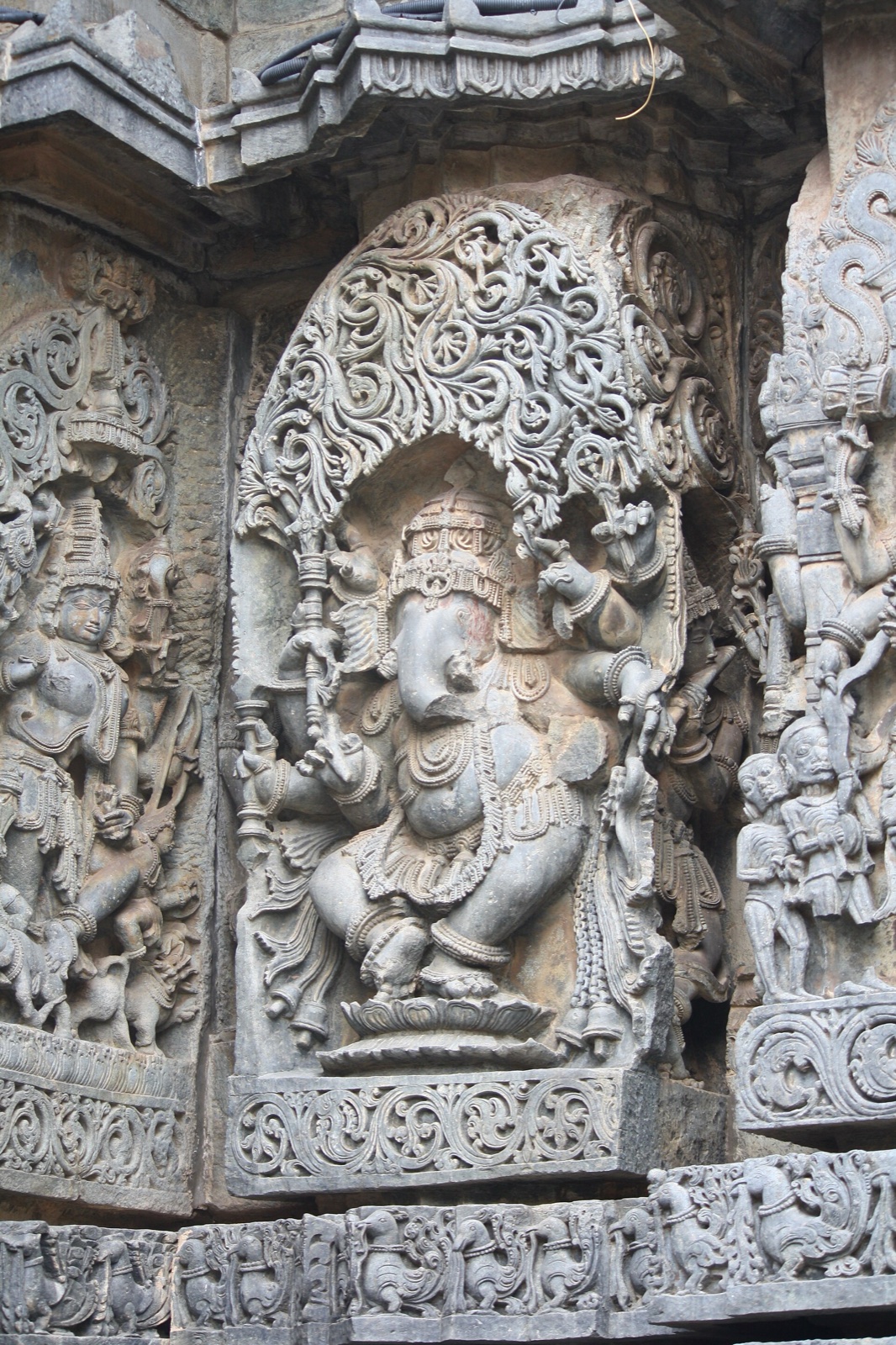
The elephant also opens the way. Ganesha, the elephant-headed God of beginnings, is the remover of obstacles, worshipped before any major enterprise and honoured as patron of scribes and authors[7]. He is held to be the child of Shiva and Parvati[7], and the Temple teaches that Shiva is one of the 3 faces of the cosmic power that Zeus embodies as one. The elephant-headed son of that face clears the threshold of every work: in the soul, the faculty that removes its own obstructions before it starts.
Pliny saw the elephant as the most nearly human of beasts: it remembers the duties it has learned, it has honesty, wisdom and justice, and it holds a religion, a reverence for the stars, the Sun and the Moon[8]. He reports that in the forests of Mauretania the herds go down at the new moon to a river called Amilo, purify themselves by sprinkling water, salute the star and return to the woods[8]. In the Temple's reading the worship of the Gods is written into nature itself, and the noblest of the beasts keeps it without being taught.
Its strength is ruled by mercy. Pliny says the elephant is so gentle toward weaker creatures that it moves aside with its trunk the sheep it meets so as not to trample one unawares; it harms none unless provoked, and when cavalry surrounds the herd it takes the weak, the tired and the wounded into the middle of the column[8]. This is Arete in the body: power that serves, the base chakra joined to the heart.
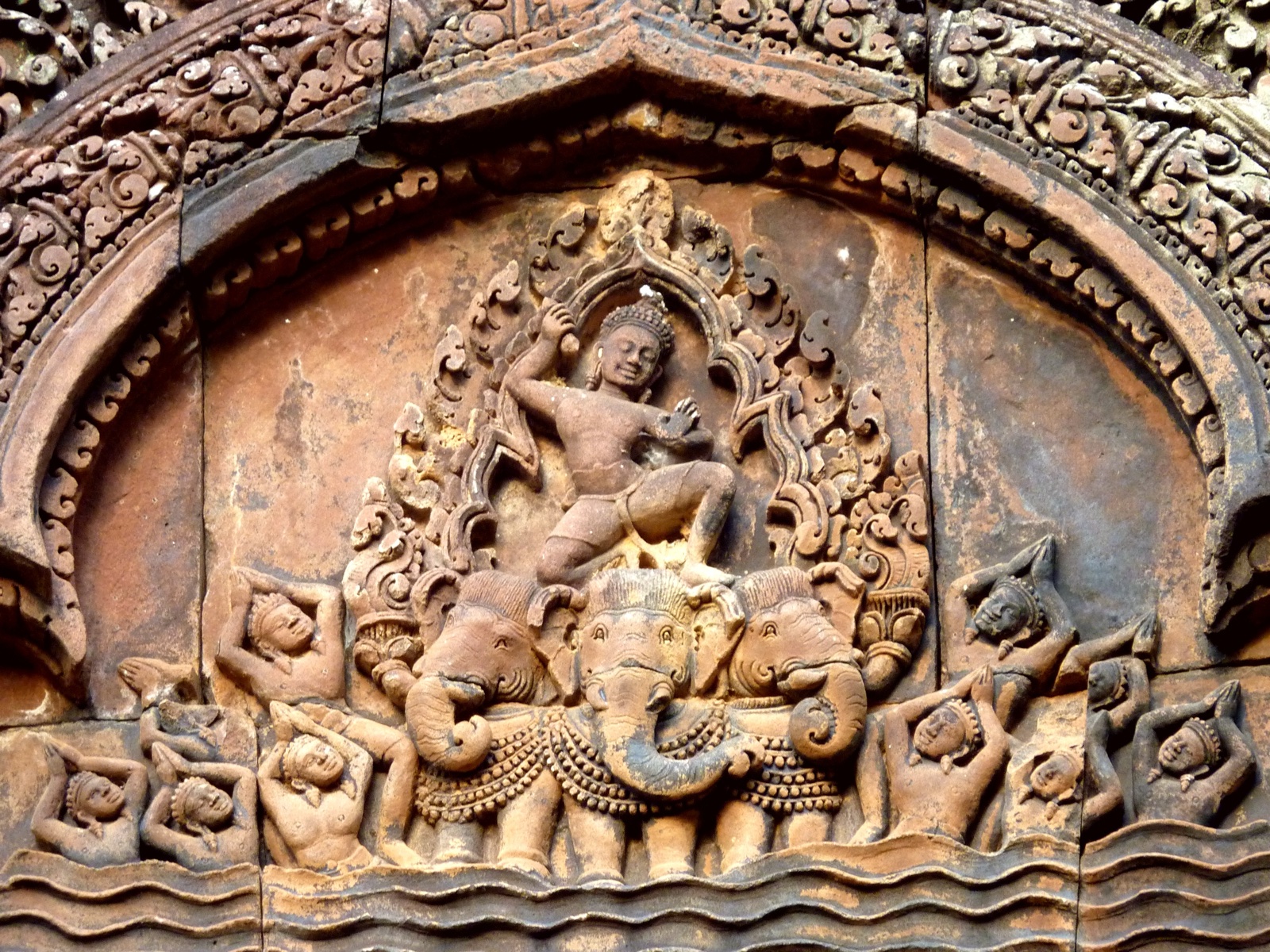
Photo Dharma from Penang, Malaysia · CC BY 2.0 · Wikimedia Commons
.jpg)
Where Matter and Spirit Meet
The elephant's body makes its spiritual nature plain. 4 of its capacities show the link.
- The trunk that lifts a tree and picks up a straw. A single organ with 150,000 muscle units holds both the greatest force and the finest touch. This is measure in action: the Zevist virtue of strength governed by discernment, the gift of Ganesha, who removes obstacles without crushing what stands near them.
- Calls beneath human hearing. The elephant speaks in infrasound that a human feels rather than hears. In the soul this is subtle perception, the work of the Third Eye: knowledge that arrives as vibration before it becomes thought, and that only a still mind registers.
- The large brain and the capacity to learn. A brain of 4 to 6 kg stores the learned paths of a long life. Pliny named the matching virtue officiorum quae didicere memoria, memory of the duties once learned[8]; in Zevism this is the remembrance of the soul's own vows, the root of steady conduct on the path toward Theosis.
- The weight that feeds the forest. The elephant keeps forest and grassland whole, and its dung spreads the seeds that grow again. Heavy power becomes abundance: the same lesson as Gajalakshmi, where the elephants of the rain-bringing King attend the Goddess of fortune.
The Gods and Their Many Names
The elephant gathers around the sovereign of heaven and His sons. In the Temple's teaching Indra is Zeus, Dionysus is Osiris and the son of Zeus, and the Hindu Trinity of Brahma, Vishnu and Shiva is 3 faces of the cosmic power that Zeus embodies as one. The beast on which Indra rides, the head that Shiva's son wears and the mount on which Dionysus returns from India all belong to the same royal power.
| Civilization | God (and the Temple's identity) | The Bond with the Animal | Witness |
|---|---|---|---|
| Vedic and Hindu India | Indra (Zeus) | Rides the white elephant Airavata | Britannica, "Indra"[6] |
| India | Krishna (Vishnu, a face of Zeus) | Names Himself Airāvata among the lords of elephants | Bhagavadgītā 10.27[9] |
| India | Ganesha, son of Shiva (a face of Zeus) and Parvati | Elephant-headed God of beginnings and remover of obstacles | Britannica, "Ganesha"[7] |
| India | Lakshmi as Gajalakshmi | The Goddess of wealth and fortune attended by 2 elephants | Britannica, "Lakshmi"[10] |
| Hellas | Dionysus (Osiris), son of Zeus | First of all to lead a triumph, mounted on an Indian elephant | Diodorus 4.3.1[11] |
| Rome | Bacchus (Dionysus) | The East conquered to the Ganges; elephants march in His triumph on Roman sarcophagi | Ovid, Metamorphoses 4.20-21[12]; Walters 23.31[13] |
| Mauretania, in Roman report | The Sun (Apollo-Helios) and the Moon | The herds purify themselves at the new moon and salute the star | Pliny, Natural History 8.1-2[8] |
The pattern is royal. Zeus as Indra rides the elephant; Dionysus, His son, campaigns into India and comes home to Boeotia after 3 years, the first to lead a triumph on an Indian elephant[11]. Ovid hails Liber as the God to whom the East was conquered as far as India, washed by the distant Ganges[12], and a Roman sarcophagus of about 190 CE leads elephants, lions and even a giraffe before His chariot[13]. The son returns bearing the beast of the Father.
One power keeps the same animal because the animal shows how that power rules. The elephant is strength that never needs to prove itself, gentle to the weak and immovable before the strong. That is the sovereignty of Zeus: a throne that carries the thunder, and a wisdom that clears the road for those who walk it.
VasuVR · CC BY-SA 4.0 · Wikimedia Commons

Ancient Witnesses
3 witnesses speak for the elephant: Diodorus on the triumph of Dionysus, Pliny on the elephant's virtues and its reverence for the Sun and Moon, and the Bhagavadgītā, where the God names Himself the king of elephants.
Diodorus Siculus, Bibliotheca Historica 4.3.1 [11]
στρατεύσαντα δʼ εἰς τὴν Ἰνδικὴν τριετεῖ χρόνῳ τὴν ἐπάνοδον εἰς τὴν Βοιωτίαν ποιήσασθαι,
κομίζοντα μὲν λαφύρων ἀξιόλογον πλῆθος,
καταγαγεῖν δὲ πρῶτον τῶν ἁπάντων θρίαμβον ἐπʼ ἐλέφαντος Ἰνδικοῦ.Having marched into India, He made His return to Boeotia after a span of 3 years, bringing a notable mass of spoils, and He was the first of all to lead a triumph, mounted on an Indian elephant.
Diodori Bibliotheca Historica, ed. I. Bekker, L. Dindorf and F. Vogel (Leipzig: Teubner, 1888-1890), Perseus Digital Library · Translation: Temple of Zeus.
Pliny the Elder, Natural History 8.1 [8]
Maximum est elephans proximumque humanis sensibus,
quippe intellectus illis sermonis patrii et imperiorum obedientia, officiorum quae didicere memoria,
amoris et gloriae voluptas, immo vero, quae etiam in homine rara, probitas, prudentia, aequitas,
religio quoque siderum solisque ac lunae veneratio.The greatest is the elephant, and the nearest to human feeling: for it understands the speech of its homeland, obeys commands and remembers the duties it has learned; it delights in love and in glory; and, what is rare even in man, it has honesty, wisdom and justice, and a religion too, a reverence for the stars, the Sun and the Moon.
Naturalis Historia, ed. Karl Mayhoff (Leipzig: Teubner, 1906), Perseus Digital Library · Translation: Temple of Zeus.
ऐरावतं गजेन्द्राणां नराणां च नराधिपम्
airāvataṃ gajendrāṇāṃ narāṇāṃ ca narādhipam
[Know Me as] Airāvata among the lords of elephants, and among men as the king.
Bhagavadgītā, chapter 10, GRETIL · Translation: Temple of Zeus. The first half of the verse names Uccaiḥśravas among horses.
Universal Significance: From the Hydaspes to the Present
Alexander met the elephant in war. The Battle of the Hydaspes in 326 BC, fought by the river now called the Jhelum, was the last battle of his Asian campaign, won against the Indian king Porus[14]. Arrian says Porus led about 4,000 horse, 300 chariots, 200 elephants and 30,000 foot against him. The battle fell in the month Mounychion of the year when Hegemon was archon at Athens, and afterwards Alexander gave Porus his rule back and added further land to it[15].
Rome learned the same respect at a cost. Hannibal's elephants were ferried across the Rhône on great rafts covered with earth, the females going first[16]. At the games of Pompey's second consulship 20 elephants, or 18 by some accounts, fought in the circus; when they lost all hope of escape they begged the crowd's mercy with gestures past describing, lamenting themselves, until the whole people rose in tears and called down curses on Pompey[8]. In Pliny's account the people forgot the general and the generosity of his show, moved only by the grief of the animals.
In India the elephant is worshipped to this day. Ganesh Chaturthi, a 10-day late-summer festival in August and September, is devoted to Ganesha[7], and Lakshmi, whom art shows attended by elephants, is celebrated above all at Diwali[10]. The Hoysala temples of Belur and Halebidu, raised in the 12th and 13th centuries and inscribed by UNESCO in 2023, cover their walls with sculpture[17], among it the dancing Ganesha shown on this page.
The elephant now needs the protection it once gave to kings. Fewer than 50,000 Asian elephants remain, and habitat loss is the gravest threat to them[5]. The beast that carried Indra and Dionysus survives only where human beings choose restraint over expansion.
In Zevist Contemplation
The Zevist takes the elephant as a model of grounded power, patient memory and quiet perception. The practices below are private and need no priest.
- Ganesha at the threshold. Before any new work, sit for a few breaths and name the obstacle that lies inside oneself: haste, fear, distraction. Honour Ganesha as the power that clears the road, and begin only when the mind is clear.
- Listening beneath hearing. Sit in silence with attention resting between the brows. Katy Payne felt the elephants before she heard them; let the practice be the same, waiting for the subtle vibration of insight before reaching for words (Pineal Meditation).
- The trunk and the straw. In daily conduct practise the elephant's measure: full strength where strength is needed, the lightest touch everywhere else. Recall Pliny's elephant moving the sheep aside with its trunk, and take care for the weaker in every action.
- Washing at the new moon. Pliny's elephants purify themselves with water at the new moon and salute the star. At each new moon the Zevist may wash the face and hands with clean water, recall the vows of the past month, and greet the Moon and the Sun in the worship of Zeus, Lord of the ordered heavens.
The elephant has no separate symbol page yet; read it beside Zeus, Dionysus and The Gammadion and the Thunderbolt, the weapon of the King who rides it.
Continue exploring
Related Pages
- The Gods: Zeus
- The Gods: Dionysus
- Symbol: The Gammadion and the Thunderbolt
- Sacred Animal: The Lion of Heracles
- Sacred Animal: The Panther of Dionysus
- Sacred Animal: The Horse of Poseidon
- Previous: The Panther of Dionysus
- Next: The Serpent
- All 32 Sacred Animals
- All symbols