




15 min read
The Goat of Zeus
author: High Priest Zevios Metathronos
αἴξ (aíx)
Nurse of Zeus, team of Thor, beast of Ea: the goat as the power that feeds the divine and climbs.
Bernd Thaller · CC BY-SA 3.0 at · Wikimedia Commons

On Crete the goat Amalthea gave her milk to the infant Zeus, and the Greeks set her among the stars. From the ibex on the cliff to Thor's chariot and the goat-fish of Ea, the goat carries one teaching: the power that feeds the divine and climbs toward it.
| Realm | Beasts of the Earth |
|---|---|
| Greek | αἴξ (aíx); he-goat τράγος (trágos) |
| Latin | capra, caper; haedus (kid) |
| Other Names | Old Norse geit, hafr; Babylonian SUḪUR.MAŠ (the Goat-Fish); Egyptian Mendes (Herodotus) |
| Species | Capra ibex (Alpine ibex), Capra aegagrus (wild goat), the domestic goat and the Cretan kri-kri |
| Gods | Zeus (Amalthea), Pan, Dionysus, Aphrodite Epitragia, Thor, Ea (Enki) |
| Material Capacity | Sure footing on near-vertical rock; the first herd animal of the Zagros |
| Spiritual Capacity | Nourishment of the divine spark and the steady ascent of the soul |
| Element and Sphere | Earth and stone; the summit; Capella and Capricorn in the sky |
The Living Animal
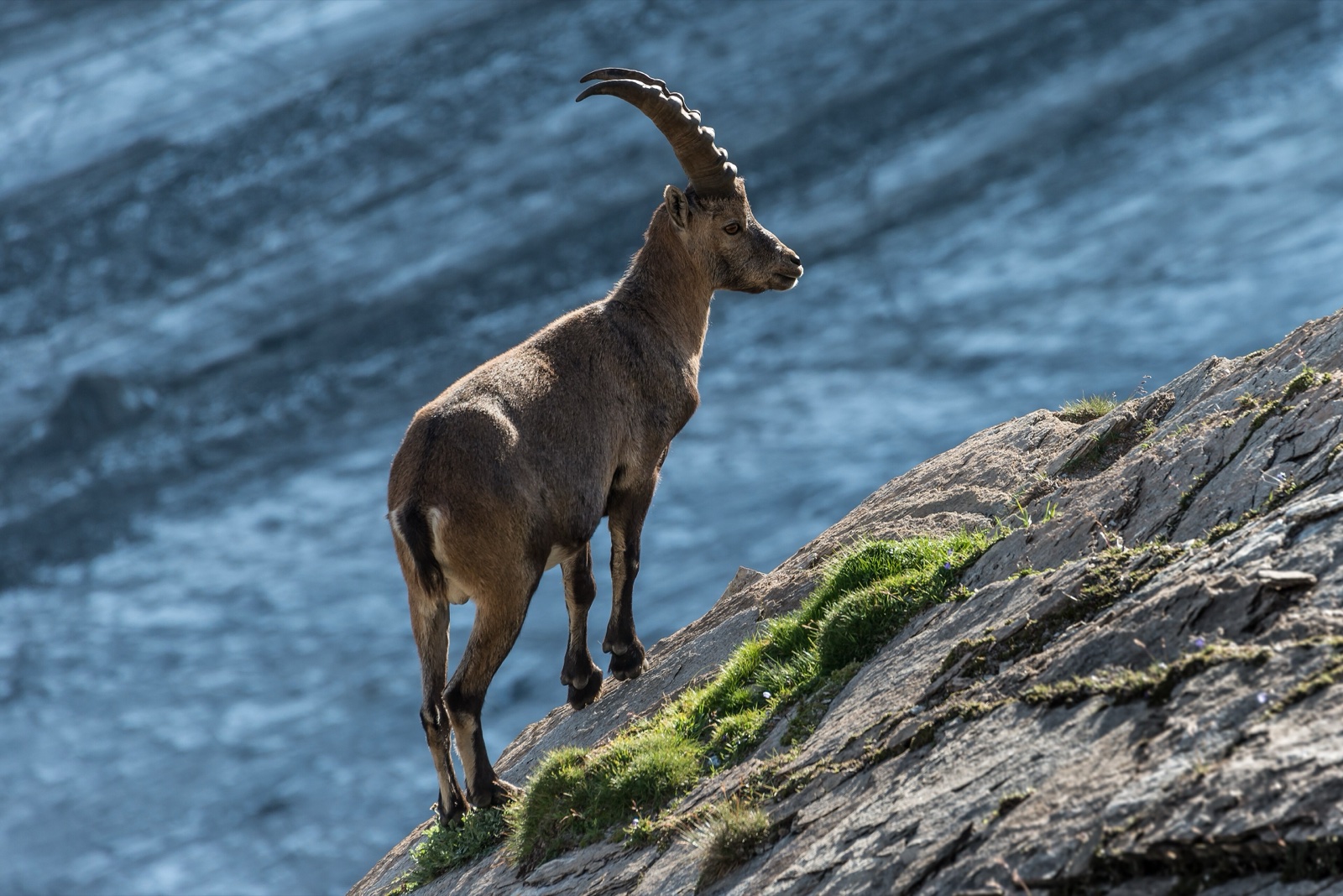
The goats of the Temple's tradition belong to the genus Capra, and the purest image of the line is the Alpine ibex, Capra ibex. It lives on steep, broken terrain between 1,800 and 3,300 m; adult males weigh 67 to 117 kg and carry horns 69 to 98 cm long, far longer than those of the females[1]. Its climbing gear is built into the foot: sharp, widely separated hooves and a rubbery callus under the front feet[1].
In northern Italy the ibex climb the near-vertical face of the 160-foot Cingino dam to lick salt from the stone[2]. The minerals supply nutrients that a diet of plants lacks, and for them the animals ignore the steep angle of the wall[2].
The wild goat, Capra aegagrus, ranges from Turkey and the Caucasus to Iran, Turkmenistan, Afghanistan and Pakistan; it is held to be the ancestor of the domestic goat, and the IUCN lists it as Near Threatened[3]. Melinda Zeder and Brian Hesse documented the first domestication of goats in the highlands of western Iran 10,000 calibrated years ago[4], at sites such as Ganj Dareh in the Zagros Mountains[5].
Crete keeps its own goat, the kri-kri or agrimi, long classed as a wild subspecies, Capra aegagrus cretica. Molecular studies show it is a feral domestic goat descended from the first domesticated stocks of the Levant, most likely brought to the island in the Minoan age; it survives in the White Mountains, the Samaria gorge and the islet of Dia, and its plight was one reason the Samaria gorge became a national park in 1962[6]. The goat that still climbs the gorges of Crete descends from the herds of the island where Zeus was nursed.
By the 19th century only about 100 Alpine ibex remained, in and around Gran Paradiso[1]. The species recovered from that remnant to 55,297 animals in 2015, and the IUCN now lists it as Least Concern[1].
The Spiritual Capacity
In Zevism the goat is the power that feeds the divine at its beginning. Callimachus sings that the infant Zeus, hidden on Crete, sucked the rich teat of the goat Amalthea and ate the sweet honeycomb[7]; Diodorus adds that Zeus honoured the goat and took from her the name Aigiochos, the Aegis-bearer[8]. The Sovereign of the Cosmos drew His first strength from a goat's milk. The Temple reads this as a law of the soul: the divine spark that wakes in a person must be fed, in silence and in hiding, before it can rule.
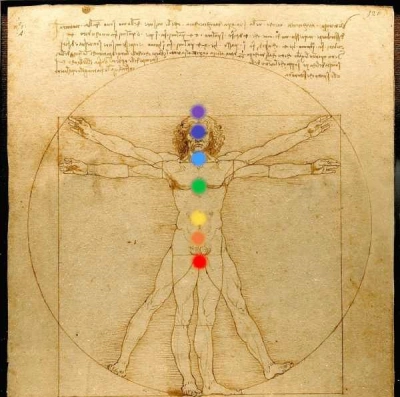
The second power is the ascent. The ibex lives where the mountain is steepest and climbs by footing, not by wings. In the Temple's teaching it stands at the base chakra, the root in earth and stone, from which the serpent rises through Sushumna to the crown (see Zevism and the Kundalini Serpent and The Chakras). Each hoof is set where the rock holds; so Arete climbs, by exact and repeated steps, toward the summit where the Gods dwell.
The third power is protection. The goat's hide became the aegis of Zeus, which He later gave to Athena[8]; the Temple's teaching on the aegis as the protective aura belongs to The Aegis and is not repeated here.
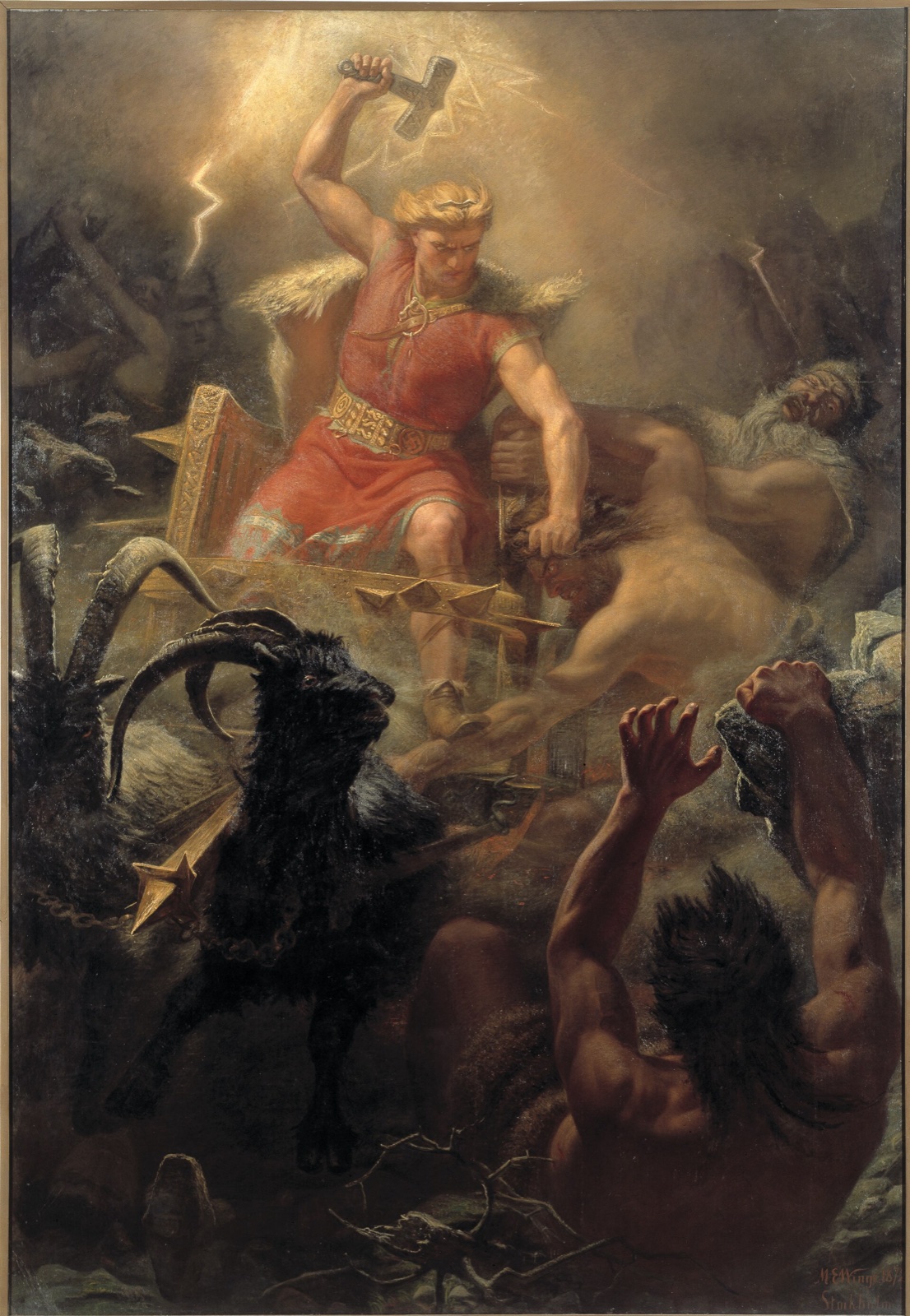
The fourth power is renewal. Thor, whom the Temple knows as Zeus, slaughters His 2 goats at night, has the bones laid on the hides, and at dawn raises the hides with the hammer Mjöllnir; the goats stand up alive, one of them lame in a hind leg[9]. The Head God restores what has been consumed when it is given back whole.
The fifth power is the nectar. On the roof of Valhöll the goat Heiðrún grazes the tree Læraðr, and from her udders runs the mead that fills a vat every day for the warriors of Odin[9]. In the soul this is the nectar that descends from the crown when the tree of the spine is fed.
Daderot · Public domain · Wikimedia Commons

Where Matter and Spirit Meet
Each material capacity of the goat is the visible form of a power of the soul. The Zevist reads them one by one, from the hoof to the horn.
- The hoof on the vertical wall. Split, sharp hooves with a gripping callus hold the ibex on rock and on the face of a dam[1][2]. This is steadiness of will: the soul rises through the chakras by footing that does not slip, and the narrower the ledge, the more exact the step must be.
- The climb for salt. The ibex crosses a sheer wall for minerals its pasture lacks[2]. The Zevist seeks what feeds the soul even where the approach is hardest, as Amalthea's milk reached the hidden God in a cave on Crete.
- The milk of the first herds. The goat fed the herding peoples of the Zagros from the first domestication 10,000 years ago[4]. This is the nursing power of the cosmos, which gave its milk to the infant Zeus and keeps giving it to every soul that is still young in the divine.
- The horn. The male ibex carries horns up to 98 cm long[1]. Ovid tells that Amalthea broke a horn on a tree, a nymph filled it with fruit for Jupiter, and He set nurse and horn among the stars[8]: the horn of strength became the horn of plenty (see The Cornucopia).
- Return from a remnant. From about 100 survivors at Gran Paradiso the Alpine ibex grew to 55,297 animals[1]. Thor's goats rise whole from their bones at dawn: what is kept intact, however few its remnants, the divine power raises again.
The Gods and Their Many Names
In the Temple's teaching the Gods are few powers known under many names, and the same animal returns to the same power in every land. Zeus is Thor and Odin; Poseidon is Enki and Ea; Dionysus is Osiris and Bacchus; Aphrodite is Astarte and Venus. Around these powers the goat keeps 4 offices: nurse and team of the Head God, beast of the God of the waters, sign of the dying and returning God of the vine, and token of the Goddess who guides.
| Civilization | God (and the Temple's Identity) | The Bond with the Animal | Witness |
|---|---|---|---|
| Crete and Hellas | Zeus, as the infant God | Amalthea nurses Him; she is set in the sky as the Olenian Goat | Callimachus, Hymn 1; Aratus, Phaenomena 162-164[7][10] |
| Hellas | Zeus Aigiochos; Athena | The goat's hide becomes the aegis; Greek statues of Athena wear it after the goatskins of Libyan women | Ps.-Hyginus, Astronomica 2.13[8]; Herodotus 4.189[11] |
| Arcadia and Hellas | Pan | The goat-footed God Himself (see Pan); Greek images make Him goat-faced and goat-legged | Herodotus 2.46[11] |
| Athens | Dionysus (Osiris, Bacchus) | Tragedy, tragoidia, the "goat-song" staged at His Great Dionysia | [12][13] |
| Attica | Aphrodite Epitragia (Astarte, Venus) | Theseus's she-goat turns into a he-goat at the shore | Plutarch, Theseus 18.2[14] |
| Egypt (Mendes) | Banebdjedet, linked with Osiris (Dionysus) | Herodotus says the Mendesians revere goats and call the he-goat Mendes; the sacred animal was in fact a ram | Herodotus 2.46[11];[15][16] |
| Scandinavia | Thor (Zeus) | Tanngnjóstr and Tanngrisnir draw His chariot and rise again from their bones | Gylfaginning 21, 44[9] |
| Scandinavia | Odin (Zeus), lord of Valhöll | Heiðrún gives mead to His warriors | Grímnismál 25; Gylfaginning 39[17][9] |
| Babylonia | Ea, Sumerian Enki (Poseidon) | The Goat-Fish, SUḪUR.MAŠ, His symbol and the source of Capricornus | [18] |
The thread is plain. The goat stands closest to the Head God at the 2 ends of His rule: at its beginning, when Amalthea feeds the hidden child, and in its exercise, when Thor drives His goats through the storm and Odin's hall drinks Heiðrún's mead. Under Ea the goat joins the fish and the mountain meets the abyss; under Dionysus and Osiris it carries the drama of death and return. Herodotus saw goats at Mendes where the Egyptians honoured a ram, the animal whose name sounded like the Egyptian word for soul[16]; the error itself shows how near the Greeks felt the 2 horned beasts to stand (see The Ram).
Mårten Eskil Winge · Public domain · Wikimedia Commons
Ancient Witnesses
The witnesses below give the goat's offices in the words of the sources: Aratus on the star of Amalthea, Plutarch on Aphrodite Epitragia, Herodotus on Mendes, Snorri on Thor's team, and the Eddic poem on Heiðrún.
Aratus, Phaenomena 163-164 [10]
αἲξ ἱερή, τὴν μέν τε λόγος Διὶ μαζὸν ἐπισχεῖν,
Ὠλενίην δέ μιν Αἶγα Διὸς καλέουσʼ ὑποφῆται.the holy Goat, who, the story goes, held her breast to Zeus; the interpreters of Zeus call her the Olenian Goat.
Aratus, Phaenomena, ed. G. R. Mair (Loeb, 1921), Perseus Digital Library canonical XML · Translation: Temple of Zeus. The Goat sits on the left shoulder of the Charioteer (line 162).
λέγεται δὲ αὐτῷ τὸν μὲν ἐν Δελφοῖς ἀνελεῖν θεὸν Ἀφροδίτην καθηγεμόνα ποιεῖσθαι καὶ παρακαλεῖν συνέμπορον, θύοντι δὲ πρὸς θαλάσσῃ τὴν αἶγα θήλειαν οὖσαν αὐτομάτως τράγον γενέσθαι· διὸ καὶ καλεῖσθαι τὴν θεὸν Ἐπιτραγίαν.
It is said that the God at Delphi bade him make Aphrodite his guide and call on Her as his fellow voyager; and as he made the offering by the sea, the she-goat turned of itself into a he-goat; for this reason the Goddess is called Epitragia.
Plutarch's Lives, vol. 1, ed. B. Perrin (Loeb, 1914), Perseus Digital Library canonical XML · Translation: Temple of Zeus.
Herodotus, Histories 2.46 [11]
σέβονται δὲ πάντας τοὺς αἶγας οἱ Μενδήσιοι, καὶ μᾶλλον τοὺς ἔρσενας τῶν θηλέων, καὶ τούτων οἱ αἰπόλοι τιμὰς μέζονας ἔχουσι· ἐκ δὲ τούτων ἕνα μάλιστα, ὅστις ἐπεὰν ἀποθάνῃ, πένθος μέγα παντὶ τῷ Μενδησίῳ νομῷ τίθεται. καλέεται δὲ ὅ τε τράγος καὶ ὁ Πὰν Αἰγυπτιστὶ Μένδης.
The Mendesians revere all goats, the males more than the females, and their goatherds receive greater honour; and one he-goat above all, at whose death great mourning is ordained for the whole Mendesian district. In Egyptian both the he-goat and Pan are called Mendes.
Herodotus, ed. A. D. Godley (Loeb, 1920-1925), Perseus Digital Library canonical XML · Translation: Temple of Zeus. The sacred animal of Banebdjedet at Mendes was a ram; Herodotus calls it a goat.
Snorri Sturluson, Gylfaginning 21 [9]
Þórr á hafra tvá, er svá heita: Tanngnjóstr ok Tanngrisnir, ok reið þá, er hann ekr, en hafrarnir draga reiðna.
Thor has 2 he-goats, which are called Tanngnjóstr and Tanngrisnir, and a chariot in which He drives, and the goats draw the chariot.
Snorra-Edda, ed. Guðni Jónsson, as given on heimskringla.no · Translation: Temple of Zeus.
Heiðrún heitir geit, er stendr höllu á
ok bítr af Læraðs limum;
skapker fylla hon skal ins skíra mjaðar;
kná-at sú veig vanask.Heiðrún is the goat called, who stands on the hall and bites from the limbs of Læraðr; she shall fill the vat with the bright mead; that drink can never fail.
Sæmundar-Edda, ed. Guðni Jónsson, as given on heimskringla.no (half-lines joined into long lines) · Translation: Temple of Zeus. Odin speaks; the hall is Valhöll.
Universal Significance
The goat of Amalthea still shines. Capella, Latin for the little she-goat, is the brightest star of Auriga and the sixth-brightest in the night sky, and in Greek myth it is the goat that suckled Zeus; 2 fainter stars beside it are the Kids, the Haedi[19]. Aratus already placed the holy Goat on the left shoulder of the Charioteer[10].
The goat-fish of Ea is the oldest image of the zodiac's Capricorn. The Babylonians used the Goat-Fish as Ea's symbol from the Middle Bronze Age, and it stands in their star catalogues before 1000 BC[18]; every horoscope cast today carries the beast of the God of the deep waters.
The theatre carries the goat in its name. Tragedy comes from Greek tragoidia, apparently "goat-song", from tragos, he-goat, though why the name was given remains uncertain[12]. At the Great Dionysia of Athens 3 playwrights each presented 3 tragedies and a satyr play[13], and every stage that performs tragedy repeats the festival's word.
The ibex is heraldry and law in the Alps. It stands on the coat of arms of the Swiss canton of Graubünden[1]. In 1856 Vittorio Emanuele II declared the Gran Paradiso mountains a royal hunting reserve, and on 3 December 1922 they became a national park[20]; the ibex populations of the Alps today stem from that stock[21], which grew from 3,020 animals in 1914 to 55,297 in 2015[1].
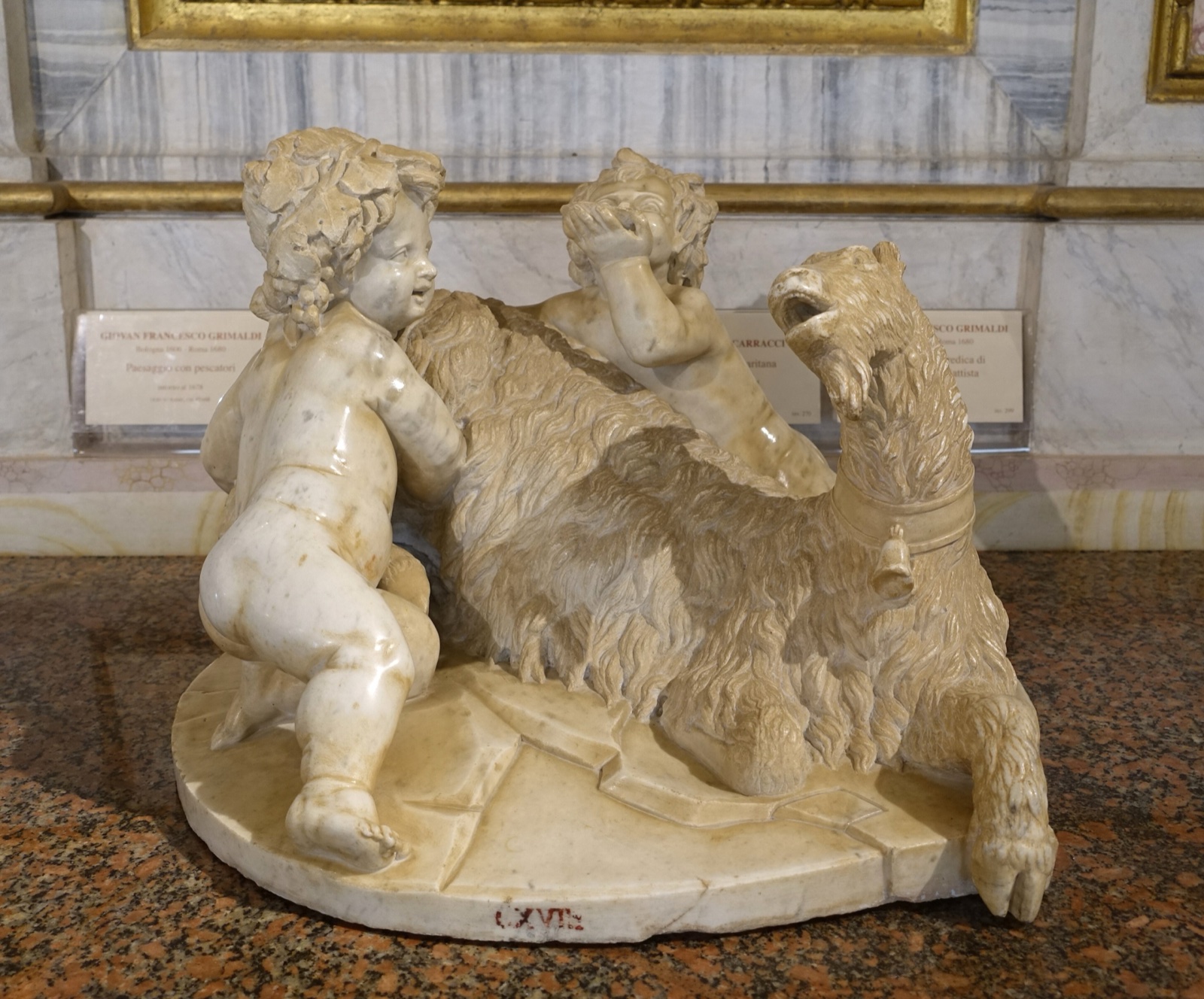
Art kept the myths in view. The marble Goat Amalthea with the Infant Jupiter and a Faun in the Galleria Borghese, dated about 1609 to 1615, was long counted the earliest work of the young Bernini, though the gallery's 2022 catalogue removes the attribution[22]. Mårten Eskil Winge painted Thor driving His goats against the giants in 1872, a canvas of 484 by 333 cm now in the Nationalmuseum, Stockholm[23].
In Zevist Contemplation
The Zevist uses the goat's image to steady the will, to feed the newly awakened spark, and to keep the work whole. These practices need no priest and promise no marvels; they train attention and conduct.
- The climb. Seated upright, breathe slowly into the base chakra and hold the image of the ibex on a sheer face. With each breath place one hoof higher, and carry the attention up the spine toward the crown without haste; if the image slips, return to the last firm ledge and begin again.
- The milk of Amalthea. At the heart and the solar chakra hold the image of the goat feeding the hidden child in the cave. In conduct, feed what is divine in yourself before you display it: study, discipline and silence are the milk and honey of the young soul.
- The bones of Thor's goats. At night review what the day consumed, and lay its lessons whole on the hide: nothing broken, nothing kept back in shame. At waking, hold the image of the hammer raised over the hides and rise with restored strength.
- The goat-fish of Ea. Before any ascent, rest the mind in the still depth, as the Goat-Fish rests in the waters of Ea, then turn the attention upward to the mountain. The Zevist does not climb from agitation but from a settled base.
The goat-footed God of wild nature and the breath of the 7 pipes are taught on Pan: Sacred Nature and the Breath of Life. The goatskin of Zeus as the protective aura is taught on The Aegis; read both beside this page.
Continue exploring
Related Pages
- Symbol: Pan: Sacred Nature and the Breath of Life
- Symbol: The Aegis
- The Gods: Zeus
- The Gods: Dionysus
- Sacred Animal: The Ram of Zeus Ammon
- Sacred Animal: The Bull of Zeus
- Previous: The Ram of Zeus Ammon
- Next: The Horse of Poseidon
- All 32 Sacred Animals
- All symbols