





13 min read
The Ram of Zeus Ammon
author: High Priest Zevios Metathronos
κριός (kriós)
Zeus Ammon, Khnum and Hermes Kriophoros: the sovereign will that leads, carries and begins.
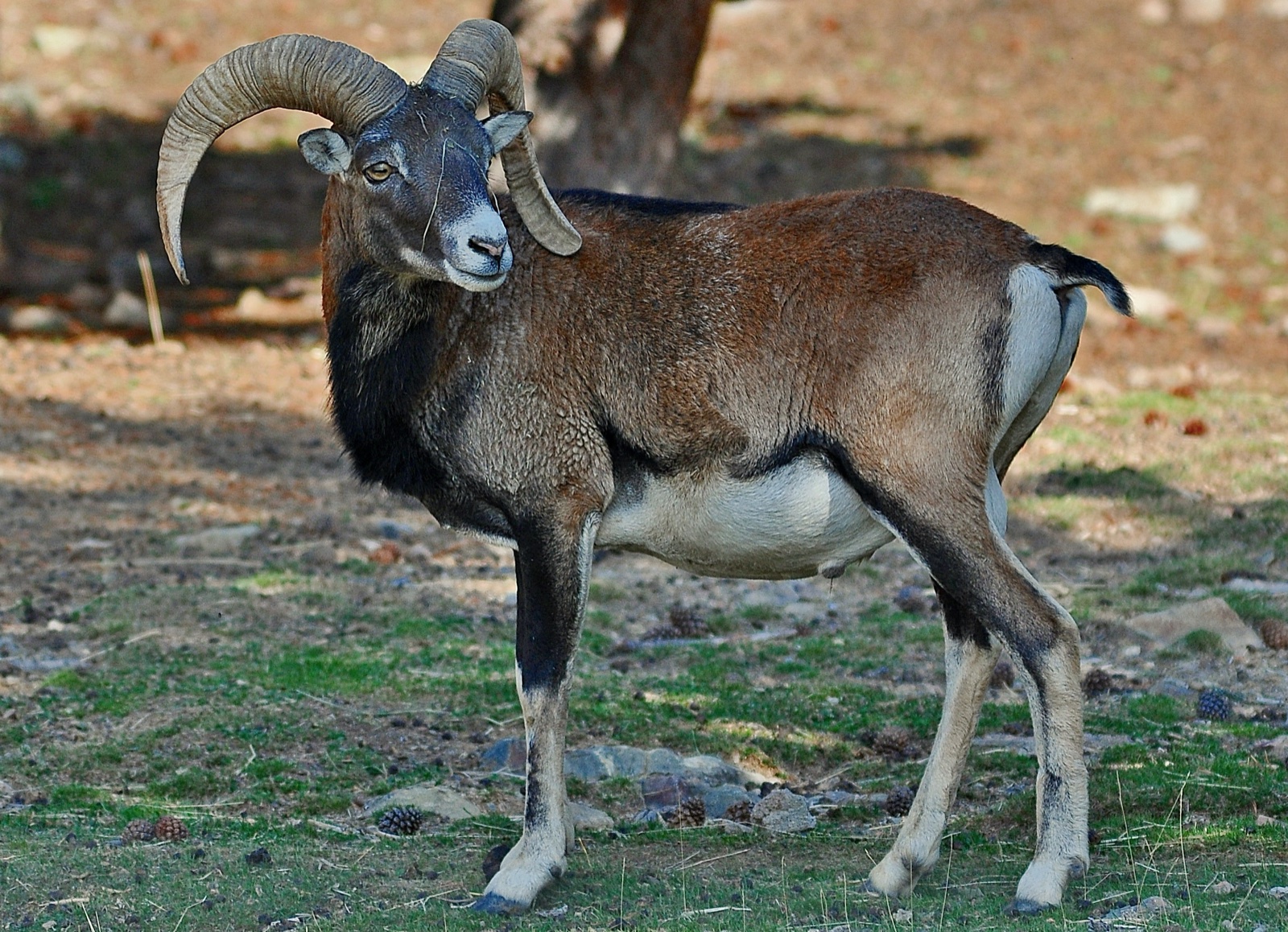
Alberto-g-rovi · CC BY 3.0 · Wikimedia Commons
_(cropped).jpg)
The ram is the animal in which Zeus showed Himself: at Thebes He put on a ram's fleece and head to let Heracles see Him, and Egypt and the oasis of Ammon made His image ram-faced ever after. In Zevism the ram is the sovereign will that leads, protects and begins, crowned with horns that spiral at the temples.
| Realm | Beasts of the Earth |
|---|---|
| Greek | κριός (kriós) |
| Latin | aries |
| Other Names | Amun and Khnum in Egypt; Chrysomallos, the golden-fleeced ram, in Hellas |
| Species | The mouflon, Ovis aries musimon, and the domestic sheep |
| Gods | Zeus Ammon, Amun, Khnum, Hermes Kriophoros, Agni |
| Material Capacity | Horns kept for life, a skull that absorbs collisions, a clash heard up to 1 mile away |
| Spiritual Capacity | The God revealed through a veil; courageous initiative and guardianship |
| Element and Sphere | Fire and the spring; the temples and the brow; the first point of Aries |
The Living Animal
The wild ram of the Mediterranean is the mouflon, Ovis aries musimon on Corsica and Sardinia and O. a. ophion on Cyprus[1]. It stands about 70 centimetres (28 inches) at the shoulder, brown with white underparts, and the ram carries a light, saddle-shaped mark on the back[1].
Its history runs through the first herds. The island mouflon most likely descends from a domestic sheep of Asia Minor, brought to the Mediterranean islands thousands of years ago, possibly in the Neolithic, and no fossil evidence shows mouflons on those islands before then[1]. The mouflon is held to be one of the 2 ancestors of all modern sheep breeds, and it has been introduced into Germany, Austria, the Czech Republic, Slovakia and Romania[2].
The ram is defined by his horns. Mouflon rams carry large horns that curve downward with the tips turned outward, while ewes are usually hornless[1]. In the wild sheep of North America the horns are true horns that last a lifetime; a bighorn ram's horns curl around the face by about 8 years of age and can weigh up to 30 pounds[3].
Rams settle rank head to head. Bighorn rams rear on their hind legs and pitch forward at speeds up to 40 miles per hour, the crash of horns can be heard up to 1 mile away, and their thick, bony skulls absorb the repeated impacts so that serious head injury is usually avoided[3]. The mouflon rut falls in late September and early October, and the single lamb, sometimes twins, is born in March[1].
The Spiritual Capacity
In Zevism the ram reveals the God who shows Himself through a veil. Heracles longed to see Zeus, and Zeus, unwilling to be seen, flayed a ram, held its head before Him and put on its fleece to show Himself to the hero[4]. The Temple teaches that the Divine meets the soul in a form the soul can bear; the ram is that form, the sovereign power of Zeus clothed so that a mortal may look on it.
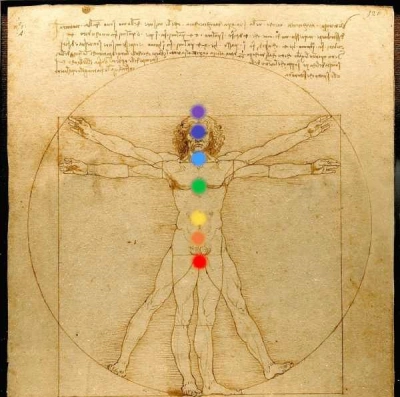
The ram's horns grow for the whole of life and curl around the face[3], and on the heads of Zeus Ammon they spiral at the temples. In the anatomy of the soul the temples hold minor chakras, and the curling horn is their image: power gathered in a spiral and turned toward the brow and the Third Eye. The spiral is the path of the serpent as well, rising and turning through the centres (see Zevism and the Kundalini Serpent).
The ram is also the bearer. In Hellas he carries the innocent through the sky, as the golden ram carried Phrixus and Helle[5], and in Tanagra Hermes carries him on His shoulders around the walls to turn away plague[6]. Its virtue is courage that goes first and protects those who follow: Arete in the form of initiative and guardianship.
The Golden Fleece is the Zevist image of the solar aura. A soul that has carried others, endured the clash and kept faith with the God grows a covering of light, and that radiance is the treasure that heroes cross the sea to win.
Where Matter and Spirit Meet
Each power of the living ram is the visible side of a power of the soul.
- Horns kept for life. The ram never sheds his horns; they lengthen and curl year by year until they frame the face by about 8 years[3]. The soul grows the same way: what is earned in virtue is not cast off each season but adds a further turn to the spiral of its strength.
- The skull that takes the blow. A ram meets another at up to 40 miles per hour and the thick, bony skull absorbs the impact[3]. This is steadfast will: the head, seat of the Third Eye and the crown, kept whole while the soul meets resistance directly.
- The sound that carries. The crash of the horns is heard up to 1 mile away[3]. The ram's contest is public, and the oracle of Ammon spoke across the desert to kings; the will that is aligned with the God announces itself without concealment.
- The wild ancestor within the flock. The mouflon is held to be an ancestor of all modern sheep breeds[2], and the island mouflon returned to the wild from early domestic stock[1]. The soul keeps its noble wild origin inside every tamed habit, and the Zevist path calls it back.
The Gods and Their Many Names
The ram belongs to the Head God under His Egyptian and Libyan names and to those who serve Him. In the Temple's teaching Zeus is Amun and Zeus Ammon, Hermes is Thoth, and Dionysus is Bacchus, to whom the Roman Liber answers. Herodotus states the identity outright: Ἀμοῦν γὰρ Αἰγύπτιοι καλέουσι τὸν Δία, "for the Egyptians call Zeus Amun"[4]. The Thebans therefore do not offer rams but hold them sacred, while those who belong to the temple of Mendes abstain from goats instead (see the goat)[4].
| Civilization | God (and the Temple's Identity) | The Bond with the Animal | Witness |
|---|---|---|---|
| Egypt, Thebes | Amun (Zeus) | Shows Himself to Heracles in a ram's fleece and head; His image is made ram-faced, and rams are sacred at Thebes. | Herodotus 2.42.3-5[4] |
| Egypt, 25th Dynasty | Amun (Zeus) | A granite statue of the 25th Dynasty shows Amun as a ram protecting King Taharqa. | Britannica, "Amon"[7] |
| Libya, oasis of Siwa | Zeus Ammon | His oracle receives Alexander in 331 BC; His Greek image is the bearded Zeus with the ram's horns of Ammon. | Met 2012.22[8]; Arrian 3.3-4[9] |
| Egypt, Elephantine and Esna | Khnum | A ram with horizontal twisting horns, or a ram-headed man, who shaped humankind from clay like a potter. | Britannica, "Khnum"[10] |
| Hellas, Boeotia | Hermes (Thoth) | Gives Nephele the golden-fleeced ram that carries Phrixus and Helle through the sky. | Apollodorus 1.9.1[5] |
| Hellas, Tanagra | Hermes Kriophoros, "Ram-bearer" | Carries a ram around the walls and turns away a plague; Kalamis makes His statue with the ram on His shoulders. | Pausanias 9.22.1[6] |
| Hellas, Colchis | Zeus Phyxios, "of Refuge" | Phrixus gives the golden ram to Zeus Phyxios and its fleece to Aeetes, who nails it to an oak in the grove of Ares. | Apollodorus 1.9.1[5] |
| Rome, the sky | Jupiter Hammon; Liber (the Roman counterpart of Dionysus) | Liber founds a temple to Jove Hammon with a ram-horned statue and sets the ram among the stars as Aries. | Hyginus, Astronomica 2.20[11] |
| India | Agni | The God of fire is accompanied by a ram. | Britannica, "Agni"[12] |
The correlation is complete in the sources themselves. Herodotus names the ram-faced God of Thebes as Zeus, the Ammonians take the image from Egypt[4], Hyginus places Jove Hammon's ram in the Roman sky[11], and the Greek sculptor gives the horns of Ammon to the bearded Zeus[8]. The same God and the same animal pass from Thebes to Siwa, from Siwa to Hellas and from Hellas to Rome.
Around the Head God stand the powers who share His ram. Khnum shapes the bodies of mortals as the ram-headed potter, Hermes gives and carries the ram as guide and protector, and Agni, the fire that carries offerings to the Gods, walks with the ram in India. The ram marks the power that leads life into form and carries it upward to the Divine.
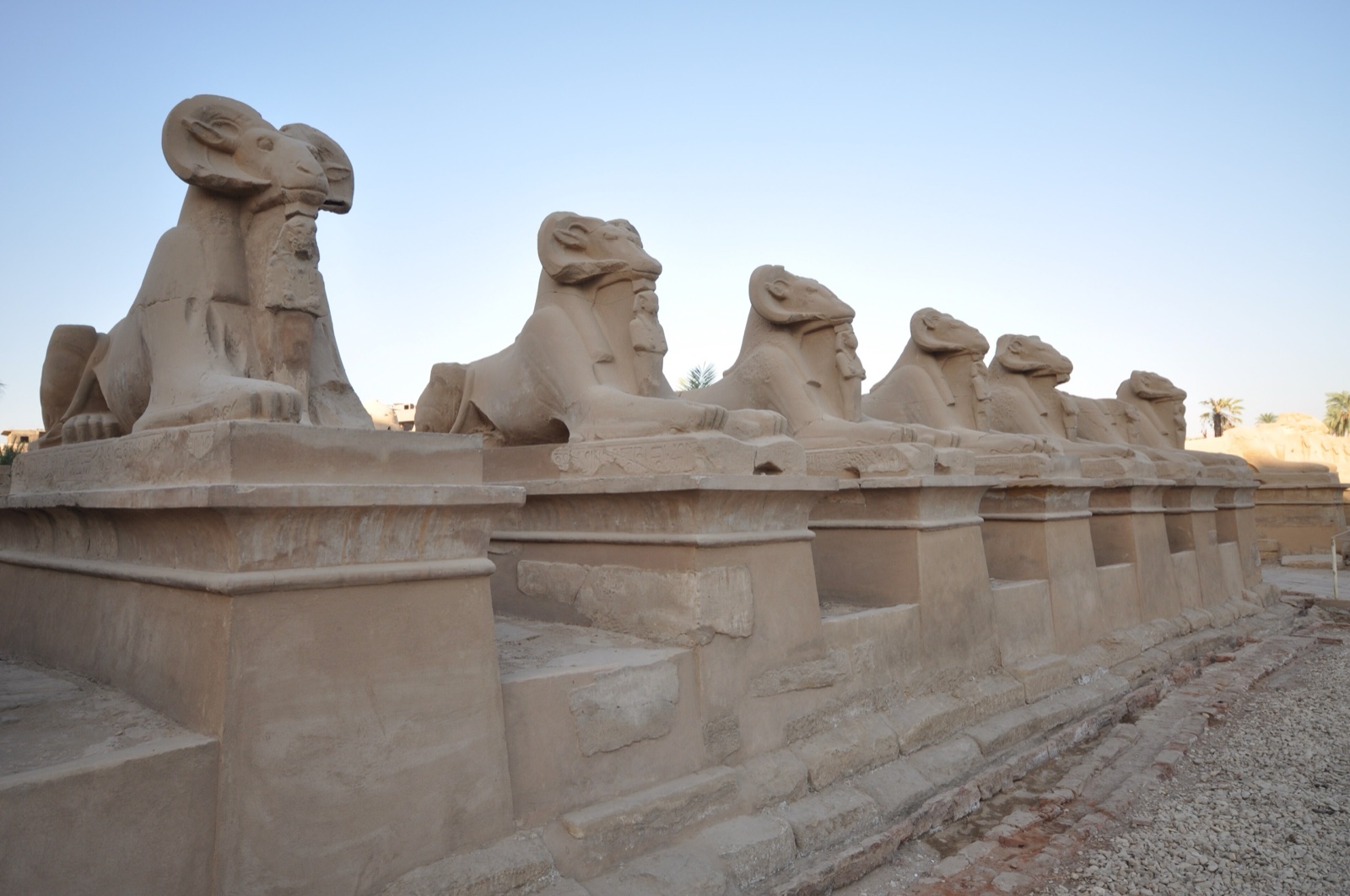
Jorge Láscar from Melbourne, Australia · CC BY 2.0 · Wikimedia Commons
.jpg)
Ancient Witnesses
3 Greek witnesses give the ram its place in the sacred history: Herodotus on the God who wore the fleece, Apollodorus on the golden ram given by Hermes, and Pausanias on the Ram-bearer of Tanagra.
Herodotus, Histories 2.42.4 [4]
κριὸν ἐκδείραντα προσχέσθαι τε τὴν κεφαλὴν ἀποταμόντα τοῦ κριοῦ καὶ ἐνδύντα τὸ νάκος οὕτω οἱ ἑωυτὸν ἐπιδέξαι. ἀπὸ τούτου κριοπρόσωπον τοῦ Διὸς τὤγαλμα ποιεῦσι Αἰγύπτιοι, ἀπὸ δὲ Αἰγυπτίων Ἀμμώνιοι, ἐόντες Αἰγυπτίων τε καὶ Αἰθιόπων ἄποικοι καὶ φωνὴν μεταξὺ ἀμφοτέρων νομίζοντες.
[Zeus contrived this:] He flayed a ram, cut off its head and held it before Him, and putting on the fleece showed Himself so to Heracles. From this the Egyptians make the image of Zeus ram-faced, and from the Egyptians the Ammonians, who are colonists of the Egyptians and the Ethiopians and speak a tongue midway between both.
Herodotus, ed. A. D. Godley (Loeb Classical Library, 1920-1925) · Translation: Temple of Zeus.
Apollodorus, Library 1.9.1 [5]
Νεφέλη δὲ μετὰ τῆς θυγατρὸς αὐτὸν ἀνήρπασε, καὶ παρʼ Ἑρμοῦ λαβοῦσα χρυσόμαλλον κριὸν ἔδωκεν, ὑφʼ οὗ φερόμενοι διʼ οὐρανοῦ γῆν ὑπερέβησαν καὶ θάλασσαν.
But Nephele snatched him away together with her daughter and gave them a ram with a golden fleece, which she had received from Hermes; borne by it through the sky, they passed over land and sea.
Apollodorus, The Library, ed. J. G. Frazer (Loeb Classical Library, 1921) · Translation: Temple of Zeus.
Pausanias, Description of Greece 9.22.1 [6]
τοῦ μὲν ἐς τὴν ἐπίκλησιν λέγουσιν ὡς ὁ Ἑρμῆς σφισιν ἀποτρέψαι νόσον λοιμώδη περὶ τὸ τεῖχος κριὸν περιενεγκών, καὶ ἐπὶ τούτῳ Κάλαμις ἐποίησεν ἄγαλμα Ἑρμοῦ φέροντα κριὸν ἐπὶ τῶν ὤμων·
Of the first, the Ram-bearer, they say for His surname that Hermes turned away a plague from them by carrying a ram around the wall; and for this Kalamis made an image of Hermes carrying a ram upon His shoulders.
Pausaniae Graeciae Descriptio, ed. F. Spiro (Leipzig, 1903) · Translation: Temple of Zeus.
Universal Significance
The ram of Zeus Ammon made a king. Arrian writes that Alexander longed to go to Ammon in Libya because the oracle was held to be truthful, because Perseus and Heracles had consulted it, and because he traced part of his own birth to Ammon[9]; he heard there, as he said, what his heart desired[9]. Plutarch reports that the prophet greeted him from the God as from a father, and tells the story that the priest, meaning "O child" (ō paidion) in Greek, said "O son of Zeus" instead[13].
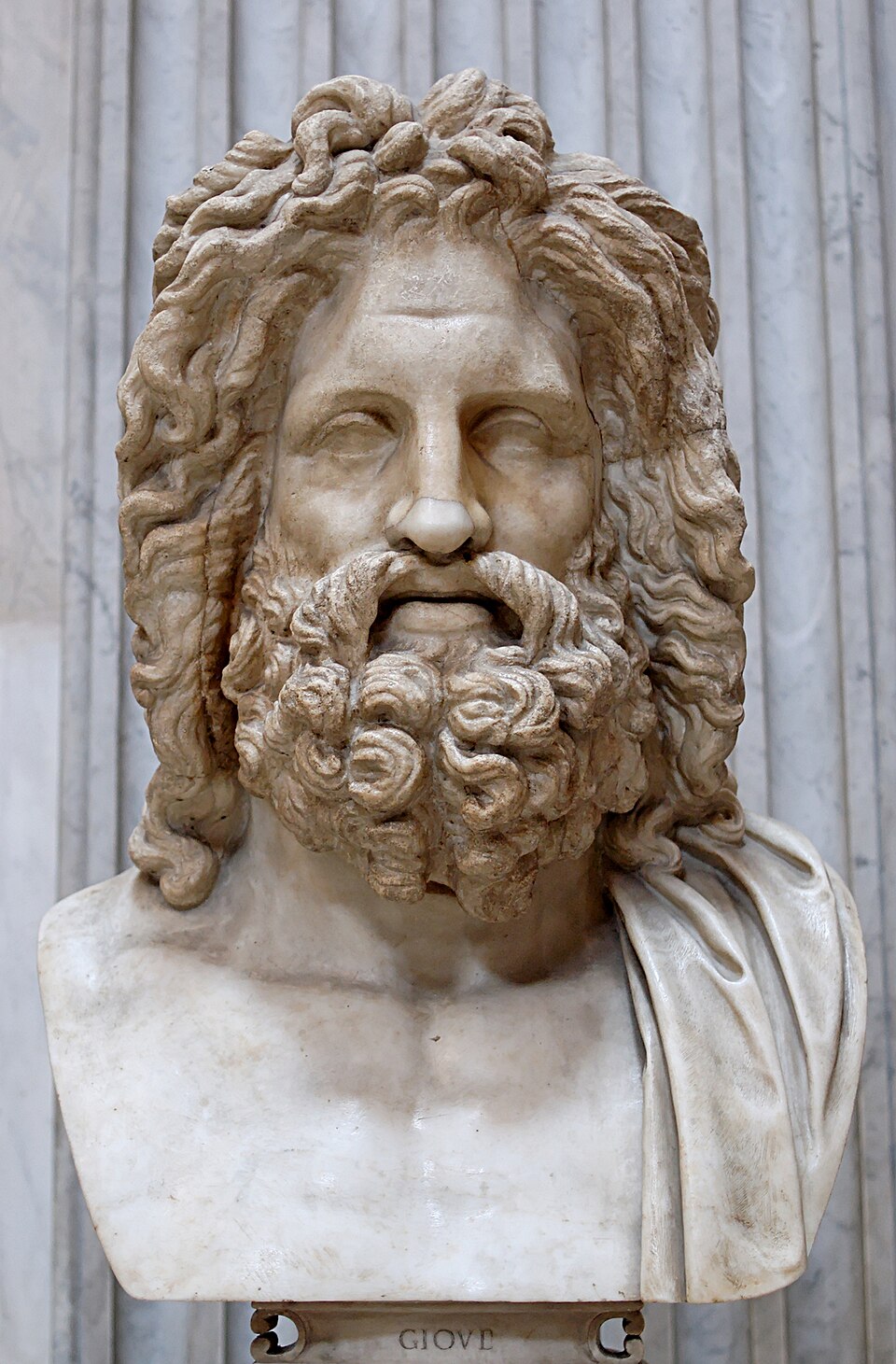
The Metropolitan Museum dates Alexander's visit to Siwa to 331 BC and notes that he himself was sometimes shown with the ram's horns of Ammon[8]. Its marble head of Zeus Ammon, Roman work of about 120 to 160 CE, joins the bearded Greek Zeus to the Egyptian ram's horns and may echo a lost work made in Egypt after that visit[8].
The ram leads the zodiac. The vernal equinox, where the Sun crosses the celestial equator in spring, is also called the first point of Aries[14], and Hyginus identifies Aries as the ram that carried Phrixus and Helle, whose fleece Hesiod and Pherecydes called golden[11]. See Astrology for the Temple's teaching on the signs.
The horn of Ammon passed into science. Pliny lists the Hammonis cornu among the most sacred gems of Ethiopia, golden in colour and shaped like a ram's horn, and says it was promised to bring prophetic dreams[15]. The fossil ammonite takes its name from Medieval Latin cornu Ammonis, "horn of Ammon"; the English word dates from 1758 and the name was fixed by the zoologist Jean Guillaume Bruguière in 1789[16].
Even chemistry carries the God's name. Sal ammoniac was named after salt deposits near the temple of Jupiter Ammon in Libya, and from it the Swedish chemist Torbern Bergman coined the scientific Latin name ammonia in 1782[17]. In Egypt the ram of Khnum ruled the First Cataract of the Nile, where He formed a triad with the Goddesses Satis and Anukis at Elephantine[10].
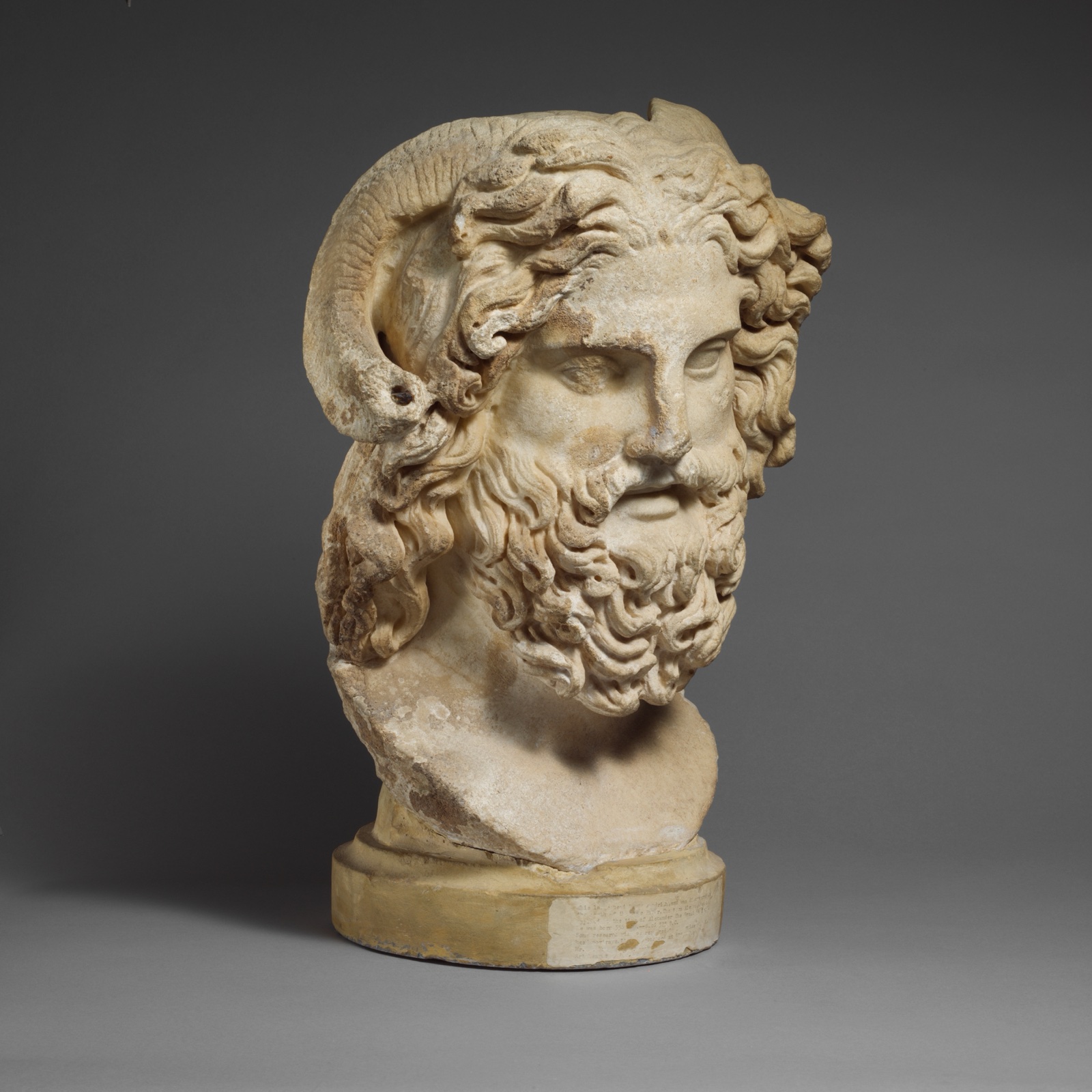
The Metropolitan Museum of Art · CC0 · Wikimedia Commons

In Zevist Contemplation
The Zevist uses the image of the ram to train courage, steadiness and the spiral rise of power toward the head. The practices engage the temples, the brow and the conduct of daily life.
- The horns at the temples. Sit upright with the eyes closed and visualise golden horns curling from the temples in a slow spiral. On each inhalation draw warmth along the spiral; on each exhalation let it gather at the brow, at the place of the Third Eye.
- The God behind the fleece. Before study, recall that Zeus showed Himself to Heracles clothed in the ram. Look for the Divine order behind the forms of the text, the rite or the event in front of you, and accept the form it takes as the form in which it can be seen.
- The Ram-bearer. In conduct, take up a burden for the household or the community as Hermes carried the ram around the walls of Tanagra. Carry it to completion and let the work itself be the protection.
- The first point. Begin new works with the decisiveness of the ram that leads the zodiac. Set the intention, meet the first resistance head on, and keep the skull of the will unbroken by holding to the God.
The ram stands among the Beasts of the Earth beside the bull and the goat. Read it with the pages of Amon Ra, Khnum and Heracles, to whom Zeus showed Himself in the fleece.
Continue exploring
Related Pages
- The Gods: Zeus
- The Gods: Amon Ra
- The Gods: Khnum
- The Gods: Hermes
- The Gods: Agni
- Sacred Animal: The Goat of Zeus
- Sacred Animal: The Bull of Zeus
- Previous: The Cow of Hathor
- Next: The Goat of Zeus
- All 32 Sacred Animals
- All symbols