




15 min read
The Bull of Zeus
author: High Priest Zevios Metathronos
ταῦρος (taûros)
Zeus, Hadad, Apis and Nandi: the force of generation held by the sovereign God.
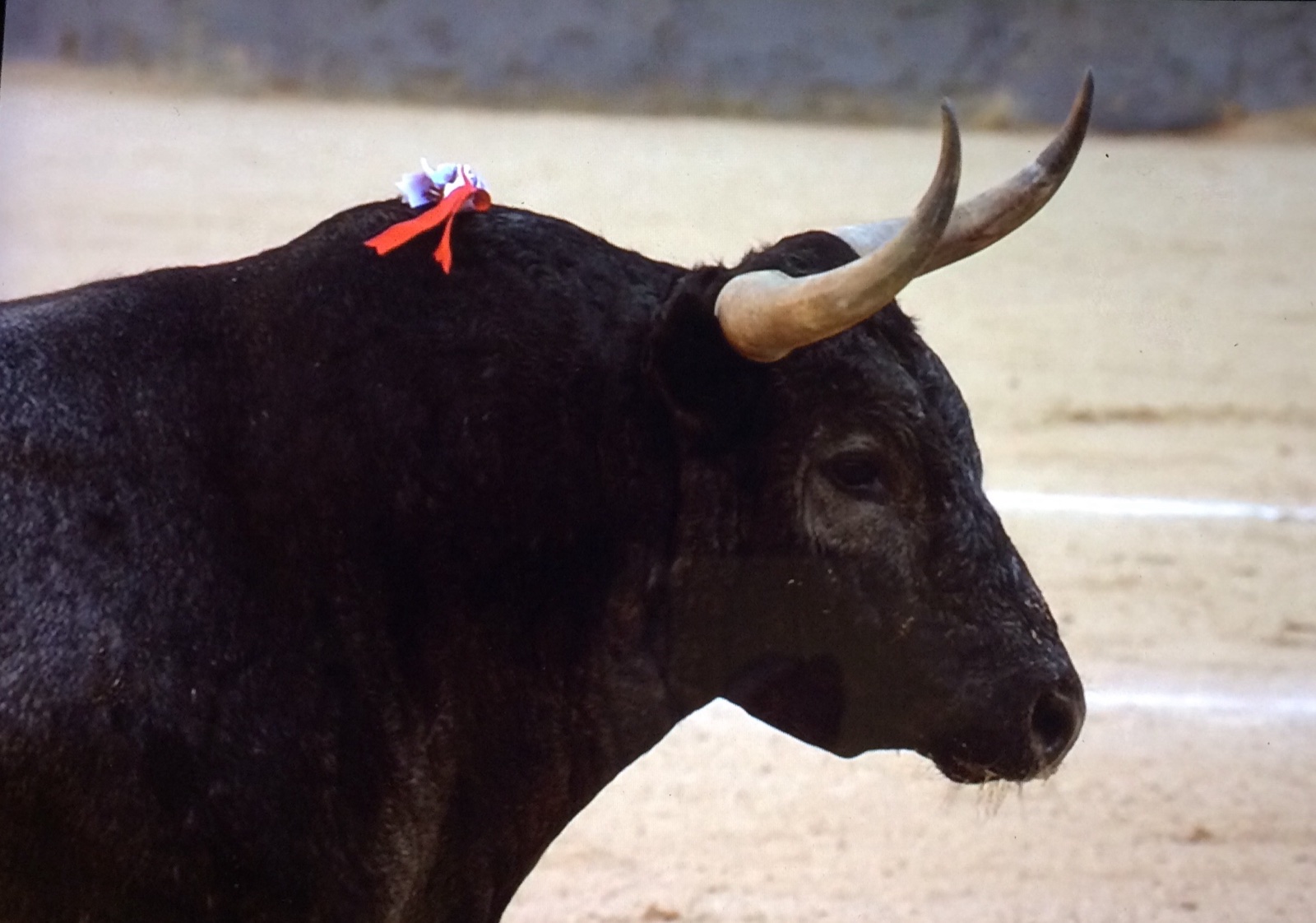
C. Quijano Garrido · CC BY-SA 4.0 · Wikimedia Commons

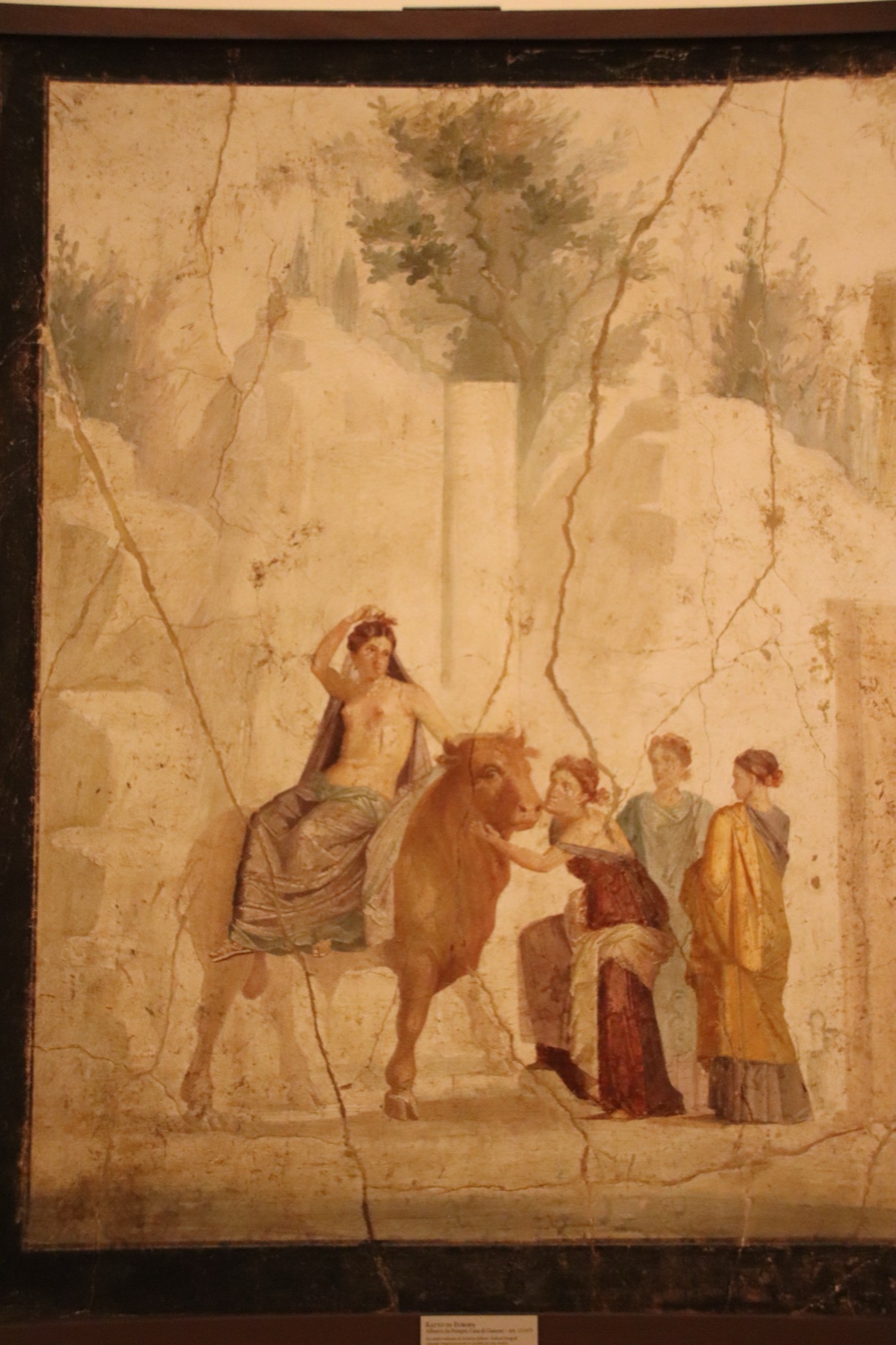
The bull is the oldest image of divine force on earth: Zeus crossing the sea with Europa on His back, Hadad standing on the bull with the lightning in His hand, Nandi facing the shrine of Shiva, Apis carrying the sun between his horns at Memphis. In Zevism the bull is the power of generation ruled by the sovereign God, the raw strength of life placed under Ma'at.
| Realm | Beasts of the Earth |
|---|---|
| Greek | ταῦρος (taûros) |
| Latin | taurus |
| Other Names | Apis, Mnevis and Buchis in Egypt; Nandi in India; the Bull of Heaven in Mesopotamia |
| Species | Bos taurus, heir of the aurochs Bos primigenius |
| Gods | Zeus, Hadad, Shiva, Ptah, Osiris, Ra, Montu, Dionysus, Poseidon, Mithras |
| Material Capacity | Great mass and strength, forward-curving horns, vision over more than 300 degrees |
| Spiritual Capacity | Generative force ruled by the sovereign God; the sacral power raised toward the crown |
| Element and Sphere | Earth and storm; the sun disk between the horns; the constellation Taurus |
The Living Animal
Every sacred bull of antiquity descends from the aurochs, Bos primigenius, the extinct wild ox of Europe. It stood about 1.8 metres (6 feet) at the shoulder, was black, and carried spreading horns that curved forward[1]. The species survived in central Poland until 1627, and domestic cattle are probably descended from it[1].
The taming of that animal came early and from very few beasts. DNA taken from cattle bones at Iranian archaeological sites, tested by computer simulation, shows that all taurine cattle descend from as few as 80 animals domesticated from the wild ox in the Near East some 10,500 years ago[2]. The humped zebu of India belongs to a second line, treated on the page of the cow.
The bull watches the whole horizon. Cattle have panoramic vision of more than 300 degrees, with a blind spot only directly behind them, but a narrow vertical field of about 60 degrees and poor depth perception for near objects[3]. Their colour vision is dichromatic, so red may appear to them as brown or grey[3].
The ear is wider than the human one. Cattle hear frequencies from 23 hertz to 35 kilohertz and are most sensitive near 8,000 hertz, while a human ear runs from 20 hertz to 20 kilohertz[3]. They locate a sound only to within about 30 degrees, against about 5 degrees for a person[3].
Cattle learn routines, remember bad experiences and places, and can recognise the particular handlers who treated them roughly[3]. Instinct still rules the bull: he may turn aggressive when he defends his breeding rights[3]. Since 1945 German breeders have tried to recreate the aurochs by crossing Spanish fighting cattle, longhorns and other breeds, though their animals are smaller and probably not genetically close to the original[1].
The Spiritual Capacity
In Zevism the bull is generative force made visible: the power that fertilises the field, drives the plough of life and defends its own line. The ancient peoples did not leave this power ownerless. They set it under the sovereign God, so that Zeus takes the bull's form, Hadad stands upon it and Shiva is served by it. The Temple teaches that the bull is the strength of nature held in the hand of Zeus, Sovereign of the Cosmos.
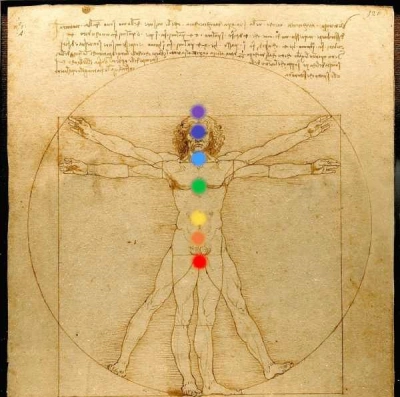
In the soul this force lives in the lower centres, the base and sacral chakras (see The Chakras). Left without order it becomes Izfet: the bull that Poseidon sent from the sea to Minos was withheld from the God, turned savage, and fathered the Minotaur, which Minos shut in the labyrinth[4]. Ruled by Ma'at, the same force carries the soul across the sea, as the bull carried Europa from Phoenicia to Crete.
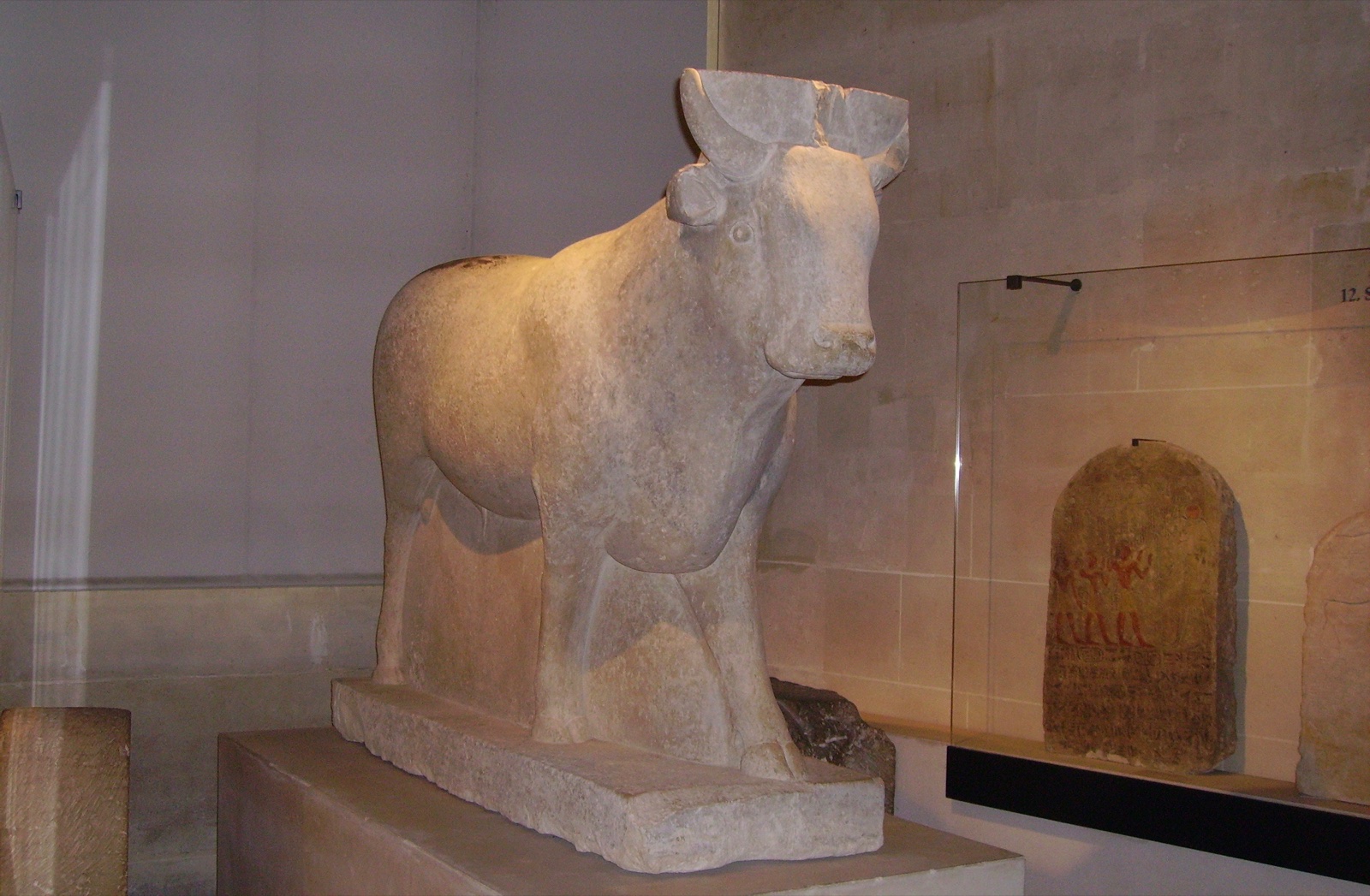
The horns hold the teaching of ascent. As Apis-Atum the bull of Memphis was shown with the sun disk between his horns[5], and Buchis of Armant carried the solar disk between his horns with 2 tall plumes[6]. For the Zevist the 2 horns are Ida and Pingala, and the disk between them is the Sun reached when the serpent rises through Sushumna to the crown (see Zevism and the Kundalini Serpent).
The virtue of the bull is strength placed in service: the steady power that bears, guards and fathers without breaking the order of the whole. This is Arete in its physical root, the force that the soul must first possess before it can lift it toward Theosis.
Where Matter and Spirit Meet
The living bull and the divine bull are a single figure seen from 2 sides. Each capacity of the animal is the visible face of a power of the soul.
- Mass and strength. The aurochs stood 1.8 metres at the shoulder[1], a body built to move weight and break resistance. In the soul this is the sacral force, the energy that every work of the spirit needs before it can begin; the Zevist does not starve it but yokes it.
- The paired horns. The wild ox carried 2 spreading horns curved forward[1], and Egypt set the sun disk between the horns of Apis and Buchis. The 2 horns are the 2 currents of the subtle body, and the disk between them is the solar crown that their union produces.
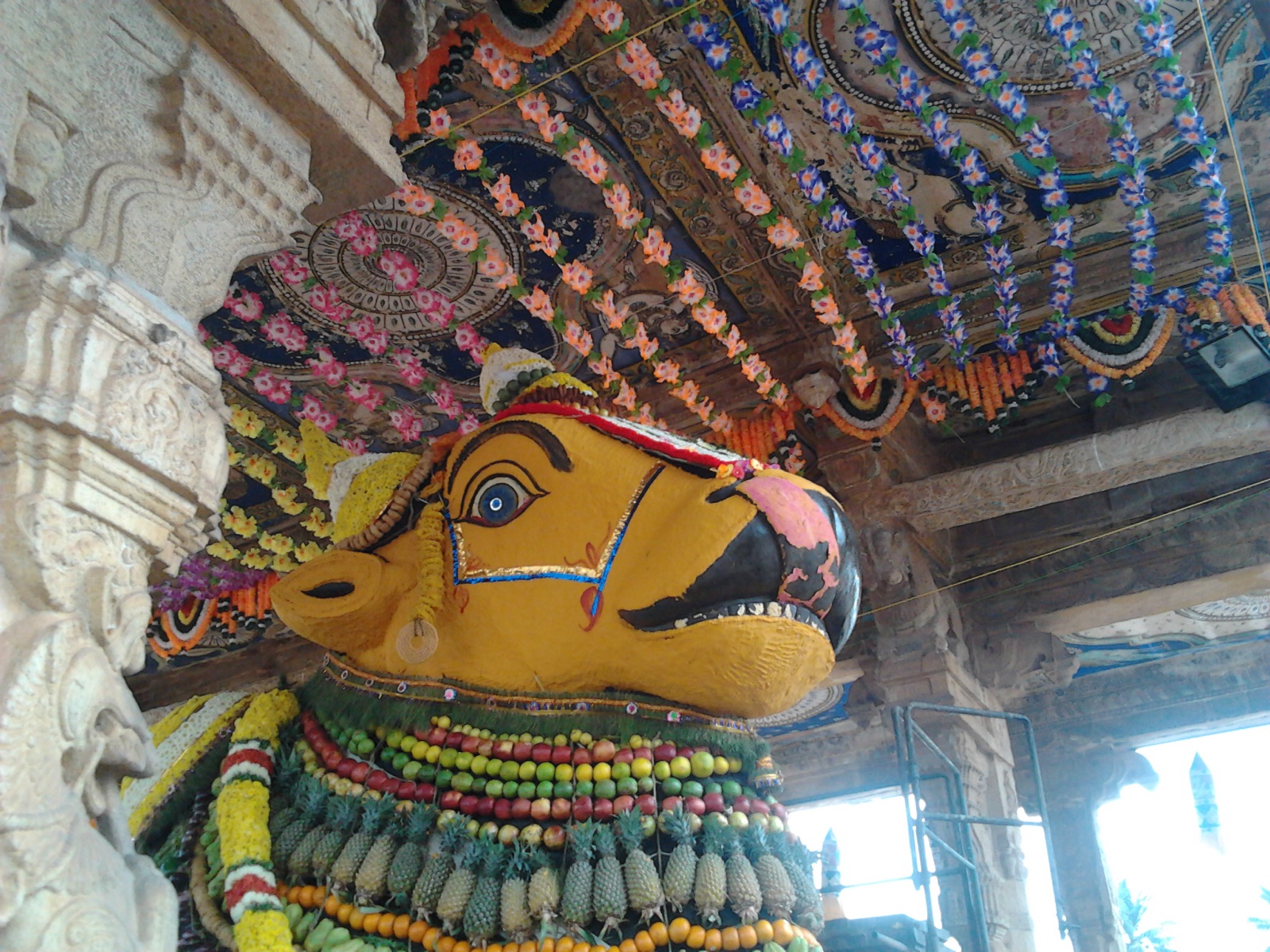
- The wide watch. With more than 300 degrees of vision[3], the bull guards the whole field around him. Nandi, set on a platform facing the shrine so that he can watch the God[7], turns that same wide sight toward a single point: the strength of the soul kept facing the Divine.
- Guarding the line. The bull turns aggressive in defence of his breeding rights[3]. In the soul generative power is a trust; kept and directed, it rises as vitality and courage instead of spilling into disorder.
- Memory of treatment. Cattle remember bad experiences and the handlers who caused them[3]. The soul's force behaves the same way: governed with justice it serves willingly, and driven with cruelty it rebels, as the bull of Minos did.
The Gods and Their Many Names
The bull stands beside a single sovereign power in every land where cattle were kept. In the Temple's teaching Zeus is Hadad and Atum, Shiva is a face of the same cosmic power, Ptah is Hephaestus, Osiris is Dionysus, Montu is Ares, Mithra is Apollo and Poseidon is Enki. Under these names the same bull returns, because the same divine order rules the same force of nature. Moschus says that Zeus "hid the God and changed His body and became a bull" (κρύψε θεὸν καὶ τρέψε δέμας καὶ γείνετο ταῦρος)[8], and Ovid has the father of the Gods lay down the weight of His sceptre to take the bull's form[9].
| Civilization | God (and the Temple's Identity) | The Bond with the Animal | Witness |
|---|---|---|---|
| Hellas | Zeus | Becomes a bull to carry Europa, daughter of Agenor, from the shore of Sidon across the sea. | Moschus, Europa 79[8]; Ovid, Met. 2.846-875[9] |
| Mesopotamia and Syria | Adad, Hadad in the West (Zeus) | The bull becomes His animal from the Ur III period; He is shown brandishing lightning, standing on or beside a bull, as on the Arslan Tash stela in the Louvre. | Oracc, "Iškur/Adad"[10] |
| India | Shiva (a face of Zeus) | Nandi, the humped white bull, is His mount from about the 1st century CE and sits facing the shrine of the God. | Britannica, "Nandi"[7] |
| Egypt, Memphis | Ptah (Hephaestus); Osiris (Dionysus); Atum (Zeus) | Apis is the herald of Ptah, appears as Apis-Atum with the sun disk, and is called the living image of Osiris; Osiris and Apis together give Serapis. | UCL Digital Egypt[11]; Britannica, "Apis"[5]; Plutarch, De Iside 43[12] |
| Egypt, Heliopolis | Ra | Mnevis bears the title "herald of Ra" and is probably the "bull of Heliopolis" of the Pyramid Texts. | UCL Digital Egypt[11] |
| Egypt, Armant | Montu (Ares) | Buchis, a white bull with black markings, is the favourite incarnation of the war God Mont at Hermonthis. | Britannica, "Buchis"[6] |
| Hellas, the Bacchic rites | Dionysus (Osiris) | The chorus calls the God to appear as a bull; many Greeks make bull-shaped images of Dionysus, and at Argos He is Bougenes, "bull-born". | Euripides, Bacchae 1018[13]; Plutarch, De Iside 35[12] |
| Crete | Poseidon (Enki) | Sends a bull from the depths to confirm the kingship of Minos and makes it savage when Minos withholds it. | Apollodorus, Library 3.1.3-4[4] |
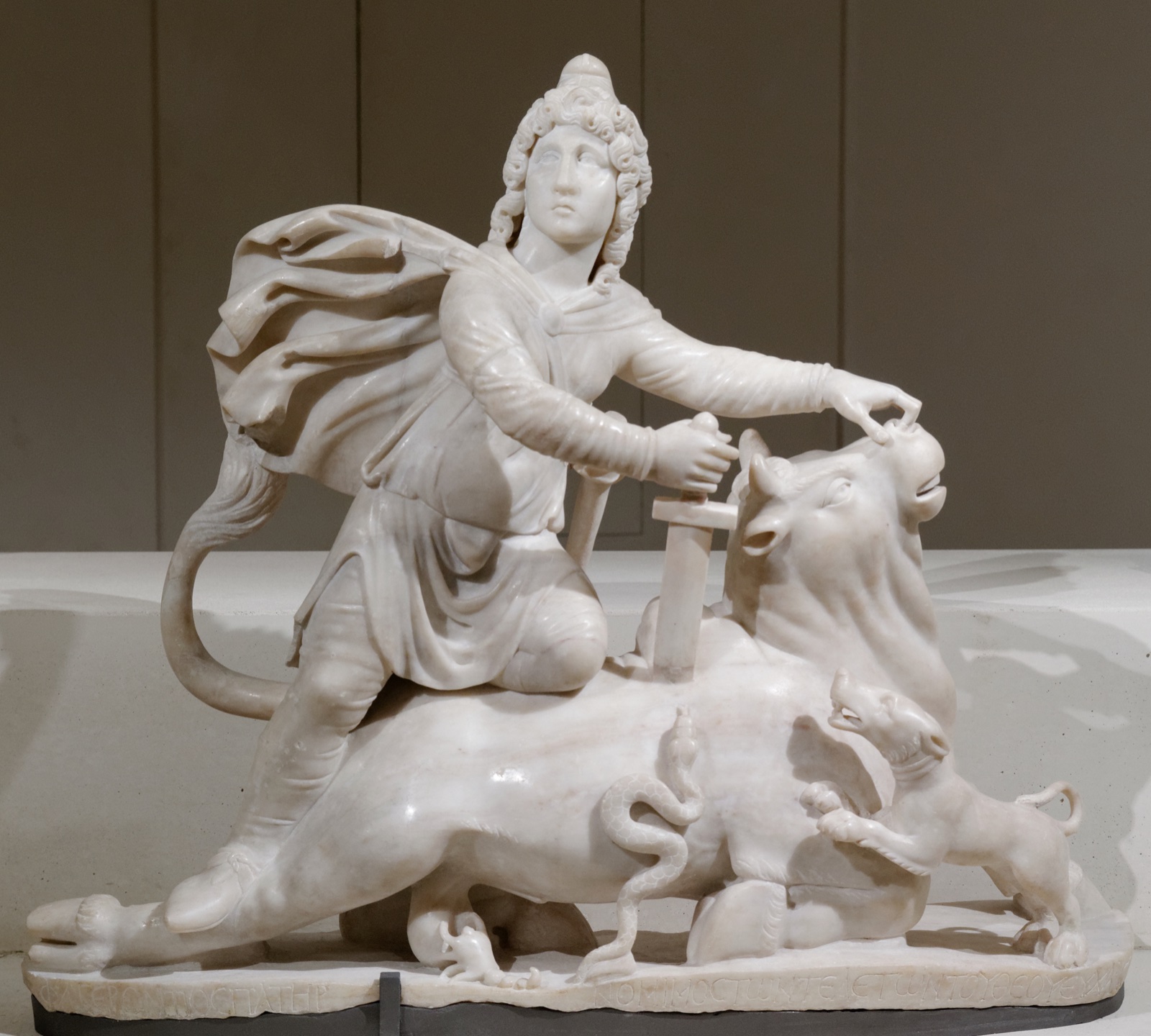
| The Roman world | Mithras (Apollo) | Slays the bull in the tauroctony, the central image of His mysteries. | Louvre AO 22256[14] |
Egypt makes the thread visible. Herodotus calls Apis by the Greek name Epaphus[15], the son whom Ovid makes the child of Jupiter and Io[9], so that the bull of Memphis is a son of Zeus in Greek eyes; Plutarch records that the priests who bury Apis wear fawnskins and carry thyrsi like the Bacchic celebrants of Dionysus[12]. The bull of Ptah, the image of Osiris and the bull-born Dionysus meet in a single animal because the same Divine order works through all 3 names.
Mesopotamia shows the same force from its other side. In Tablet VI of Gilgamesh the Bull of Heaven is created[16] at the demand of Ishtar, who turns to Anu after Gilgamesh refuses Her[17], and it is force loosed in anger, not force ruled. Wherever the bull obeys the sovereign God, it fathers, carries and protects; wherever it is loosed against the order of the Gods, it devastates until a hero seizes it by the horns.
Yair Haklai · CC BY-SA 4.0 · Wikimedia Commons

Marie-Lan Nguyen · CC BY 2.5 · Wikimedia Commons

Ancient Witnesses
Greek tragedy, Latin epic and Greek history each set down the bull as a body of the Divine: the God who appears as a bull, the father of the Gods who puts on the bull's form, and the Egyptian calf conceived by light from heaven.
Euripides, Bacchae 1018-1019 [13]
φάνηθι ταῦρος ἢ πολύκρανος ἰδεῖν
δράκων ἢ πυριφλέγων ὁρᾶσθαι λέων.Appear as a bull, or as a many-headed serpent to behold, or as a lion blazing with fire to see.
Euripidis Fabulae, vol. 3, ed. Gilbert Murray (Oxford, 1913) · Translation: Temple of Zeus. The chorus calls on Dionysus; Murray's line numbering places these words at 1018-1019.
Ovid, Metamorphoses 2.848-851 [9]
ille pater rectorque deum, cui dextra trisulcis
ignibus armata est, qui nutu concutit orbem,
induitur faciem tauri mixtusque iuvencis
mugit et in teneris formosus obambulat herbis.That father and ruler of the Gods, whose right hand is armed with triple-forked fire, who shakes the world with a nod, puts on the form of a bull; mingled with the bullocks He lows, and walks in His beauty over the tender grass.
Die Metamorphosen des P. Ovidius Naso, ed. Hugo Magnus (Gotha, 1892) · Translation: Temple of Zeus.
Herodotus, Histories 3.28.2 [15]
ὁ δὲ Ἆπις οὗτος ὁ Ἔπαφος γίνεται μόσχος ἐκ βοός, ἥτις οὐκέτι οἵη τε γίνεται ἐς γαστέρα ἄλλον βάλλεσθαι γόνον. Αἰγύπτιοι δὲ λέγουσι σέλας ἐπὶ τὴν βοῦν ἐκ τοῦ οὐρανοῦ κατίσχειν, καί μιν ἐκ τούτου τίκτειν τὸν Ἆπιν.
This Apis, or Epaphus, is a calf born of a cow that can never again conceive offspring. The Egyptians say that a light comes down upon the cow from heaven, and that from this she bears Apis.
Herodotus, ed. A. D. Godley (Loeb Classical Library, 1920-1925) · Translation: Temple of Zeus.
Gary Todd from Xinzheng, China · Public domain · Wikimedia Commons
.jpg)
Universal Significance
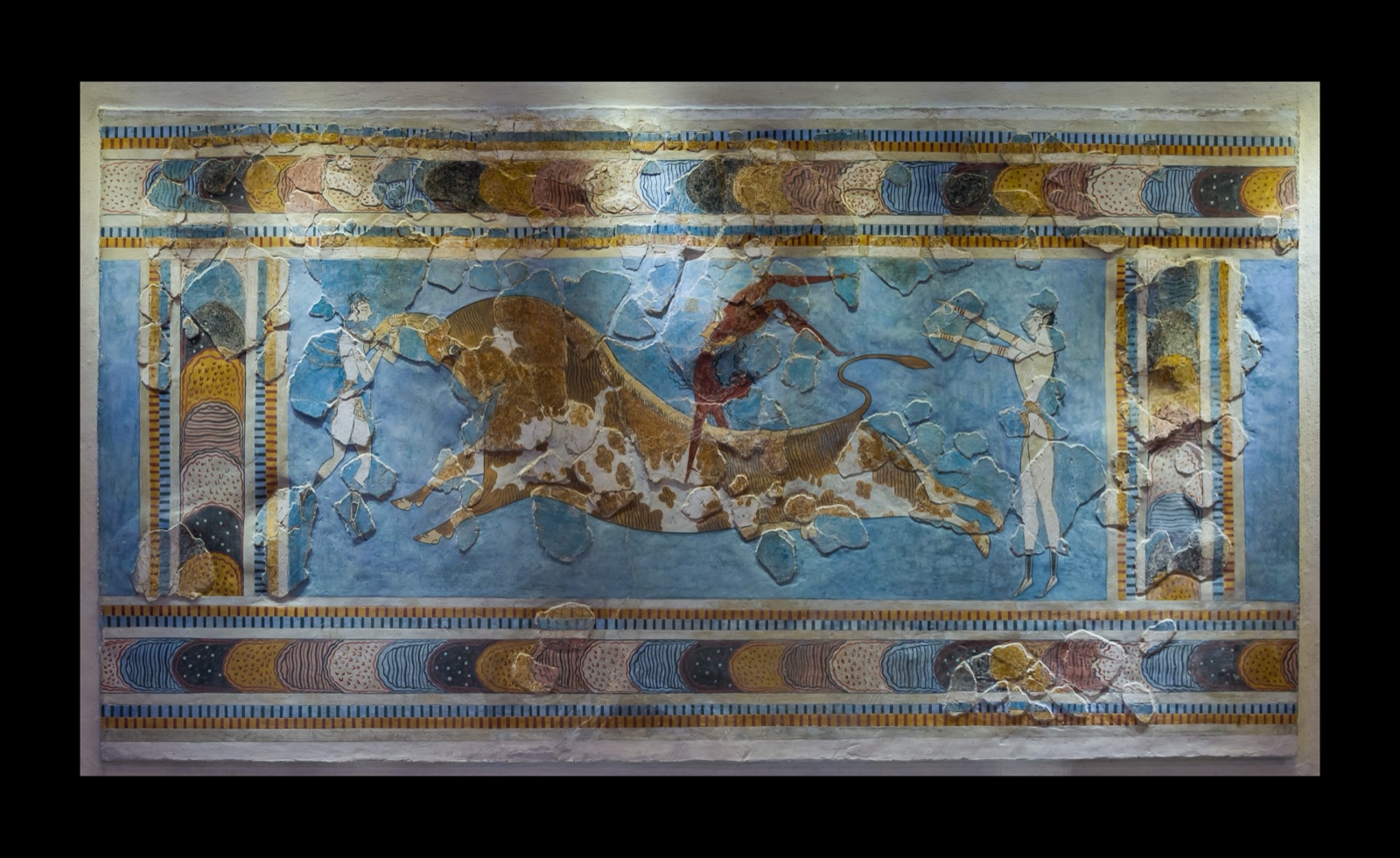
The palace of Knossos painted the bull in motion. Its bull-leaping fresco, about 1400 BCE, shows 3 athletes: 1 grasping the horns, 1 vaulting upside down over the back and 1 landing behind a charging bull; the panels are now in the Archaeological Museum of Heraklion[18]. The Hellenic Ministry of Culture dates the Taureador panels from 1450 to 1400 BC and reads bull-leaping as carrying religious symbolism, the bull standing for the vigour of nature[19]. The double axe belongs to the same palace world.
Mesopotamia kept the bull in its greatest poem. The British Museum holds K.231, a Neo-Assyrian tablet of the 7th century BC from Kouyunjik, the ancient Nineveh, which carries Tablet VI of the Epic of Gilgamesh with the meeting of Gilgamesh and Ishtar and the creation of the Bull of Heaven[16]. In R. Campbell Thompson's 1928 rendering, Enkidu seizes the Bull by the horns, its heart is offered to the Sun-God, and Gilgamesh hangs the great horns in the shrine of his forefathers[17].
The sky shows the bull from autumn to spring in the Northern Hemisphere[20]. In Taurus the reddish Aldebaran, magnitude 0.85 and 65 light-years away, is the Bull's eye inside the V of the Hyades, which marks his face; Elnath and Zeta Tauri mark the 2 horns, and the Pleiades lie within the same figure[20]. Near Zeta Tauri lies the Crab Nebula, the remnant of a star whose explosion was seen in 1054 CE[20].
A continent bears the name of the bull's rider. Herodotus could find no certain origin for the name Europe unless it came from Tyrian Europa, and he noted that she went only from Phoenicia to Crete and on to Lycia[15]. The Greek 2 euro coin now carries the abduction of Europa by Zeus in the form of a bull, taken from a mosaic of the 3rd century AD at Sparta[21].
The Mithraic bull spread across the Roman world. The Louvre keeps the marble tauroctony AO 22256[14], and among its Mithraic marbles are works from the mithraeum at Sidon in Lebanon, found by Edmond Durighello in 1887[22]. In India the bull of Shiva still guards the temples: at Thanjavur, Rajaraja I consecrated the Brihadisvara temple in his 25th regnal year, 1009 to 1010 CE, and UNESCO declared it a World Heritage property in 1987[23]; in Varanasi bulls held to belong to Shiva roam the streets branded with His trident[7].
Jebulon · CC0 · Wikimedia Commons

Sonphoto · CC BY-SA 3.0 · Wikimedia Commons

In Zevist Contemplation
The Zevist contemplates the bull to take possession of strength without becoming its servant. The image works on the lower centres of the soul and on the discipline that governs them.
- Riding the force. Hold the image of Europa seated on the white bull as it walks into the sea. Breathe slowly into the base and sacral chakras and feel their heat as the bull beneath the rider: strong, calm and moving in a single direction.
- The disk between the horns. Visualise 2 curved horns rising from the base of the spine along the left and right of the body, with a golden disk held between their points above the crown. On each inhalation draw the warmth up both horns; on the exhalation let it gather in the disk as light.
- The watch of Nandi. Before study or meditation, sit still and turn the whole attention toward the image of the God, as Nandi faces the shrine. The wide field of the senses remains open, but the face of the soul looks toward the God alone.
- Grasping the horns. In conduct, the bull-leaper of Knossos teaches the moment of seizing a difficulty at its strongest point. Meet anger, desire or fear at the horns, with timing and nerve, and vault over it instead of being thrown.
Among the Beasts of the Earth the bull stands beside the cow, its partner in the herds of the Gods, and the ram of Zeus Ammon. Read it with the page of Zeus and the page of Dionysus, the bull-born God.
Continue exploring
Related Pages
- The Gods: Zeus
- The Gods: Dionysus
- The Gods: Osiris
- The Gods: Mithras
- Sacred Animal: The Cow of Hathor
- Sacred Animal: The Ram of Zeus Ammon
- Sacred Animal: The Lion of Heracles
- Previous: The Lion of Heracles
- Next: The Cow of Hathor
- All 32 Sacred Animals
- All symbols