




14 min read
The Jackal of Anubis
author: High Priest Zevios Metathronos
θώς (thṓs)
The canid of Anubis, Wepwawet and Hermanubis: guardian of the dead and opener of the ways.
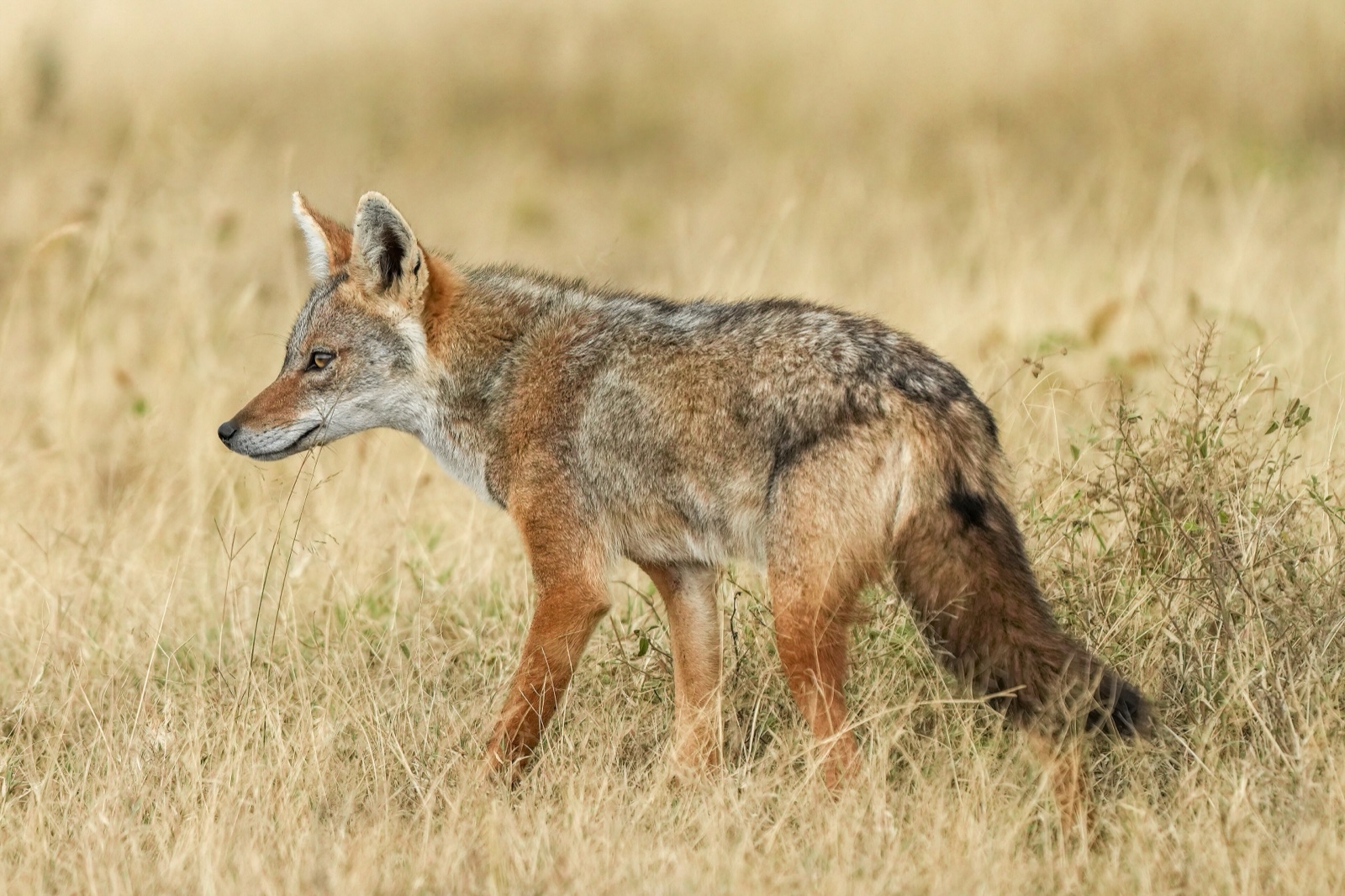
Giles Laurent · CC BY-SA 4.0 · Wikimedia Commons

The jackal of Egypt is the animal of Anubis, embalmer of the dead and guardian of the necropolis, whom the Temple knows as Hermes, guide of souls. Modern genetics has renamed the creature itself: the golden jackal of Egypt is a wolf of its own species, as Herodotus already called it.
| Realm | Beasts of the Earth |
|---|---|
| Greek | θώς (thṓs) |
| Latin | Canis lupaster (scientific name); Virgil names the God "latrator Anubis" |
| Other Names | African golden wolf, African wolf, Egyptian wolf; formerly golden jackal |
| Species | Canis lupaster (African golden wolf), distinct from Canis aureus |
| Gods | Anubis, Hermanubis, Wepwawet, Duamutef, Hermes |
| Material Capacity | A lean desert canid that scavenges, keeps a lifelong pair and moves by night near people |
| Spiritual Capacity | Guardianship of passage: the guide of souls, the opener of the ways, the steady hand at the balance |
| Element and Sphere | Earth; the desert and the necropolis; the West and the night |
The Living Animal
The canid behind Anubis is the African golden wolf, Canis lupaster, also called the African wolf and the Egyptian wolf[1]. Science first described it in 1833 from a specimen taken in the Fayum of Egypt, the type locality of the species[1]. Its body measures 70 to 85 cm with a tail of about 25 cm, and it weighs 8 to 10 kg[2].
The animal was long classified with the golden jackal, Canis aureus. In 2015 a genome-wide study led by Klaus-Peter Koepfli of the Smithsonian Conservation Biology Institute, published in Current Biology, showed that the African and Eurasian golden jackals are distinct species[3]. The African lineage is closer to the gray wolf and the coyote than to the jackals, and it split from the gray wolf and coyote clade about 1.0 to 1.7 million years ago; taxonomists had joined the 2 animals because their skulls and teeth are so alike[4]. Koepfli proposed that harsh desert habitats pressed both lineages into the same small, lean, light-coated body[3].
The study named the animal Canis anthus, but current taxonomy prefers lupaster, because the type specimen of anthus is lost and the name is doubtful[1]. Herodotus had already called the Egyptian canid by its true name: the Egyptians, he wrote, buried their wolves, which are not much larger than foxes, wherever they found them lying[5].
The golden jackal as described before the split, a range that takes in North and East Africa, lives in mated pairs and is strictly monogamous[2]. A family holds a territory of 2 to 3 square kilometres through the year, marked with urine, and grown young often stay a year with their parents to help raise the next litter[2]. The pair keeps in touch with a wide repertoire of howls, and near human settlement the animal is strictly nocturnal[2].
It is a scavenger as much as a hunter. Golden jackals clean up garbage and carrion around towns and villages[2], and in the Ethiopian Highlands the diet of African wolves was made up largely of rodents (22.0%), insects (24.8%) and goats and sheep (24.3%), with 74% of the rodents eaten taken as carcasses[6]. The same study found African wolves actively defending their territories against Ethiopian wolves[6]. The species is listed as Least Concern[1].
The Spiritual Capacity
Anubis is the Egyptian God most closely bound to cemeteries and to embalming, and His characteristic animal is the jackal; He brings the dead into the judgement scene of the Book of the Dead and attends the scales on which the heart is weighed[7]. He was Lord of the Necropolis and supervisor of embalming, and His statuette stood guard over the dead in the tomb[8]. In the Temple's teaching Anubis is Hermes, as Thoth is Hermes and Mercury is Hermes[9]: the God who leads souls across the threshold of death. See Anubis and Hermes.
The faculty the jackal reveals is guardianship of passage. It watches the boundary where life ends, keeps the body from dissolution, and leads the soul on. In the Papyrus of Ani, Anubis holds the cord of the balance and steadies its plumb bob while the heart is weighed against the feather of Ma'at[10]. The steady hand of Anubis is the reason the verdict is just: the scale is true because its guardian does not tremble.
His other forms complete the figure. Wepwawet, the canine God known as the Opener of the Ways, was chiefly associated with Osiris, and His standards were carried in processions and festivals[11]; He was the local God of Asyut[12]. In Zevism the opening of the ways is the opening of the path of the soul: the canal of Sushumna through which the serpent of Kundalini rises, between Ida and Pingala. The Opener runs ahead, and the way He opens stands open.
Duamutef, 1 of the 4 Sons of Horus, wears the jackal head on the lid of the canopic jar that protects the stomach[13]. The stomach lies at the seat of the solar chakra, the Grail of the soul, where the Sun of the empowered soul burns. The jackal-headed son of Horus therefore guards the soul's own Sun, and the Zevist reads the canopic jar as an image of the guarded solar centre.
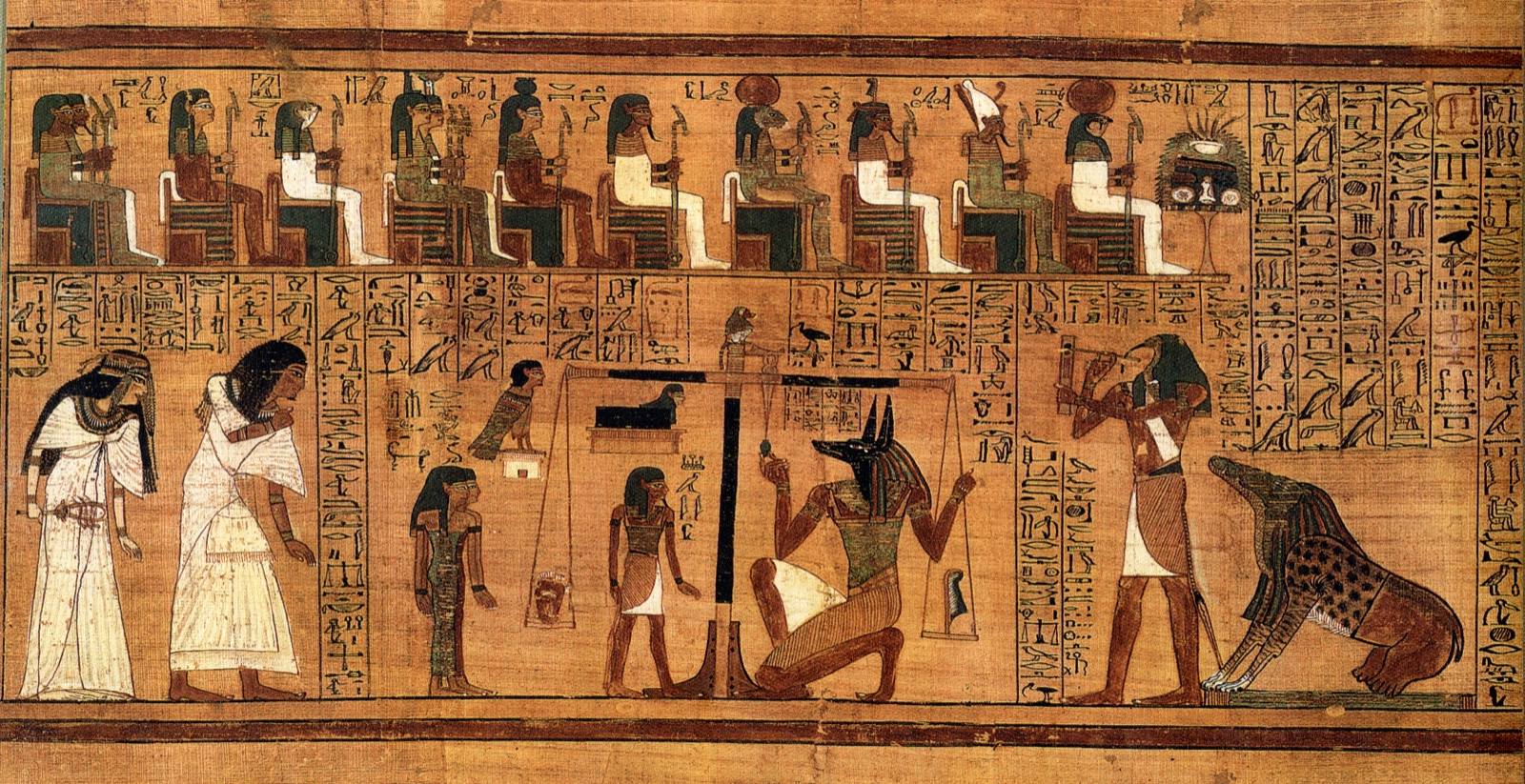
Photographed by the British Museum; original artist unknown · Public domain · Wikimedia Commons

Where Matter and Spirit Meet
The capacities of the living canid and the offices of Anubis-Hermes correspond point by point.
- The scavenger and the embalmer. The animal clears carrion around settlements, and most of the rodents it eats are taken as carcasses[6]. Anubis turns the dead body from decay to preservation; the jackal's appetite for what has died is the visible face of the God who masters death and leaves nothing to rot.
- The desert-shaped body and the 1 power under many names. Separate lineages in Africa and Eurasia were pressed by desert life into the same lean form, so alike that taxonomists took them for 1 species[3]. The Zevist sees the same law in the Gods: 1 power, working on different peoples, yields 1 recognisable shape, Anubis in Egypt and Hermes in Hellas.
- The faithful pair and the faithful guide. The pair is strictly monogamous and holds its ground together through the year[2]. Anubis keeps the same fidelity toward the soul: the guide who receives the dead does not abandon them between the tomb and the hall of judgement.
- The night walker and the guide in darkness. Near human settlement the animal moves only by night[2]. The passage of the dead lies through darkness, and the guide must see and move where others cannot; Darkness bound by Ma'at is the ground of His work, not its enemy.
- The howl that finds its kin. Golden jackals use a wide inventory of howls to locate one another[2]. The Opener of the Ways calls in the same manner: a voice in the dark that tells the soul where its own are, and which way leads to them.
The Gods and Their Many Names
The canine God of Egypt appears under several names, each a function of 1 guide. Anubis embalms and guards; Wepwawet opens the ways; Duamutef guards the organs of the dead; and the Greeks, recognising their own Hermes in Him, joined the 2 names into Hermanubis.
| Civilization | God (and the Temple's identity) | The Bond with the Animal | Witness |
|---|---|---|---|
| Egypt | Anubis (Hermes) | Jackal or jackal-headed God of cemeteries and embalming, who attends the scales of the heart | British Museum EA 35831[7] |
| Egypt, Asyut | Wepwawet, Opener of the Ways | Canine God of Asyut whose standards led processions | Metropolitan Museum of Art[11] |
| Egypt | Duamutef, son of Horus | Jackal-headed protector of the stomach on the canopic jar | Metropolitan Museum of Art[13] |
| Graeco-Roman Egypt | Anubis of Kynopolis | Anubis honoured at the City of Dogs, where the dogs received sacred food; Lykopolis honoured the wolf | Strabo 17.1.40[14] |
| Hellas | Hermanubis (Hermes) | The power that relates to the heavens is named sometimes Anubis and sometimes Hermanubis | Plutarch, Isis and Osiris 61[15] |
| Hellas | Anubis, likened to Hecate | A God of the lower world and of Olympus at once, as Hecate is among the Greeks | Plutarch, Isis and Osiris 44[16] |
| Roman Empire (Latin) | Anubis with the caduceus of Mercury | The dog-necked messenger between the Gods above and below carries the caduceus in the procession of Isis | Apuleius, Metamorphoses 11.11[17] |
| Rome (Augustan) | Anubis the barker | Virgil sets "latrator Anubis" among the Gods of Egypt at Actium | Virgil, Aeneid 8.698-700[18] |
The thread runs from the Nile to Rome without a break. The canid that walked the cemeteries gave its head to the God who guarded them, and every people that met Him kept the head and changed only the name. Apuleius makes the identity visible: the dog-necked Anubis carries the caduceus, the staff of Hermes (see The Caduceus of Hermes).
The Temple holds this as plain fact of the divine order. Hermes guides the souls of Hellas, Anubis guides the souls of Egypt, and They are 1 God; the ibis of Thoth (see The Ibis) and the jackal of Anubis are the 2 animals of the same guide, the one for the Word that records, the other for the hand that leads.
Ancient Witnesses
The witnesses come from Greek, Latin and Egyptian sources. Strabo gives the City of Dogs, Herodotus the Egyptian wolf, Apuleius the portrait of Anubis bearing the caduceus, and the Papyrus of Ani the caption written over Anubis at the balance.
Strabo, Geography 17.1.40 [14]
ὁ Κυνοπολίτης νομὸς καὶ Κυνῶν πόλις, ἐν ᾗ ὁ Ἄνουβις τιμᾶται καὶ τοῖς κυσὶ τιμὴ καὶ σίτισις τέτακταί τις ἱερά.
λύκον τε Λυκοπολῖται, κυνοκέφαλον δὲ Ἑρμοπολῖται,The Kynopolite nome and Kynopolis, the City of Dogs, in which Anubis is honoured, and for the dogs a sacred honour and feeding has been appointed. And the people of Lykopolis honour the wolf, and the people of Hermopolis the dog-headed baboon.
Strabonis Geographica, ed. A. Meineke (Perseus Digital Library) · The 2 lines stand in the same section; the second comes from Strabo's list of animals honoured by single cities. Translation: Temple of Zeus.
Herodotus, Histories 2.67.2 [5]
τὰς δὲ ἄρκτους ἐούσας σπανίας καὶ τοὺς λύκους οὐ πολλῷ τεῳ ἐόντας ἀλωπέκων μέζονας
αὐτοῦ θάπτουσι τῇ ἂν εὑρεθέωσι κείμενοι.The bears, which are rare, and the wolves, which are not much larger than foxes, they bury on the spot wherever they are found lying.
Herodotus, ed. A. D. Godley (Perseus Digital Library) · Translation: Temple of Zeus.
Apuleius, Metamorphoses 11.11 [17]
hic horrendus ille superum commeator et inferum, nunc atra nunc aurea facie sublimis,
attollens canis cervices arduas Anubis,
laeva caduceum gerens, dextera palmam virentem quatiens;Here came that awe-inspiring messenger who passes between the Gods above and the Gods below, lofty, His face now black, now golden, holding high His dog's neck: Anubis, bearing the caduceus in His left hand and shaking a green palm branch in His right.
Apuleius, Metamorphoses, ed. S. Gaselee (Perseus Digital Library) · Translation: Temple of Zeus.
Papyrus of Ani (British Museum EA 10470,3), the text written above Anubis at the balance [19]
He who is in the tomb saith, pray thee, O weigher of righteousness, to guide (?) the balance that it may be stablished.
E. A. Wallis Budge, The Book of the Dead: The Papyrus of Ani (1895), Plate III · The original column gives Budge's public-domain translation, with his query mark. Modern rendering: Temple of Zeus.
Universal Significance
The cult of the canine God filled the ground of Egypt. The catacombs beside the temple of Anubis at Saqqara, near Memphis, once held nearly 8 million mummified animals, 92% of them dogs, with jackals, foxes, falcons, cats and mongooses among the rest, according to a study led by Paul Nicholson of Cardiff University and published in Antiquity[20]. Plutarch reports that in ancient times the dog held the highest honours in Egypt, and lost its primacy after Cambyses killed the Apis bull, when the dog alone approached and ate the body[16].
The most famous image of the jackal God came out of the tomb of Tutankhamun. Object 261 in Howard Carter's register is a recumbent figure of the jackal Anubis on a shrine, with a sledge and carrying poles; it is catalogued in the Egyptian Museum, Cairo, as JE 61444, and the archive lists 15 photographs of it by Harry Burton[21]. The Papyrus of Ani, whose weighing scene shows Anubis at the balance, dates to about 1250 BC, the 19th Dynasty, and is registered in the British Museum under 1888, with E. A. Wallis Budge named as donor[10].
The Latin world met Anubis first as the God of an enemy and later in the processions of Isis. Virgil, describing the battle of Actium on the shield of Aeneas, set "latrator Anubis" with the monstrous Gods of every kind against Neptune, Venus and Minerva at Actium[18]. Apuleius, writing in Latin in a later age, shows the same God walking at the head of the procession of Isis, lofty, black and gold of face, carrying the caduceus of Mercury[17].
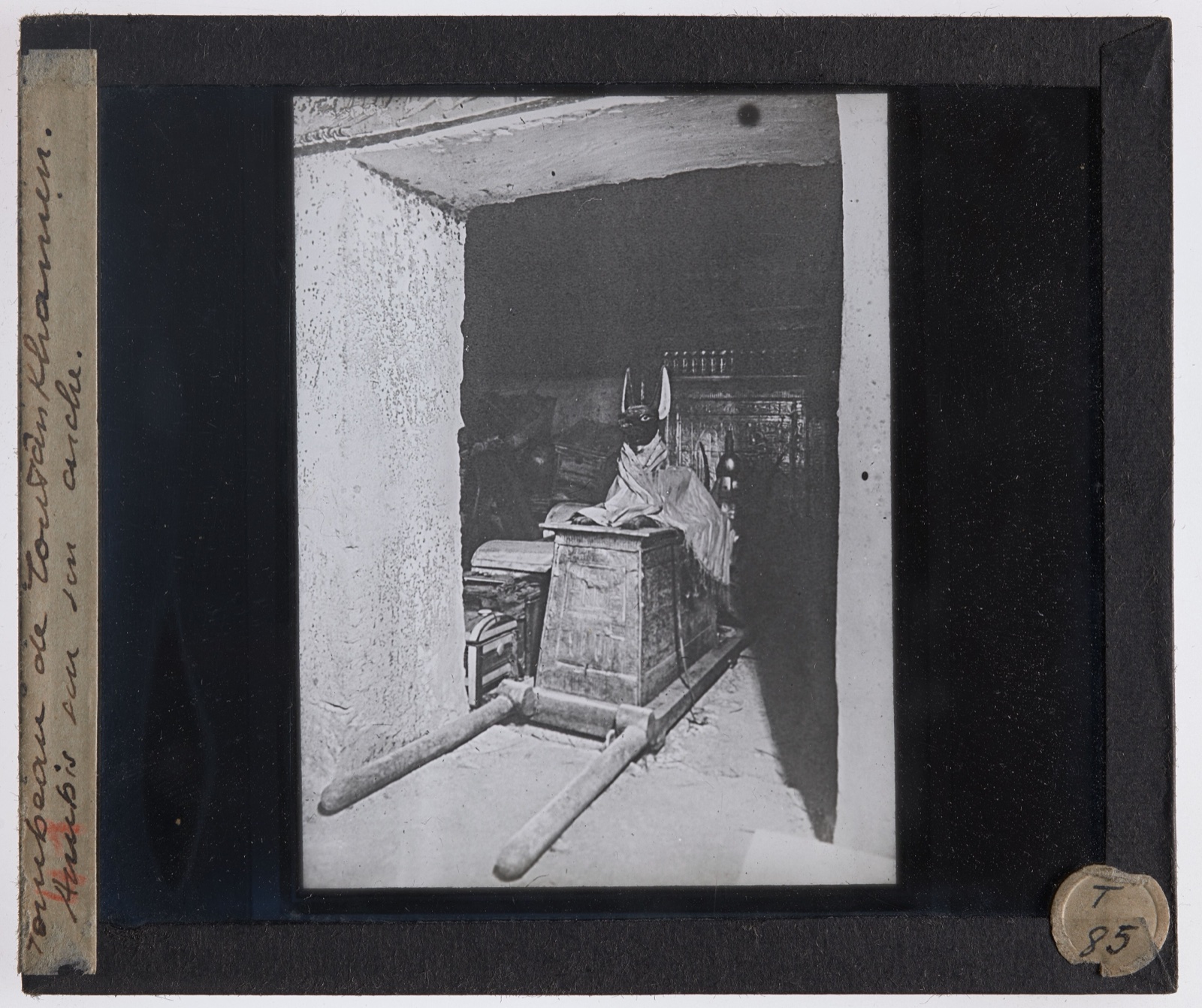
Harry Burton · Public domain · Wikimedia Commons

In Zevist Contemplation
The Zevist turns to the jackal at the thresholds of life: sleep, illness, mourning, every ending and every new beginning. Its image disciplines the soul in watchfulness and in judgement.
- The watcher on the shrine. In meditation, hold the image of the black jackal lying alert on its shrine, as in Tutankhamun's treasury. Rest the attention at the base chakra and breathe slowly: the watcher is calm because it is ready.
- The steady hand at the balance. Bring a decision of the day to the heart chakra and weigh it, as Anubis steadies the balance against the feather of Ma'at. The hand that does not tremble belongs to the soul that has nothing to hide.
- The opener of the ways. Before breathwork on the Kundalini path, call to mind Wepwawet running ahead of the procession. The image fixes the intention that the way through Sushumna be opened in order and in its season.
- The embalmer's work on the soul. What has died in the soul (an old habit, a spent attachment, a grief) is not left to rot but treated and set in order, as Anubis treats the body; see The Skull and the Work of Transformation.
- The faithful pair. Contemplate the monogamous pair holding its ground year after year as a model of kept oaths. Fidelity to the given word is a work of Arete and stands under Zeus Horkios.
Read this page alongside Anubis, Maat and The Afterlife and Death, where the same guide is approached through the doctrine of the soul's passage.
Continue exploring
Related Pages
- The Gods: Anubis
- The Gods: Hermes
- The Gods: Maat
- The Gods: Osiris
- Sacred Animal: The Ibis of Thoth
- Sacred Animal: The Dog of Hecate
- Sacred Animal: The Wolf of Apollo
- Previous: The Wolf of Apollo
- Next: The Dog of Hecate
- All 32 Sacred Animals
- All symbols