




14 min read
The Dog of Hecate
author: High Priest Zevios Metathronos
κύων (kýōn)
Hound of Hecate, warden of the gate of Hades, healer at Epidaurus, finder of the light hidden from Indra.
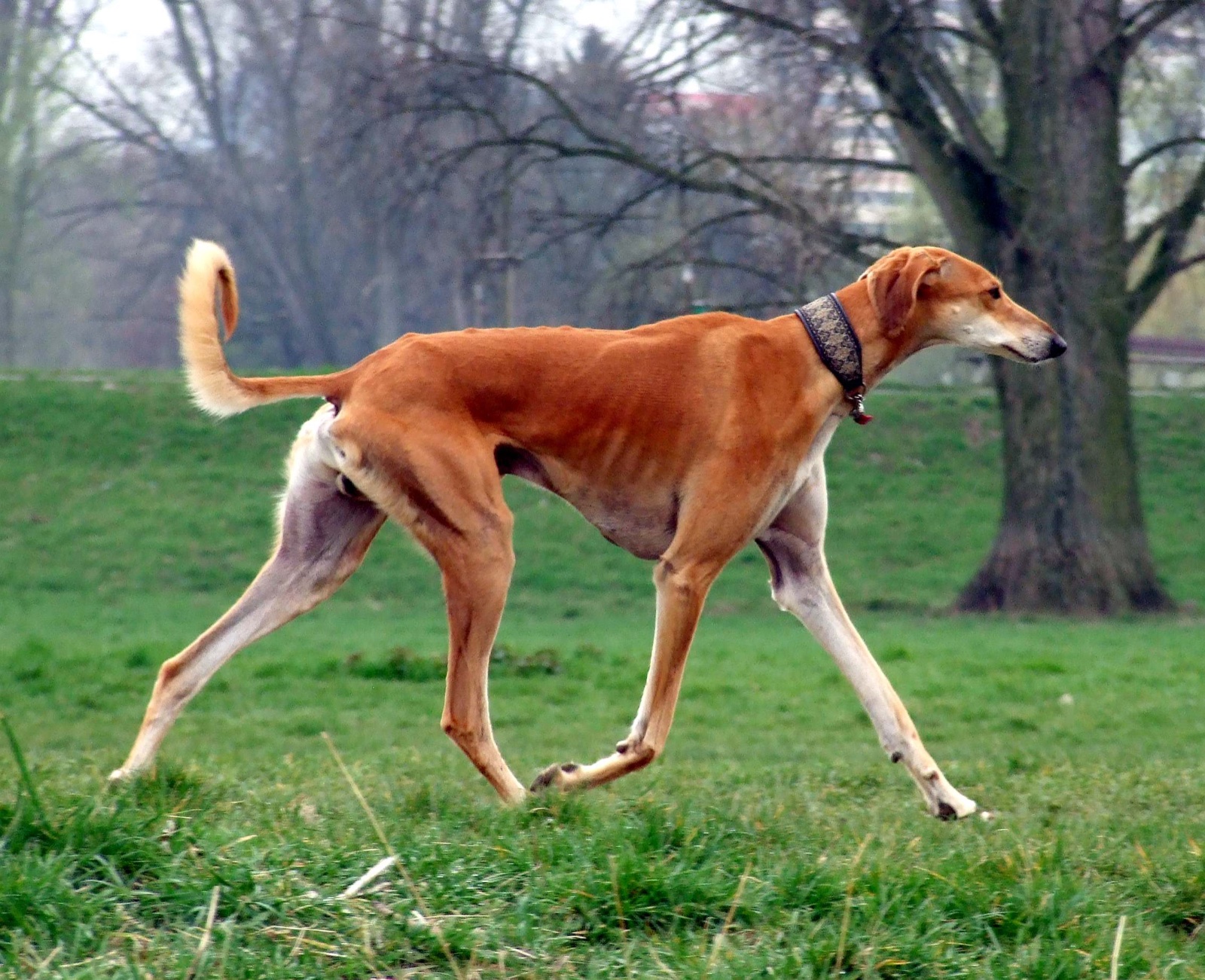
r. · CC BY-SA 3.0 · Wikimedia Commons

The dog has lived beside humankind for at least 14,000 years[1], and the Gods set it at every threshold: at the torch-lit rites of Hecate, at the gate of Hades, on the road of the dead and in the healing court of Asclepius. In Zevism the dog is the guardian and the finder: the power of the soul that keeps faith, scents what is hidden and brings the stolen light home.
| Realm | Beasts of the Earth |
|---|---|
| Greek | κύων (kýōn); σκύλαξ (skýlax), puppy |
| Latin | canis; canicula, the Dog Star |
| Other Names | Sanskrit śvan; Sārameya, "sons of Saramā", the dogs of Yama |
| Species | The domestic dog, descended from the grey wolf Canis lupus |
| Gods | Hecate, Artemis, Asclepius, Ares Enyalios, Indra (Saramā), Yama, Gula |
| Material Capacity | Up to 300 million olfactory receptors; an inborn reading of human signals |
| Spiritual Capacity | Guardian of thresholds, finder of hidden light, keeper of faith and healing |
| Element and Sphere | Earth and night; the gate and the road; Sirius, the Dog Star |
The Living Animal
Every dog descends from the wolf. A jaw from Kesslerloch Cave in Switzerland shows domestic dogs living there between 14,100 and 14,600 years ago, and dog remains of roughly 14,000 years lie with human burials at Bonn-Oberkassel in Germany[1]. The Kesslerloch team places the taming of local wolves before 15,000 years ago, while others argue for a far older date from a 31,700-year-old canid skull found in Goyet Cave, Belgium, which the Swiss researchers read as a wolf[1]. The date is still disputed; the bond is not.
The dog lives in a world made of scent. Its nose holds up to 300 million olfactory receptors against about 6 million in a human, and the part of its brain given to analysing smell is, in proportion, 40 times greater than in the human brain[2]. Scientists estimate its sense of smell at 10,000 to 100,000 times the acuity of a human's[2].
The dog also reads people. In 2002 Brian Hare and his colleagues showed that dogs are more skilful than great apes at tasks that require reading human communicative signals[3]. Wolves raised by humans lacked the skill, while puppies only a few weeks old, even those with little human contact, already had it; the authors concluded that domestication selected dogs for the social cognition that lets them communicate with humans[3].
Antiquity bred and studied dogs by type and work. The marble Jennings Dog in the British Museum, a Roman copy of a Hellenistic bronze found in Rome, shows a seated Molossian dog with a docked tail, every tendon of the guard dog rendered from life[4].
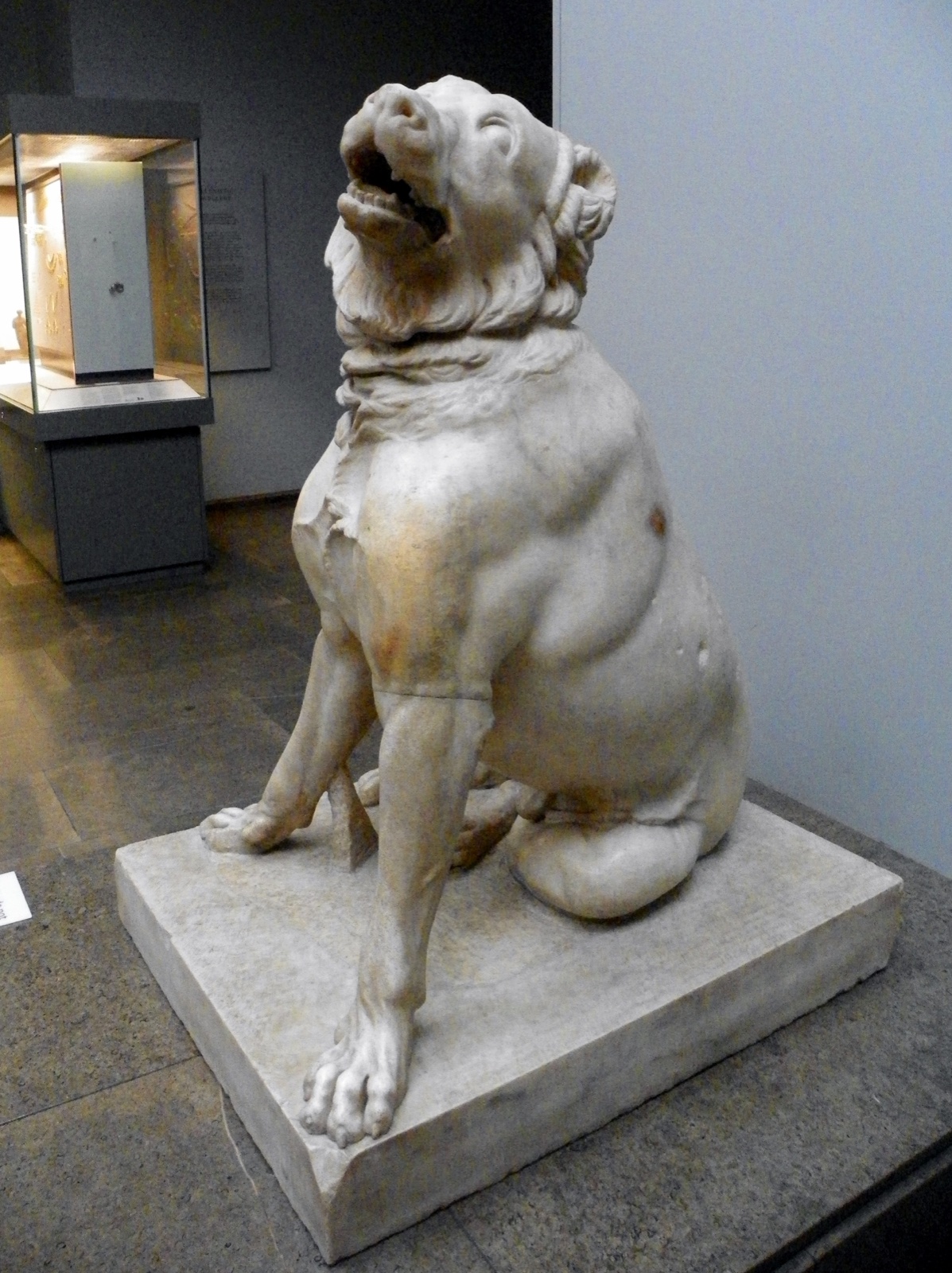
Peter O'Connor aka anemoneprojectors · CC BY-SA 2.0 · Wikimedia Commons
.jpg)
The Spiritual Capacity
The dog belongs to the thresholds. The ancient witnesses place it where one state of being passes into another: the night rites where Hecate appears, the gate of the house of Hades, the road that the dead walk to the Fathers. In Zevism the dog is the guardian of passage, the sentinel of the aura that admits what is worthy and turns back what is not. It stands at the base of the soul, in the earth and in the night, and it does not sleep at its post.
The dog is also the finder. In the Ṛgveda, Saramā, the divine bitch sent by Indra, crosses the river Rasā and tracks down the cows that the Paṇis have hidden in their stronghold[5]. In the Temple's teaching Indra is Zeus, and the cows of the hymn are the riches of light held captive in darkness. Saramā is the faculty of the soul that follows the scent of the hidden light until it finds it: the work of the 6th chakra, the Third Eye, which perceives what the outer senses cannot.
Third, the dog heals and keeps faith. At Epidaurus the sacred dogs of Asclepius healed with their tongues the eyes of a blind boy and the ailment of another[6]; in Mesopotamia the dog was the animal of Gula, the great healer[7]. Fidelity is the virtue the dog teaches above all others: a power that has the strength of the wolf and places it in service. This is Arete in its plainest form, strength governed by loyalty, and the Zevist who acquires it guards the inner temple as the dog guards the gate.
Above all of this burns Sirius, the Dog Star, whose rising announced the flood of the Nile and the new year in Egypt[8]. The dog of the earth has its image in the brightest star of the night sky: the faithful guardian below answers to the herald of renewal above.
Where Matter and Spirit Meet
The dog's body is the visible form of its spiritual office. 4 of its living capacities show the 4 powers it carries for the soul.
- The nose and the Third Eye. Up to 300 million olfactory receptors let the dog perceive a world invisible to human eyes[2]. This is the material image of spiritual discernment: the opened 6th chakra perceives the subtle traces of things as the nose perceives a trail, and like Saramā it can follow them through darkness to their source.
- Reading the human signal and devotion. Dog puppies read human communicative signals almost from birth, a gift that wolves raised by humans lack[3]. The dog turns its whole attention to the will of the one it serves. The Zevist turns the same attention to the signs of the Gods, and the heart chakra, taught in The Chakras, is the organ of this attunement.
- From wolf to dog, and wildness ruled. The dog is a wolf whose force has been brought into order over at least 14,000 years[1]. Nothing of the wolf's strength was lost; it was placed in service. This is the work of Arete on the instincts of the base chakra: the raw power is kept, and Ma'at is laid upon it.
- Buried beside humans and guide of the dead. At Bonn-Oberkassel dogs lie with human burials some 14,000 years old[1]. The oldest graves already join the dog to the dead, and the Ṛgveda gives Yama 2 4-eyed dogs who guard the road of the departed[5]. The animal that accompanies life accompanies the soul past death: the guardian of the aura becomes the guardian of the passage.
The Gods and Their Many Names
The dog gathers around 3 divine powers in every land: the power of the threshold and the underworld, the power of healing, and the power of the hunt and of war. In the Temple's teaching the same Gods are worshipped under many names, and so the same animal returns to Them in Hellas, in Vedic India and in Mesopotamia. Indra, who sends Saramā, is Zeus; Asclepius, whose dogs heal at Epidaurus, is Imhotep; Ares, to whom the youths of Sparta offered puppies, is Mars and Montu. The jackal of Anubis belongs to its own page, The Jackal, and the wolf of Apollo to The Wolf.
| Civilization | God (and the Temple's identity) | The Bond with the Animal | Witness |
|---|---|---|---|
| Hellas | Hecate | The dogs of the underworld bay around Her when She rises to the torch-lit rite; dogs, honey and black lambs were offered to Her | Apollonius, Argonautica 3.1216-1217[9]; Theoi, Hekate[10] |
| Hellas | Hades and Cerberus | The 50-headed, bronze-voiced dog of Hades fawns on those who enter and devours any who try to leave | Hesiod, Theogony 310-312, 769-773[11] |
| Hellas | Heracles and Eurystheus | Heracles brings the 3-headed hound up from Hades as his last labour, painted about 530 BC | Caeretan hydria, Louvre E 701[12] |
| Hellas | Artemis (Diana) | Pan gives the Huntress hounds that pull down lions and 7 Cynosurian bitches swifter than the winds | Callimachus, Hymn 3[13] |
| Epidaurus | Asclepius (Imhotep) | A sanctuary dog heals the eyes of the blind boy Lyson; another heals a boy of Aegina with its tongue | IG IV2 1, 121-122, cures 20 and 26[6] |
| Sparta | Ares Enyalios (Mars, Montu) | Each company of ephebes offers a puppy to Enyalios before their battle, "the most valiant of tame animals" | Pausanias 3.14.9[14] |
| Vedic India | Indra (Zeus) | Saramā, Indra's messenger, crosses the Rasā and finds the cows hidden by the Paṇis | Ṛgveda 10.108[5] |
| Vedic India | Yama | 2 4-eyed, broad-nosed dogs, sons of Saramā, guard the path of the dead and are Yama's messengers among men | Ṛgveda 10.14.10-12[5] |
| Mesopotamia | Gula (Ninkarrak) | The dog is Her attribute; Her temple at Isin was the "Dog Temple", with more than 30 dog burials under its ramp | Heffron, Oracc[7] |
The dog stands with the Gods who govern passage: from life to death (Hecate, Hades, Yama), from sickness to health (Asclepius, Gula), from darkness to light (Indra and Saramā). Each passage is a threshold, and the threshold is the dog's post in every civilization that kept the animal.
The Spartan witness adds the warrior's reading. Pausanias records that the ephebes judged the dog the most valiant of tame creatures and so fit for the most valiant of Gods[14], and at Colophon a black puppy was offered by night to Enodia, the Goddess of the Road[14]. Courage, vigilance and fidelity are one virtue seen from 3 sides.
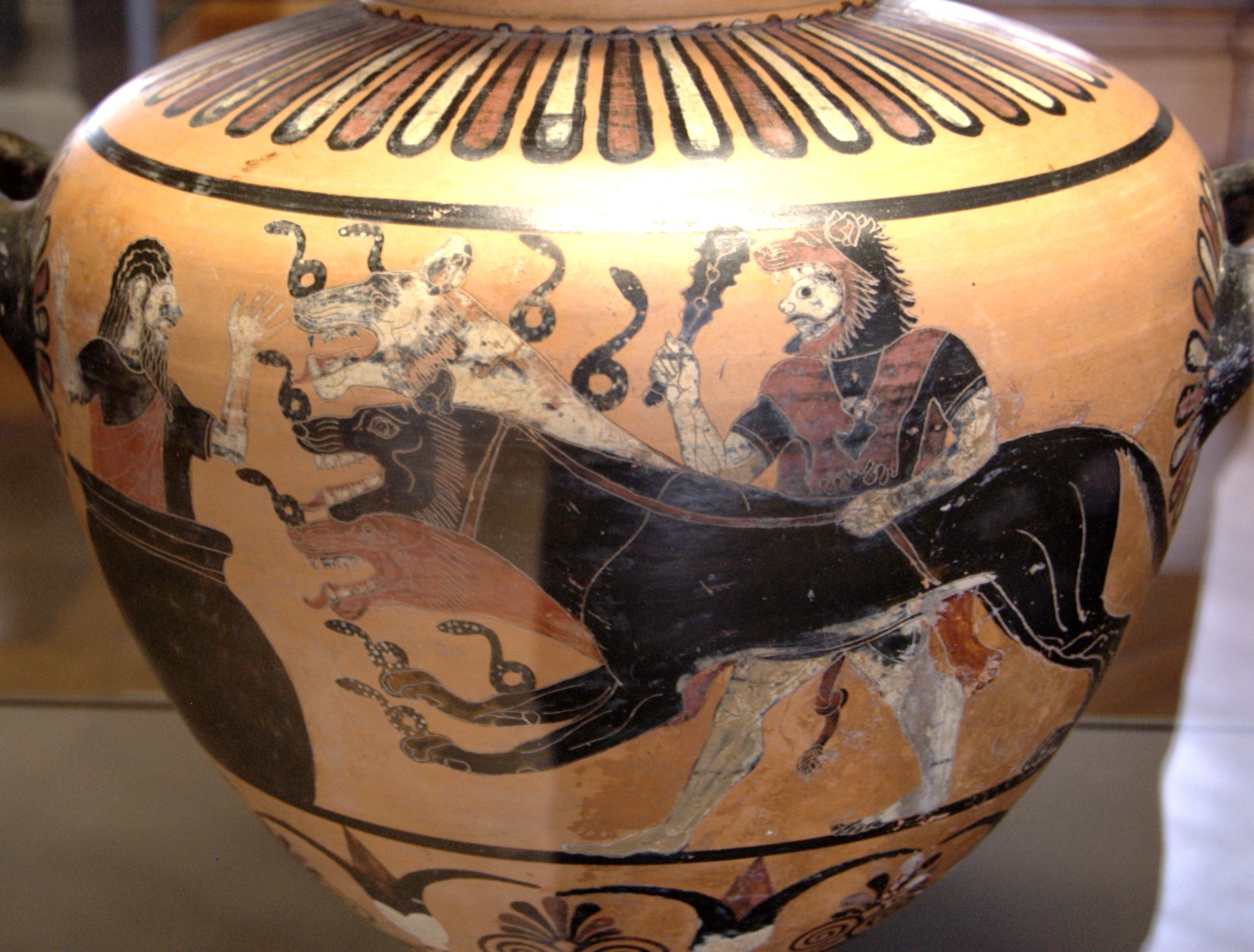
Eagle Painter · Public domain · Wikimedia Commons

Ancient Witnesses
5 witnesses follow: the Greek poet of the Argonauts on the dogs that announce Hecate, Homer on the star the Greeks named the Dog of Orion, Pausanias on the Spartan rite of Enyalios, and 2 hymns of the Ṛgveda on the dogs of Yama and on Saramā, the messenger of Indra. The Sanskrit is given without its Vedic accents.
Apollonius Rhodius, Argonautica 3.1216-1217 [9]
στράπτε δʼ ἀπειρέσιον δαΐδων σέλας· ἀμφὶ δὲ τήνγε
ὀξείῃ ὑλακῇ χθόνιοι κύνες ἐφθέγγοντο.The boundless blaze of the torches flashed, and around Her the dogs of the underworld gave tongue with shrill baying.
Argonautica, ed. G. W. Mooney (London, 1912) · Hecate rises to the rite of Jason. Translation: Temple of Zeus.
ὅν τε κύνʼ Ὠρίωνος ἐπίκλησιν καλέουσι.
λαμπρότατος μὲν ὅ γʼ ἐστί, κακὸν δέ τε σῆμα τέτυκται,
καί τε φέρει πολλὸν πυρετὸν δειλοῖσι βροτοῖσιν·the star that men call by name the Dog of Orion. Brightest of all it is, yet it is set as an evil sign, and it brings much fever to wretched mortals.
Homeri Opera, ed. D. B. Monro and T. W. Allen (Oxford, 1920) · Sirius, seen by Priam in the gleam of Achilles. Translation: Temple of Zeus.
Pausanias, Description of Greece 3.14.9 [14]
ἐνταῦθα ἑκατέρα μοῖρα τῶν ἐφήβων σκύλακα κυνὸς τῷ Ἐνυαλίῳ θύουσι, θεῶν τῷ ἀλκιμωτάτῳ κρίνοντες ἱερεῖον κατὰ γνώμην εἶναι τὸ ἀλκιμώτατον ζῷον τῶν ἡμέρων.
There each company of the ephebes offers a puppy to Enyalios, judging that the most valiant of tame animals is a fitting victim for the most valiant of the Gods.
Graeciae descriptio, ed. F. Spiro (Leipzig: Teubner, 1903) · The rite at the Phoebaeum near Therapne, before the battle of the Spartan youths. Translation: Temple of Zeus.
यौ ते श्वानौ यम रक्षितारौ चतुरक्षौ पथिरक्षी नृचक्षसौ ।
ताभ्याम् एनम् परि देहि राजन् स्वस्ति चास्मा अनमीवं च धेहि ॥yau te śvānau yama rakṣitārau caturakṣau pathirakṣī nṛcakṣasau |
tābhyām enam pari dehi rājan svasti cāsmā anamīvaṃ ca dhehi ||Your 2 dogs, Yama, the guardians, 4-eyed, keepers of the path, watchers of men: to them entrust this man, O King, and grant him well-being and freedom from sickness.
Die Hymnen des Rigveda, ed. Th. Aufrecht (Bonn, 1877), GRETIL electronic text by B. van Nooten and G. Holland · Funeral hymn to Yama. Accents omitted; text checked against the VedaWeb TEI of the same edition. Translation: Temple of Zeus.
इन्द्रस्य दूतीर् इषिता चरामि मह इछन्ती पणयो निधीन् वः ।
अतिष्कदो भियसा तन् न आवत् तथा रसाया अतरम् पयांसि ॥indrasya dūtīr iṣitā carāmi maha ichantī paṇayo nidhīn vaḥ |
atiṣkado bhiyasā tan na āvat tathā rasāyā ataram payāṃsi ||As the messenger of Indra, sent forth, I wander, seeking your great treasures, O Paṇis. Fear of being leapt over helped in this; so I crossed the waters of the Rasā.
Die Hymnen des Rigveda, ed. Th. Aufrecht (Bonn, 1877), GRETIL electronic text by B. van Nooten and G. Holland · Saramā answers the Paṇis. Accents omitted; text checked against the VedaWeb TEI of the same edition. Translation: Temple of Zeus.
Universal Significance
The dog's oldest monument is in the sky. The Egyptians observed that Sirius, the brightest star in the night sky, made its heliacal rising, its first appearance before dawn, at the latitude of Memphis at the start of the inundation[8]. The star was the Goddess Sopdet, "the sharp one", whom the Greeks called Sothis, the herald of the life-giving flood[8]; the new year was bound to the "going forth of Sothis", and the link is already suggested by an ivory tablet of the 1st Dynasty[15].
The Greeks named the same star after a dog. Homer calls it the star that "men call the Dog of Orion", the brightest of all, which comes in late summer and brings fever[16]. Hesiod sets the season of heat "when Sirius parches head and knees", and tells his brother to cut the grapes when Orion and Sirius reach mid-heaven[17]. Latin turned the season into dies caniculares, from canicula, "little dog", and English has called it the "dog days" since at least 1538[18].
Philosophy took a name from the dog. The Cynics took their name from Greek kunikos, "dog-like", most likely from the public, shameless way of life of Diogenes of Sinope, the pupil of Antisthenes, and the school lasted into the 6th century AD[19]. The dog became the emblem of a life stripped of convention and lived by nature.
The healing dog of Asclepius has its modern heir. On 29 January 1929 Morris Frank and Dorothy Harrison Eustis incorporated The Seeing Eye in Nashville, Tennessee, which describes itself as the oldest existing guide dog school in the world[20]. The dog that once licked the eyes of the blind at Epidaurus now walks before the blind through the cities of the world.
In Zevist Contemplation
The Zevist takes the dog as a teacher of vigilance and faithful strength. Its image belongs in meditation, in study and in conduct, wherever the soul must guard what it has gained and follow what it has not yet found.
- The guardian at the gate. At the opening of meditation, see a great hound seated at the threshold of the aura, calm and awake. The image trains the mind to admit only what serves the work and to let distraction pass outside.
- The scent of Saramā. With slow breath, rest the attention at the 6th chakra and follow a single subtle impression to its source without forcing it. The practice cultivates the patient discernment that the Third Eye requires.
- Fidelity as practice. The dog keeps its post every night. The Zevist keeps the daily practice the same way, without waiting for mood or reward, and that constancy is the ground on which every advance of the soul is built.
- Sirius at the rising. In late summer, when Sirius returns before dawn, the Zevist can mark the season as the Egyptians marked the flood: a time to renew the practice and set the year in order under Ma'at, as taught in Maat.
The Gods of the dog are presented on Their own pages: Hecate and Her torch in The Torch of Hecate, and the guardian of the underworld in Cerberus. Read with this page, they complete the Temple's teaching on the guardian of the threshold.
Continue exploring
Related Pages
- The Gods: Hecate
- The Gods: Cerberus
- The Gods: Asclepius
- The Gods: Artemis
- Symbol: The Torch of Hecate
- Sacred Animal: The Wolf of Apollo
- Sacred Animal: The Jackal of Anubis
- Previous: The Jackal of Anubis
- Next: The Cat of Bastet
- All 32 Sacred Animals
- All symbols