




14 min read
The Ibis of Thoth
author: High Priest Zevios Metathronos
ἶβις (îbis)
The bird of Thoth and Hermes Trismegistus: the Word, the measure and the record of Ma'at.
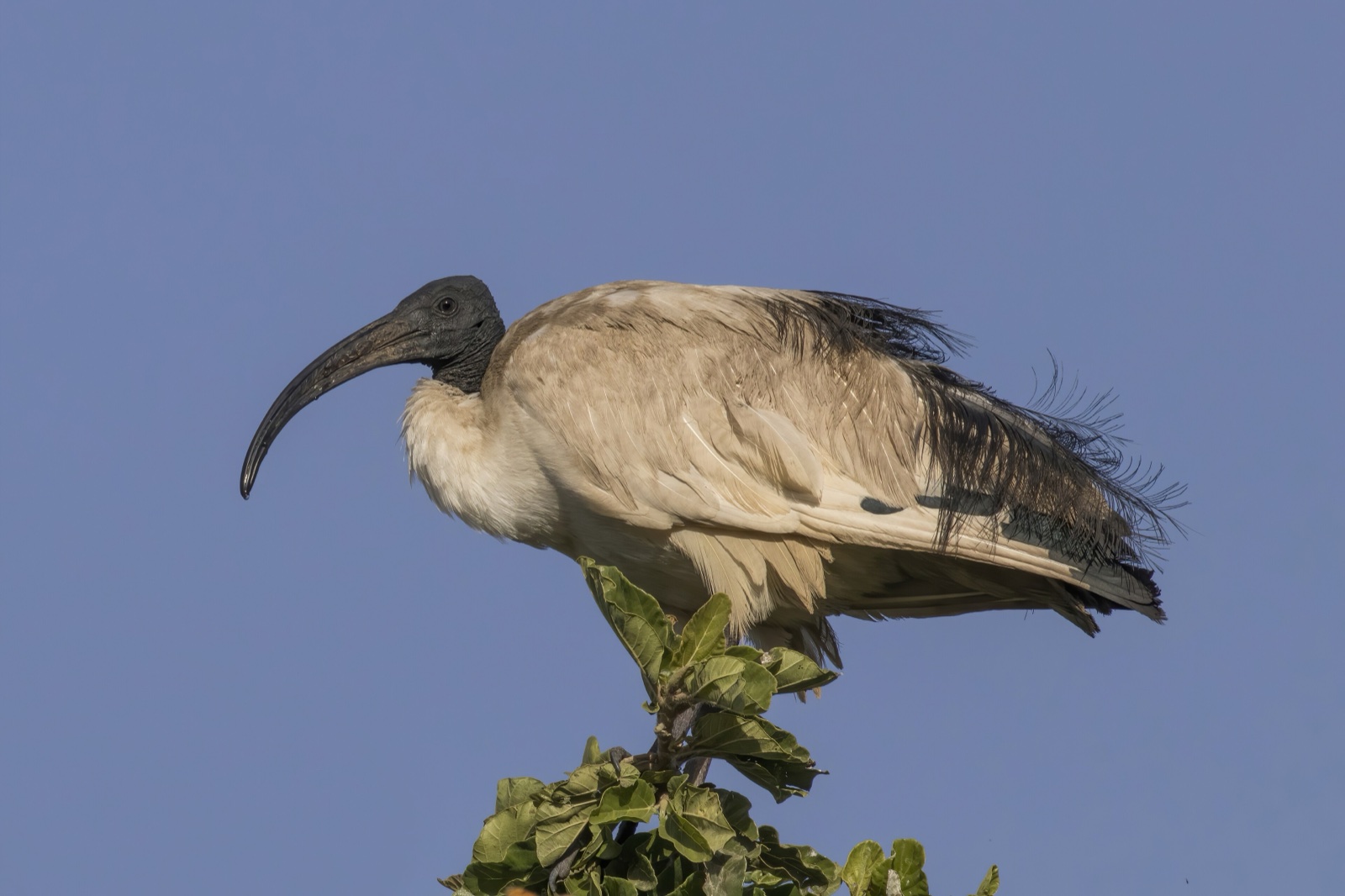
Charles J. Sharp · CC BY-SA 4.0 · Wikimedia Commons
.jpg)
The sacred ibis is the bird of Thoth, whom the Greeks named Hermes and the Hellenistic world called Hermes Trismegistus. It wades the line between water and land and probes the hidden mud with a curved bill, and Egypt honoured it above almost every other bird.
| Realm | Birds of the Heavens |
|---|---|
| Greek | ἶβις (îbis) |
| Latin | ibis |
| Other Names | Sacred ibis, African sacred ibis |
| Species | Threskiornis aethiopicus (sacred ibis) |
| Gods | Thoth, Hermes, Mercury, Hermes Trismegistus |
| Material Capacity | A long curved bill that probes mud and shallow water; life on the edge of water and land |
| Spiritual Capacity | The Word, measure and record of Hermes-Thoth; the mind that searches the hidden |
| Element and Sphere | Water and Air; the Moon; the shoreline between worlds |
The Living Animal
The bird of Thoth is the sacred ibis, Threskiornis aethiopicus, a wading bird native to sub-Saharan Africa[1]. An adult measures 65 to 89 cm from bill to tail, spans 112 to 124 cm across the wings and weighs about 1,500 g. The plumage is white with the flight feathers tipped black, and the head and neck are bare and black; females are smaller than males, above all in the bill[1].
The bill is long, slender and curved downward[2]. The ibis feeds by probing it into shallow water, mud or grass, and takes mostly insects such as grasshoppers, locusts, crickets and aquatic beetles[2]. Its wider diet runs to fish, amphibians, molluscs and crustaceans, gathered in open country both wet and dry, though water is always near[1]. A sacred ibis can live up to 20 years[2].
Ibises breed in colonies of up to several thousand pairs, with nests packed close in trees, bushes and on the ground beside water[1]. Herodotus, who went to see the bones of the winged serpents on the Arabian border of Egypt[3], described 2 kinds of ibis: an all-black bird with the legs of a crane and a strongly hooked face, and a second kind that throngs about men's feet, white-feathered, with a bare head and neck and black wing tips and rump[4]. His second ibis is the sacred ibis exactly as it stands in the marshes today.
Egypt has lost its sacred bird. The species was common there until the start of the 19th century, and by 1850 it had vanished from Egypt both as a breeder and as a migrant[1]. Ancient DNA shows how wild the old supply was: tissue from 40 mummies in 6 catacombs yielded 14 complete ancient mitochondrial genomes, whose diversity matches that of modern African populations[5]. The authors conclude that the temples relied on the short-term taming of wild migratory ibises each year, and they reject the theory of centralised long-term farms[5].
Where Egypt lost the bird, Europe acquired it by accident. Escaped ibises have bred in the upper Po valley in Piedmont since 1989, after leaving a zoo near Turin, and in France wild breeding was first recorded in 1993 at the Golfe du Morbihan; the French wildlife office has since run eradication programmes against them[1].
The Spiritual Capacity
In Egypt the ibis is the living form of Thoth, God of the Moon, of reckoning, of learning and of writing, the inventor of writing and the scribe, shown as a man with the head of an ibis[6]. The Greeks identified Thoth with Hermes and called Him Hermes Trismegistos, Hermes the Thrice Great[6]. In the Temple's teaching Hermes, Thoth, Anubis and Mercury are 1 God[7]: the messenger of Zeus, the Lord of the Word and the guide of souls. See Thoth and Hermes.
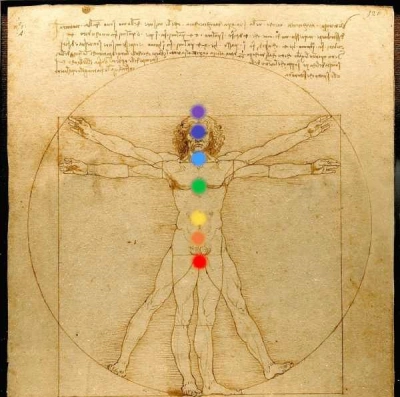
The faculty the ibis reveals is the ordering mind: the power that names, counts, measures and records, so that the true is kept and the false is exposed. In the soul's anatomy this power works through the throat chakra, seat of the Word, and through the 6th chakra, the Third Eye, which sees beneath the surface of things. The ibis's bill, curved like the crescent of Thoth's Moon, is the emblem of both: speech and insight joined in a single instrument. See The Chakras.
Thoth stands in the hall of judgement as the recorder of Ma'at. In the Papyrus of Ani the ibis-headed God waits beside the great balance, ready to write down the result of the dead man's examination[8]. Ma'at is the order of the cosmos, held by Zeus as its Sovereign; Izfet is dissolution and the collapse of existence. The Zevist reads writing as the Hermetic instrument of Ma'at: a record that does not drift and a measure that cannot be bribed.
Plato preserves the second half of the teaching. When Theuth brought letters to King Thamus, whom the Greeks call Ammon, the King answered that writing would give men a drug of reminding instead of memory, and the appearance of wisdom in place of wisdom[9]. In Zevism Thamus is Zeus Ammon and the scene is exact: Hermes brings the instrument and Zeus judges its use. The written word must be carried inward until it lives in the soul, or it lies on the page like a mummified ibis, preserved and empty.
Where Matter and Spirit Meet
The living bird and the God it carries are 1 design seen from 2 sides. Each capacity of the ibis described above is the visible body of a power of Hermes-Thoth.
- The probing bill and the searching mind. The ibis feeds by pushing its curved bill into water, mud and grass for prey it cannot see[2]. The Hermetic intellect works the same ground: it enters what is obscure, finds the living thing hidden there and draws it up into the light of understanding.
- White and black plumage and Light bound by Ma'at. The body is white, while the head, the neck and the tips of the flight feathers are black[1]. Light and Darkness are positive when bound by Ma'at, and the ibis wears both in a fixed and ordered pattern, each colour in its place. Thoth records in the same spirit: nothing is erased and everything is set where it belongs.
- The shoreline and the messenger between worlds. The ibis lives where water and dry ground meet and needs both[1]. Hermes is the God of the boundary, who crosses between Gods and men and between the living and the dead; the wader at the water's edge is His crossing made visible.
- The guard at the pass. Herodotus was told that ibises meet the winged serpents of Arabia at the pass into Egypt each spring and kill them there[3]. The Kundalini serpent of Zevism rises from within the soul; these serpents come from outside, in a swarm, unbidden, and stand for the forces of Izfet pressing into an ordered land. The ibis at the pass is discernment at the gate of the mind.
- The wild migrant and the free intellect. The genomes of the mummies point to wild, migratory birds tamed for a season, and the evidence does not support long-term farms[5]. Thoth's knowledge cannot be farmed: it is caught in its season, by attention, from a living source that remains free.
The Gods and Their Many Names
Hermes is 1 God under many names, and the ibis follows Him through every language that knew Him. In Egypt He is Thoth, whose cult was centred at Khmunu, and whose sacred animals were the ibis and the baboon[6]. Greek writers named His city Hermopolis, the city of Hermes: Herodotus records that dead ibises were carried to the city of Hermes for burial[10], and Strabo that the people of Hermopolis honoured the dog-headed baboon[11].
| Civilization | God (and the Temple's Identity) | The Bond with the Animal | Witness |
|---|---|---|---|
| Egypt | Thoth (Hermes) | Ibis-headed God of writing and reckoning; the ibis and the baboon are His sacred animals | Encyclopaedia Britannica, "Thoth"[6] |
| Egypt, the judgement hall | Thoth, scribe of Ma'at | The ibis-headed God stands by the balance to record the verdict on the heart | Papyrus of Ani, BM EA 10470,3[8] |
| Hellas (Herodotus) | Hermes | Ibises are taken for burial to the city of Hermes | Herodotus 2.67.1[10] |
| Hellas (Plato) | Theuth (Hermes) | The God whose sacred bird is the ibis invents number, geometry, astronomy and letters | Plato, Phaedrus 274c-d[9] |
| Phoenicia | Taautos (Thoth, Hermes) | The inventor of letters, called Thoyth by the Egyptians and Hermes by the Greeks | Philo of Byblos in Eusebius, Praep. Ev. 1.9-10[12] |
| Rome | Mercury (Cyllenius) | When Typhon assailed the Gods, Mercury hid in the wings of an ibis | Ovid, Metamorphoses 5.331[13] |
| Graeco-Roman Egypt | Hermes Trismegistus | The Hermetic writings are ascribed to Thoth, the Thrice Greatest | Encyclopaedia Britannica, "Hermetic writings"[14] |
The thread is a single office. Wherever the God of the Word was known, His bird was the wader with the measuring bill: in Egypt as His living image, in Herodotus as the burial charge of His city, in Plato as the sign by which His name is introduced, in Ovid as the form He took when the Gods withdrew before Typhon. The Phoenician Taautos completes the circle by giving the same God, the same gift of letters and the same Greek name.
The Temple reads this agreement as the signature of 1 power. Peoples who never shared a priesthood saw the same faculty in the same creature, because the faculty is real and the creature is its fitting body; and because in Zevism Anubis too is Hermes, the jackal of the necropolis stands beside the ibis as the other face of the same guide (see The Jackal).
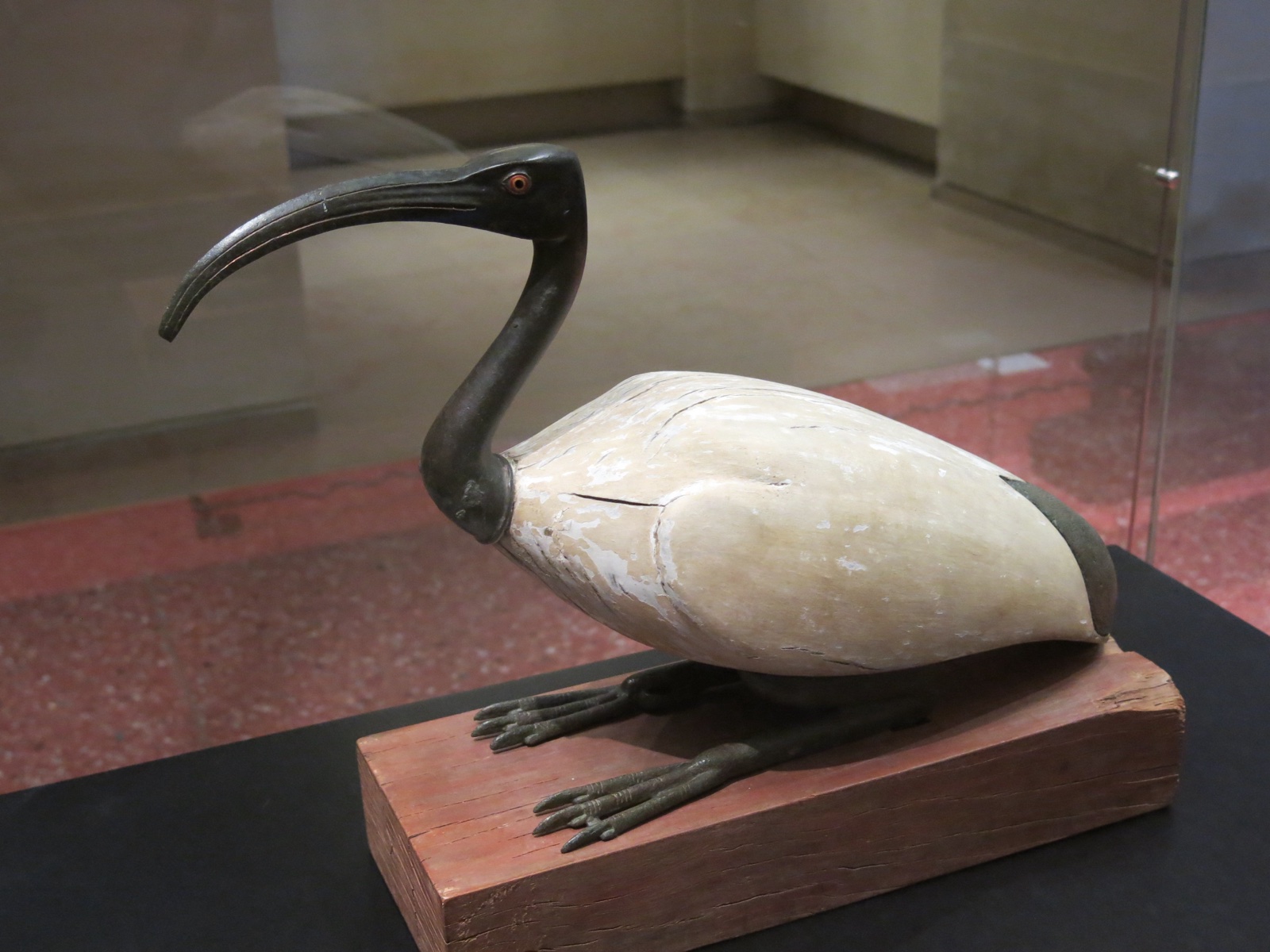
Tangopaso · Public domain · Wikimedia Commons
.jpg)
Ancient Witnesses
The witnesses below give the ibis in Herodotus's own observation, the ibis as the sign of Theuth in Plato, and the words of Thoth Himself at the weighing of the heart, as Budge translated them from the Papyrus of Ani.
Herodotus, Histories 2.75.3 [3]
λόγος δὲ ἐστὶ ἅμα τῷ ἔαρι πτερωτοὺς ὄφις ἐκ τῆς Ἀραβίης πέτεσθαι ἐπʼ Αἰγύπτου,
τὰς δὲ ἴβις τὰς ὄρνιθας ἀπαντώσας ἐς τὴν ἐσβολὴν ταύτης τῆς χώρης
οὐ παριέναι τοὺς ὄφις ἀλλὰ κατακτείνειν.The story is that at the beginning of spring winged serpents fly from Arabia toward Egypt, and that the ibises, the birds, meet them at the pass into this country, and do not let the serpents through, but kill them.
Herodotus, ed. A. D. Godley (Perseus Digital Library) · Translation: Temple of Zeus.
Herodotus, Histories 2.76.1-2 [4]
τῶν μὲν δὴ μελαινέων τῶν μαχομενέων πρὸς τοὺς ὄφις ἥδε ἰδέη, τῶν δʼ ἐν ποσὶ μᾶλλον εἱλευμενέων τοῖσι ἀνθρώποισι (διξαὶ γὰρ δή εἰσι ἴβιες)
ψιλὴ τὴν κεφαλὴν καὶ τὴν δειρὴν πᾶσαν, λευκὴ πτεροῖσι πλὴν κεφαλῆς καὶ αὐχένος καὶ ἀκρέων τῶν πτερύγων καὶ τοῦ πυγαίου ἄκρουSuch is the form of the black ibises that fight the serpents. But of those that throng more about men's feet (for there are 2 kinds of ibis), the head and the whole neck are bare, and the plumage is white except the head, the throat, the tips of the wings and the end of the rump.
Herodotus, ed. A. D. Godley (Perseus Digital Library) · Translation: Temple of Zeus.
ἤκουσα τοίνυν περὶ Ναύκρατιν τῆς Αἰγύπτου γενέσθαι τῶν ἐκεῖ παλαιῶν τινα θεῶν,
οὗ καὶ τὸ ὄρνεον ἱερὸν ὃ δὴ καλοῦσιν Ἶβιν· αὐτῷ δὲ ὄνομα τῷ δαίμονι εἶναι Θεύθ.
τοῦτον δὴ πρῶτον ἀριθμόν τε καὶ λογισμὸν εὑρεῖν καὶ γεωμετρίαν καὶ ἀστρονομίαν,
ἔτι δὲ πεττείας τε καὶ κυβείας, καὶ δὴ καὶ γράμματα.I heard, then, that at Naukratis in Egypt there lived one of the ancient Gods of that country, whose sacred bird is the one they call the Ibis; and the name of the divinity Himself was Theuth. He was the first to discover number and calculation, geometry and astronomy, and draughts and dice too, and above all letters.
Platonis Opera, ed. J. Burnet (Perseus Digital Library) · Socrates speaking. Translation: Temple of Zeus.
Papyrus of Ani (British Museum EA 10470,3), words of Thoth at the weighing of the heart [15]
Hear ye this judgment. The heart of Osiris hath in very truth been weighed, and his soul hath stood as a witness for him; it hath been found true by trial in the Great Balance. There hath not been found any wickedness in him;
E. A. Wallis Budge, The Book of the Dead: The Papyrus of Ani (1895), Plate III · The original column gives Budge's public-domain translation; "the Osiris" is the dead scribe Ani. Modern rendering: Temple of Zeus.
Universal Significance
Egyptian law guarded the bird with the heaviest penalty. Herodotus states that whoever killed an ibis or a hawk, willingly or unwillingly, had to die[16], and Diodorus repeats the rule for the cat and the ibis alone, adding that he himself saw a Roman in Egypt fall to a mob for killing a cat by accident[17].
The ibis also became the largest votive offering of the ancient world. Millions of mummified ibises and baboons have been found in cemeteries near Hermopolis and Memphis[6]. Tuna el-Gebel holds about 4 million sacred ibis mummies, the largest known number of birds, and Saqqara about 1.75 million, with some 10,000 deposited there each year; the practice began around 600 BC and peaked between about 450 and 250 BC[5]. The ibis mummy in Turin, wrapped in linen, came from Asyut and was excavated by Ernesto Schiaparelli between 1910 and 1912[18], and the Louvre's recumbent ibis of Thoth, carved in white acacia with copper-alloy parts, is attributed to the Ptolemaic period[19].
Through Hermes Trismegistus the ibis-God passed into the philosophy of the West. The Hermetic writings, works of revelation ascribed to Thoth, probably date from the middle of the 1st century to the end of the 3rd century AD; Hermetism was cultivated by the Arabs and reached the West through them, and late medieval and Renaissance literature is full of allusions to Hermes Trismegistos[14]. In 1488 Giovanni di Stefano set Hermes Trismegistus in marble on the floor of Siena Cathedral, the first inlay to greet the visitor in the nave[20].
Modern science kept the name. The British Ornithologists' Union called its journal Ibis, and its first number in 1859 made it the first major ornithological journal[21]. The bird itself now survives in sub-Saharan Africa and in the escaped colonies of Italy and France, while in Egypt, the land that made it sacred, it disappeared around 1850[5].
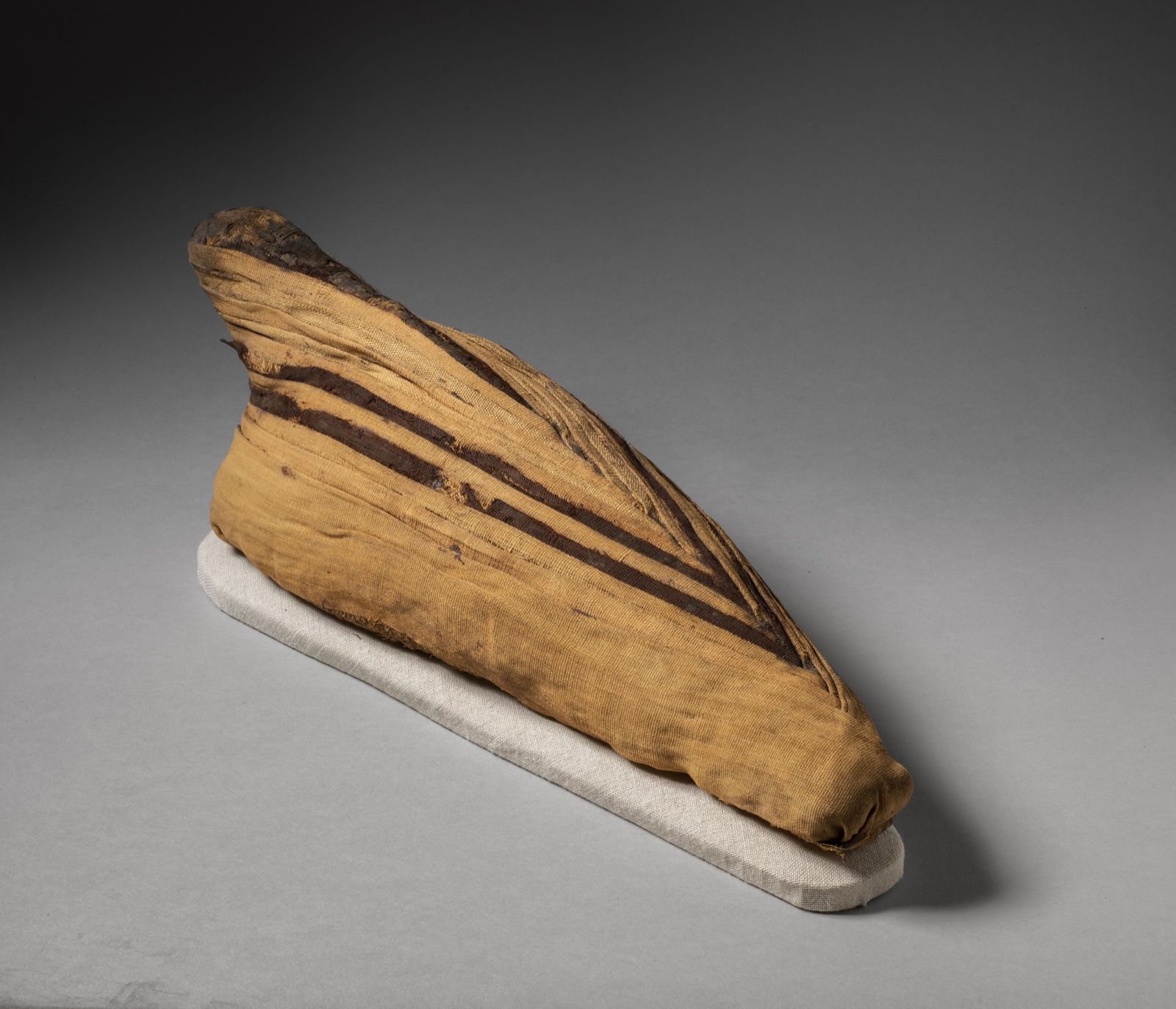
Museo Egizio, Turin · CC0 · Wikimedia Commons

In Zevist Contemplation
The Zevist uses the ibis as an image of disciplined intelligence: the mind that searches, weighs and records under the authority of Ma'at. Its use belongs to daily practice, in meditation, in study and in conduct.
- The wader at the threshold. In meditation, hold the image of the ibis standing still at the edge of the water, with the breath slow and even. The stillness before the strike is the stillness of attention that precedes every true perception, and it is trained at the Third Eye.
- The bill and the throat. Bring the curved bill to mind at the throat chakra before speaking or writing anything of weight. The Word of Hermes is exact: what is said should probe, find and name the true thing, and nothing beyond it.
- The palette of Thoth. At the close of the day, set down the day's conduct in writing and weigh it against Ma'at, as Thoth records at the balance. The practice builds Arete, the vehicle by which the soul rises, and keeps an honest account of its progress.
- Memory over reminding. Learn sacred texts by heart and do not leave them only on the page, as King Thamus warned Theuth. What is carried within becomes part of the soul's own light; see Becoming as the Gods.
- White and black in order. Contemplate the ibis's plumage as Light and Darkness held in their places, and examine where in the soul either has strayed from its place. Order restored there is a small act of Ma'at.
Read this page alongside Thoth, Hermes and The Caduceus of Hermes, where the same God is approached through His staff.
Continue exploring
Related Pages
- The Gods: Thoth
- The Gods: Hermes
- The Gods: Maat
- Symbol: The Caduceus of Hermes
- Sacred Animal: The Jackal of Anubis
- Sacred Animal: The Tortoise of Hermes
- Sacred Animal: The Falcon of Horus
- Previous: The Rooster of Helios
- Next: The Lion of Heracles
- All 32 Sacred Animals
- All symbols