



9 min read
Sacred Geometry · Layer 3 · Level I · The Figures of the Decad
The Triangle
Τὸ Τρίγωνον
author: High Priest Zevios Metathronos
Zevist Numerology 3 · The Triad
Spirit · Divine union · Beginning, middle, and completion
Core meanings · Foundational Temple text
Spirit, divinity, trine force, a perfect number, first union, divine/holy trinity [Ea, Enlil, Anu - Poseidon, Zeus, Hades, etc.], trinity of the worlds
Three points not on one line enclose a space. Nothing with fewer can. The triangle is the first plane figure, the figure of the Triad, and the atom of every other polygon: cut any of them along its diagonals and triangles are what remain. Plato built the elements from 2 triangles; Pythagoras is remembered for a theorem about 1 of them; the Temple's Triad is beginning, middle and completion drawn as a closed figure.
I. The Figure
Τὸ Σχῆμα
Euclid calls a figure contained by 3 straight lines a trilateral, and sorts it 2 ways: by its sides, equilateral, isosceles or scalene, and by its angles, right-angled, obtuse-angled or acute-angled.1 The triangle is also the first thing he constructs. Proposition I.1 builds an equilateral triangle on a given line, and it does so with the 2 circles of the vesica: the third point is where the circles cross, and it's the same distance from both ends of the line because each circle was drawn with that distance as its radius.2
Two theorems govern every triangle after that. The 3 angles of any triangle together equal 2 right angles, 180° (I.32). And in a right-angled triangle the square on the side opposite the right angle equals the sum of the squares on the other 2 sides (I.47).3 The second carries the name of Pythagoras. Diogenes Laertius, citing Apollodorus the calculator, says that Pythagoras sacrificed a hecatomb on discovering it.4 In the triangle with sides 3, 4 and 5 the equality reads 9 + 16 = 25, and the Temple's tribute to the teacher gives that very example.5
The triangle is the Triad's figure for the same reason the line is the Dyad's: it's the least that the number can enclose. Sextus Empiricus sets the plane under the Triad in the Pythagorean order of magnitudes.6 Aristotle opens On the Heavens with the Pythagorean saying that the all and all things are defined by 3, because end, middle and beginning give the number of the whole, and that number is the Triad.7 The Temple's numerology receives the same teaching: 3 is the first expression of completeness, a beginning that has received a middle and an end.8
II. The Construction
Ἡ Κατασκευή
The equilateral triangle needs no measurement, only the compass of Layer 2. The construction is Euclid's first, and it's shown above.2
- Draw the line AB. With centre A and radius AB describe a circle; with centre B and radius BA describe another.
- Mark C where the circles cross above the line. Join CA and CB.
- CA equals AB, because both are radii of the first circle. CB equals BA, because both are radii of the second. So all 3 sides are equal, and the triangle is equilateral.
- The second crossing, D, below the line, gives a second equilateral triangle ABD. The 2 together, base to base, are the rhombus whose short diagonal is AB and whose long diagonal is CD, the axis of the vesica. The hexagon of Layer 6 is 6 of these triangles about one centre.
Plato goes one step further down. In the Timaeus every plane surface is composed of triangles, and all triangles derive from 2: the one with a right angle and 2 equal sides, half of a square, and the one with a right angle and unequal sides in which the square on the longer leg is triple the square on the shorter, half of an equilateral triangle.9 Six copies of the second, meeting at a centre, compose the equilateral face of the tetrahedron, the octahedron and the icosahedron; 4 copies of the first compose the square face of the cube.9 The triangle is the atom of 4 elements, and the figure above is their periodic table.
III. Number and Form
Ἀριθμὸς καὶ Σχῆμα
The Pythagoreans counted with pebbles, and the triangle is the first figure the pebbles make. One pebble, then a row of 2 beneath it, then 3, then 4: the triangular numbers 1, 3, 6 and 10, each the sum of the counting numbers up to its row, each given by n(n + 1) ⁄ 2.10 Nicomachus treats them first among the plane numbers because they're the first that can be made at all, exactly as the triangle is the first plane figure.11 The Temple's numerology draws 6 as a triangle of 1, 2 and 3 and 10 as the Tetractys of 1, 2, 3 and 4; both are rows of the same figure.8
Three is also the number the triangle carries in its name. The Greek letter delta, Δ, is a triangle, and the Greeks named the triangular land at the mouth of the Nile after it: Herodotus calls it the Delta and describes the river dividing around it.12 The letter, the figure and the land that geometry was first measured in share one shape.
IV. In the Ancient Witnesses
Παρὰ τοῖς Ἀρχαίοις
The Triad of the Gods is Homeric before it's Pythagorean. In the Iliad Poseidon tells how the 3 sons of Kronos divided the world by lot: Zeus took the broad heaven, Poseidon the grey sea, Hades the murky darkness, while earth and high Olympus remained common to all 3.13 The Temple's numerology names that triad beside the Mesopotamian 3, Anu, Enlil and Ea, and speaks of the trinity of the worlds.8 3 brothers, 3 realms, 1 common ground: it's the triangle with its interior.
The oldest surviving mathematics of the triangle is Egyptian and Babylonian. The scribes of the Rhind Mathematical Papyrus, about 1550 BCE, computed the area of a triangular field; the Babylonian tablet Plimpton 322, about 1800 BCE, lists whole-number triples that satisfy the relation of I.47 1,000 years before Pythagoras.14 Proclus, following Eudemus, says that geometry itself was first discovered among the Egyptians and originated in the remeasuring of their lands, and that Thales brought it to Greece.15 Herodotus tells the same story in his own words.12 The Greeks received the triangle from the East and gave it its proofs.
V. The Zevist Reading
Ἡ Ζευϊστικὴ Ἀνάγνωσις
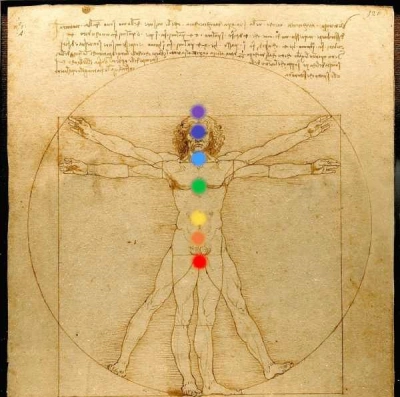
The Triad is the first union, and the soul's own triangle is Ida, Pingala and Sushumna: the receptive current, the directing current and the central path that rises between them.16 Layer 2 drew the 2 flanking circles and found the axis between them; the triangle closes that axis into a figure. In the Tetractys of Layer 10 this is the third row, and the Temple's reading of that symbol names it exactly so: 3 reveals the relationship of the 2 powers to a central path.17
The trident of Poseidon carries the same 3 points, and the Temple reads them as the opening of the soul's 3 knots.18 The triskelion turns 3 forms about 1 centre: creation, preservation and transformation.19 Where the Dyad sets 2 terms in relation, the Triad gives the relation a result, which is why the Temple's core meanings call it spirit, divinity and a perfect number. A sacred action has the same 3 parts, the invocation that opens it, the attentive presence that sustains it and the thanksgiving that gathers it, and the equilateral triangle, with no side longer than another, is the figure of a rite in which none of the 3 is slighted.
The triangle is also the figure of ascent. Its base rests on the earth and its apex points to one place. The Pythagorean star of Layer 5 and the Tetractys of Layer 10 are built from it, point upward, and the Temple's reading of both figures makes the upward point the soul's aspiration toward the Gods.16 Fire, in the Timaeus, is the body with the fewest and sharpest triangular faces; it rises because of its shape.9
Contemplation of the Triangle
Draw the line and the 2 circles as before, and raise the triangle from the crossing. Then take the 3 corners in turn: the left as what receives, the right as what directs, the apex as the path that rises between them. Hold all 3 as 1 figure.
Speak the Triad's affirmation 3 times, once at each corner: "My thought, word, and deed are united in this sacred purpose."20 Seal with 1 AUM.
VI. Measure
Τὸ Μέτρον
| Quantity | Value | Note |
|---|---|---|
| Sum of the angles | 180° | Two right angles, Euclid I.32 |
| Equilateral triangle, each angle | 60° | A third of 180° |
| Equilateral triangle, altitude | s√3 ⁄ 2 ≈ 0.8660 s | Half the vesica's axis |
| Equilateral triangle, area | s²√3 ⁄ 4 ≈ 0.4330 s² | |
| Equilateral triangle, circumradius and inradius | s ⁄ √3 and s ⁄ (2√3) | The centre divides the altitude 2 : 1 |
| Plato's isosceles triangle | 1 : 1 : √2 | Half a square; 4 make a square |
| Plato's scalene triangle | 1 : √3 : 2 | Half an equilateral triangle; 6 make one |
| The triangle 3, 4, 5 | 3² + 4² = 5² | The smallest whole-number right triangle |
| Triangular numbers | n(n + 1) ⁄ 2 | 1, 3, 6, 10, 15, 21, 28, 36, 45, 55 … |
VII. Sources and Reading
Πηγαί
- Euclid, Elements I, Definitions 19 to 21. Joyce, Book I · Greek, Perseus.
- Euclid, Elements I.1. Joyce.
- Euclid, Elements I.32 and I.47. I.32 · I.47.
- Diogenes Laertius, Lives VIII.12 (Pythagoras). English (Hicks) · Greek.
- Temple of Zeus, In Honor of a Great Teacher: Pythagoras.
- Sextus Empiricus, Against the Physicists II 279. Greek, Scaife Viewer.
- Aristotle, On the Heavens I.1, 268a10 to 13. Greek, Scaife Viewer · English (Stocks).
- Temple of Zeus, 3 · The Triad, 6 · The Hexad and 10 · The Decad.
- Plato, Timaeus 53c to 55b, 56a to b. Greek, page 53 · English (Loeb), page 54.
- Eric W. Weisstein, "Triangular Number", MathWorld. mathworld.wolfram.com.
- Nicomachus of Gerasa, Introduction to Arithmetic II.8, translated by Martin Luther D'Ooge (Macmillan, 1926).
- Herodotus, Histories II.15 to 17 (the Delta) and II.109 (geometry from Egypt). II.15 (Godley) · II.109 (Godley).
- Homer, Iliad XV.187 to 193. Greek · English (Murray).
- British Museum, Rhind Mathematical Papyrus, EA 10057 and EA 10058: collection record. Plimpton 322: Eleanor Robson, "Words and Pictures: New Light on Plimpton 322", American Mathematical Monthly 109 (2002) 105 to 120; MacTutor, "Pythagoras's theorem in Babylonian mathematics".
- Proclus, Commentary on the First Book of Euclid's Elements, Prologue II (Friedlein 64.16 to 65.11), Morrow translation (Princeton, 1970). archive.org.
- Temple of Zeus, The Pythagorean Star and the Two Orientations and Red, White, and Black.
- Temple of Zeus, The Tetractys.
- Temple of Zeus, The Trident of Poseidon: Threefold Power.
- Temple of Zeus, The Triskelion.
- Temple of Zeus, How to Use the Numbers in Magick & Meditation.